
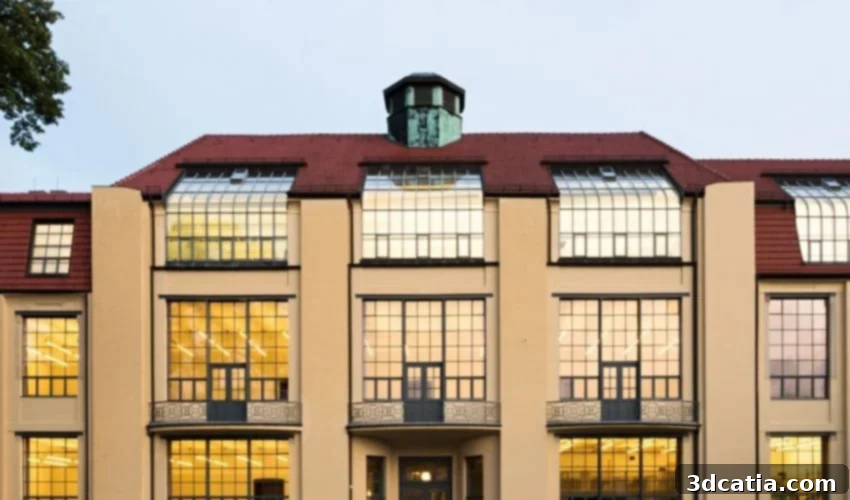
Bauhaus University Weimar: Pioneering 3D Printing for Interdisciplinary Innovation in Design, Architecture, and Materials Science
3D printing, or additive manufacturing, has rapidly transcended its industrial origins to become a transformative force in creative and artistic domains, including traditional crafts. At the esteemed Bauhaus University Weimar, a beacon of integrated art, design, architecture, and engineering, this cutting-edge technology is not merely a tool but a catalyst for profound innovation. The university’s rich legacy provides an unparalleled environment for exploring and advancing the vast potential of additive manufacturing. Students and researchers alike are leveraging 3D printing not only in practical design applications but also to develop groundbreaking new materials, sustainable construction methodologies, and ambitious interdisciplinary projects. This article delves into the dynamic engagement of Bauhaus University Weimar with 3D printing, featuring insights from professors and lecturers across diverse research areas. From philosophical debates on design to practical breakthroughs in construction and materials science, we offer an exclusive look into how this historic academic institution is embracing the future of manufacturing through 3D printing technologies.
The historical Bauhaus was founded during a period of immense social and political upheaval, driven by a vision to harness the transformative power of rapid industrialization for societal good. This inherent affinity for technology and a commitment to integrating artistic and technical innovation have always been central to the Bauhaus tradition. Today, at Bauhaus University Weimar, this foundational ethos continues to thrive, finding new expression in the digital age. This article offers a contemporary perspective on the pioneering work being undertaken at the university, where faculty members from the Faculties of Architecture and the Built Environment, as well as Art and Design, share their expertise. They illuminate how 3D printing is not just influencing but actively shaping their teaching methodologies, research agendas, and the very future of their respective disciplines. By examining these diverse perspectives, we gain a comprehensive understanding of how additive manufacturing is being integrated into both theoretical exploration and practical application within this unique academic setting.
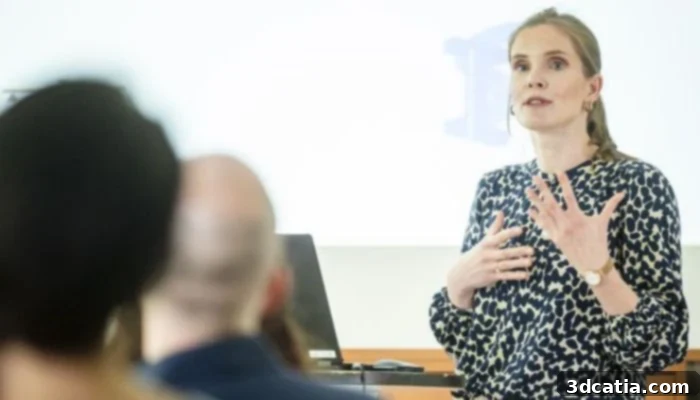
Junior Professor Dr.-Ing. Luise Göbel leads the ‘NanoMatFuture’ research group for the project StimuCrete, which is funded by the German Federal Ministry of Education and Research (BMBF) (Credit: Bauhaus University Weimar).
Materials Mechanics, Design Theory, and Digital Fabrication Research
Bauhaus University Weimar is globally renowned for its distinctive approach to design education, seamlessly blending aesthetics with functionality. However, the university’s influence extends far beyond design, with disciplines such as architecture, civil engineering, and materials science playing equally pivotal roles. Junior Professor Dr.-Ing. Luise Göbel, who leads the chair in Materials Mechanics, exemplifies this multidisciplinary spirit. Her research is primarily focused on sustainable and digital building practices, an area where 3D printing offers revolutionary potential. Having worked with additive manufacturing for nearly a decade, Dr. Göbel considers it a cornerstone of her scientific inquiry. She highlights its significant capacity for innovation within the construction industry and its profound scientific relevance in materials mechanics. Dr. Göbel describes the technology’s impact as having “enormous resonance in the scientific community,” underscoring its central role in her own research endeavors. She particularly values 3D printing’s ability to facilitate rapid demonstrations, produce custom components with intricate geometries, and accelerate the prototyping process. For instance, she explains, “With 3D printing, we can test geometries that we later want to implement using large-scale concrete printers. In that sense, its influence on work processes is truly substantial and transformative.” This allows for iterative design and testing cycles that were previously unimaginable, pushing the boundaries of what is possible in modern construction.
Complementing Dr. Göbel’s engineering perspective, Dr. Michael Braun represents a more artistic and theoretical discipline. As a product designer and distinguished design scholar, he has been an integral part of the Faculty of Art and Design in the Chair of Design Theory and Design Research since 2018. His view on the potential of 3D printing, while distinct, is deeply complementary, fostering a holistic understanding of the technology. Dr. Braun’s research delves into contemporary design cultures, exploring digital design processes and their impact on creative practice. In this realm, 3D printing plays a critical and multifaceted role. The technology has been a constant companion throughout his academic journey, dating back to the very beginning of his studies. From his unique vantage point, additive manufacturing possesses the profound ability to “raise new questions about the relationship between design, material, and technology,” thereby positioning it as a significant cultural, creative, and epistemological field of tension. This intellectual curiosity was evident in his master’s thesis, which focused on 3D printing as a means to explore how digital tools could dissolve the traditional separation between design conceptualization and physical execution. He further advanced this line of inquiry in his doctoral research, where he meticulously examined potential advancements in additive manufacturing and the innovative applications of robotic 3D printing, pushing the boundaries of digital fabrication and artistic expression.
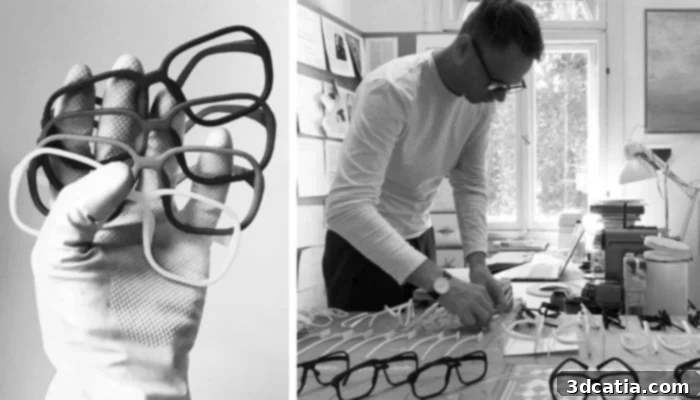
Parametric Glasses, a Master’s thesis by Dr. Michael Braun on the authorship of digital designs (Image: Michael Braun).
Innovative Projects: StimuCrete and Digital Craftsmanship
Beyond its utility for rapid prototyping and idea visualization, Professor Göbel is deeply involved with 3D printing through her groundbreaking project, StimuCrete. This ambitious initiative, generously funded by the Federal Ministry of Research, Technology, and Space, is dedicated to investigating the rheological behavior of concrete. The overarching goal of StimuCrete is to imbue concrete with intelligent properties, making it responsive and adaptable. While this concept may initially sound complex, it promises to usher in a new era of decisive progress in 3D concrete printing. In essence, the project aims to develop a concrete mixture that remains flexible and flowable during the precise printing process, yet solidifies almost instantaneously upon exiting the print head. This immediate hardening is crucial for structurally supporting subsequent layers of material, allowing for complex geometries and faster construction. Dr. Göbel succinctly articulates the project’s ambition: “We want to make it possible to switch this behavior on at the push of a button,” highlighting the control and precision they seek to achieve with StimuCrete, thereby revolutionizing the capabilities of large-scale additive construction.
Dr. Braun, from his design-centric perspective, views 3D printing as a powerful tool capable of fundamentally transforming traditional creative processes. Historically, manufacturing processes have been characterized by a strict separation of design and execution. Consider, for example, the conventional roles of an architect who designs a building and the construction company that later builds it. With the advent of additive manufacturing, Dr. Braun argues that these once distinct phases are no longer isolated. He posits: “Design is no longer something that is completed before fabrication, but something that continues to evolve during fabrication.” This continuous interplay, he explains, generates fascinating creative tensions and opens new avenues for artistic expression. The inherent mechanical precision offered by 3D printing raises compelling questions about how design processes adapt and change under digital conditions, and what becomes of traditional craftsmanship in this evolving landscape. These profound research questions were the initial impetus that drew Dr. Braun to 3D printing. What particularly captivates him is the concept of “digital craftsmanship,” a paradigm where the focus shifts away from an idealized notion of perfection. Instead, it critically embraces and engages with deviations, explores the intricate behavior of materials during the printing process, and celebrates emergent qualities. In short, Dr. Braun advocates for viewing the inherent imperfections and unexpected variations that occur during the printing process not as “errors” to be corrected, but rather as a rich and dynamic creative resource that can lead to unique and innovative outcomes.
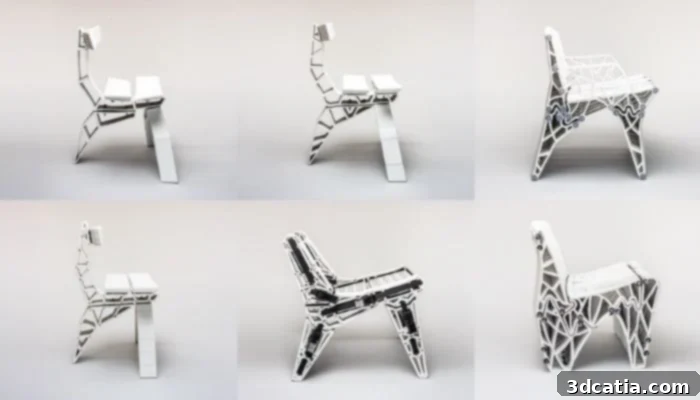
Doctoral research by Dr. Michael Braun on robotic 3D printing of porcelain and artisanal processes. In this work, he developed the concept of ‘Deviation-Driven Design.’ Shown here is a design created iteratively as part of the empirical portion of the study (Credit: Michael Braun).
Students as Mediators of Additive Technologies and Future Innovators
A shared observation among both Junior Professor Dr.-Ing. Luise Göbel and Dr. Michael Braun is the palpable enthusiasm their students display for the subject of additive manufacturing. Students at Bauhaus University Weimar do not merely perceive 3D printing as a technological novelty; rather, they embrace it as a powerful opportunity to critically re-evaluate and address pressing ecological, social, and design-related challenges. The comprehensive 3D printing modules offered at the university cover a broad spectrum of topics, including but not limited to, resource-efficient construction methods, the intricate dynamics of digital production cultures, and the exploration of novel forms of aesthetic practice. This forward-thinking curriculum ensures that students are not just learning how to use the technology, but how to think critically about its implications and applications across diverse fields.
In a significant development, the university is establishing its own dedicated DigitalPrintCreteLab this year. This state-of-the-art facility will empower students to conduct their own hands-on additive experiments under the expert guidance of faculty members. Dr. Göbel elaborates on the lab’s capabilities: “In addition to the printing device itself, this lab includes a variety of sensors, allowing both the printing process and the results to be examined and evaluated from multiple perspectives.” This comprehensive approach ensures a deep understanding of the entire additive manufacturing workflow, from material preparation to post-processing analysis. Furthermore, Bauhaus University Weimar will soon launch an innovative course designed to provide “practical knowledge not only on theoretical foundations but also on IT interfaces, materials science issues, and electrotechnical design.” This module is intentionally structured to be highly interdisciplinary, welcoming students from all faculties. It aims to inspire and engage individuals from varied academic backgrounds to explore and contribute to the rapidly evolving field of 3D printing, fostering a collaborative and cross-disciplinary learning environment.
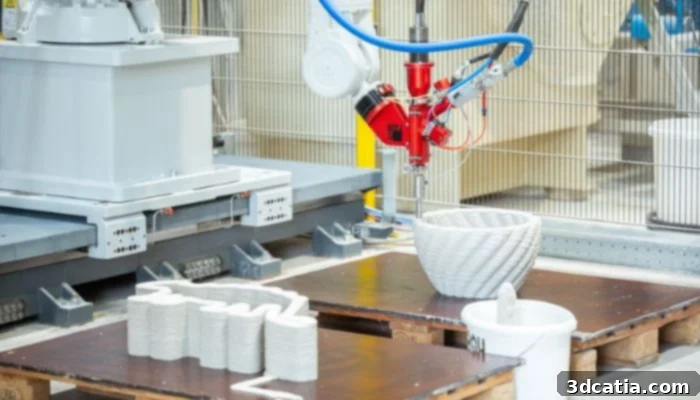
The goal of the StimuCrete project is to develop an intelligent concrete (Credit: Bauhaus University Weimar).
The university’s commitment to interdisciplinary education is further exemplified by its innovative course formats, Robotic Tectonics I and Robotic Tectonics II. These modules bring together students from architecture, civil engineering, and design, fostering a collaborative environment where they jointly experiment with robotically controlled 3D printing processes. The primary objective of Robotic Tectonics II, in particular, is to challenge students to design, print, and assemble non-standardized components using a diverse array of materials under robotic guidance. A central tenet of this module is the practical implementation of interdisciplinary design and construction processes, ensuring that theoretical knowledge translates into tangible outcomes. In this unique teaching format, co-led by Dr. Michael Braun alongside Prof. Dr. Jan Willmann, Prof. Dr. Lars Abrahamczyk, and Melad Haweyou, students are granted significant creative freedom in realizing their designs for these components, with many ultimately opting for advanced 3D printing techniques. As Dr. Braun insightfully explains, “3D printing is not only understood as a manufacturing technology but as a design medium that enables students to conduct material-based experiments.” This perspective encourages students to view the technology as a dynamic partner in their creative exploration, pushing the boundaries of material expression and form.
Across all the aforementioned courses and initiatives, students gain invaluable hands-on experience with state-of-the-art 3D printing technologies. Professor Göbel underscores the particular interest students show in 3D printing, recognizing that this technology will play an increasingly significant role in their future professional careers across various industries. She also highlights the crucial role students play as important multipliers, explaining that they are “able to carry ideas from research into practice.” This inherent capacity makes the opening of the new DigitalPrintCreteLab and the cultivation of student-driven ideas truly pioneering for the advancement of additive manufacturing. Dr. Braun notes the diverse attitudes students exhibit towards 3D printing, reflecting the multifaceted nature of the technology itself. He observes: “Some students initially see 3D printing as a ‘neutral’ tool for realizing complex geometries. Others use it as a form of expression, as a medium for design experimentation, or as a critical counterpart.” This spectrum of engagement demonstrates that additive manufacturing at Bauhaus University Weimar is far more than just a new technology; it is a powerful driver of interdisciplinary education, a fertile ground for innovative ideas, and a catalyst for diverse and critical research, preparing students to become leaders in a digitally fabricated future.
Beyond core modules, the university also offers accessible beginner courses in 3D printing, ensuring a broad entry point for all interested students. For those seeking to deepen their expertise, advanced courses are available in specialized areas such as CAD modeling, parametric design, and advanced 3D printing techniques. Niklas Hamann, a distinguished doctoral candidate at Bauhaus University Weimar, plays a pivotal role in supervising these courses. His personal research focuses on customized 3D printing solutions for orthotics, exploring their profound potential impact on design and patient care. Hamann’s innovative work has garnered significant recognition, including being honored in the prestigious 3D Pioneers Challenge 2017, where his groundbreaking RIG3D project secured a win in the highly competitive MedTech category. This highlights the university’s commitment to fostering impactful research that addresses real-world needs through advanced additive manufacturing.
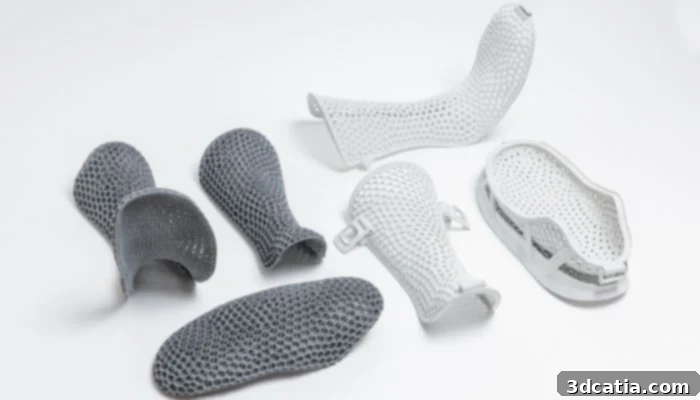
Custom orthoses from Niklas Hamann’s doctoral research (Credit: Niklas Hamann).
One Technology, Different Perspectives: The Future of Fabrication at Bauhaus
At Bauhaus University Weimar, 3D printing transcends its definition as merely a technical tool. It embodies a vibrant field for experimentation, an invaluable medium for teaching, and a captivating design challenge that continuously inspires and pushes boundaries. Whether employed in the meticulous development of innovative concrete recipes aimed at revolutionizing sustainable construction or utilized in the critical reflection on complex algorithmic design processes, the fundamental understanding of fabrication at Bauhaus University Weimar is profoundly shaped by 3D printing. In turn, the technology itself is continuously questioned, reinterpreted, and redefined by the university’s dedicated researchers and ambitious students. True to the timeless ethos of the historical Bauhaus, which ingeniously united art, craft, and industry, today’s designers, artists, civil engineers, architects, and other scholars at Weimar collaboratively strive to explore fundamental questions about design processes, the evolution of production cultures, and the profound responsibilities inherent in creative work. This synergistic approach ensures that Bauhaus University Weimar remains at the forefront of additive manufacturing, seamlessly blending its rich historical legacy with a forward-looking vision for the future of creative and technical innovation.
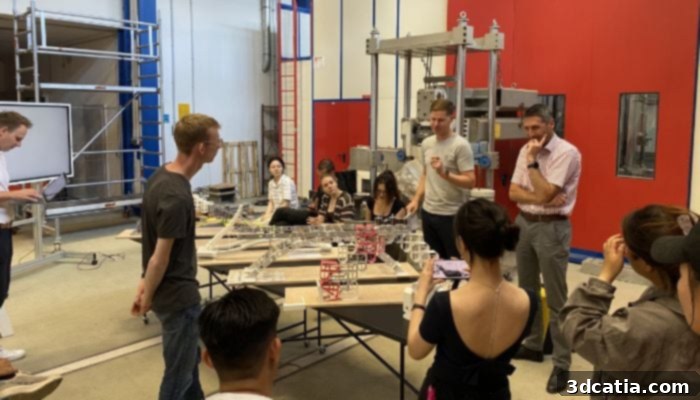
The Robotic Tectonics II module at the Summaery 2025 (Credit: Bauhaus University Weimar).
We extend our sincere gratitude to Prof. Dr. Göbel, Dr. Braun, and Mr. Hamann for their invaluable contributions, which made this illuminating article possible. For those interested in delving deeper into the pioneering projects and extensive research of our esteemed interviewees, further information can be accessed by clicking HERE for Prof. Dr. Luise Göbel, HERE for Dr. Michael Braun, and HERE for Niklas Hamann.
We invite you to share your thoughts on the innovative approaches showcased at Bauhaus University Weimar! Please let us know what you think in a comment below, or join the conversation on our LinkedIn or Facebook pages. Additionally, don’t miss out on the latest 3D printing news and developments—sign up for our free weekly Newsletter to receive updates directly in your inbox. You can also explore our comprehensive video content on our YouTube channel.
Cover image: Bauhaus University Weimar