
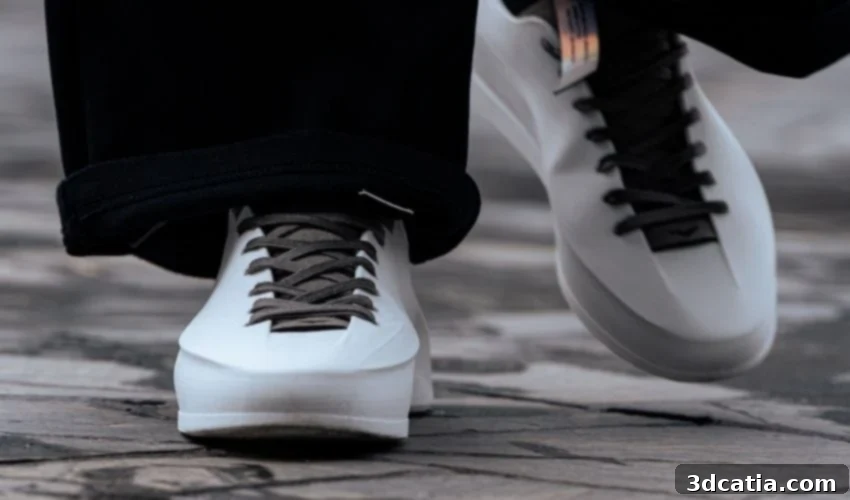
Servati: Pioneering Sustainable 3D-Printed Footwear in Fashion
In recent years, 3D printing has profoundly transformed numerous industries, and its impact on the footwear sector has been particularly revolutionary. This advanced manufacturing technology empowers designers to push the boundaries of creativity, enabling the creation of intricate, unique artistic pieces without traditional aesthetic or production limitations. Among the innovative companies leading this charge is Servati, a dynamic Italian startup that is not only embracing technological innovation but also championing sustainability within the fashion industry. Servati has made a significant mark by developing fully recyclable footwear collections, utilizing the power of additive manufacturing to redefine both style and environmental responsibility.
The brand recently garnered widespread attention in the global fashion community, presenting its groundbreaking collections at the prestigious Palazzo Giureconsulti during Milan Fashion Week 2025. This pivotal event underscored Servati’s commitment to merging cutting-edge design with eco-conscious practices, positioning them as a key innovator in sustainable luxury. To delve deeper into Servati’s journey, from its foundational principles to its most ambitious projects, 3Dnatives sat down with Matteo Di Paola, CEO and co-founder. In this exclusive interview, Di Paola shares insights into the brand’s inception, its unique manufacturing approach, and its vision for the future of footwear.
3DN: Hello Matteo! Can you introduce yourself and tell us about your initial encounter with 3D printing?

Matteo Di Paola (left) and Marco Primiceri (right)
Hello! I’m Matteo Di Paola, the CEO and co-founder of Servati. Our company is an innovative startup renowned for its eponymous brand, which specializes in producing designer sneakers that are not only 3D-printed but also 100% recyclable. Our venture truly began with the discovery of 3D printing, a technology we immediately recognized as a powerful enabler. It offered us a unique pathway to overcome significant entry barriers that typically exist within the highly competitive footwear industry.
Traditional footwear manufacturing often involves substantial upfront investment in tooling, molds, and minimum order quantities, which can be prohibitive for new brands. By leveraging 3D printing, we were able to effectively eliminate the high setup costs associated with developing new models. This technological advantage allowed us to fully unleash our creative potential, moving rapidly from conceptual design to the creation of initial prototypes. We could then rigorously test these prototypes in the market, gather feedback, and iterate on our designs with unprecedented speed and efficiency. This agile approach proved crucial in establishing Servati and bringing our vision for innovative, sustainable footwear to life.
3DN: When was Servati founded, and what drives its mission?
Servati was founded on the convergence of a deep-seated passion for technology, a commitment to innovation, and a genuine love for the dynamic world of sneakers. My co-founder and designer, Marco Primiceri, and I shared these core passions, and it was through this synergy that we decided to create a truly unique brand. Our overarching mission is ambitious yet clear: to revolutionize the footwear industry. We aim to achieve this by introducing designs that are not only cutting-edge and innovative but also inherently sustainable. We firmly believe that exceptional style and profound environmental responsibility are not mutually exclusive; rather, they can, and should, go hand in hand.
From day one, Servati has been dedicated to challenging conventional manufacturing processes that often contribute to significant waste and environmental degradation. Our mission extends beyond simply making shoes; it’s about crafting a new paradigm for fashion that prioritizes both aesthetic appeal and ecological integrity. We strive to inspire consumers and other industry players to rethink their approach to production and consumption, demonstrating that high-quality, fashionable products can indeed be produced with a minimal environmental footprint. By integrating advanced 3D printing techniques with a circular economy model, Servati is committed to paving the way for a more sustainable future in footwear, proving that innovation can serve both style and planet.
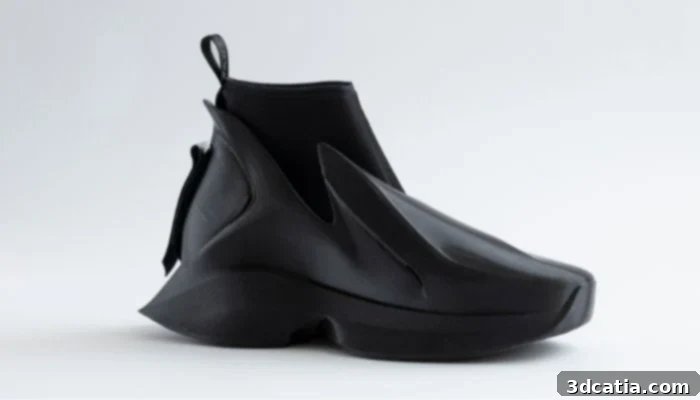
Servati’s INIZIO DARK FOAM Model
3DN: How exactly do you integrate 3D printing into your core business operations?
At Servati, 3D printing isn’t just a part of our business; it’s the very foundation of our production process. We have established an extensive in-house manufacturing capability, operating a fleet of over 30 FDM (Fused Deposition Modeling) printers. This significant investment allows us to maintain complete control over quality, design integrity, and production timelines, ensuring that every pair of Servati sneakers meets our rigorous standards.
The FDM technology is particularly crucial for us because it aligns perfectly with our sustainability goals. Unlike traditional shoe manufacturing, which often relies on numerous disparate components glued or stitched together, our approach simplifies the structure dramatically. After the intricate components of the shoe’s sole and structural elements are precisely printed, they are then carefully assembled with a textile upper. A key differentiator in our process is the complete absence of adhesives or chemical solvents. This method not only simplifies the assembly but also adheres to a fundamental “disassembly principle.” This means that at the end of its life cycle, each Servati shoe can be easily taken apart into its constituent materials, ensuring that the entire product is fully and genuinely recyclable. This innovative assembly technique is central to our commitment to a circular economy, minimizing waste and maximizing resource utility in the footwear industry.
3DN: Can you elaborate on the creative journey of Servati shoes, from initial concept to the final product?
The creation of a Servati shoe is a meticulously planned and executed process that seamlessly blends digital innovation with advanced manufacturing. It all begins in the digital realm with sophisticated 3D modeling software. Our designers, including co-founder Marco Primiceri, leverage these powerful tools to translate their artistic visions into precise digital blueprints. This initial design phase is crucial as it allows for unparalleled freedom in form, texture, and structural complexity, pushing beyond the limitations of conventional manufacturing methods.
Once a design is finalized digitally, the model is then meticulously scaled across various shoe sizes, ensuring a perfect fit for all customers. This scaled model is then prepared for printing, a critical step involving slicing the 3D model into thousands of thin layers and generating the precise toolpaths for our FDM printers. Our extensive fleet of over 30 FDM printers then begins the additive manufacturing process, layer by layer, bringing the digital design into a tangible form. During this printing stage, we employ state-of-the-art LiDAR technology. This continuous monitoring system actively tracks print quality in real-time, allowing us to detect and correct any potential errors or deviations immediately. This proactive approach ensures exceptional precision, minimizes material waste, and guarantees a consistent, high-quality output for every component.
After the printing is complete, each component undergoes a post-processing stage. This step is essential for refining details, ensuring smooth finishes, and preparing the parts for assembly. This might involve light sanding or other finishing touches to meet our aesthetic and functional standards. Finally, the precisely printed components – typically the sole, midsole, and structural elements – are assembled with a pre-designed textile upper. As mentioned, this assembly is achieved without the use of any adhesives or chemical bonding agents. This non-adhesive, mechanical assembly not only supports our recycling initiatives but also ensures the durability and integrity of the final product. The result is a high-performance, aesthetically pleasing, and fully recyclable sneaker that embodies Servati’s commitment to innovation and sustainability.
3DN: What specific 3D printing technologies and materials do you utilize in your production?
Our primary manufacturing technology is FDM (Fused Deposition Modeling). This choice is deliberately made and is deeply rooted in our commitment to maintaining a robust and genuinely sustainable recycling chain. FDM technology allows us to work with thermoplastic materials that can be melted and reshaped multiple times without significant degradation, which is fundamental to our circular economy model. The ability to control the material properties and printing parameters precisely also enables us to create durable yet lightweight components essential for high-performance footwear.
Our diverse printer farm comprises machines from several well-known and reliable brands in the 3D printing industry, including Artillery, Creality, and Anycubic. This multi-brand strategy provides us with significant advantages in terms of both efficiency and flexibility in production. Having a range of printers allows us to scale our output quickly, handle different component sizes simultaneously, and minimize downtime. Each printer is carefully maintained and calibrated to ensure consistent quality across our entire production line. While we do not disclose the exact proprietary material compositions, we focus on using thermoplastic filaments specifically engineered for durability, comfort, and, most importantly, their ability to be 100% recycled back into new products through our innovative Boomerang Process. This rigorous material selection and technological integration are key to delivering our promise of sustainable, high-quality footwear.
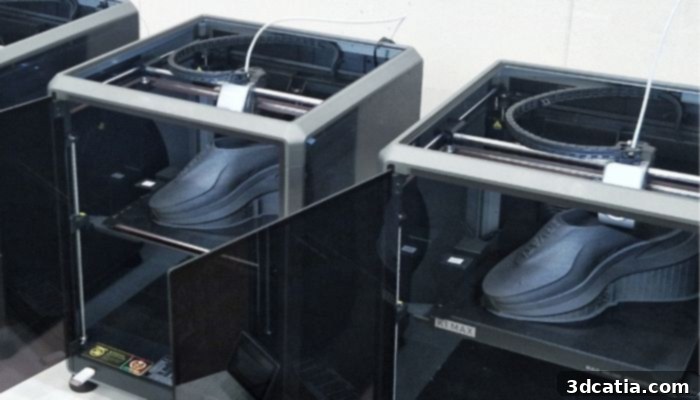
Servati’s 3D Printer Farm
3DN: Who are Servati’s primary customers, and what are the market challenges you face?
Servati primarily targets a sophisticated B2C customer base, reaching them directly through our dedicated e-commerce platform. Our ideal customers are design enthusiasts who are deeply passionate about innovation, appreciate unique aesthetics, and prioritize sustainability in their purchasing decisions. These individuals are typically early adopters, trendsetters, and environmentally conscious consumers who seek products that align with their values of responsible consumption and cutting-edge style.
Beyond our direct consumer sales, we actively cultivate collaborations with partners across the broader design and fashion sectors. We frequently participate in major industry events and engage with institutions and companies that are keen on technological experimentation and exploring the frontiers of fashion innovation. These collaborations often lead to exciting new projects and help us expand our brand presence within the professional sphere.
Furthermore, other businesses turn to us for specialized consulting services or 3D printing support. We leverage our expertise and advanced manufacturing capabilities to produce high-quality prototypes on behalf of third parties, particularly within the fashion industry. For these businesses, our 3D printing solutions can significantly reduce the time and cost typically associated with developing new products, offering a rapid and efficient pathway from concept to tangible prototype.
One of the main challenges we encounter in our industry is the crucial need to educate the market about more innovative and sustainable design concepts. Traditional production models and established consumer habits are deeply ingrained, and convincing both industry veterans and consumers to embrace new, often radically different, approaches requires persistent effort. Breaking down barriers related to traditional manufacturing mindsets and shifting consumer perceptions about what constitutes quality, design, and sustainability in footwear is an ongoing, yet rewarding, endeavor for Servati.
3DN: Which Servati events or projects would you highlight as particularly significant?
We’ve been incredibly fortunate to achieve several significant milestones since Servati’s inception. We’ve actively participated in numerous startup competitions, which have not only provided valuable exposure but also affirmed the viability and potential of our innovative business model. A standout moment was the recognition we received from the Ministry of Made in Italy. They honored us as one of the most interesting innovations of recent years, an incredible validation of our efforts. This led to us exhibiting alongside iconic Italian companies such as Brembo and Ferrari, placing Servati in a truly esteemed category and highlighting our contribution to Italian ingenuity and craftsmanship.
More recently, and a truly pivotal event for us, was being selected by Sara Sozzani Maino, Head of Special Projects at Vogue Italia, and the National Chamber of Italian Fashion to take part in Milan Fashion Week 2025. This was an extraordinary opportunity to showcase our collections on a global stage. During the event, we not only presented our latest designs but also offered attendees a unique glimpse into our revolutionary production process directly on site. This allowed fashion industry leaders, buyers, and consumers to witness firsthand how 3D printing enables our commitment to sustainability and innovation, reinforcing Servati’s position at the forefront of the future of fashion.
3DN: Can you tell us more about the Servati Design Challenge?
The Servati Design Challenge is an exciting annual initiative we created with a clear purpose: to make the world of fashion, particularly footwear design, more accessible, democratic, and inclusive. We recognize that many talented young designers face significant hurdles in bringing their creative visions to fruition due to high production costs and limited access to manufacturing resources. Our challenge aims to dismantle these barriers.
Through this program, we offer aspiring designers an unparalleled opportunity to transform their innovative sneaker ideas into tangible products. Participants gain access to our advanced 3D printing platform and leverage our established network of suppliers and technical expertise. This means they can design without the usual constraints, knowing that the technology is there to support their most ambitious concepts. The stakes are high: the winner of the Servati Design Challenge receives the incredible chance to see their project professionally produced and sold through our official channels. This is more than just a prize; it’s an integration into the Servati brand, making the winning designer an integral part of our growth journey and providing them with significant industry exposure and a tangible stepping stone in their career. It’s our way of fostering new talent and continually infusing fresh, diverse perspectives into our brand and the wider footwear industry.
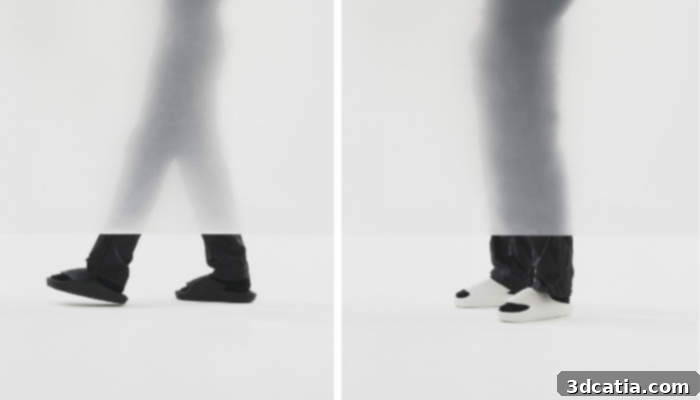
Servati’s SLIDES FUN in Both Black and White Versions
3DN: What central role does sustainability play within Servati’s philosophy and operations?
Sustainability is not merely a feature or an afterthought for Servati; it is a core pillar and an inherent value that guides every aspect of our brand, from design and production to consumer interaction. Our unwavering commitment to environmental responsibility is encapsulated in our unique patent, which ensures that each and every Servati sneaker is designed to be 100% recyclable and easily disassembled at the end of its useful life. This design philosophy dramatically contrasts with the linear “take-make-dispose” model prevalent in much of the fashion industry.
To further cement our dedication to a circular economy, we have implemented an innovative program called the Boomerang Process. This initiative actively encourages our customers to return their used Servati shoes once they are ready for a new pair. In exchange for returning their worn sneakers, customers receive a voucher that can be applied towards the purchase of new Servati footwear. This incentivized return system closes the loop, ensuring that valuable materials do not end up in landfills. The discarded shoes are then meticulously processed, with their materials recovered and recycled to create new models. This continuous cycle of production, consumption, and recycling significantly reduces our environmental impact, minimizes waste generation, and conserves precious natural resources. The Boomerang Process is a testament to our belief that sustainable fashion can be both aspirational and practical, offering a genuine solution for eco-conscious consumers and setting a new standard for responsible manufacturing in the footwear industry.
3DN: How do you envision the role of 3D printing evolving in the world of design and fashion?
3D printing is poised to play an increasingly crucial and transformative role in the world of design and fashion, fundamentally reshaping how products are conceived, developed, and brought to market. Its impact is multi-faceted, offering advantages that address some of the industry’s longest-standing challenges.
Firstly, it helps significantly reduce initial production costs. Traditional manufacturing often requires expensive tooling and molds, especially for complex designs. 3D printing eliminates these upfront costs, allowing designers and brands to experiment more freely and bring innovative products to life without prohibitive financial barriers. Secondly, and critically, it enables rapid prototyping. The ability to quickly create physical iterations of designs means that concepts can be tested, refined, and perfected in a fraction of the time compared to conventional methods. This agility allows for faster market testing with lower associated risks, as designers can gauge consumer interest and make adjustments before committing to large-scale production.
Furthermore, 3D printing provides unparalleled flexibility in inventory management. With the capability for on-demand production, companies can manufacture items only as they are ordered, thereby avoiding costly overproduction and excess inventory. This lean manufacturing approach minimizes waste, reduces storage needs, and aligns perfectly with sustainable practices. It also opens up possibilities for mass customization, allowing consumers to personalize products to an unprecedented degree. In fashion, this could mean bespoke shoes tailored to individual foot shapes or unique design elements chosen by the customer. Ultimately, 3D printing fosters innovation, reduces environmental impact, and empowers designers with tools to create truly unique, functional, and sustainable pieces, paving the way for a more responsive, efficient, and personalized fashion landscape.
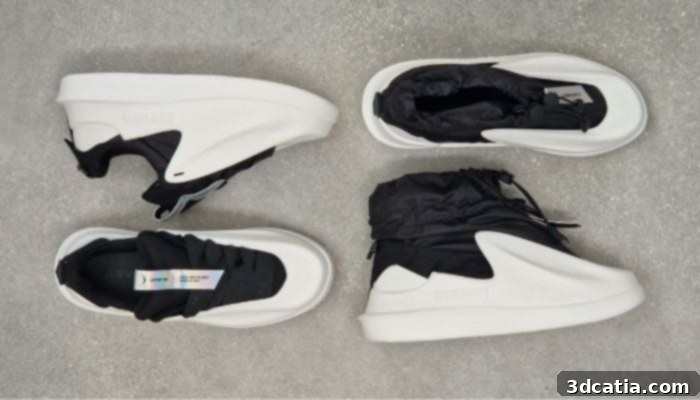
Servati’s HYPER BOOT
3DN: Do you have any final thoughts or advice for our readers?
My final message to your readers is to wholeheartedly believe in the transformative power of 3D printing. It is not just a passing trend; it is a fundamental technology that is actively revolutionizing industries across the board, most notably in the dynamic worlds of design and fashion. I strongly encourage everyone, especially aspiring designers, entrepreneurs, and those passionate about innovation, to invest their time and energy in learning about this incredible technology. Understanding 3D printing, its capabilities, and its potential applications is key to becoming an active participant in shaping the future and truly being a part of this exciting change.
For those who are curious to learn more about Servati, our sustainable practices, or simply wish to engage in a discussion about the future of additive manufacturing in fashion, we are always open and happy to connect. We thrive on sharing ideas and visions about this fascinating and rapidly evolving sector. If you’d like to explore our collections and discover more about what we do, please click HERE to visit our website. We believe that through collaboration and shared knowledge, we can collectively push the boundaries of what’s possible and build a more sustainable and innovative future for design and manufacturing.
What do you think of Servati’s approach to 3D printed footwear? Let us know your thoughts in a comment below or connect with us on our LinkedIn or Facebook pages! Plus, don’t forget to sign up for our free weekly Newsletter to get the latest 3D printing news straight to your inbox. You can also find all our videos on our YouTube channel.
All Photo Credits: Servati