
SAMOROST Project Pioneers Sustainable Mycelium Furniture with Advanced 3D Printing Technology
In a groundbreaking stride towards ecological innovation, SAMOROST, a visionary initiative spearheaded by the Czech 3D printed construction firm Buřinka, recently unveiled an extraordinary collection of sustainable furniture. Presented at the prestigious international Designblok festival, this pioneering reveal introduces furniture meticulously crafted from mycelium, the intricate root structure of fungi. This project stands at the vanguard of eco-conscious design, seamlessly integrating the transformative power of mycelium with additive manufacturing and an unwavering commitment to environmental stewardship. While mycelium has previously been explored in conjunction with 3D printing for various applications, SAMOROST distinguishes itself as the first to utilize this remarkable biological material as the primary structural component in furniture, fundamentally challenging conventional notions of sustainable product creation.
The creation of SAMOROST’s furniture hinges on a sophisticated process involving specially formulated mycelium-based substrates. Within these carefully prepared environments, the mycelium’s filamentous hyphae embark on a remarkable journey of growth. As they feed on cellulose – a ubiquitous organic compound found in plant cell walls – these hyphae proliferate, weaving an incredibly dense, interconnected network. Mycelium demonstrates an unparalleled adaptability, thriving on a diverse array of materials that are often discarded as waste. These include common items such as sawdust, paper, cardboard, and other biomass that might otherwise be deemed non-recyclable or past their usable life. By infusing these waste materials with mycelium, a unique and robust new substrate is forged: mycocomposite. This innovative mycocomposite serves as the fundamental building block and the critical component in the manufacturing of the SAMOROST furniture collection, embodying a truly circular economy approach.
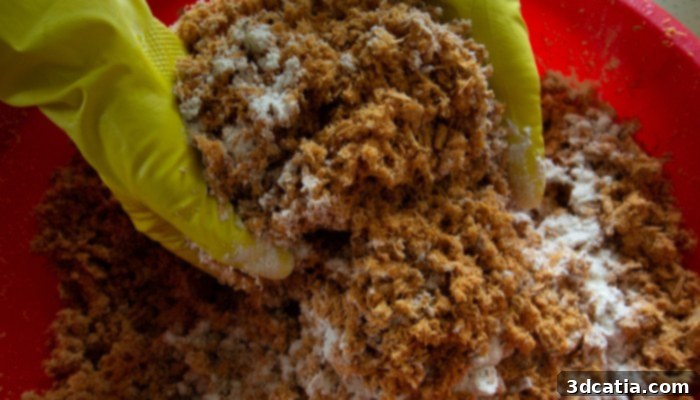
Preparation of mycelium substrate, a crucial initial step in crafting sustainable furniture.
The Innovative Manufacturing Process: From Mycelium to Furniture
Once the unique mycocomposite substrate has reached its initial stage of formation, it undergoes a crucial transformation. The substrate is carefully crushed and then meticulously placed into a reusable 3D printed mold. These molds, themselves a testament to sustainable practices, are crafted from recycled plastic, further reinforcing the project’s eco-friendly ethos. The act of crushing and reforming the substrate is vital; it allows the mycelium’s resilient hyphae to re-link and continue their growth within the confined structure of the mold. This re-linking process results in an even stronger, more cohesive mycocomposite, perfectly conforming to the desired shape of the furniture piece.
Following this intricate growth phase, the substrate is allowed to dry completely. This drying process is essential for two primary reasons: first, it halts the further biological activity of the mycelium, effectively killing it. This ensures the material’s stability and prevents any unwanted continued growth or decomposition in the finished product. Second, drying imparts significant structural integrity and durability to the mycocomposite. Once this meticulous process is complete, the now inert and robust mycocomposite substrate is ready for the final stages of processing and assembly, culminating in the creation of durable, aesthetically pleasing, and highly sustainable furniture.
A Designer’s Vision: Embracing Organic Forms and Zero Waste
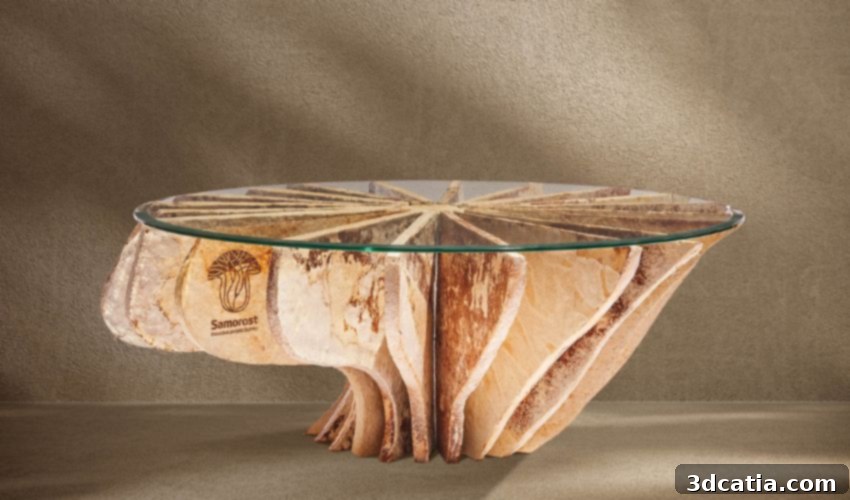
The design philosophy behind SAMOROST is as innovative as its material. Tomaz Kloza, a designer from MYMO and a key partner in the project, articulated the core principle: “The table was created in such a way that no waste was created during production. For the ribs that the table is made of, we worked with rectangular reusable forms that were filled with organic substrate with mycelium. We achieved a specific curvature of the ribs by splitting the substrate in molds with an organic curve into two parts. The individual curves gradually evolve and the resulting table thus seamlessly blends between the individual ribs into a continuous organic shape.” This statement underscores a profound commitment to circular design and biomimicry. The ability to create complex, flowing organic shapes without generating waste highlights the inherent advantages of mycelium and additive manufacturing. The 3D printed molds enable precise control over form, allowing designers to mimic natural structures, producing furniture that feels both contemporary and deeply connected to nature.
This “no waste” approach is paramount in an era grappling with excessive consumption and environmental degradation. By utilizing reusable molds and a bio-based material that can incorporate various waste streams, SAMOROST offers a compelling model for future manufacturing. The design process, focused on creating seamless, naturally evolving forms, not only enhances the aesthetic appeal of the furniture but also speaks to the potential for truly sustainable product cycles. The furniture pieces are not merely functional objects; they are sculptural embodiments of a new design paradigm, where material science, environmental consciousness, and artistic expression converge to redefine the boundaries of what is possible.
Exceptional Properties of Mycocomposite: A New Frontier in Materials Science
Beyond its impressive eco-credentials, this innovative building material distinguishes itself through a suite of exceptional physical attributes that often surpass those offered by traditional furniture materials. The mycocomposite, for instance, boasts a remarkable strength-to-weight ratio. It possesses a weight akin to polystyrene, making it incredibly lightweight and easy to transport and maneuver, yet it drastically outperforms polystyrene in terms of structural strength and load-bearing capacity. This combination of lightness and robustness is a game-changer for logistics and practical use.
Furthermore, the material exhibits outstanding thermal insulation capabilities, making it an interesting candidate for broader architectural and interior design applications beyond furniture. This natural insulating property can contribute to energy efficiency in living spaces. Crucially for safety, mycocomposite also retains inherent flame resistance, offering a significant advantage over many synthetic or processed wood materials. Its hydrophobic properties mean it naturally repels water, enhancing its durability and resistance to moisture damage, a common issue with traditional wood-based furniture.
Perhaps its most significant leap towards environmental responsibility lies in its end-of-life cycle. The mycocomposite is entirely biodegradable, meaning that once its useful life is over, it can naturally decompose and return to the earth without leaving harmful residues. This characteristic firmly positions it within the circular economy framework, reducing landfill waste and minimizing environmental impact. Moreover, the material is inherently environmentally friendly throughout its lifecycle, from sourcing waste inputs to its non-toxic production. Complementing these benefits, the mycocomposite has garnered complete health safety approval from its designers, assuring consumers that the furniture is safe for indoor use, free from volatile organic compounds (VOCs) and other harmful chemicals often found in conventional furniture, contributing to healthier indoor air quality.
Mycelium Furniture in the Spotlight: Challenging Traditional Aesthetics
At the Designblok exhibit, one of the main attractions was a captivating mycelium-based coffee table, specifically designed to mirror the organic appearance and elegant form of a chanterelle mushroom. This striking piece not only showcased the inherent visual appeal and unique texture achievable with mycelium but also underscored the furniture’s impressive functionality and durability. It effortlessly withstood a load comparable to, or even exceeding, that of a conventional coffee table, proving its practical viability. The aesthetic integration of nature’s forms into contemporary design creates a refreshing and calming presence in any space, inviting contemplation and interaction.
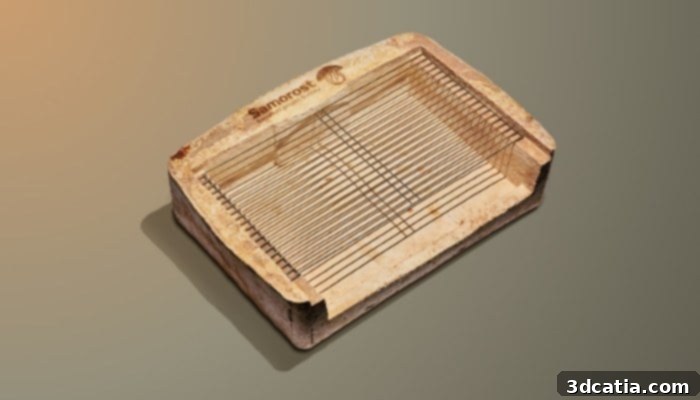
The exhibit extended beyond just tables, featuring a diverse array of pieces that pushed the boundaries of sustainable design. Other showcased items included elegantly designed luminaires that diffused light through their organic forms, acoustic panels crafted to improve soundscapes while adding visual interest, versatile shelves, robust stools, and even an innovative grill. Each piece was uniquely conceived to subtly resemble a mushroom in some way, celebrating the material’s origin and the beauty of fungal structures. This deliberate design choice not only pays homage to the mycelium itself but also highlights the potential for biomimicry to inspire a new generation of sustainable and aesthetically rich furniture and home goods.
Buřinka’s Vision: Cultivating a Sustainable Future from the Czech Republic
Buřinka, the driving force and primary innovator behind the SAMOROST project, is deeply committed to envisioning and paving a path towards a more sustainable way of living—one that is in profound alignment with the natural world. Building upon their prior groundbreaking ventures into 3D printing with concrete, Buřinka has clearly recognized and embraced the enormous potential of mycelium as a cornerstone for future sustainable living solutions. Their strategic decision to collaborate with MYMO’s esteemed mycelium research experts proved pivotal; this synergy of expertise and vision was instrumental in the birth of SAMOROST. The overarching ambition of this ambitious project is not merely to create innovative products but to strategically position the Czech Republic among the global leaders in sustainable construction and design, demonstrating that cutting-edge technology and environmental responsibility can go hand in hand.
The SAMOROST project represents more than just a collection of furniture; it is a powerful statement about the future of materials, manufacturing, and environmental responsibility. By harnessing the natural power of mycelium and integrating it with the precision of 3D printing, Buřinka and MYMO are not just designing products, but shaping a more sustainable future. Their work provides a tangible example of how waste can be transformed into valuable resources, how design can be intrinsically linked with ecological principles, and how innovative partnerships can drive significant progress in the quest for a greener planet. To learn more about the inspiring SAMOROST project and its contributions to bio-based design, you can click here to visit their dedicated innovation platform.
What are your thoughts on the transformative use of mycelium within 3D printing to shape not just furniture, but an entirely new paradigm of sustainable design? Let us know in a comment below or join the conversation on our LinkedIn, Facebook, and Twitter pages! Don’t forget to sign up for our free weekly newsletter here, to receive the latest 3D printing news straight to your inbox! You can also find all our compelling videos and interviews on our YouTube channel.
*All Photo Credits: Stavebni sporitelna Ceske sporitelny (Burinka)