

PepsiCo’s 3D Printing Revolution: Accelerating Bottle Design and Manufacturing with Additive Manufacturing
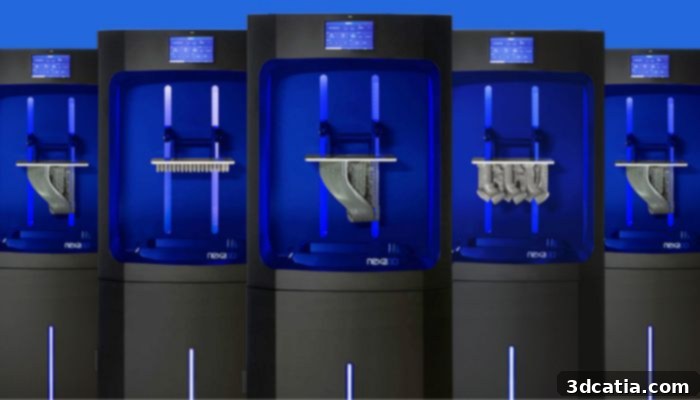
Pepsi. It’s a name synonymous with refreshing taste, an iconic American beverage that has captured the hearts (and taste buds) of billions across the globe. From corner stores to vast supermarkets, plastic bottles of Pepsi products are a ubiquitous sight, found in over 200 countries and enjoyed by more than a billion people daily. With net sales exceeding $79 billion in 2021, PepsiCo, the U.S.-based beverage and snack giant, is a powerhouse in the consumer goods industry. However, even industry leaders face challenges, especially in today’s rapidly evolving market where consumer demands and expectations for new products and packaging designs are constantly shifting. The relentless pressure for faster time-to-market and increased innovation has driven PepsiCo to explore cutting-edge solutions, leading them to a transformative partnership with Nexa3D partner Dynamism. This collaboration aimed to revolutionize the production of their bottles by embracing additive manufacturing, more commonly known as 3D printing, specifically utilizing Nexa3D’s NXE 400 3D printer and the advanced xPEEK147 material, ideal for demanding blow molding applications.
The consumer goods sector is characterized by intense competition and an insatiable appetite for novelty. Brands like PepsiCo must continuously innovate, not just with their product formulations but also with their packaging. A bottle’s design plays a crucial role in brand identity, consumer appeal, and functionality. Traditionally, the development of new bottle designs and their corresponding molds has been a painstakingly slow and expensive process. Manufacturing prototypes using conventional methods, such as CNC machining for mold inserts or traditional tooling, could take up to six weeks for a single iteration. This protracted timeline significantly hindered PepsiCo’s ability to respond swiftly to market trends, test numerous design variations, and ultimately, bring new products to consumers at the speed demanded by modern commerce. Recognizing these limitations and the costly problems associated with protracted development cycles, PepsiCo, in alliance with Dynamism, embarked on a journey to integrate additive manufacturing into its R&D and production workflows, adopting a sophisticated “hybrid approach” that has since redefined their packaging innovation strategy.
Why PepsiCo is Embracing Additive Manufacturing for Packaging Innovation
The decision to pivot towards additive manufacturing was driven by several compelling strategic objectives: reducing costs, accelerating product development, and enhancing design flexibility. By integrating Nexa3D’s state-of-the-art NXE400 3D printer into their operations, PepsiCo has unlocked significant performance improvements across multiple indicators. This powerful industrial-grade 3D printer, known for its exceptional speed and precision, has allowed PepsiCo to dramatically shorten its prototype development time. What once took up to six weeks can now be achieved in a mere 48 hours. This accelerated turnaround time is not just a marginal improvement; it represents a paradigm shift, enabling PepsiCo’s global packaging R&D team to validate designs, perform advanced system analysis, and iterate on concepts at an unprecedented pace. The ability to rapidly produce high-quality, functional prototypes means that designers and engineers can test more ideas, fail faster (and cheaper), and ultimately converge on optimal designs far more efficiently.
Beyond speed, the financial benefits of additive manufacturing are equally impactful. The cost associated with producing a tool set for blow molding applications has seen an astonishing reduction – plummeting from approximately $10,000 using traditional methods to a mere $350 with 3D printing. This 96% cost reduction per tool set dramatically lowers the barrier to entry for design experimentation and allows for the production of specialized tools for niche product runs without prohibitive upfront investments. Furthermore, the xPEEK147 material utilized with the NXE 400 printer offers superior mechanical properties, including high heat resistance, chemical inertness, and exceptional durability, which are critical for the demanding environment of blow molding. This robust material choice not only ensures the integrity of the 3D-printed tools but also contributes to an increased product life cycle for the molds used in bottle manufacturing, leading to less frequent replacements and further operational savings.
Max Rodriguez, Senior Manager of Global Packaging R&D, Advanced Engineering, and Design at PepsiCo, highlighted the strategic importance of this shift. He anticipates a significant growth of approximately 30% for the company, attributing it to the hybrid model patented in 2020. This innovative approach integrates a universal metal mold shell, compatible with most commercial blow molding machines, with custom 3D-printed inserts. While acknowledging that “Time and cost are obviously important,” Rodriguez emphasizes a deeper, more profound benefit: “But more important is to have the ability to have the flexibility to run through a number of different design iterations at a record pace so that we can evaluate performance in all of the downstream activities. That really is what helps us to accelerate.” This flexibility is paramount in a market where consumer preferences can pivot quickly. Additive manufacturing empowers PepsiCo to rapidly test various geometries, ergonomic features, and aesthetic designs, ensuring that their packaging not only looks appealing but also performs optimally throughout the product’s lifecycle – from production line efficiency to shelf appeal and consumer interaction.
The implementation of additive manufacturing by PepsiCo is a testament to the technology’s maturity and its ability to deliver tangible business value in high-volume industries. The collaboration between PepsiCo and Dynamism, leveraging Nexa3D’s advanced resin 3D printing technology, exemplifies how forward-thinking companies are disrupting traditional manufacturing paradigms. This innovative approach allows PepsiCo to not only save substantial costs and accelerate product launches but also to foster a culture of continuous innovation. Engineers are no longer constrained by the limitations of conventional tooling, freeing them to explore more radical and optimized designs that might have been too expensive or time-consuming to prototype previously. This agility translates directly into a competitive advantage, enabling PepsiCo to stay ahead of market trends and meet the ever-evolving demands of its global customer base. The ability to rapidly iterate and refine designs means that every aspect of bottle performance – from material usage and structural integrity to pouring characteristics and shelf presence – can be meticulously optimized. If you’d like to learn more about additive manufacturing in PepsiCo’s bottle manufacturing process, you can read the entire case study HERE.
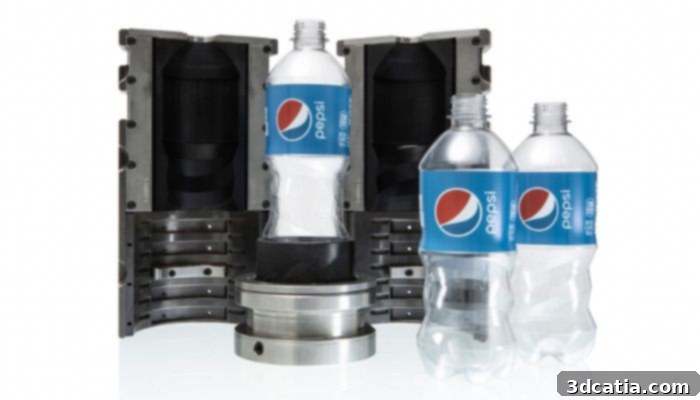
Photo Credits: Nexa3D
This strategic adoption of additive manufacturing places PepsiCo at the forefront of packaging innovation within the beverage industry. It underscores a broader trend where industrial 3D printing is moving beyond mere prototyping to impact direct manufacturing and tooling applications significantly. For global brands like PepsiCo, the integration of such advanced technologies is not just about efficiency; it’s about sustaining leadership in a dynamic marketplace. The ability to quickly and affordably bring new, optimized, and visually appealing packaging to market ensures that PepsiCo remains responsive to consumer preferences and competitive pressures, securing its position as a global leader for years to come. Furthermore, this innovative approach could pave the way for more sustainable packaging solutions, as rapid prototyping allows for the optimization of material use and the exploration of novel, eco-friendly designs. The future of beverage packaging is undoubtedly intertwined with the advancements in additive manufacturing, and PepsiCo is clearly leading the charge.
What are your thoughts on PepsiCo’s strategic use of additive manufacturing for their iconic beverage bottles? Do you believe this approach will set a new standard for packaging development across the consumer goods industry? We invite you to share your perspectives in a comment below or join the discussion on our LinkedIn, Facebook, and Twitter pages! Don’t forget to sign up for our free weekly Newsletter here to get the latest 3D printing news delivered straight to your inbox. You can also explore all our insightful videos on our YouTube channel for more in-depth content.
*Cover Photo Credits: Nexa3D