
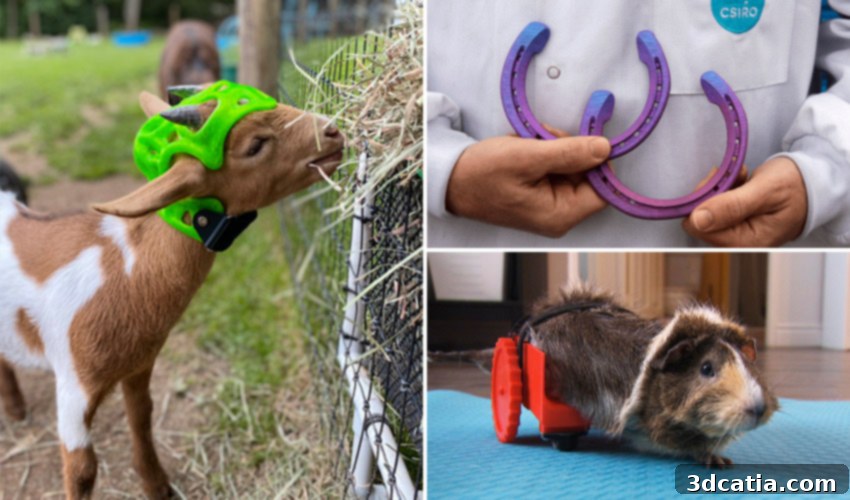
Revolutionizing Animal Welfare: How 3D Printing is Saving and Enhancing Animal Lives Globally
The innovative power of 3D printing, also known as additive manufacturing, extends far beyond human applications, reaching across countless industries to benefit living beings worldwide – and this crucially includes animals. From beloved pets to endangered wildlife, 3D printing technology is offering life-changing solutions, enabling creatures who have lost limbs, body parts, or even natural habitats to regain functionality, comfort, and a new lease on life. Just as with humans, the applications for 3D printed prosthetics and orthotics for animals are incredibly diverse and impactful. Thanks to rapid advancements in scanning technologies, increasingly affordable 3D printers, and a growing community of compassionate innovators, countless animals are now receiving highly customized 3D printed solutions that are significantly improving their quality of life. This article delves into some of the most inspiring and heartwarming examples of how 3D printing is making a tangible difference in the animal kingdom, showcasing the ingenuity and empathy driving this technological revolution in animal care.
The Shellter Project: 3D Printed Homes for Hermit Crabs
Hermit crabs, like Paris Shelton, face a severe and growing ecological crisis: a critical shortage of natural shells. This environmental challenge, often exacerbated by habitat destruction and pollution, forces these vulnerable crustaceans to seek refuge in dangerous or unsuitable discarded items, such as glass bottles and plastic debris, significantly threatening their survival. Recognizing this urgent problem, Makerbot, a prominent name in desktop 3D printing, launched the ‘Shellter Project’ – a brilliant community-driven initiative aimed at providing environmentally friendly and custom-designed 3D printed shells. This project not only addresses the immediate housing crisis for hermit crabs but also promotes sustainable solutions within marine environments, offering a creative and impactful response to a pressing ecological need.
The Shellter Project ingeniously harnessed the collective creativity of the global maker community. Makerbot and TeamUSA utilized Thingiverse, a popular online platform for sharing 3D printable designs, to call upon designers worldwide to create innovative and crab-friendly shell designs. Participants were encouraged to upload their creations using the specific tag “SHELLTER,” fostering an open-source spirit of collaboration. This approach allowed for a wide variety of aesthetically pleasing and structurally sound shell options, designed to mimic natural forms while utilizing durable, often biodegradable, 3D printing materials. Once designs were submitted, Makerbot’s team 3D printed these shells and carefully integrated them into specialized “crabitats” at their Botcave facility in Brooklyn, New York. These controlled environments allowed researchers to observe crab preferences, understand which designs were most appealing and functional, and refine the process to effectively mitigate the hermit crab housing crisis. This project stands as a testament to how 3D printing can mobilize a community for ecological good, offering tailored solutions to complex environmental challenges and protecting vulnerable marine life.
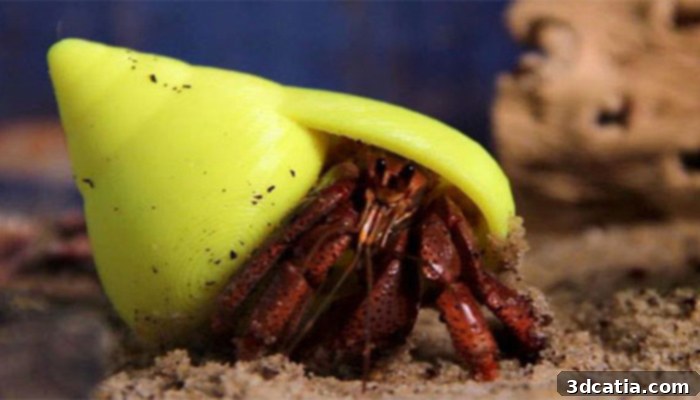
Photo Credits: Makerbot
Waddles the Duck: A New 3D Printed Leg for a Happy Quack
Waddles the duck faced a challenging start to life, having been born with a severely deformed leg that greatly hindered his mobility, balance, and overall well-being. This congenital condition meant that simple acts like walking or foraging became incredibly difficult, impacting his quality of life significantly. His luck took a remarkable turn when he crossed paths with Derrick Campana, a renowned prosthetist with a unique and heartwarming specialization: designing and fitting prosthetics specifically for animals. Campana, often affectionately referred to as “the Animal Tinkerbell” for his transformative work, leveraged the precision and customization capabilities of 3D printing to craft a bespoke artificial leg for Waddles.
The process of creating Waddles’ prosthetic was meticulous and highly personalized. It began with Campana carefully making a mold of Waddles’ healthy paw. This critical step ensured an accurate impression of the duck’s anatomy, which was then precisely scanned into a digital format. Using advanced 3D modeling software, Campana designed a prosthetic leg that was not only structurally sound but also anatomically tailored to Waddles’ specific gait and weight distribution. The digital model was then brought to life through 3D printing, resulting in a lightweight yet durable prosthetic designed to seamlessly integrate with Waddles’ natural movements. Initially, Waddles, like many animals adapting to new prosthetics, showed some hesitation and needed time to adjust. However, with patience, consistent practice, and perhaps some gentle encouragement, he fully embraced his new limb. Today, Waddles walks perfectly, demonstrates confidence in leaning on his prosthetic whenever needed, and enjoys a significantly improved quality of life. His story beautifully exemplifies how individualized 3D printed solutions can dramatically transform the lives of animals facing mobility challenges, restoring their natural abilities and promoting their overall happiness.
3D Printed Horseshoes: Enhancing Equine Performance and Comfort
Traditional horseshoes, while essential for protecting hooves and providing traction, have inherent limitations regarding weight, exact fit, and the time-consuming process of blacksmithing. It might seem unconventional to consider 3D printing for something as specific and traditional as horseshoes, but this innovative application has not only been realized but has also gained significant acceptance and appreciation within the competitive equine community. The Australian scientific agency CSIRO spearheaded this groundbreaking development, creating advanced 3D printed horseshoes aptly named “Titanium Shoes.” This project aimed to push the boundaries of equine care and performance through cutting-edge additive manufacturing.
The primary innovation behind CSIRO’s Titanium Shoes lies in the material choice: titanium. Unlike conventional aluminum or steel horseshoes, titanium offers a superior strength-to-weight ratio, resulting in significantly lighter racing shoes. This reduction in weight directly translates to enhanced athletic performance for racehorses, allowing them to move with greater agility, speed, and reduced exertion over distances, which can be crucial in competitive environments. The customization aspect is equally crucial for equine health and performance. The project integrates advanced 3D scanning technologies to digitize each horse’s hoof with remarkable precision, capturing every nuance of its unique anatomy. This detailed digital model then allows for the creation of perfectly fitted, custom-designed horseshoes using dedicated CAD software. The entire scanning process takes only minutes, and bespoke shoes can be modeled and 3D printed on the very same day, dramatically accelerating the turnaround time compared to traditional methods. This rapid, precise, and personalized approach not only boosts performance but also significantly improves the overall comfort, balance, and long-term hoof health for horses, marking a substantial leap forward in equine care, injury prevention, and sports technology.
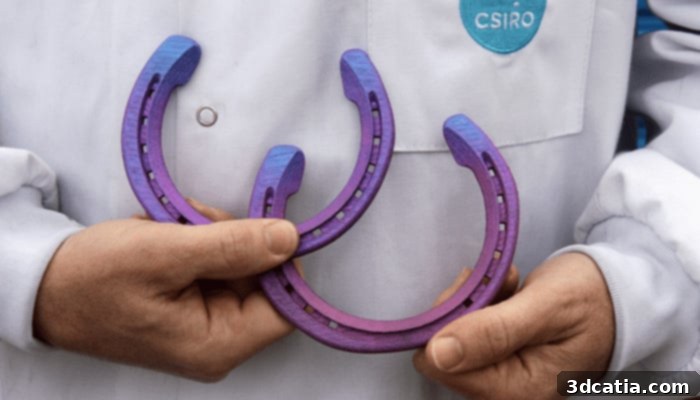
CSIRO was a leader in making 3D printed horseshoes, improving comfort and performance for horses. (photo credits: CSIRO)
Turbo the Chihuahua: Rolling Towards a Brighter Future with a 3D Printed Wheelchair
Turbo Roo, the now Instagram-famous Chihuahua, captured hearts worldwide after being born without his two front legs. This congenital condition meant he was unable to walk, run, or playfully keep up with other dogs, severely limiting his independence, mobility, and overall quality of life. Without the use of his front limbs, Turbo faced a future of being carried or dragging himself, an undignified and restrictive existence for any energetic pup. A heartwarming video of the adorable two-legged pup quickly went viral across social media platforms, drawing significant attention, sympathy, and compassion from across the globe. Among the many who saw his inspiring story was an aerospace engineer based in San Diego, who possessed a unique skillset and the resources to make a real difference.
Inspired by Turbo Roo’s resilient spirit and determined to help him achieve greater independence, the engineer applied his advanced design expertise to a truly unique and challenging problem. He meticulously designed and 3D printed a custom wheelchair harness, perfectly tailored to Turbo Roo’s small frame and unique anatomy. This harness provided the necessary support and comfort without restricting his movement. The addition of durable rollerblade wheels to the custom-made frame provided the necessary mobility, transforming Turbo from a stationary pup into a dynamic, energetic, and joyful dog. Thanks to these ingeniously crafted 3D printed wheels and the custom-fit harness, Turbo Roo is now always on the move, zipping around with boundless energy and confidence. His story perfectly illustrates how individual innovation, combined with the accessibility and precision of 3D printing technology, can provide highly customized mobility solutions for pets, enabling them to lead full, active, and happy lives despite significant physical challenges that would otherwise leave them sidelined.
AKUT the Loggerhead Turtle: A Second Chance with a 3D Printed Titanium Jaw
AKUT-3, a magnificent loggerhead turtle from Turkey, suffered a tragic and life-threatening injury after a devastating boating collision. The accident left him with a catastrophic loss of approximately 60 percent of his upper and lower jaw, rendering him completely unable to eat independently and giving him very little chance of survival in the wild. His prognosis was grim, highlighting the immense challenges faced by injured wildlife, particularly when crucial feeding mechanisms are compromised. However, a beacon of hope emerged through the expertise of Turkish company BTech Innovation, a specialist in advanced medical prostheses for both human and veterinary applications.
The process to restore AKUT’s jaw mirrored the meticulous steps taken for human patients requiring complex surgical implants, showcasing the universality of additive manufacturing in medical solutions. Caretakers at Pamukkale University’s Research, Rescue and Rehabilitation Center provided detailed scan images of AKUT-3’s severely damaged jaw to BTech Innovation. Using these precise digital scans, BTech engineers were able to design and 3D print a highly customized implant made from medical-grade titanium – a material widely favored for its biocompatibility, exceptional strength, and durability in prosthetics, including those produced through additive manufacturing techniques like DMLS (Direct Metal Laser Sintering). This innovative intervention marked a significant milestone, potentially representing the very first 3D printed jaw created for a wild species, pushing the boundaries of veterinary medicine, conservation biology, and prosthetic design.
The intricate surgery to fit AKUT’s new jaw lasted 2.5 hours, a testament to the collaborative effort of both experienced surgeons and dedicated veterinarians working in concert. Following the successful procedure, AKUT’s body demonstrated excellent acceptance of the new titanium implant, showing no signs of rejection. While extensive long-term updates are often scarce for rehabilitated wildlife, the team’s ultimate goal was to return him to his natural habitat once he regained full strength, resumed independent feeding, and demonstrated complete autonomy. AKUT’s inspiring journey underscores the critical role of 3D printing in wildlife conservation, offering advanced medical solutions that can literally give endangered or severely injured animals a new lease on life, enabling them to survive and thrive in their natural ecosystems.
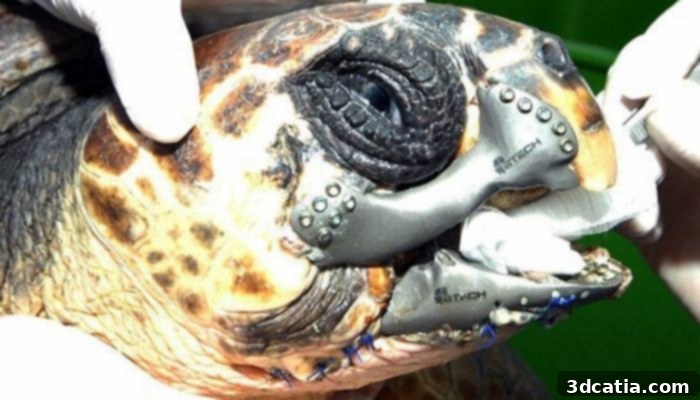
Photo Credits: Btech Innovations
Alaska the Guinea Pig: Tiny Wheelchair, Big Impact for a Small Pet
In Toronto, Canada, Alaska the Guinea Pig faced a debilitating challenge after undergoing the amputation of one of her front legs due to a severe post-birth uterus infection. This significant loss of mobility presented a unique problem for her devoted owner, as readily available commercial wheelchair options in the market are typically designed for much larger animals, such as dogs or cats, leaving small pets like guinea pigs overlooked and without suitable assistive devices. Alaska’s tiny size and specific needs made finding an appropriate solution seem almost impossible through conventional means.
Determined to restore Alaska’s ability to move independently and enjoy a fulfilling life, her owner sought help from an unexpected yet innovative resource: a digital design technician at the Toronto Public Library. This collaboration perfectly illustrates the burgeoning role of public maker spaces and community-accessible technology in addressing highly specific needs. Leveraging the library’s accessible Ultimaker 2+ 3D printer, the technician was able to design and fabricate a custom-fitted wheelchair perfectly scaled for Alaska’s diminutive 700-gram frame. This project beautifully demonstrates how community resources and readily available 3D printing technology can be harnessed to address specific, niche needs in animal welfare, providing solutions that commercial markets often miss. It highlights the unparalleled advantage of additive manufacturing in creating highly personalized, size-appropriate mobility solutions, ensuring that even the smallest of pets can regain their independence, move freely, and enjoy a happy, active life, free from the limitations imposed by generic, ill-fitting, or non-existent devices.
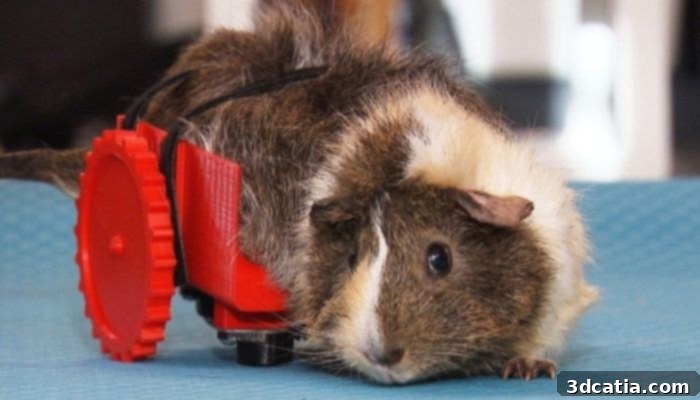
Photo Credit: Toronto CTV News
DiveDesign 3D Printed Helmet for Bo the Baby Goat: Protecting a Fragile Mind
Bo the Baby Goat was born with a critical and life-threatening condition: a large hole in his skull, which left his delicate brain tissue alarmingly exposed. This severe congenital defect made him incredibly vulnerable to injury, infection, and potentially fatal trauma, necessitating an immediate and highly effective protective solution. Without adequate protection, Bo’s chances of survival and healthy development would have been severely compromised. Fortunately, the innovative team at DiveDesign, known for their bespoke 3D printing solutions for animals, stepped in to provide a custom-engineered answer: a personalized helmet crafted from robust yet flexible TPU (Thermoplastic Polyurethane).
The unique and primary challenge with Bo was his rapid growth. As a developing billy goat, his head size was constantly changing, meaning a single, static helmet wouldn’t suffice for long; it would quickly become ill-fitting and ineffective. DiveDesign brilliantly addressed this by utilizing regular and precise 3D scans of Bo’s head. These scans allowed them to accurately measure his skull’s dimensions as he grew, enabling them to design and 3D print new, perfectly fitting helmets every few weeks. This iterative approach demonstrates the unparalleled adaptability and responsiveness of 3D printing for dynamic situations, where constant adjustments are required. The TPU material chosen for the helmets provided not only excellent impact protection but also comfort, flexibility, and durability for an active young goat. DiveDesign’s ongoing commitment to Bo ensures that as he continues to grow, his vulnerable brain remains safely and securely protected, allowing him to thrive and live a normal life despite his challenging start. This case exemplifies how 3D printing offers continuous, evolving, and life-saving solutions for animals with complex and changing needs.
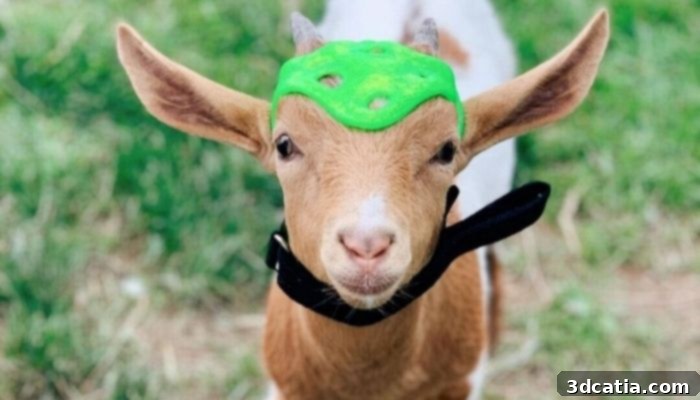
Photo Credit: Goats of Anarchy
Grecia the Toucan: A Symbol of Resilience with a 3D Printed Beak
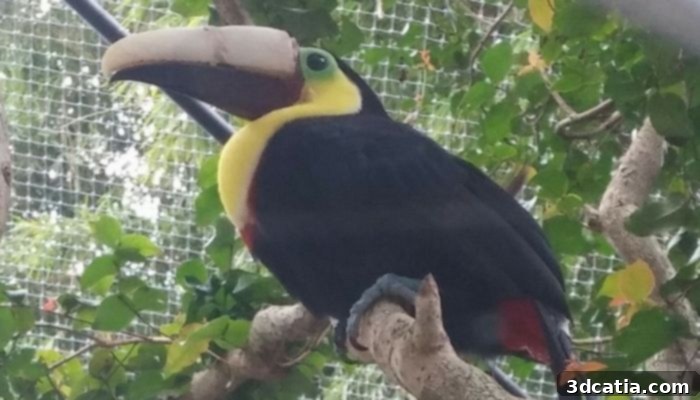
Grecia, a vibrant toucan hailing from Costa Rica, holds the poignant and groundbreaking distinction of being the first toucan to receive a sophisticated 3D-printed beak, a true testament to both her incredible resilience and the transformative power of additive manufacturing. Her tragic story began with a brutal and unprovoked attack by teenagers, who were never apprehended. This horrific incident, devastatingly, left her with more than half of her upper beak missing. For a toucan, the beak is far more than just a tool for eating or vocalizing; it is an incredibly integral and multi-functional anatomical structure crucial for regulating body temperature, preening, defense, and even attracting mates. The loss of such a vital part of her anatomy severely compromised her ability to survive.
The severity of Grecia’s injury left many doubting her chances of survival, as she struggled to eat and maintain her health. However, her unwavering spirit and the public outcry ignited a wave of global compassion and determination to find a solution. This led to a crucial collaboration with a leading US-based 3D printing company, 3D Systems, who committed their expertise and resources to designing and fabricating a prosthetic beak. To achieve a functional and anatomically correct replacement, the team undertook a meticulous process: they accurately scanned the beak of a toucan that had passed away, creating a precise digital model that served as the blueprint. The prosthetic itself was then carefully crafted from durable, lightweight nylon, likely utilizing a Selective Laser Sintering (SLS) machine, a 3D printing technology renowned for producing strong, complex, and highly detailed parts. While the exact proprietary details of the printing process remained confidential, the outcome was undeniable: Grecia’s rehabilitation was a resounding success. Her journey not only restored her ability to eat and thrive but also transformed her into a powerful international symbol against animal abuse and a beacon of hope for technological intervention in wildlife rescue and conservation. Grecia’s story continues to inspire, showcasing how innovation can directly lead to renewed life and a powerful message.
Grecia’s beak is yet another example of how 3D printed prosthetics can help animals (photo credits: Bob J Galindo – Own work, CC BY-SA 4.0, via Wikipedia Commons )
Alejandro Colli: A Benevolent Engineer Providing Free 3D Printed Prosthetics for Pets
The increasing accessibility and versatility of 3D printing are fostering a new wave of individual philanthropy, where talented individuals are leveraging technology to help animals in profound ways. One such inspiring figure is Alejandro Colli, an Argentinian computer engineering student who has dedicated his exceptional skills to making 3D-printed prosthetic limbs for injured dogs. His commendable initiative highlights a growing trend where technological expertise, combined with a deep philanthropic spirit, fills crucial gaps in animal welfare, particularly for pets who might otherwise have limited or no accessible options for limb replacement after injury or congenital defects.
Like many impactful and community-driven projects of the younger generation, Alejandro’s endeavor gained significant traction through the power of social media. He launched a heartfelt call to action on Twitter, announcing his commitment to creating custom 3D printed prosthetics specifically for dogs in need. This passionate outreach quickly connected him with a nearby veterinary hospital, eager to collaborate and provide deserving cases for his expertise. Initially, developing his prototypes involved a steep learning curve, requiring extensive research, design iterations, and testing. His very first functional prosthetic took several months of diligent work and refinement before it was ready for a successful trial on an animal. However, with each subsequent project, his efficiency, design expertise, and understanding of animal biomechanics grew, significantly reducing the production time for each custom limb.
Remarkably, Alejandro provides these life-changing prosthetics entirely free of charge, driven solely by his compassion and desire to help. His incredible generosity has extended far beyond the borders of Argentina, with his custom-made limbs reaching injured dogs in various South American countries, including Panama, Mexico, Colombia, and Chile. Alejandro Colli’s work exemplifies the profound impact that individual innovators can have by harnessing accessible 3D printing for humanitarian and animal welfare causes, offering tangible hope, improved mobility, and a second chance at a full life for countless deserving animals across the continent. His story is a powerful reminder of how one person’s dedication, combined with technology, can create a ripple effect of good.
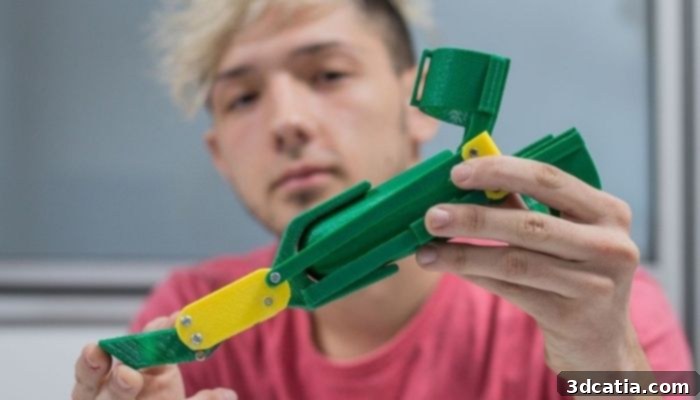
Photo Credits: Alejandro Colli
Mr. Stubbs, the Alligator with a 3D Printed Tail
Mr. Stubbs, an American alligator, endured a harrowing and life-altering experience when he lost his tail several years ago while being illegally transported by a group of animal traffickers. For alligators, the tail is not merely for aesthetics; it is an absolutely vital appendage crucial for swimming, steering, maintaining balance, and even as a powerful defensive weapon. Its absence, therefore, represented a severe impediment to Mr. Stubbs’s survival, mobility, and overall quality of life in a natural or captive environment. For a significant period, experts and veterinarians struggled to find a suitable, functional prosthesis for Mr. Stubbs, facing the complex challenge of replicating such a powerful, heavy, and essential anatomical structure with traditional methods.
Ultimately, a dedicated team of specialists, unwilling to give up on Mr. Stubbs, turned to advanced 3D technologies to offer him a better future. They utilized an Artec 3D scanner, a high-precision and non-invasive device, to create a detailed digital model of the alligator’s rear section and the remaining part of his tail stump. This incredibly accurate digital scan allowed the engineering team to design a specialized, custom-fitted tail prosthesis that perfectly matched his unique size, weight, and body composition. The high precision and customization capabilities of 3D printing were absolutely crucial in developing an appendage that was not only structurally sound but also functionally appropriate for Mr. Stubbs’ aquatic and terrestrial movements, providing the necessary thrust for swimming and balance for walking. Fortunately, Mr. Stubbs readily adopted his new 3D printed tail, quickly integrating it into his locomotion and swimming patterns with remarkable ease. His story highlights the transformative potential of 3D printing in providing complex, large-scale prosthetics for even the most unusual and powerful creatures, ensuring their well-being, enhancing their natural behaviors, and promoting species conservation through rehabilitation.
Fred the Tortoise and the “Animal Avengers”: A New 3D Printed Shell
In a truly pioneering and heartwarming case within the realm of 3D printed prosthetics for animals, Fred the tortoise from Brazil received a groundbreaking gift: his very own custom-designed, 3D printed tortoise shell. This was a world-first, showcasing the innovative reach of additive manufacturing for amphibians and reptiles, particularly in situations of severe trauma. Fred had suffered catastrophic injuries as a result of a devastating forest fire, losing a staggering 85% of his natural, protective shell – an injury that would typically be fatal for a tortoise, leaving him exposed and vulnerable. However, a compassionate and determined group of volunteers, aptly named the “Animal Avengers,” refused to give up on him.
The Animal Avengers embarked on an ambitious and meticulously planned project to recreate Fred’s shell. They achieved this by taking forty precise photos of healthy tortoises, capturing various angles and details. These photos were then digitally stitched together and processed using advanced photogrammetry software to create an accurate 3D model of a complete, ideal tortoise shell that would perfectly fit Fred’s remaining body. This detailed digital blueprint was then brought to life using an FDM (Fused Deposition Modeling) desktop 3D printer, making the technology accessible and practical for such a rescue effort. Due to the size and complexity of the shell, it was carefully printed in four separate pieces, a process that required an impressive 50 hours of continuous printing using a durable plastic filament. Once assembled and securely fitted, the functional shell was further enhanced by a volunteer artist, who meticulously painted it to mimic the natural patterns and colors of a real tortoise shell. This artistic touch provided not only essential protection but also a visually authentic appearance, helping Fred to feel more at home in his new “skin.” With his new, perfectly fitted 3D printed shell, Fred was able to feel secure and at home again, enabling him to continue living a long and happy life alongside his tortoise companions, a powerful testament to the fusion of technology, art, and profound compassion in animal rescue.
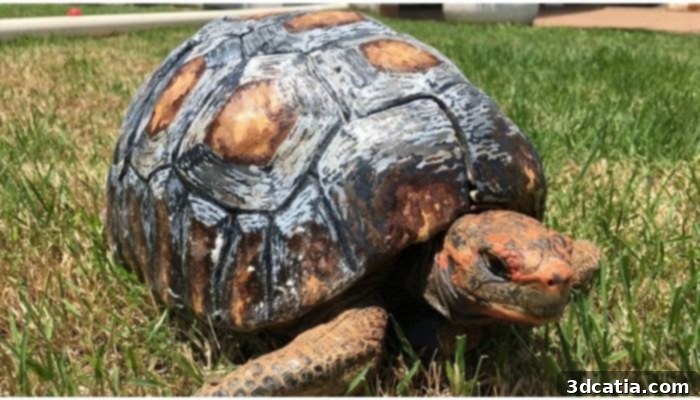
Photo Credits: Noticias
Bagpipes the Penguin: Waddle No More with a 3D Printed Leg
Bagpipes the penguin, a much-loved resident of the International Antarctic Centre in Christchurch, New Zealand, faced a grim future after a severe encounter with a fishing line in 2007. The injury to his leg was so extensive and irreparable that amputation became the only viable option to save his life. For nearly a decade following the surgery, Bagpipes bravely navigated his enclosure, hopping around on one foot, a clear testament to his resilience but also a significant limitation on his natural movement, balance, and overall comfort. In 2016, after almost ten years of him hobbling, a dedicated team at the Centre enlisted the expertise of Professor Dr. Janelle Clucas from the University of Canterbury, New Zealand, to design and 3D print a prosthetic leg, offering the old bird a much-deserved new lease on life.
The creation of Bagpipes’ custom prosthetic presented unique challenges that highlight the complexities of designing for animal anatomy. Dr. Clucas encountered initial difficulties during the critical 3D scanning process of his leg stump, primarily due to Bagpipes’ understandable fidgeting and wiggling, which complicated obtaining a precise digital model. However, through patience and ingenuity, a perfect scan was finally secured, allowing the design phase to proceed. Following this, a lengthy 30-hour printing process commenced, bringing the prosthetic to life. The initial prosthetic foot was carefully crafted from a durable plastic, enabling Bagpipes to begin adapting to his new mobility. Dr. Clucas, dedicated to continuous improvement, further iterated and refined the design, developing newer models that featured easier clip-on mechanisms for better attachment and incorporating rubber materials to enhance grip and stability, particularly on varied surfaces common in his habitat. Thanks to the relentless dedication of Dr. Clucas and the transformative capabilities of 3D printing, Bagpipes successfully transitioned from hobbling to confidently waddling, regaining a much fuller, more comfortable, and dignified life. His story is a poignant reminder of how advanced technology, combined with compassionate innovation, can profoundly improve the welfare of individual animals, allowing them to thrive against all odds.
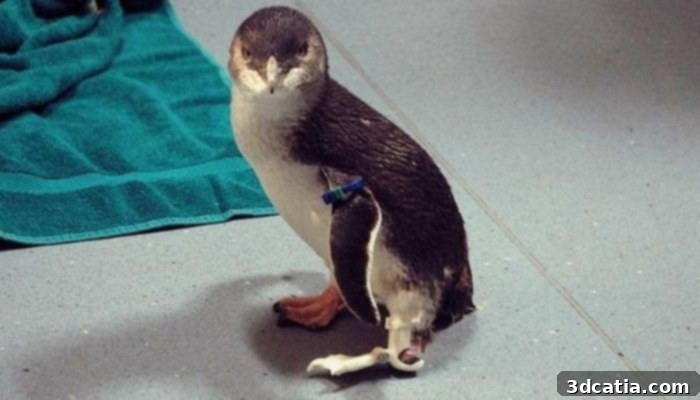
Photo Credits: Christchurch Antarctic Centre
As these remarkable stories unequivocally demonstrate, 3D printing is rapidly emerging as a cornerstone of modern animal welfare, veterinary medicine, and even ecological conservation efforts. The ability to create highly customized, precise, and often cost-effective prosthetics, orthotics, protective gear, and even environmental solutions is fundamentally transforming the lives of countless animals, from the smallest guinea pigs and hermit crabs to majestic alligators, endangered turtles, and beloved family pets. This innovative technology offers tangible hope where traditional methods often fall short or are prohibitively expensive, providing bespoke solutions for unique anatomical challenges, facilitating rehabilitation, and ensuring that animals, both wild and domestic, have the opportunity to live fuller, more comfortable, and healthier lives.
The ongoing advancements in 3D printing materials, sophisticated scanning techniques, and accessible printing technologies promise an even brighter future. As the technology becomes more widespread and refined, we can anticipate an increase in innovative applications, further lowering costs, and expanding the reach of these life-changing solutions to more animals worldwide. It’s clear that 3D printing is not just a technological marvel; it’s a powerful tool for empathy, a testament to human ingenuity in caring for our planet’s diverse inhabitants, and a beacon of hope for animal welfare across the globe. The fusion of technology and compassion is truly revolutionizing how we support and protect the animal kingdom.
What do you think of these incredible 3D printed prosthetics and solutions for animals? We’d love to hear your thoughts! Let us know in a comment below or connect with us on our Facebook and Twitter pages! Don’t forget to sign up for our free weekly newsletter to receive all the latest 3D printing news straight to your inbox!