

When you need 3D printed parts that bend, stretch, or absorb impacts, rigid plastics like PLA or PETG often fall short. Flexible filaments such as TPE and TPU are designed for those use cases. To choose the right material, it helps to understand how they relate and how they differ on the print bed and in real-world applications.
Thermoplastic Elastomer (TPE) is a broad family of materials that combines rubber-like elasticity with the processing convenience of thermoplastics. Thermoplastic Polyurethane (TPU) is a specific type of TPE: a more structured, tougher subtype that balances flexibility with strength. Both deliver impact resistance, water resistance, and good durability against weathering and UV, but they behave differently during printing and in finished parts.
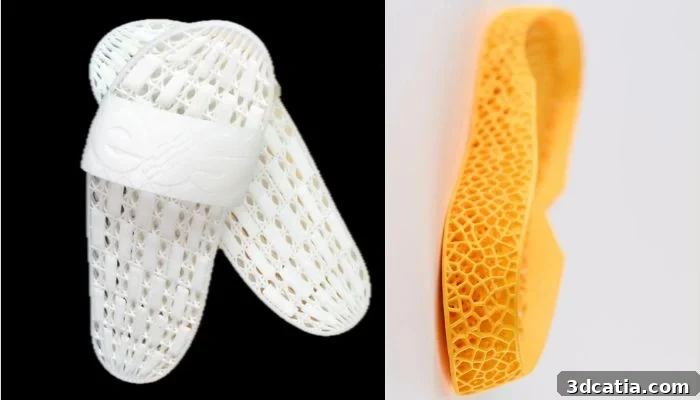
EOS TPU 1301 (left), ALM TPE 410 (right). Photo Credit: EOS
Filaments labeled simply as TPE tend to be softer and more rubber-like, offering exceptional stretch and cushioning. That softness, however, makes them more challenging to feed and harder to keep dimensionally stable under load. TPU is generally firmer and more abrasion-resistant, and its firmer structure also makes it easier to print reliably, which is why many makers choose TPU for functional and wear-prone parts.
What is TPE? (Thermoplastic Elastomer)
Thermoplastic Elastomer (TPE) refers to a family of polymer blends that behave like rubber but can be processed like plastic. TPE parts bend, compress, and return to shape, making the material ideal where comfort, grip, or controlled deformation are priorities. The TPE category includes several subtypes, such as TPU, TPA, and TPC.
Typical properties of TPE include good impact resistance, strong vibration damping, excellent fatigue resistance, and fair chemical and UV resistance. Many grades perform across a wide temperature range and can be recycled. The main trade-off is printability: very soft TPEs require slow speeds, careful extrusion control, and best results with a direct drive extruder to prevent buckling or jams.
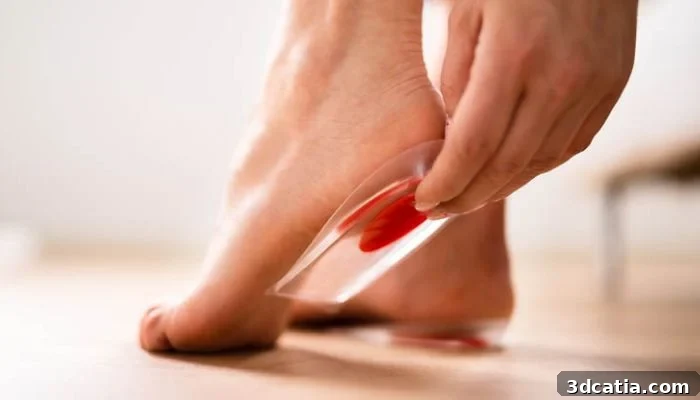
Photo Credit: kuraray
Common applications for TPE include:
- Ergonomic grips and soft-touch handles
- Gaskets and seals that require compression recovery
- Cushioning components like shoe soles
- Medical cushioning and comfort pads
- Padding for sporting equipment
What is TPU? (Thermoplastic Polyurethane)
Thermoplastic Polyurethane (TPU) is a block copolymer with alternating hard and soft segments, giving it a useful balance of flexibility and toughness. TPU is the most popular flexible filament in 3D printing because it combines elasticity with strong mechanical properties. That makes TPU well suited for many functional and end-use parts.
TPU grades typically offer excellent abrasion and wear resistance, good impact strength, and resistance to oils, greases, and many chemicals. TPU’s combination of durability and elasticity makes it a reliable choice for prototypes and finished products that experience repeated mechanical stress.
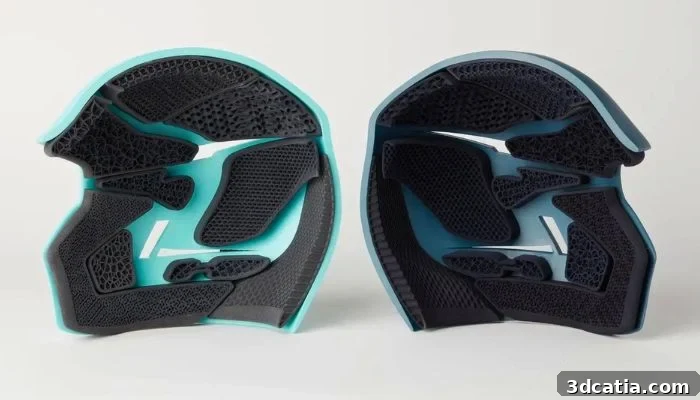
American football helmet with custom padding printed in TPU. Photo Credit: Formlabs
Common TPU applications include:
- Phone and device cases
- Shoes and durable shoe soles
- Automotive vibration dampers, seals, and flexible tubing
- Sporting goods that need abrasion resistance
- Medical tubing and protective devices
- Industrial components requiring repeated flexing
Head-to-Head Comparison: TPE vs. TPU
| Feature | TPE Filament | TPU Filament |
| Shore Hardness* | Typically very soft (lower A scale numbers) | Ranges from semi-flexible to firm (60A–98A common) |
| Print Difficulty | High — requires tuned settings and experience | Medium — more forgiving and easier for beginners |
| Extruder Requirement | Direct drive strongly recommended | Direct drive preferred; Bowden can work at slow speeds |
| Abrasion Resistance | Moderate | Excellent |
| Chemical/Oil Resistance | Fair | Outstanding |
| Elongation at Break | Very high — stretches further | High, but generally snaps sooner than ultra-soft TPE |
*Shore hardness ranges overlap and can vary by formulation; check technical data for each filament.
When to Use Which?
Choose TPE if you need:
- Maximum softness and a true rubber-like feel
- High stretch and elastic recovery
- Superior vibration damping and cushioning
- Comfort-driven, soft-touch surfaces
Choose TPU if you need:
- A balance of flexibility, strength, and durability
- Higher abrasion and wear resistance
- Consistent, repeatable performance in functional parts
- Easier and more reliable 3D printability
- Components that must withstand repeated mechanical stress
How to Print TPE and TPU Filament
Printing flexible filaments requires hardware and slicer adjustments. For ultra-soft TPE, a direct drive extruder is essential — feeding very flexible filament through a long Bowden tube usually results in buckling and jams. TPU prints better on direct drive setups but can sometimes work on a well-tuned Bowden system at low speeds.
Flexible materials behave like rubber, so they demand patience and practice. Common issues include excessive stringing, poor bridging, and nozzle clogs. If the filament meets too much resistance, it can deform and tangle inside the extruder. Flexible parts can also adhere extremely strongly to smooth build surfaces, risking damage when removed.
Follow these practical tips for more reliable flexible filament printing:
- Slow Print Speeds: Print at 20–30 mm/s to reduce backpressure and extrusion problems.
- Loosen Extruder Tension: Set idler tension just high enough to feed the filament without deforming it.
- Minimize Retractions: Disable retraction or keep it very short (1–2 mm) to avoid tangles and stretch.
- Use a Release Layer: Apply a glue stick or tape when printing on smooth PEI or glass to prevent permanent bonding.
- Keep Filament Dry: Flexible filaments absorb moisture quickly. Dry filament before printing to avoid bubbling and poor surface quality.
- Adjust Temperatures: Slightly increasing nozzle temperature (about +5°C) can improve flow; reduce or disable part cooling to promote layer bonding when needed.
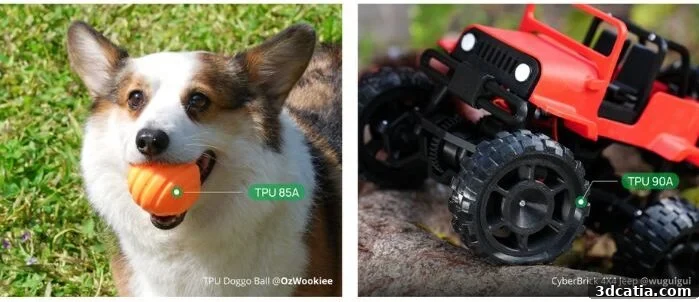
Photo Credit: Bambu Lab
Purchasing Flexible Filament
When shopping, remember TPU is a subtype of the broader TPE category. The key specification to check is the Shore hardness rating. Higher A-scale numbers indicate a firmer material:
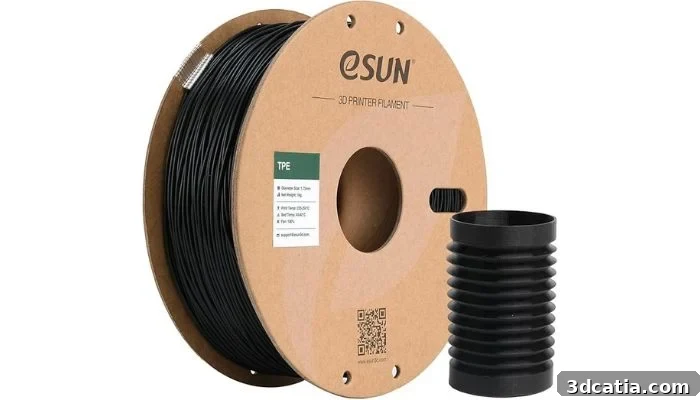
TPE-83A Filament. Photo credit: eSUN
- 95A and above: Typically standard TPU—semi-flexible, durable, and fairly easy to print.
- 85A or lower: Likely an ultra-soft TPE or a specialized TPU blend that behaves more like rubber and usually requires a direct-drive setup.
The Cost Breakdown: Commodity vs. Specialty
Price differences come from production scale and market demand. Standard 95A TPU is widely manufactured and priced competitively, often comparable to PETG or PLA. Ultra-soft TPEs are harder to extrude consistently and typically sell in smaller spools at higher per-gram cost. Well-known manufacturers of flexible filaments include Ninjatek, Fillamentum, Recreus, Polymaker, SainSmart, and Overture, among others.
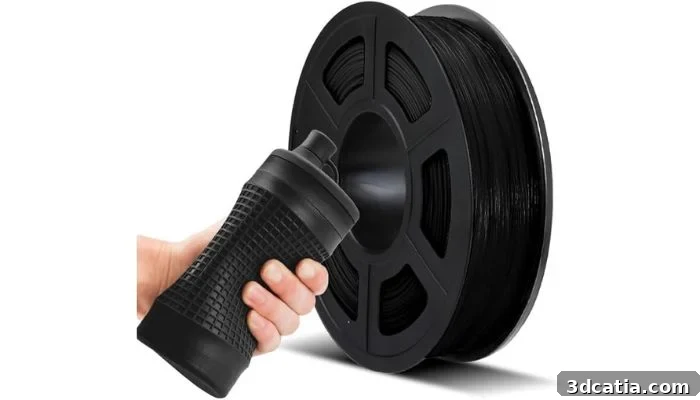
95A TPU Filament. Photo credit: JAYO
The Final Verdict
TPE and TPU are closely related but serve different goals. TPE delivers the softest, most rubber-like feel with maximum elasticity and cushioning, at the cost of more challenging printability and lower dimensional stability. TPU offers a practical middle ground: controlled flexibility, much better abrasion resistance, and far more reliable 3D printing behavior.
Rule of thumb: If you are new to flexible filaments or need durable, functional parts, start with TPU. If you require maximum stretch and a true rubber feel and are prepared to fine-tune your setup, explore TPE.
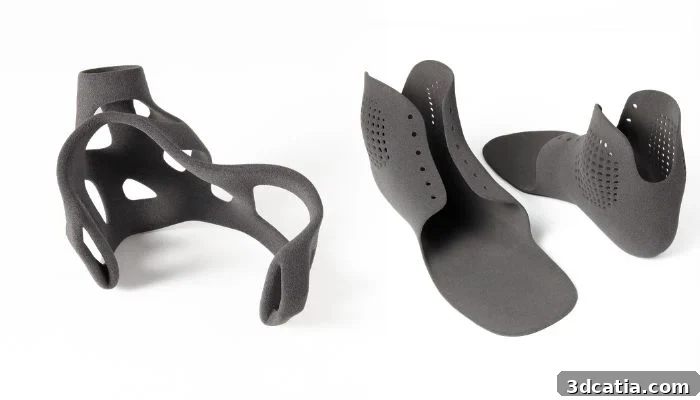
TPU is also available in powder form for custom medical and orthopedic applications. Photo Credit: Formlabs
We’d love to hear which flexible filaments you prefer to print and why. Share your experience in the comments or on social media. *Cover Photo Credits: JAYO (left), CC3D (right).