
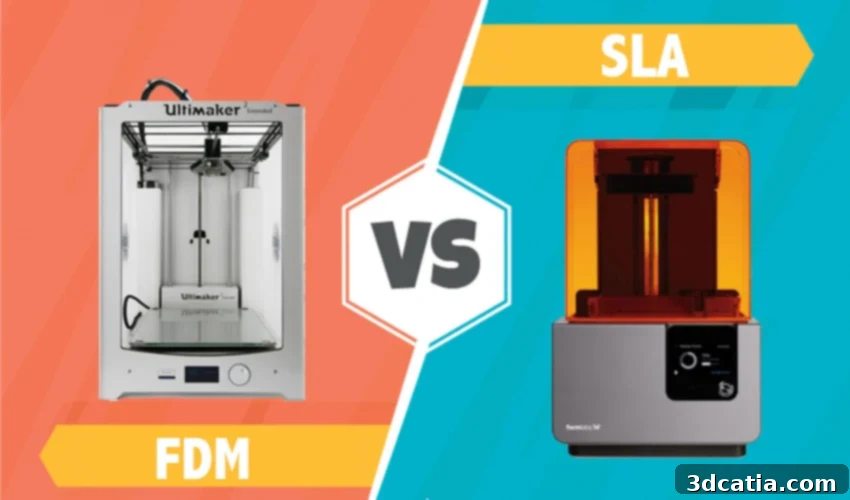
FDM vs. SLA 3D Printing: A Comprehensive Guide to Choosing Your Ideal Additive Manufacturing Technology
Since its revolutionary inception, the fundamental purpose of 3D printing has remained consistent: transforming a digital design into a tangible, physical object. However, the world of additive manufacturing is vast and varied, encompassing a spectrum of technologies, each employing distinct techniques, undergoing unique developmental trajectories, and yielding different results. Among the myriad options available today, two stand out as particularly prominent and widely adopted: Fused Deposition Modeling (FDM) and Stereolithography (SLA). This article delves into a detailed comparison of these two leading technologies, exploring their origins, material capabilities, print quality, post-processing requirements, costs, and industrial applications, helping you discern which is best suited for your specific needs.
Early Innovations and Milestones
The history of 3D printing officially began with Stereolithography (SLA). Its pioneering developments trace back to 1986, when Chuck Hull, the visionary founder of 3D Systems, secured the very first commercial patent for the photopolymerization of a liquid resin using a focused ultraviolet laser. This groundbreaking technique involved curing successive layers of photosensitive resin to build a 3D object from the ground up. Years later, a related technology, Digital Light Processing (DLP), emerged, operating on the same fundamental principle of photopolymerization but utilizing light generated by a digital projector to cure entire layers simultaneously, significantly increasing print speeds. The early success and continued innovation in SLA/DLP printers fostered the growth of influential companies such as Formlabs, known for democratizing desktop resin printing, B9Creations, and Carbon 3D, which pushed the boundaries with continuous liquid interface production (CLIP) technology.
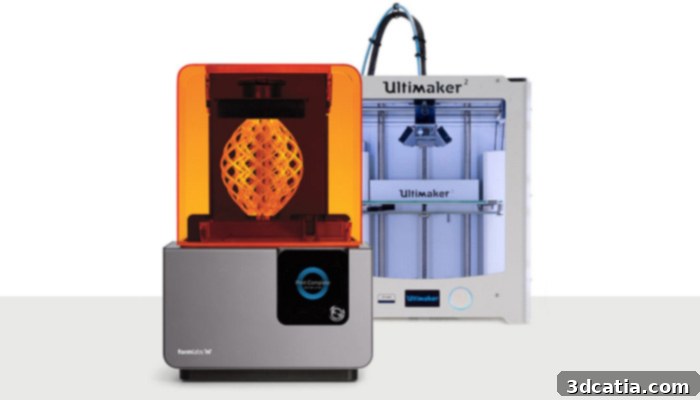
Just a couple of years after Hull’s pioneering work, in 1988, Scott Crump, the founder of Stratasys, introduced an equally transformative technology: Fused Deposition Modeling (FDM), also known as Fused Filament Fabrication (FFF). Unlike SLA’s liquid resin and laser, FDM works by extruding a thermoplastic filament, heating it to its melting point, and depositing it layer by layer onto a build platform. This technology quickly gained immense popularity due to its relative simplicity, ease of handling, and significantly lower cost compared to the nascent SLA systems. The open-source nature of many FDM variants further accelerated its adoption, leading to a vibrant ecosystem of innovation. The advancements in FDM technology paved the way for companies like Ultimaker, renowned for their reliable and open-platform machines, Makerbot, a key player in bringing FDM to the desktop, and Zortrax, known for its integrated hardware and material solutions, to become major brands in the 3D printing industry.
Materials: Filaments vs. Resins
Material availability and properties represent one of the most significant distinctions between FDM and SLA technologies. FDM, being the most widespread and accessible technology, boasts an incredibly diverse range of compatible materials. This includes foundational thermoplastics like PLA (Polylactic Acid) and ABS (Acrylonitrile Butadiene Styrene), which are popular for their ease of use and mechanical properties, respectively. Beyond these basics, the FDM ecosystem has seen the development of a vast array of specialized and composite filaments. These include materials infused with wood fibers, cork, or even coffee grounds, offering unique aesthetic and tactile qualities. Flexible materials such as TPU (Thermoplastic Polyurethane) enable the creation of soft, elastic parts. Furthermore, performance-oriented filaments like PETG (Polyethylene Terephthalate Glycol), Nylon, Polycarbonate, and those reinforced with carbon fiber or glass fiber are readily available, providing enhanced strength, temperature resistance, and durability. This extensive selection also means an immense spectrum of colors and finishes. FDM filaments typically come in standard diameters of 1.75 mm or 2.85 mm, ensuring broad compatibility across different machines, although some brands like Zortrax have developed proprietary filaments optimized for their specific printers to ensure consistent results.
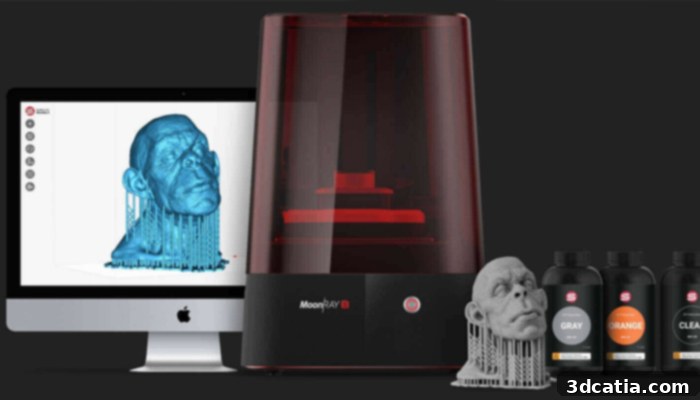
In contrast, SLA technology exclusively utilizes photopolymer resins. These liquid resins are specifically formulated to cure and solidify when exposed to a particular wavelength of UV light. While offering exceptional detail and smooth finishes, the material selection for SLA is generally more limited compared to FDM, and the resins tend to be more expensive. A key characteristic of SLA resins is their specialized nature; they are often difficult to interchange between different printer manufacturers, as each machine might operate with specific light wavelengths and resin formulations. For instance, printers like the Form 2 (and its successors) from Formlabs offer a curated range of standard resins in basic colors like black, white, gray, and transparent, alongside a growing portfolio of functional resins. However, the versatility of SLA resins lies in their ability to achieve very specific properties for diverse applications. This includes tough resins for durable parts, flexible resins for bendable components, high-temp resins for heat resistance, and critically, castable resins for jewelry and dental applications, and biocompatible resins for medical devices. The choice of resin directly influences the mechanical properties, visual appearance, and ultimate application suitability of the printed part.
Print Quality and Precision
Perhaps the most significant and immediately apparent difference between FDM and SLA technologies lies in the quality of the final printed object. SLA is widely recognized for producing significantly higher quality prints with superior detail and smoother surface finishes compared to FDM.
In SLA, the resolution of the printed model is primarily determined by the optical spot size of the laser or the pixel size of the projector. Since the printing process involves light-induced polymerization rather than physical extrusion, there are no visible layer lines in the same way as with FDM. This results in incredibly smooth, almost injection-molded-like surfaces, capable of rendering intricate details and complex geometries with exceptional precision. SLA printers can achieve remarkably fine layer thicknesses, typically ranging from 0.05 mm down to as little as 0.01 mm (10 microns). This allows for extremely accurate dimensions and a high level of fidelity to the original digital model, making it ideal for applications where aesthetics, fine features, and tight tolerances are paramount, such as jewelry, dental models, and highly detailed prototypes.
Conversely, with FDM technology, the resolution and surface finish are directly related to the diameter of the extrusion nozzle and the precision of the extruder’s movements along the X and Y axes. The process of extruding molten plastic in distinct layers inherently leaves visible layer lines, which are a hallmark of FDM prints. Achieving a good print quality with FDM necessitates meticulous machine calibration, including proper bed leveling, accurate temperature settings, and precise flow rates. The quality can vary considerably depending on the machine’s rigidity, precision of its motion system, and the consistency of material extrusion. Factors such as the weight of upper layers potentially compressing or slightly displacing lower layers can also reduce the overall precision and smoothness. FDM printers typically operate with layer thicknesses ranging from 0.5 mm for very fast, low-detail prints, down to 0.127 mm (127 microns), and sometimes even finer, around 0.05 mm, with specialized nozzles and settings. While modern FDM printers can produce impressive results, they generally cannot match the microscopic detail and flawless surface finish achievable with SLA without significant post-processing.
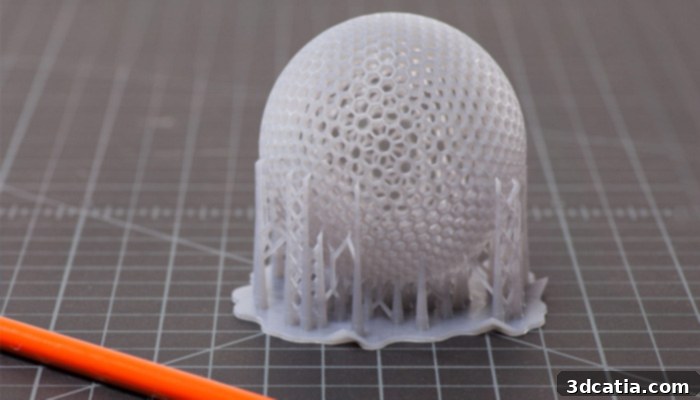
A model created through stereolithography showcases exceptional detail and smooth surfaces.
Post-processing Requirements
The moment a 3D printer completes its job, the printing process is not truly finished. All 3D printing technologies require some form of post-processing, which can range from a quick cleanup to hours of dedicated work to achieve the desired final product. The nature and complexity of this post-processing differ significantly between FDM and SLA.
For FDM technology, post-processing is generally more straightforward and less labor-intensive. The primary steps involve removing any support structures that were printed to prevent overhangs from collapsing and cleaning up any excess plastic or stringing. Supports are typically broken away manually, though more advanced FDM printers can use soluble supports that dissolve in water, simplifying the process and improving surface finish where supports were attached. If a smoother finish is desired, FDM prints can be sanded, filled with body filler, or painted. Tools like Polymaker’s Polysher can be used for vapor smoothing certain plastics (like PLA) to reduce layer lines. For materials like ABS, acetone vapor smoothing is a common technique to achieve a glossy, smooth surface. While FDM post-processing can be minimal, achieving a high-quality finish often still requires effort.
SLA post-processing, on the other hand, can be more involved and requires greater care due to the nature of liquid resins. The initial step is carefully removing the model from the build platform, which can sometimes be tricky as residual, uncured resin may make it sticky. The most crucial step is cleaning the model to remove all uncured resin from its surface. This is typically done by immersing the model in a bath of isopropyl alcohol (IPA) or a specialized resin cleaner, often with agitation or in a dedicated wash station. This process usually involves multiple rinses to ensure complete cleanliness. It is imperative to perform this delicately and with appropriate personal protective equipment, such as gloves, to protect against skin contact with uncured resins, which can be irritating or corrosive. After cleaning, the support structures must be removed, which can be done manually or with simple tools like flush cutters. Because SLA supports are often finer and more numerous, their removal must be done carefully to avoid damaging the delicate model surface. Finally, SLA prints often require a secondary post-curing stage under UV light. This process fully hardens the resin, optimizing its mechanical properties like strength, hardness, and temperature resistance, which are not fully developed directly after printing. This UV post-curing can be done using a dedicated UV curing chamber or even natural sunlight, though controlled curing stations offer more consistent results.
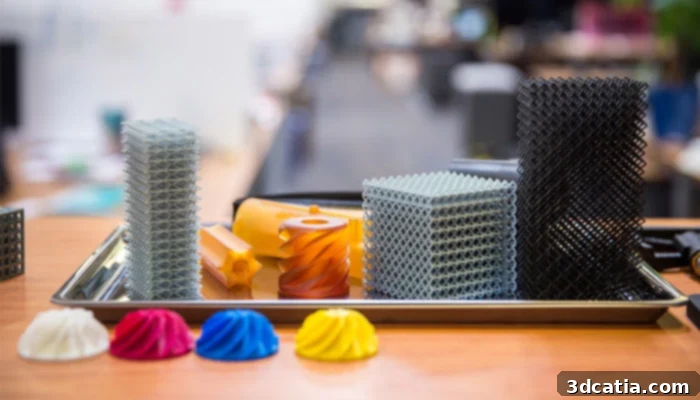
Stereolithography (SLA) allows for the printing of very complex and precise models with smooth finishes.
Price and Affordability
The financial investment required for both the 3D printers themselves and their ongoing consumables is another significant differentiator between FDM and SLA technologies. This factor often plays a decisive role in which technology an individual or business chooses to adopt.
FDM technology holds a distinct advantage in terms of affordability, making it the most accessible entry point into 3D printing for hobbyists, educators, and small businesses. Entry-level FDM machines, often based on the open-source RepRap philosophy, can be purchased for as little as €200 to €400. Mid-range desktop FDM printers, offering better reliability, larger build volumes, and more features, typically range from €500 to €3,000. Industrial-grade FDM systems, designed for high-volume production and engineering materials, can cost tens of thousands of euros. The consumables for FDM – filaments – are also relatively inexpensive. Basic materials like PLA and ABS can be found for €15-€25 per kilogram spool. Even specialized filaments, such as those reinforced with carbon fiber or offering unique properties, rarely exceed €80-€100 per kilogram for desktop systems. The maintenance costs are also generally lower, primarily involving occasional nozzle replacements, build plate upkeep, and minor component swaps. This low barrier to entry and economical operational cost makes FDM a highly attractive option for rapid prototyping, educational settings, and personal projects.
Stereolithography 3D printers, while offering superior print quality, come with a higher price tag. Reputable desktop SLA machines, such as those from Formlabs, generally start from around €3,000 to €4,000, with more advanced professional and industrial systems costing significantly more, easily reaching into the tens of thousands. The consumable resins for SLA are also considerably more expensive than FDM filaments. Standard resins typically cost at least €70-€150 per liter, with specialized engineering, dental, or castable resins often exceeding €200 per liter. Furthermore, SLA printers have additional recurring consumable costs. The resin tank (or VAT), which holds the liquid resin during printing, has a finite lifespan and must be replaced after a certain number of prints or volume of resin has passed through it, as the transparent film at the bottom can degrade. This replacement cost can add another €50-€150 per tank. While the initial investment and ongoing material costs are higher, the unparalleled resolution and surface finish often justify the expense for applications demanding high precision and aesthetic quality.
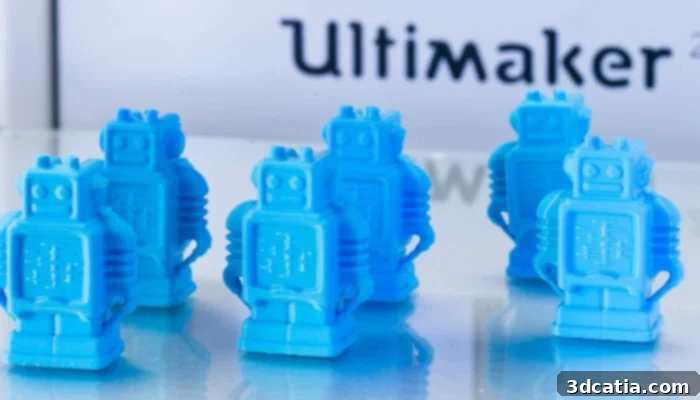
Models created using FDM technology are characterized by their layer lines and robust nature.
Industrial Applications and Sectoral Use
The distinct characteristics of FDM and SLA technologies, particularly concerning price, material properties, and print quality, have led to their adoption in different industrial sectors and for varying applications.
For FDM, its main uses are concentrated in areas where cost-effectiveness, material strength, and speed are prioritized over ultra-fine detail. It is a cornerstone technology for rapid prototyping, allowing engineers and designers to quickly iterate on designs, test form and fit, and validate concepts at a low cost. FDM is also extensively used for creating low-cost models, jigs, fixtures, and custom tooling in manufacturing environments, significantly improving efficiency. Its robustness and ability to print with engineering-grade thermoplastics make it suitable for producing functional prototypes and even some end-use parts, especially where structural integrity is more critical than surface aesthetics. Education benefits greatly from FDM’s affordability and ease of use, making 3D printing accessible for teaching and student projects. While historically associated with lower quality, advancements in FDM technology, including finer nozzles, more precise motion systems, and advanced material handling, are enabling high-quality FDM printers to produce parts with increasingly impressive detail and surface finish, blurring some of the traditional distinctions.
Stereolithography, with its inherently higher print quality, exceptional precision, and smooth surface finish, finds its niche in industries demanding exacting standards and intricate details. The jewelry sector extensively utilizes SLA for creating highly detailed master patterns for investment casting, particularly with specialized castable resins that burn out cleanly. The dental industry has revolutionized its workflows with SLA, using it to produce highly accurate dental models, surgical guides, retainers, clear aligner molds, crowns, and bridges, leveraging biocompatible resins for direct-contact applications. Medical professionals also use SLA for creating anatomical models for surgical planning and educational purposes. Artists and designers appreciate SLA’s ability to produce intricate miniatures, figurines, and concept models with unparalleled aesthetic quality. While powerful, SLA does have specific limitations; printed models can be sensitive to prolonged exposure to intense UV illumination or heat, as these can cause further curing, discoloration, or material degradation over time. However, ongoing material science developments are continually introducing new resins with improved stability and performance characteristics for various demanding applications.
Summary – Pros & Cons: A Quick Overview
To simplify your decision-making process, here’s a concise summary of the advantages and disadvantages for both FDM and SLA technologies:
FDM (Fused Deposition Modeling)
- Pros:
- Most widespread and accessible desktop 3D printing technology.
- Mechanism and operation are relatively simple, making it user-friendly.
- Significantly more affordable 3D printers, with entry-level models starting from €200-€400.
- Vast selection of materials (filaments) available, including basic plastics, flexible options, and engineering composites, at a lower cost per kilogram.
- Generally capable of larger build volumes for its price point.
- Parts are typically more robust and suitable for functional prototypes and end-use applications where strength is key.
- Post-processing is often less hazardous and simpler, mostly involving support removal and optional sanding.
- Cons:
- Visible layer lines are a common characteristic, leading to less smooth surface finishes.
- Requires thorough calibration and fine-tuning to achieve optimal print quality and precision.
- Printing intricate details and very small features can be challenging compared to SLA.
- Often exhibits anisotropic properties (strength varies depending on print orientation).
- Support structures can leave marks on the part surface upon removal.
SLA (Stereolithography)
- Pros:
- Exceptional print quality with incredibly smooth surface finishes and invisible layer lines.
- Capable of producing highly precise and intricate models with fine details, making it suitable for multiple demanding sectors like jewelry, dental, and medical.
- Offers specialized resins (e.g., castable, dental, flexible, high-temp) allowing for models with diverse mechanical and functional properties.
- Models created with this technique often offer greater accuracy, resolution, and isotropic strength.
- Ideal for aesthetic prototypes, fit-and-finish testing, and functional parts requiring high fidelity.
- Cons:
- The price of SLA 3D printers and their consumables (resins, resin tanks) is significantly higher, often outside many personal or small business budgets.
- Requires more technical knowledge and careful handling during printing and post-processing.
- Post-processing involves handling liquid resins (which can be toxic/irritating) and requires specific cleaning (IPA wash) and UV post-curing.
- Limited color options compared to FDM filaments.
- Generally has smaller build volumes than similarly priced FDM machines.
- Resins can be sensitive to UV light and heat over time, potentially causing degradation or yellowing.
The choice between FDM and SLA ultimately hinges on your specific project requirements. If affordability, a wide range of robust materials, and quick functional prototyping are your priorities, FDM is likely the better choice. However, if uncompromised detail, smooth surface finishes, high precision, and specialized material properties for specific applications like jewelry or dentistry are paramount, then SLA will deliver superior results despite the higher investment and more involved workflow.
Which 3D printing technology do you prefer, SLA or FDM, and why? Share your thoughts and experiences in a comment below or connect with us on our Facebook and Twitter pages! Don’t forget to sign up for our free weekly Newsletter here to receive the latest 3D printing news straight to your inbox!