
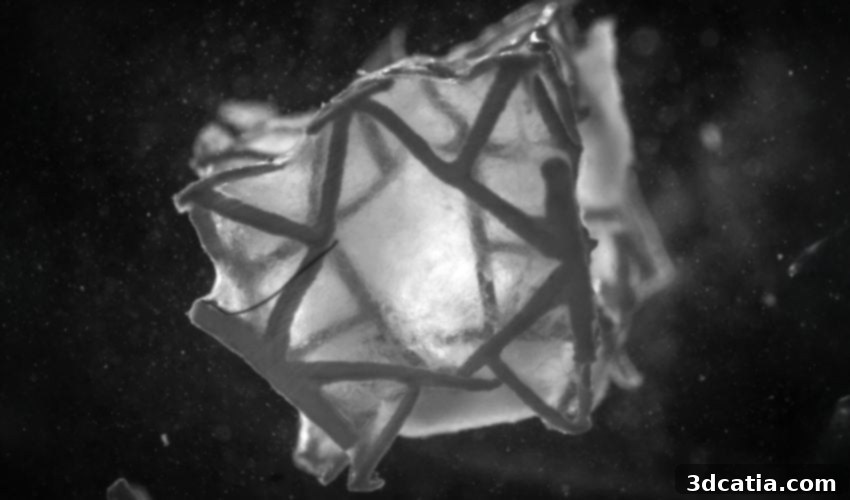
Revolutionary RCPatch: 3D-Printed Heart Patch for Advanced Cardiac Regeneration
In a groundbreaking development poised to transform cardiac surgery, an interdisciplinary research team, spearheaded by Professor Robert Katzschmann from ETH Zurich and Professor Omer Dzemali from University Hospital Zurich, has unveiled a remarkable innovation known as the “RCPatch.” This pioneering three-dimensional, tissue-integrating heart patch represents a significant leap forward in medical technology. Unlike conventional treatments, the RCPatch is engineered not only to seal defective areas within the heart chamber but also to actively promote and contribute to their natural regeneration. This novel approach promises a future where heart defects are not merely repaired but truly healed, marking a new era in regenerative cardiovascular medicine.
The current clinical standard for treating heart defects, particularly those resulting from myocardial infarction (heart attack), often involves the use of bovine pericardium patches (BPPs). While these patches offer practical advantages such as stability and ease of implantation, they come with significant biological limitations. BPPs are essentially inert, meaning they are biologically inactive and remain permanently within the heart as foreign bodies. This passive presence introduces several long-term risks for patients, including the potential for calcification, which can stiffen the patch and impair heart function; thrombosis, leading to the formation of dangerous blood clots; or chronic inflammation, which can further complicate cardiac health. Recognizing these inherent drawbacks, the dedicated research team at ETH Zurich embarked on an ambitious mission: to develop a biologically active patch that could overcome these limitations by fully integrating into the native heart tissue, thereby offering a more sustainable and regenerative solution.
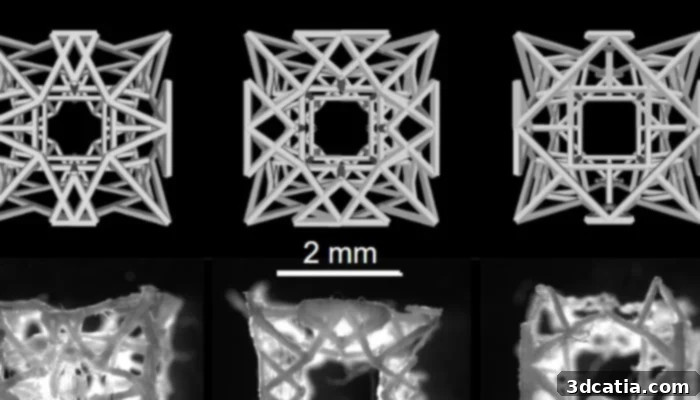
The lattice structure of the ‘patch’ from three perspectives provides insight into its intricate design.
The Innovative Design: Three Coordinated Components for Heart Regeneration
The RCPatch’s pioneering efficacy stems from its ingenious composition, comprising three intricately coordinated components that work in synergy to achieve both immediate mechanical repair and long-term biological regeneration. This multi-layered design represents a sophisticated blend of engineering and biology, carefully crafted to mimic and support the heart’s natural healing processes.
1. The Fine-Mesh Sealing Net
The first component is a fine-mesh sealing net, strategically positioned to lie directly over the cardiac defect. Its primary role is to provide immediate mechanical closure, effectively sealing the damaged area and preventing blood leakage. This initial sealing capability is crucial for stabilizing the heart post-implantation and creating a secure environment for the subsequent regenerative processes to unfold. The material choice for this net ensures biocompatibility and allows for effective interaction with surrounding tissues.
2. The 3D-Printed Biodegradable Support Scaffold
Central to the RCPatch’s innovative structure is a three-dimensional support scaffold, meticulously fabricated using advanced 3D printing techniques. This scaffold boasts a precise lattice structure, intricately designed from biodegradable polymers. The choice of biodegradable materials is paramount; unlike permanent implants, these polymers are engineered to gradually dissolve over time, leaving no foreign material behind once the heart tissue has regenerated. The lattice structure itself is not arbitrary; its open, porous architecture is critical for facilitating cell infiltration, nutrient diffusion, and waste removal, all of which are essential for promoting healthy tissue growth and integration within the defect area. This 3D-printed framework provides the necessary mechanical stability and temporary structural support while guiding the regenerative process.
3. The Regenerative Hydrogel with Living Heart Cells
The third, and arguably most biologically active, component is a specialized hydrogel formulated to actively promote tissue growth and regeneration. This hydrogel is not only applied to the sealing net but also meticulously used to fill the intricate pores of the 3D-printed lattice structure. Crucially, this hydrogel is populated with living heart cells. These cells are the engines of regeneration, capable of integrating with the native cardiac tissue and contributing directly to the repair and restoration of heart function. Once the RCPatch is implanted, the hydrogel provides a nurturing microenvironment that encourages these cells to thrive, proliferate, and differentiate, thereby facilitating the active remodeling and regeneration of the damaged myocardial tissue.
The beauty of the RCPatch’s design lies in its dynamic interaction with the body. Upon implantation, the entire assembly fuses seamlessly with the surrounding heart tissue. As regeneration progresses and new, healthy tissue forms, the biodegradable support scaffolding gradually and completely dissolves. This ensures that, in the long term, the patient’s heart is left only with regenerated, native cardiac tissue, free from any permanent foreign bodies. This elegant solution addresses the core limitations of traditional patches, paving the way for true biological integration and lasting recovery.
Compelling Preclinical Success and Promising Outlooks
The efficacy and potential of the RCPatch have been rigorously evaluated through preclinical studies conducted in pig models, which closely mimic human cardiac physiology. In these critical trials, the RCPatch was successfully implanted to seal an artificially induced defect in the left ventricle, the heart’s primary pumping chamber. The results were overwhelmingly positive and significantly exceeded the performance of existing treatments. The implantation procedure itself proved to be straightforward, indicating potential for clinical feasibility. Crucially, the patch demonstrated exceptional mechanical integrity, successfully withstanding the high pressures and dynamic forces inherent to the heart’s constant beating. Beyond its structural robustness, the RCPatch effectively prevented bleeding, a common and serious complication in cardiac repair, and, most importantly, actively contributed to the restoration of heart function. This regenerative capacity makes the RCPatch far more promising than the biologically inert bovine pericardium patches (BPPs) currently in widespread use, offering not just a patch, but a pathway to true healing.
The highly encouraging results from these preclinical evaluations lay a robust foundation for the continued development of the RCPatch, propelling it closer to clinical application in human patients. The research team harbors an ambitious, long-term goal: to create an implantable, mechanically reinforced, and fully tissue-based heart patch capable of effectively treating extensive myocardial damage. This vision extends beyond merely patching a hole; it aims for comprehensive regeneration of damaged heart muscle. However, realizing this transformative goal will necessitate extensive and meticulous evaluations. The immediate next phase of research involves conducting comprehensive long-term animal studies. These studies are critical for thoroughly analyzing the device’s overall stability under chronic conditions, monitoring its sustained regenerative capabilities over extended periods, and ensuring its safety and effectiveness before advancing to human trials. This diligent approach underscores the commitment to bringing a safe and truly revolutionary therapy to patients suffering from heart disease.

A schematic diagram showing how the RCPatch is applied to a cardiac defect.
Revolutionizing Heart Surgery: Beyond Mechanical Closure to Active Tissue Healing
The advent of the RCPatch signifies a profound paradigm shift in the realm of heart surgery. Traditionally, interventions for heart defects have focused primarily on mechanical closure – essentially plugging a hole. With the RCPatch, medical professionals could not only achieve precise mechanical closure but also actively promote the healing and regeneration of living heart tissue. This dual-action capability moves beyond passive repair, ushering in an era of active biological restoration. The unique combination of immediate sealing, robust mechanical stability, and profound biological integration is what sets this concept apart from any existing treatments. If this innovative device continues to demonstrate success in subsequent, more extensive studies, it would represent an monumental step toward the widespread adoption of regenerative therapies for a myriad of heart diseases, offering hope for millions affected by cardiac ailments worldwide. For those interested in delving deeper into the technical specifics and ongoing research, additional information can be found HERE.
Join the Conversation on Medical Innovations
The development of the RCPatch underscores the incredible potential of interdisciplinary research and advanced manufacturing techniques like 3D printing in addressing some of the most pressing challenges in healthcare. What are your thoughts on this innovative heart patch and its implications for the future of cardiac care? We invite you to share your perspectives and engage with our community. Please let us know your opinions in a comment below, or join the discussion on our LinkedIn or Facebook pages! Staying informed about the latest advancements in medical technology is crucial, especially in a field as dynamic as 3D printing. Don’t miss out on critical updates – sign up for our free weekly Newsletter to receive the latest 3D printing news directly in your inbox. You can also explore our extensive video content and interviews on our YouTube channel. Furthermore, for those with a specific interest in the rapidly evolving landscape of medical and dental 3D printing news, we encourage you to visit our dedicated page HERE for a wealth of focused content and analyses.
*Cover Photo Credit: ETH Zürich