
Unlocking Advanced Manufacturing: A Comprehensive Guide to FDM 3D Printing with Metal and Ceramic Filaments
When the conversation turns to 3D printing, the technology that most frequently springs to mind for the general public and many industry newcomers is FDM, or Fused Deposition Modeling. This extrusion-based additive manufacturing method is celebrated for its relative simplicity and accessibility, requiring merely a build plate, an extruder (or multiple for multi-material printing), and a thermoplastic filament to construct parts layer by layer. Thermoplastics remain the most widely utilized materials for FDM, with popular choices including PLA, PETG, and ABS. These polymers are favored for their ease of printing, making them ideal for beginners and a staple in prototyping and educational settings. Their widespread adoption is largely due to how readily polymers can be processed into filament form.
However, the landscape of FDM is evolving rapidly, moving beyond these traditional polymer-based materials. While metals and ceramics have historically been associated with more specialized and often more expensive additive manufacturing processes like powder bed fusion, material jetting, or binder jetting, advancements in material science have brought these high-performance materials into the realm of FDM. Both metals and ceramics are now available in filament form, making them compatible with a vast array of existing FDM printers. This development is profoundly attractive because these materials boast a plethora of superior physical properties compared to polymers, such as significantly higher durability, enhanced resistance to extreme temperatures, superior strength, and excellent chemical inertness. This capability is particularly transformative for industries looking to leverage FDM for more demanding, industrial-grade applications, especially within critical sectors like engineering, aerospace, automotive, and medical device manufacturing.
The Evolution of FDM: Why Advanced Materials Matter
The limitations of conventional thermoplastics become apparent when confronted with environments requiring exceptional mechanical strength, thermal stability, or chemical resistance. For instance, aerospace components often operate under immense stress and fluctuating temperatures, while medical implants demand biocompatibility and robust mechanical integrity. Traditional FDM plastics, while versatile, simply cannot meet these stringent requirements. The advent of metal and ceramic FDM filaments bridges this gap, enabling designers and engineers to create parts with properties previously unattainable through standard FDM.
The superior attributes of metal and ceramic filaments extend beyond mere durability. Metals, depending on their alloy, can offer remarkable tensile strength, excellent electrical and thermal conductivity, and high hardness, making them suitable for functional prototypes, tooling, and even end-use parts. Ceramics, on the other hand, provide unparalleled heat resistance, stiffness, hardness, wear resistance, and often excellent insulating properties, alongside chemical inertness. These characteristics make ceramic FDM ideal for applications in high-temperature environments, specialized tooling, and custom laboratory equipment. By adapting FDM technology to these advanced materials, manufacturers can now produce complex geometries with the desired material performance, opening new avenues for innovation and customization without the prohibitive costs and complexities often associated with other metal or ceramic additive manufacturing methods.
Decoding the FDM Process for Metal and Ceramic Filaments
Transitioning from printing with standard plastics to metals and ceramics using FDM requires understanding a multi-stage process that extends beyond the printer itself. While the initial printing phase shares similarities with traditional FDM, the subsequent steps are critical for transforming a “green part” into a fully dense, functional metal or ceramic component. This involves specialized post-processing stages known as debinding and sintering.
Step 1: Printing the Green Part with Bound Filaments
The key to FDM printing with metals and ceramics lies in what are known as “bound filaments.” Unlike pure polymer filaments, these specialized materials consist of fine metal or ceramic powder particles uniformly dispersed within a polymer binder. This binder acts as a temporary carrier, allowing the composite material to be extruded and shaped by an FDM printer. The printing process itself largely mirrors that of conventional FDM, with users needing to set appropriate nozzle temperatures, print speeds, and bed adhesion settings suitable for the specific bound filament. During this stage, the FDM printer deposits layers of this composite material, building up a “green part.” This green part is essentially a fragile, polymer-rich replica of the desired object, holding its shape thanks to the binder, but lacking the final mechanical properties of a solid metal or ceramic component. Careful calibration and understanding of material-specific parameters are crucial to produce a structurally sound green part that can withstand the subsequent post-processing stages.
Step 2: Debinding – Removing the Binder
The debinding stage is arguably the most delicate and critical step in the entire process. Its primary purpose is to meticulously remove the polymer binder from the green part. This binder, essential for printing, must be eliminated to prepare the part for sintering, where the metal or ceramic particles will fuse together. Debinding typically involves controlled exposure to either heat (thermal debinding) or chemical solvents (solvent debinding), or often a combination of both. In thermal debinding, the green part is heated gradually to precise temperatures, allowing the binder to evaporate or decompose without causing the part to crack or deform. Solvent debinding, on the other hand, involves immersing the part in a solvent that selectively dissolves the polymer binder. The exact method and parameters are highly dependent on the specific filament material and binder system used by the manufacturer. Incorrect debinding can lead to internal defects, porosity, or complete structural failure of the part, compromising its final properties. This stage leaves behind a “brown part” – a fragile, porous structure composed almost entirely of the metal or ceramic particles, held together by minimal inter-particle friction.
Step 3: Sintering – Achieving Full Density and Strength
Following debinding, the brown part undergoes the sintering process. This is where the true transformation occurs, turning the fragile, porous structure into a dense, strong, functional metal or ceramic component. Sintering involves heating the brown part to a temperature significantly below the material’s melting point, but high enough to allow the individual metal or ceramic particles to fuse together at their contact points through atomic diffusion. As sintering progresses, the pores within the part shrink, and the material densifies, resulting in a reduction in overall volume (shrinkage). This shrinkage is a predictable and often significant phenomenon that must be accounted for during the initial design phase of the part, requiring careful scaling of the original CAD model. The sintering atmosphere (e.g., vacuum, inert gas, or hydrogen) is also carefully controlled to prevent oxidation or contamination. The result is a fully dense part with the mechanical, thermal, and chemical properties characteristic of the chosen metal or ceramic. This final part can then be subjected to further post-processing steps such as machining, polishing, or heat treatment, if required, to achieve desired surface finishes or specific material properties.
Advantages and Considerations for Industrial Adoption
The integration of metal and ceramic filaments into FDM technology offers several compelling advantages, particularly for industrial applications. It lowers the barrier to entry for producing complex metal and ceramic parts, as it leverages familiar FDM hardware and workflows. This can significantly reduce initial investment costs compared to acquiring specialized laser-based or binder jetting systems. FDM also allows for greater design flexibility and customization, making it suitable for rapid prototyping, small-batch production of specialized components, and even tooling. The ability to create lightweight structures with intricate internal geometries, which are challenging or impossible with traditional manufacturing methods, opens up new possibilities for performance optimization in various sectors.
However, there are also considerations. The complete workflow, including debinding and sintering, requires specialized equipment and expertise beyond a typical FDM setup. Users must account for material shrinkage during sintering in their designs, which requires experience and iterative testing. While the cost of entry for the printer might be lower, the overall cost per part, especially when factoring in specialized filaments and the energy-intensive post-processing, can be higher than for polymer parts. Furthermore, material selection and print parameters are more critical for ensuring part integrity and desired mechanical properties. Nonetheless, for industries seeking to innovate with high-performance materials without the massive capital expenditure of other additive manufacturing techniques, FDM with metal and ceramic filaments presents a powerful and accessible solution.
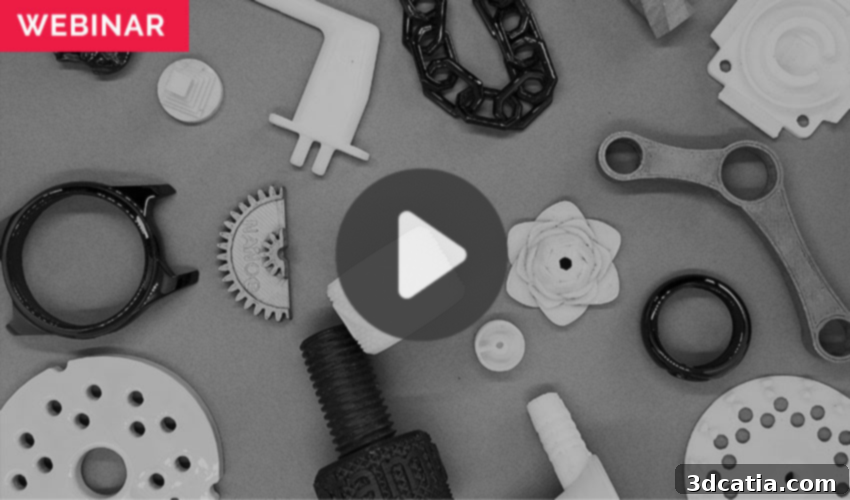
To delve deeper into these intricate processes and understand real-world applications, 3Dnatives hosted a highly informative webinar titled “How can you use FDM to print Ceramics and Metals?” This event, which took place on June 22nd at 4PM CEST (10AM EDT), brought together leading experts in the field. We were privileged to be joined by Nanoe, a pioneering manufacturer renowned for its ceramic and metal filaments compatible with a wide range of FDM printers currently on the market. Also participating was Novadditive, a specialized center dedicated to providing accessible, on-demand, and customized ceramic parts for various industries. Nanoe, through its Zetamix brand launched in 2018, has been at the forefront of making high-performance ceramic and metal materials available for FDM. The webinar provided an in-depth exploration of the underlying technology, detailed the 3D printing processes including the crucial debinding and sintering steps for both ceramic and metal FDM printing, and showcased compelling case studies demonstrating successful applications. A lively Q&A session followed, allowing attendees to directly engage with the experts. For those who missed it, or wish to revisit the valuable insights shared, the replay of this pivotal webinar is available below.
Meet Our Esteemed Speakers:
A trained engineer from Ecole Centrale Paris, Guillaume de Calan founded the raw manufacturing company, Nanoe, in 2008. Driven by a vision to make advanced ceramic materials accessible for a wider range of 3D printing processes, the company strategically launched its specialized brand, Zetamix, in 2018. This pivotal move enabled Nanoe to make significant inroads into the burgeoning metal and ceramic 3D printing markets, offering innovative filament solutions for FDM users globally.
Vincent Poirier stands as a distinguished ceramic expert engineer, boasting an impressive career spanning over 30 years within the dynamic ceramic industry. Leveraging his profound knowledge and extensive experience, he embarked on an entrepreneurial journey in 2019, launching Novadditive. This pioneering venture emerged as the first specialized center dedicated to facilitating the creation and provision of ceramic parts. Vincent’s overarching goal with Novadditive is to democratize access to high-quality, on-demand, and customized ceramic components for any industry, breaking down traditional barriers to adoption.
Madeleine Prior serves as the dedicated English Content Specialist for 3Dnatives, widely recognized as the leading international online magazine providing comprehensive coverage on 3D Printing and Additive Manufacturing. As an integral member of the 3Dnatives team, Madeleine is responsible for meticulously defining the content strategy for its extensive English-speaking audience. Her role involves curating and delivering the latest news, insightful analyses, and critical developments from the additive manufacturing sector, ensuring readers are well-informed about its ongoing implications and innovations.
The Future of FDM: Pushing Material Boundaries for Innovation
The journey of FDM from a prototyping tool for plastics to a versatile platform capable of producing high-performance metal and ceramic parts represents a significant leap forward in additive manufacturing. This evolution is driven by continuous innovation in material science and processing techniques, enabling industries to overcome traditional manufacturing constraints and unlock new possibilities for design and application. The ability to integrate advanced materials like metals and ceramics into the FDM workflow democratizes access to robust, functional components, fostering innovation across diverse sectors from intricate medical instruments to durable industrial tooling and aerospace components. As the technology matures, with ongoing advancements in filament formulations, printer capabilities, and post-processing efficiencies, we can anticipate an even broader adoption and more sophisticated applications of FDM with these advanced materials.
Are you interested in expanding your knowledge and exploring how FDM technology can be leveraged to produce ceramics and metals for your specific needs? We encourage you to share your thoughts, questions, and experiences in a comment below! Join the conversation and connect with us on our Facebook, Twitter, and LinkedIn pages for the latest updates and discussions in the additive manufacturing world. To ensure you never miss out on critical developments and expert insights, sign up for our free weekly Newsletter here, and get the most up-to-date 3D printing news delivered directly to your inbox!