
Exploring the Cutting Edge: This Week’s Top 3D Printing Innovations and Developments
Welcome to our definitive compilation of this week’s most compelling 3D printing highlights, showcasing groundbreaking advancements and practical insights from across the additive manufacturing landscape. As the world of 3D printing continues to evolve at an astonishing pace, we bring you a curated selection of stories that not only demonstrate the technology’s current capabilities but also hint at its incredible future potential. From optimizing print quality in desktop resin setups to revolutionizing automotive engineering, crafting iconic props, ensuring workplace safety in large-scale operations, and pioneering sustainable housing solutions, this week’s roundup is packed with innovation. Join us as we delve into these fascinating developments that are shaping the industry and beyond.
Mastering Resin 3D Printing: Essential Slicing Techniques and Troubleshooting for Flawless Prints
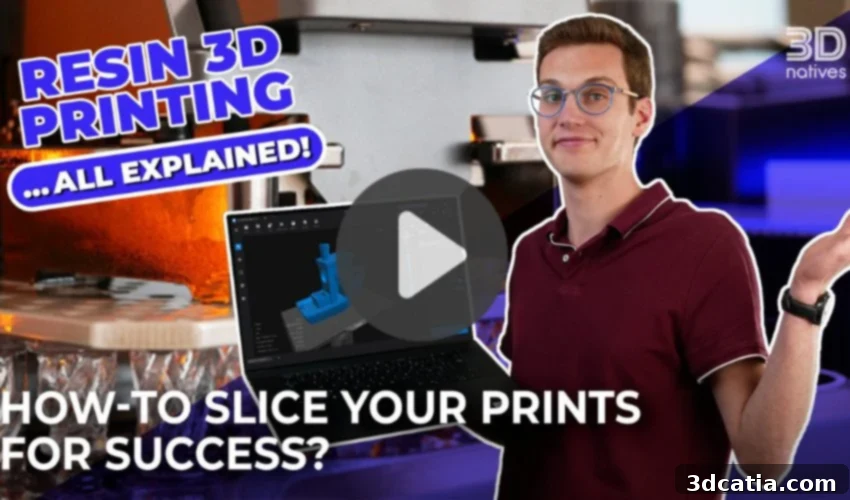
Kicking off our weekly review, we’re excited to present our exclusive video guide, offering invaluable tips for achieving flawless resin 3D prints. Resin 3D printing, or stereolithography (SLA) and digital light processing (DLP), is renowned for its exceptional detail and smooth surface finishes, making it ideal for miniatures, prototypes, and intricate models. However, it can also be challenging for newcomers and even experienced users. Our host, Elliot, dives deep into the critical aspects of the slicing process, which is the foundational step for any successful print. He provides practical, actionable advice designed to help you navigate common pitfalls and significantly improve your print success rates.
The guide covers key areas that are often overlooked but are crucial for optimizing print quality and minimizing costly resin wastage. Elliot demonstrates how to effectively dial in your print settings, a process that requires understanding your specific resin and printer characteristics to achieve optimal exposure times and layer heights. Crucially, he explains the strategic placement of supports—structures vital for preventing model deformation and ensuring that overhangs and intricate details are perfectly rendered. Viewers will also learn how to identify and eliminate “islands” within a model, which are isolated areas that can detach during printing and lead to failures. Furthermore, the video addresses persistent issues like “cupping,” where suction forces can cause prints to warp or fail, offering solutions to mitigate these problems. Finally, for larger models, Elliot provides guidance on hollowing out prints, a technique that saves material and reduces print times while maintaining structural integrity. These expert tips are designed to empower users to avoid print failures and achieve professional-grade results consistently.
Porsche’s Performance Revolution: Forging Lighter, Stronger Pistons with 3D Printing for the 911 GT2 RS
Our second highlight takes us into the fast lane of automotive innovation, as DPCcars showcases how luxury sports car manufacturer Porsche is leveraging advanced 3D printing technology to enhance the performance of its iconic 911 GT2 RS. This groundbreaking application focuses on optimizing the vehicle’s pistons, a core component critical to engine efficiency and power output. In a strategic collaboration with leading industry partners Mahle, Trumpf, and Zeiss, Porsche has adopted a sophisticated bionic design approach. This method, inspired by natural structures, allows for the creation of components that are not only significantly lighter but also stronger and more efficient than conventionally manufactured parts, leading to an overall improvement in the sportscar’s dynamic capabilities.
The video provides an in-depth look at Porsche’s meticulous engineering process and rigorous testing protocols. It highlights how additive manufacturing enables the production of complex internal geometries previously impossible with traditional methods, leading to superior thermal management and reduced mass. The significance of this innovation is underscored by a grueling 200-hour endurance test, a formidable challenge designed to push the 3D printed pistons to their absolute limits. This extensive testing period is crucial for demonstrating the unparalleled durability, reliability, and sustained high-performance capabilities of these advanced components under extreme operating conditions. Porsche’s commitment to integrating 3D printing into such critical engine parts represents a significant leap forward in automotive engineering, promising to redefine benchmarks for performance, efficiency, and material utilization in high-performance vehicles. This fusion of cutting-edge technology and automotive passion not only elevates the 911 GT2 RS but also paves the way for wider adoption of additive manufacturing in the high-stakes world of motorsport and luxury car production.
From Game to Reality: Crafting an Iconic Fallout Stimpak with 3D Printing
For fans of post-apocalyptic adventures and digital craftsmanship, our third highlight is a treat, perfectly timed with the recent premiere of the Fallout series. 3D printing enthusiast Iengzeh takes us on an immersive journey documenting the intricate process of 3D printing and meticulously finishing the iconic Stimpak, a vital medical injector from the beloved Fallout universe. This project exemplifies how additive manufacturing empowers individuals to bring virtual objects into the physical world with remarkable accuracy and detail, transforming digital designs into tangible, fan-favorite props.
Using a high-quality model provided by Faran3D, Iengzeh meticulously guides viewers through each stage of the creation process. The journey begins with the crucial step of slicing the digital model, preparing it for the physical print. The Stimpak is then brought to life using PLA (Polylactic Acid) filament, a popular and versatile material for FDM (Fused Deposition Modeling) 3D printers, chosen for its ease of use and good surface finish potential. Following the printing phase, extensive post-processing steps are undertaken to ensure the prop’s authenticity. This includes careful cleaning to remove any support structures or print artifacts, followed by sanding to smooth out layer lines and create a seamless surface. Priming prepares the surface for painting, allowing for better paint adhesion and a more vibrant final color. The finishing touches are where the Stimpak truly comes alive: a carefully selected glass vial is integrated and filled with fake blood, replicating the syringe’s essential component, while intricate wiring details are added to enhance its realistic, utilitarian aesthetic. The culmination of this detailed effort is a highly realistic Stimpak decoration that is not only aesthetically accurate to the gritty, retro-futuristic post-nuclear world of Fallout but also serves as a testament to the creative possibilities that 3D printing unlocks for prop makers and enthusiasts alike. This project truly bridges the gap between digital fandom and physical artistry.
Optimizing Production & Safety: Environmental Control in a Large-Scale 3D Print Farm
Next up, we delve into the often-unseen but critically important operational aspects of large-scale additive manufacturing. Kason Knight from i-SOLIDS: 3D Printing & Engineering provides an illuminating insight into the essential requirements for maintaining optimal conditions within their sprawling Texas 3D printing farm, proudly one of the largest facilities of its kind in the United States. His focus extends beyond mere production volume, emphasizing the dual importance of ensuring consistent print quality and safeguarding employee health and safety—factors that are paramount in any industrial setting, especially when dealing with advanced manufacturing processes.
Knight meticulously breaks down the key environmental variables that demand stringent control within a high-volume 3D printing environment. These include precise temperature regulation, which is crucial for preventing material warping and ensuring consistent layer adhesion across numerous machines. Humidity control is another vital factor, as fluctuations can negatively impact filament properties, resin curing, and the overall stability of prints. Perhaps most critically, Knight addresses the management of particulate matter and Volatile Organic Compounds (VOCs), which are byproducts of various 3D printing processes. These airborne contaminants can pose significant health risks to employees if not properly managed, and can also degrade print quality over time by settling on sensitive components. He explains the profound importance of maintaining consistency and strict regulation in these environmental conditions, highlighting how even minor deviations can lead to compromised product quality, increased material waste, and potential health hazards. Furthermore, Knight reveals the sophisticated array of equipment and innovative strategies his team employs to maintain an environment that is not only conducive to mass 3D printing but also ensures a safe and healthy workspace. This deep dive offers valuable lessons for anyone operating or planning a large-scale 3D printing facility, underscoring the fact that advanced technology demands an equally advanced approach to facility management and environmental control.
Revolutionizing Housing: Canada’s Inaugural 3D Printed Multi-Unit Residential Homes
Concluding our journey through this week’s 3D printing marvels, the Canada Mortgage and Housing Corporation shines a spotlight on a truly transformative project: the development of Canada’s first 3D printed residential homes in Leamington, Ontario. This pioneering initiative is the result of a powerful collaboration between Habitat for Humanity Windsor-Essex, the University of Windsor, and Nidus3D, bringing together humanitarian efforts, academic expertise, and cutting-edge construction technology. This project represents a significant stride towards addressing a critical societal challenge with innovative solutions.
The context for this project is particularly poignant, given the worsening housing shortage that is currently impacting over 10,500 families in Windsor and Essex County alone. The severe lack of affordable living options has created a pressing need for rapid, cost-effective, and sustainable construction methods. This collaborative endeavor directly seeks to provide viable, affordable housing solutions for families in need, while simultaneously revolutionizing traditional construction practices that are often slow, labor-intensive, and resource-heavy. By leveraging advanced construction 3D printing technology, the initiative is poised to dramatically improve sustainability efforts within the home construction sector. 3D printing offers numerous environmental benefits, including reduced material waste through precise application, lower energy consumption during the build process, and the potential to use locally sourced or recycled materials. Beyond sustainability, this method promises faster construction times, allowing for quicker deployment of much-needed housing units, and offers design flexibility that can lead to more durable and energy-efficient structures. This landmark project in Leamington is not just about building houses; it’s about building a future where innovative technology, social responsibility, and environmental stewardship converge to create a lasting positive impact on communities and redefine the possibilities of modern home construction.
Which of these incredible 3D printing advancements captured your imagination the most this week? Are you grappling with similar challenges in slicing resin 3D prints, or perhaps inspired by the potential of 3D printed homes? We’d love to hear your thoughts and insights! Share your comments below or connect with us on our LinkedIn, Facebook, and Twitter pages. Don’t miss out on staying informed; make sure to sign up for our free weekly newsletter here to receive the latest 3D printing news directly in your inbox. For a visual feast of all our content, you can also find every video featured and more on our dedicated YouTube channel. Stay curious, stay informed, and keep exploring the incredible world of additive manufacturing!