
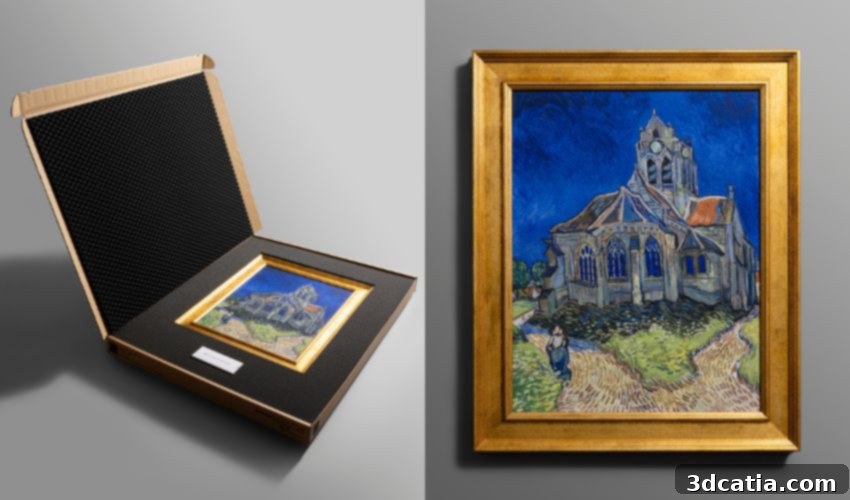
LITO: Pioneering Art Democratization and Preservation Through Revolutionary 3D Technologies
Historically, the world of art and culture has often been perceived as an exclusive domain, largely reserved for a privileged few who possess the means to access its treasures. LITO is on a groundbreaking mission to dismantle these long-standing barriers, making fine art universally accessible and reshaping our understanding of artistic creation and restoration. By leveraging advanced 3D technologies, LITO meticulously digitizes existing masterpieces and recreates them using a state-of-the-art proprietary printing process. This innovative approach not only broadens access to art but also opens up unprecedented possibilities in both the preservation of cultural heritage and the forging of new artistic expressions. LITO actively partners with esteemed museums, leading institutions, and visionary contemporary artists to safeguard invaluable works through its unique methodology, or to craft exquisite replicas and limited-edition creations that uphold the integrity and emotion of the originals. In this insightful interview, Joachim Marte, co-founder and CEO of LITO, delves into the intricate operations and profound motivations behind the company, illuminating the transformative potential of 3D technologies within the art world.
3DN: Could you briefly introduce yourself and LITO?
Hello, I’m Joachim Marte, and I serve as the CEO and co-founder of LITO, an innovative Austrian company I established in 2022 alongside John Dodelande. Our foundational aim at LITO is to democratize the art world, ensuring that exceptional art is no longer confined to galleries or exclusive collections, but is accessible to a much broader audience. We envision a future where art is not just seen, but truly experienced, passionately collected, and deeply integrated into people’s lives in new and meaningful ways. This mission drives every aspect of our work, from technological development to artistic collaboration.
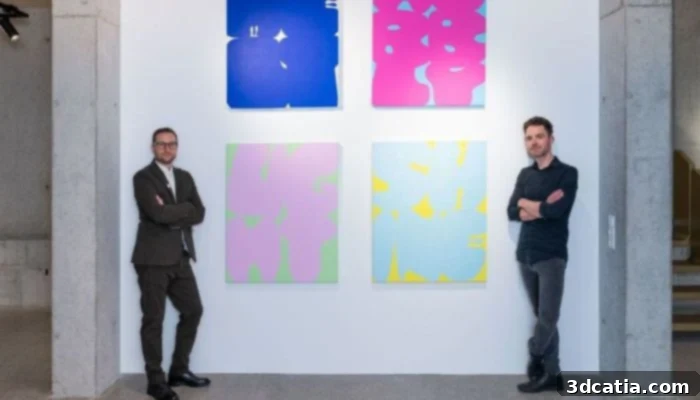
Joachim Marte, co-founder and CEO of LITO and Marcel Summer, Chief Technology Officer and co-founder, at the LITO Gallery in Bregenz, Austria.
LITO operates through two distinct yet complementary divisions. With **LITO Masters**, we offer art enthusiasts and seasoned collectors the opportunity to acquire exceptionally faithful reproductions of their most cherished historical artworks. These aren’t mere prints; they are meticulously crafted editions that capture the original’s texture, relief, and color fidelity, ensuring no compromise on quality or the authentic experience. On the other hand, **LITO Editions** represents our commitment to contemporary art innovation. For this division, we collaborate directly with leading contemporary artists, inviting them to conceptualize and design original works specifically for our unique production process. These concepts are then rendered and developed into exclusive, limited editions within our state-of-the-art LITO Technology Lab. Our dedicated team of LITO experts brings unparalleled technical know-how to the table, working hand-in-hand with each artist to discover the most creative solutions and forms that not only push artistic boundaries but also resonate deeply with the artist’s individual visual language and creative intent.
LITO offers artists an entirely novel creative pathway, one that diverges significantly from traditional working methods and unlocks fresh potential for innovation. The result is what we proudly consider a new art form – a fascinating hybrid that expertly blurs the lines between a conventional print, a highly coveted limited edition, and a truly unique work of art. The artist remains fully immersed and involved throughout the entire production process of each edition, ensuring that their vision is translated with utmost fidelity. Each exclusive work is conceived specifically for and collaboratively with LITO, then meticulously printed and published in small, highly limited editions. Every piece is personally signed and numbered by the artist, offering an unparalleled level of provenance and exclusivity. Crucially, these editions convey the profound physicality, rich materiality, and emotional depth of an authentic, original artwork, making them far more than mere reproductions; they are artistic creations in their own right, imbued with the spirit of both the artist and LITO’s innovative spirit.
3DN: Why is LITO focusing on digitization and 3D printing? How did the idea of integrating these technologies come about?
LITO’s profound focus on 3D digitization and advanced 3D printing is rooted in our unwavering commitment to achieving the absolute pinnacle of art edition quality. We aim to guarantee not only optimum color accuracy and an exact faithful representation of an artwork’s visual characteristics but, crucially, to replicate its tactile elements – the intricate brushstrokes, complex reliefs, and textured lacquered surfaces that define its physical presence. The visionary idea of integrating these transformative technologies emerged from a critical realization: traditional printing techniques, while historically significant, inherently reach their limitations when attempting to capture the true depth, nuance, and three-dimensional qualities of original works of art. These conventional methods often flatten textures and simplify the subtle topographical variations that are integral to an artwork’s character.
In contrast, the application of sophisticated 3D scanning technology empowers LITO to capture precise, multi-dimensional data of an artwork. This includes minute, intricate details that are often entirely overlooked or simply uncapturable by two-dimensional photographic or scanning methods. By creating a comprehensive digital topography of the artwork, we obtain an unparalleled level of detail regarding its surface, relief, and textural nuances. This rich, high-fidelity data then serves as the blueprint for our advanced 3D printing processes. Utilizing specialized printers, we can meticulously reconstruct the artwork layer by layer, accurately reproducing its physical properties with exceptional precision. This innovative process ensures that the fundamental essence and integrity of the original work are not just preserved but genuinely resurrected in its new edition. Through this revolutionary approach, LITO is poised to completely redefine and revolutionize the field of art printing, promising art lovers and collectors across the globe an incomparable standard of quality, authenticity, and a truly immersive experience that was previously unimaginable.
3DN: What are the possibilities offered by 3D technologies in the field of restorative art and in the creation of new art objects?
3D technologies are unlocking truly exciting and transformative possibilities in both the delicate field of art restoration and the boundless realm of artistic creation. Specifically, advanced 3D scanning offers museums, conservators, and art historians revolutionary methods to delve “behind the canvas” and beneath the surface, gaining an unprecedented and deeper understanding of artworks. By making visible the complex, layered techniques and often hidden compositional changes employed by artists, these technologies provide insights that traditional examination methods simply cannot reveal. This ability to non-invasively explore the internal structure and history of a piece is invaluable for both scholarly research and practical conservation.
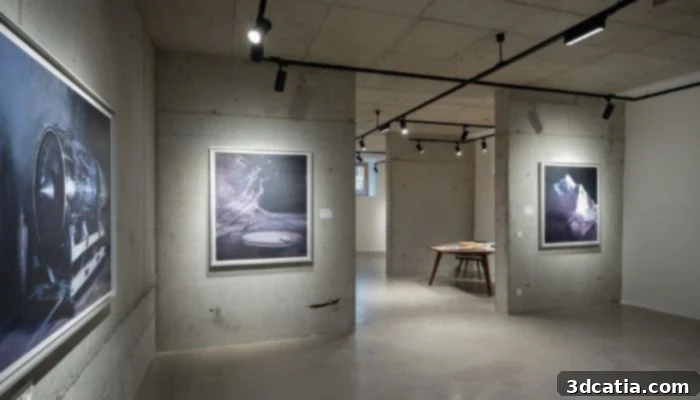
Galerie LITO Editions, Bregenz, Austria. Jia Aili limited edition prints on paper, “Untitled” 2023
By digitally capturing the precise surface topography and underlying structural data of paintings in three dimensions, 3D scanning empowers art historians and restorers to meticulously explore hidden details such as pentimenti (visible traces of earlier painting under a final layer), preparatory underdrawings, and minute brushstroke variations that might be entirely invisible to the naked eye. This technology provides invaluable insight into the artist’s creative process, the specific materials and pigments used, and any modifications or interventions made over time. Furthermore, 3D scanning facilitates entirely non-invasive analysis, significantly minimizing the risk of causing damage to fragile or highly valuable works of art during examination and restoration procedures. Conservators can utilize this sophisticated technology to accurately assess the current condition of paintings, precisely identify early signs of deterioration, and develop more targeted, effective, and ethically sound restoration plans. This leads to more informed decisions and ultimately, better long-term preservation outcomes for our shared cultural heritage.
In the realm of contemporary creative arts, 3D technologies furnish artists with a powerful new toolkit to explore uncharted dimensions of expression and materiality. The applications are vast and continually expanding: from sculptors who utilize 3D printing to imbue their complex digital designs with physical form and texture, to multimedia artists who seamlessly integrate 3D scanning, virtual reality, and augmented reality into captivating, immersive installations that challenge traditional perception. Beyond these, generative artists employ 3D software to create intricate, algorithmically driven forms, while others use these tools for rapid prototyping of functional art or architectural models. Overall, 3D technologies are fundamentally reshaping the art world, fostering not only a deeper understanding and more robust preservation of historical works but also stimulating unparalleled creativity across diverse artistic disciplines. The continuous advancement and integration of these technologies promise to profoundly enrich both the appreciation and creation of art in remarkably innovative and exciting ways for generations to come.
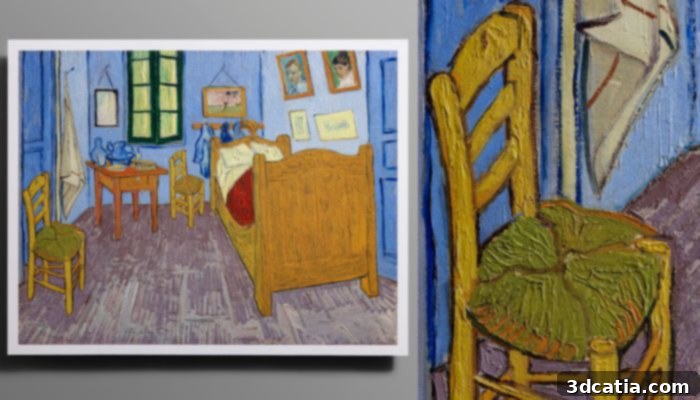
LITO Hi-Rnd© limited edition print on paper in collaboration with the Musée d’Orsay (Image: LITO Masters – Vincent van Gogh “Van Gogh’s Bedroom in Arles”, 1889)
3DN: Could you explain in more detail the technology and materials you use?
At the heart of LITO’s innovative reproductions lies our proprietary technology, Hi-Rnd©. This isn’t merely a piece of equipment; it’s a holistic, end-to-end process that meticulously integrates the very latest available scanning and printing technologies. Its purpose is singular: to create unique works of art that not only maintain the highest aesthetic standards but also guarantee absolutely accurate and consistent prints. The name Hi-Rnd© itself embodies our commitment to this comprehensive approach and underscores our unwavering dedication to preserving the integrity, fidelity, and authentic spirit of the original artwork throughout every stage of its recreation. It represents a paradigm shift in how art is reproduced, moving beyond mere visual replication to a true multi-sensory experience.
This cutting-edge technology allows us to seamlessly combine the most advanced 3D scanning capabilities with sophisticated, state-of-the-art 3D printing techniques. Our scanning systems employ a fusion of structured light, laser scanning, and photometric stereo to capture the finest sub-millimeter details of an artwork’s surface topography, color, and reflectance properties. This allows us to meticulously record nuances like individual brushstrokes, subtle impasto, and the precise texture of lacquered or varnished surfaces. The non-destructive nature of these scanning techniques is paramount, ensuring that we capture every intricate detail without causing any damage whatsoever to the precious original artwork. This guarantees both the authenticity of our data and the deepest respect for the artist’s original vision. What’s more, our Hi-Rnd© printing technology then utilizes this rich data to produce accurate prints that exhibit remarkable consistency across multiple editions, while simultaneously capturing the unique essence and individual character of each specific work. This delicate balance between consistency and uniqueness is a hallmark of our process. In essence, Hi-Rnd© printing technology exemplifies our relentless commitment to pushing the boundaries of printing and art reproduction. It represents a seamless blend of technological innovation, advanced material science, and the unparalleled know-how of our expert team, all culminating in the creation of truly remarkable and art historically significant editions.
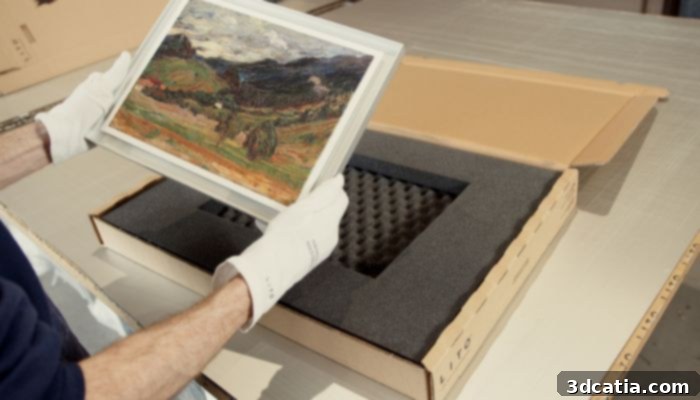
LITO Hi-Rnd© limited edition, print on paper (Image: LITO Masters – Wassily Kandinsky “Landscape” 1901)
The versatility of our Hi-Rnd© system extends to its ability to work with an incredibly wide array of materials. This includes traditional art substrates like fine art paper and canvas, as well as modern mediums such as Alu-Dibond, high-quality glass, wood, and numerous other specialized surfaces. This flexible and adaptable approach is critical because it allows us to precisely respond to the unique characteristics, historical context, and specific requirements of each individual work of art. By doing so, we ensure that we can reproduce it with the absolute highest quality and fidelity, irrespective of the original medium. Whether we are replicating the subtle brushwork of a traditional oil painting on canvas, the delicate washes of a watercolor on paper, or the sharp lines and reflective qualities of a contemporary piece on Alu-Dibond or glass, our deep expertise and exceptional versatility in materials processing are paramount. These capabilities guarantee that we can faithfully translate and bring any artistic vision to life with unparalleled precision, textural accuracy, and overall excellence, opening up new horizons for both historical preservation and contemporary artistic expression.
3DN: What limits and challenges does LITO face?
The LITO Technology Lab, nestled in Bregenz, Austria, is undeniably where the “magic happens” – the crucible of our innovation and artistic recreation. However, it also functions as a formidable and indispensable interface, serving as a critical bridge between our diverse partners, who range from renowned contemporary artists to leading international museums, and our highly specialized engineering capabilities. LITO Hi-Rnd© is more than just a technology; it is a dynamic tool designed for active exploration, constantly pushing the boundaries of new art forms and facilitating the development of groundbreaking concepts. In this environment, our dedicated team is perpetually challenged to devise creative and ingenious solutions, not merely to meet but to consistently anticipate and exceed our partners’ often complex and unique expectations. The iterative phases of ideation, rigorous testing, and meticulous prototyping are absolutely crucial to our process and can frequently span several months to reach a refined, production-ready state, demanding immense patience, expertise, and collaborative spirit.
While LITO is adept at tackling a vast spectrum of art reproduction challenges, we currently encounter certain limitations, particularly when it comes to faithfully reproducing exceptionally large-format paintings, specifically those exceeding dimensions of 2 x 3 meters. Due to their monumental scale, these large-format artworks inherently present unique and significant technical obstacles. Presently, our state-of-the-art equipment and specialized processes are meticulously optimized for reproducing works of art within specific dimensional parameters, ensuring consistent, high-fidelity results. Reproducing larger works, however, introduces considerable logistical and technical complexities. These can include challenges related to the scanning area and resolution, the physical build volume of our specialized printers, the structural stability of larger print substrates during processing, and even managing the intricate details of material deposition over expansive surfaces. Nevertheless, LITO is relentlessly committed to continuous improvement. We are actively investing in research and development, constantly striving to advance our technology and refine our methodologies. Our goal is to systematically expand our capabilities, overcome these existing constraints, and ultimately make the reproduction of even the most immense artistic masterpieces a consistent reality, further broadening art accessibility.
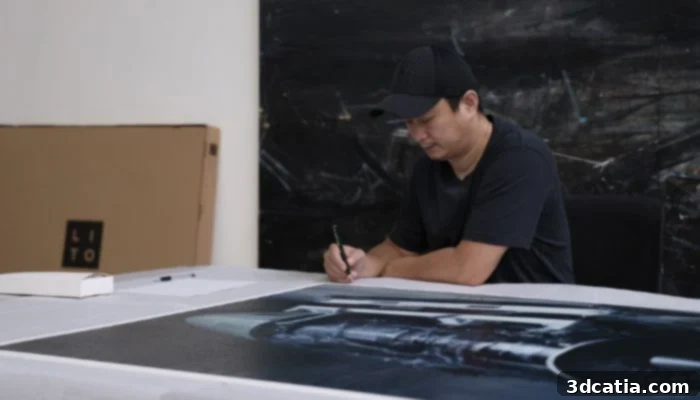
Artist Jia Aili signs a limited edition of LITO Hi-Rnd© in his Beijing studio (photo credits: LITO Editions).
3DN: What have been your most exciting projects, and what are you currently working on?
One of our most exhilarating and culturally significant projects to date has been the digitization and subsequent commercialization of fragments from Claude Monet’s world-renowned “Water Lilies” series, in collaboration with the prestigious Musée de l’Orangerie. This endeavor is particularly exciting because it allows individuals to bring a tangible, textural piece of one of art history’s most iconic and immersive masterpieces into their private collections, thereby democratizing access to an artwork previously experienced primarily in a museum setting. It’s a true bridge between institutional preservation and personal appreciation. Another immensely rewarding experience was our collaboration with the celebrated contemporary artist Peter Halley. Together, we meticulously created a unique series of editions titled “Nine Times” (2023) from his original work, “Scratch.” This project was the culmination of an intensive nine-month partnership between the innovative LITO Tech Lab in Austria and Peter Halley himself, showcasing how our 3D technologies can perfectly translate and enhance an artist’s distinctive geometric abstraction and textured aesthetic. The level of detail and artistic control achieved in these editions truly speaks to the power of our collaborative model.
While these are certainly highlights, it’s important to emphasize that every single collaboration we undertake at LITO is profoundly unique and distinctive in its own way. Each partnership presents fresh artistic challenges, requires bespoke technical solutions, and results in a truly individual creation. We take immense pride in our impressive and continually expanding portfolio of both historical masterpieces and works by contemporary artists, which includes some of the rarest and most cherished artworks from around the globe. This diverse range underscores our commitment to both preserving cultural heritage and fostering new artistic expressions. We are currently deeply immersed in a significant number of new and equally ambitious projects, spanning various artistic periods and creative visions. These upcoming initiatives will further demonstrate the versatility and impact of LITO’s technology, pushing the boundaries of what is possible in art accessibility, preservation, and creation.
3DN: Any final words for our readers?
Thank you sincerely for this valuable opportunity to share LITO’s vision and for your keen interest in our revolutionary technology and innovative products. We truly believe that we are at the forefront of a profound shift in how art is experienced and preserved. We are incredibly enthusiastic about the future and eagerly anticipate the moment when we can unveil all of our upcoming collaborations, which promise to bring even more extraordinary art to a wider audience. Stay tuned to our channels for these exciting announcements! We encourage everyone interested in the intersection of art and advanced technology to explore our activities and learn more about our mission on our official website.
We’d love to hear your thoughts on LITO’s pioneering work in democratizing art through cutting-edge 3D technologies! Please share your insights in a comment below or engage with us on our LinkedIn or Facebook pages. Additionally, don’t miss out on the latest advancements in additive manufacturing – sign up for our free weekly Newsletter to receive top 3D printing news directly in your inbox. You can also discover a wealth of insightful content and videos on our YouTube channel, showcasing the vibrant future of 3D printing and its diverse applications across industries.
*Cover Photo: LITO Hi-Rnd© Limited edition canvas print in collaboration with Musée d’Orsay, image: LITO Masters – Vincent van Gogh “The Church at Auvers-sur-Oise”, 1890