
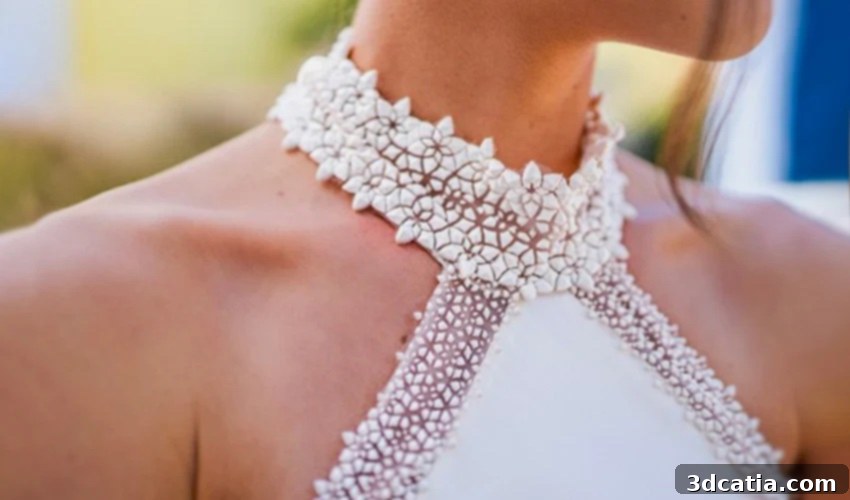
Beyond Fabric: Ada Hefetz’s Visionary 3D Printed Wedding Dresses Revolutionize Bridal Couture
Imagine a wedding gown that transcends traditional textiles, a masterpiece woven not by thread but by light and advanced technology. This captivating vision is no longer a futuristic fantasy but a tangible reality, pioneered by acclaimed Israeli designer Ada Hefetz. She has unveiled a groundbreaking collection of wedding dresses, integrating state-of-the-art additive manufacturing to redefine bridal couture. This innovative line features three exquisite garments that seamlessly blend Hefetz’s signature traditional design aesthetics with cutting-edge technological advancements. Each original creation draws inspiration from Hefetz’s profound “Flower of Life” theme, with its intricate and mesmerizing elements brought to life through Stratasys’ revolutionary 3DFashion™ technology. This advanced system allows for the direct 3D printing of complex models onto a textile surface, achieving unparalleled precision and detail. These remarkable 3D printed wedding dresses are more than just garments; they are a celebration of marital union, the eternal circle of life, and the limitless possibilities of contemporary design. Initially showcased to critical acclaim at Milan Design Week last April, these pioneering pieces are currently captivating audiences at the D-House Urban Laboratory in Milan, offering a glimpse into the future of high fashion.
Ada Hefetz has long been celebrated in the fashion world for her exquisite couture garments and bridal wear, renowned for their sophisticated fusion of modern classic chic and timeless vintage style. Her designs resonate with brides seeking elegance and individuality, always pushing the boundaries of conventional beauty. Now, Hefetz is embarking on an unprecedented journey, leveraging additive manufacturing for the very first time to dramatically expand the horizons of design within the fashion industry. This bold move underscores her commitment to innovation and artistic expression. As the designer herself eloquently articulates: “I wouldn’t be able to achieve such complicated geometric designs without the Stratasys 3DFashion technology, as attaining this level of symmetry by hand would simply be impossible. The 3D printer allows me to digitally create new forms using mathematical formulas, and print these directly onto the fabric, ensuring the pattern is replicated perfectly.” Her words highlight the transformative power of 3D printing in fashion, demonstrating how it serves as an indispensable tool for realizing design visions that were once considered unattainable. Once again, we witness how 3D printing is fundamentally reshaping the creation of garments, ushering in a new paradigm for the entire fashion industry.
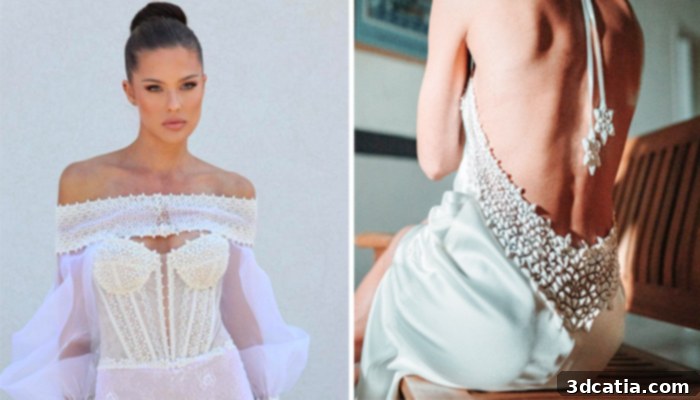
Two of the wedding dresses created by 3D printing by Ada Hefetz (photo credits: Stav Peretz).
The Technology and Inspiration Behind Ada Hefetz’s 3D Printed Wedding Dresses
To bring the intricate decorative elements of these extraordinary 3D printed wedding dresses to life, Ada Hefetz meticulously utilized the cutting-edge J850™ TechStyle™ 3D printer from Stratasys. This advanced solution, powered by PolyJet 3D printing technology, stands as a beacon of innovation in the textile world, allowing for direct printing onto fabric with an astonishing palette of over 500,000 unique colors. Beyond color, the J850™ TechStyle™ offers varying levels of flexibility, enabling designers to simulate a vast array of textures and finishes, from delicate lace to structured embellishments. For this particular bridal collection, Hefetz selected VeroVivid™ translucent resin as the primary fabrication material. This choice was pivotal, as the material’s unique properties contribute significantly to the ethereal and pearlized shimmer effect that perfectly embodies the designer’s vision. The intricate “Flower of Life” pattern, a central motif in Hefetz’s designs, is composed of overlapping circles that elegantly intertwine to form symbolic floral shapes. Hefetz masterfully combined this ancient, sacred geometry with her delicate design of a lily, creating a powerful visual metaphor. The lily, a traditional symbol of purity and renewal, together with the “Flower of Life,” beautifully symbolizes the profound union between two individuals and the enduring circle of life. This seamless integration of symbolic design with advanced 3D printing technology highlights the boundless potential for personalized and deeply meaningful bridal wear.
The adoption of additive manufacturing in fashion represents a significant leap forward, offering compelling advantages over traditional garment creation methods. One of the most critical benefits is the substantial reduction in design and production time, coupled with lower associated costs. This efficiency is empowering designers worldwide, providing them with unprecedented freedom to diversify their creative outputs and transform abstract ideas into tangible, exquisite realities with remarkable speed and economic viability. Ada Hefetz further elaborates on her journey into this innovative realm: “During the COVID pandemic, I closed my studio and used the time to innovate. I wanted to pursue 3D printing and the design opportunities it opens up, and having spoken to a few specialized designers, Stratasys’ TechStyle printer came highly recommended. I’m so pleased with the results so far and the designs it has enabled that I am planning to use this for all of my future collections.” Her statement underscores a pivotal moment of industry introspection and adaptation, demonstrating how unforeseen circumstances can serve as a catalyst for groundbreaking innovation. Hefetz’s enthusiastic embrace of 3D printing technology, driven by a desire to push creative boundaries, speaks volumes about its potential to shape the future of fashion design and production. The ability to create intricate, customized pieces directly onto fabric, with unparalleled precision and repeatability, signals a new era for luxury and bespoke fashion, where the only limit is the designer’s imagination.
The Stratasys technology, meticulously applied across Ada Hefetz’s three pioneering 3D printed wedding dresses, masterfully delivered a stunning pearlized shimmer effect, perfectly mirroring the designer’s ethereal vision. This advanced capability allowed for the creation of organic algorithmic designs, resulting in pieces that are a harmonious blend of cherished tradition and bold innovation. The intrinsic benefits of 3D printing in fashion extend far beyond aesthetic enhancements, encompassing unparalleled design freedom, accelerated prototyping, and the potential for on-demand customization. Beyond the specific techniques employed by Hefetz, many other 3D printing technologies are increasingly offering immense advantages across the entire fashion value chain. From creating intricate embellishments and structural elements to developing custom footwear and accessories, the versatility of additive manufacturing is continually being explored and expanded. As a direct consequence of these breakthroughs, 3D printing has rapidly evolved into an indispensable tool for the industry’s most influential and visionary designers, enabling them to push the boundaries of what is possible and craft truly unique, forward-thinking collections. The future of fashion technology is undoubtedly intertwined with the ongoing advancements in additive manufacturing, promising an era of unprecedented creativity, personalization, and sustainable production practices.
Ada Hefetz’s trailblazing work with 3D printed wedding dresses not only showcases the transformative potential of additive manufacturing in fashion but also inspires a new generation of designers and consumers alike. Her collection at Milan Design Week and the D-House Urban Laboratory serves as a powerful testament to how technology can elevate traditional craftsmanship, creating garments that are both deeply meaningful and astonishingly modern. This innovative approach offers a compelling glimpse into a future where custom, intricate designs are not only achievable but also more accessible, blurring the lines between digital creation and physical artistry. What are your thoughts on Ada Hefetz’s revolutionary approach to bridal wear and her pioneering use of 3D printing in couture? We invite you to share your insights and comments below, or engage with us on our vibrant LinkedIn, Facebook, and Twitter pages! Don’t miss out on the latest advancements and news in the world of additive manufacturing; be sure to sign up for our free weekly Newsletter here, delivering the freshest 3D printing news straight to your inbox! Additionally, you can explore all our engaging videos and exclusive content on our YouTube channel, where innovation comes to life.
*Cover Photo Credits: Stav Peretz