
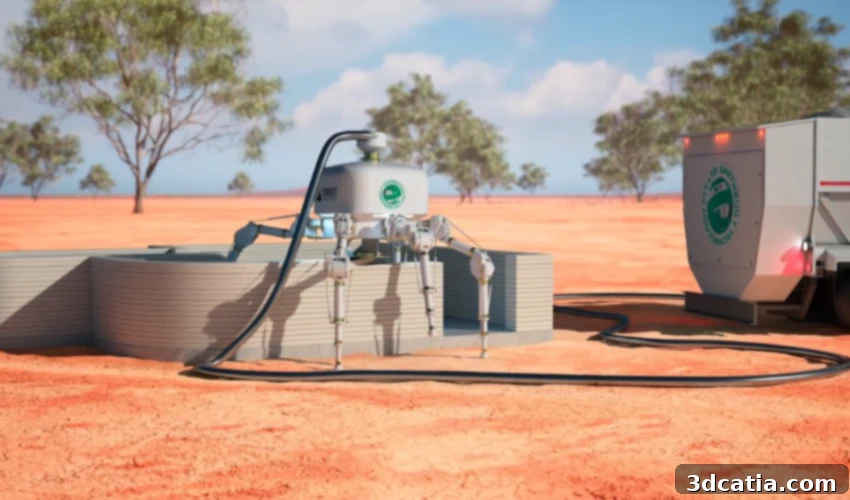
Charlotte Robot: Pioneering Automated Earthbagging for Sustainable Construction on Earth and in Space
A groundbreaking collaboration between Crest Robotics and Earthbuilt Technology has unveiled “Charlotte,” a revolutionary six-legged robot poised to redefine the future of construction. This spider-like machine isn’t just a marvel of engineering; it’s essentially a mobile 3D printer, meticulously designed to construct an entire 200 square meter home in an astonishingly short timeframe – potentially within a single day. Charlotte’s introduction marks a significant leap forward, offering transformative solutions for both the pressing housing challenges on Earth and the ambitious prospects of building infrastructure in the vacuum of space, such as future lunar and Martian bases. Its unique blend of advanced robotics and sustainable building practices positions it as a key player in the next generation of architectural innovation.
At the core of Charlotte’s innovative capability lies its unique approach to automated earthbagging. This advanced process ingeniously combines readily available, locally sourced materials such as clay, sand, and various aggregates into a cohesive mix. These components are then precisely compacted into robust, layered structures that form the foundational and load-bearing walls of a home. This method distinguishes itself from traditional construction by leveraging the abundance of natural resources found almost anywhere. Unlike conventional concrete, which often requires significant curing time and has a high carbon footprint, Charlotte’s chosen material cures remarkably fast, solidifying into a durable, sandstone-like consistency within approximately 72 hours. This rapid hardening not only accelerates the construction timeline but also contributes to the overall strength, thermal mass, and resilience of the structure, making it highly suitable for diverse environmental conditions. Dr. Claude Webster, founding director of Crest Robotics, highlighted the unparalleled efficiency of this method, stating, “We intend to build the walls of the house within a day. This technology removes the heavy labor from earth bagging and makes it possible to move really quickly and safely.” This emphasis on speed, safety, and efficiency underscores Charlotte’s immense potential to revolutionize building practices globally, providing quicker access to housing solutions.
Transforming the Construction Workforce: Enhanced Safety and Accessibility
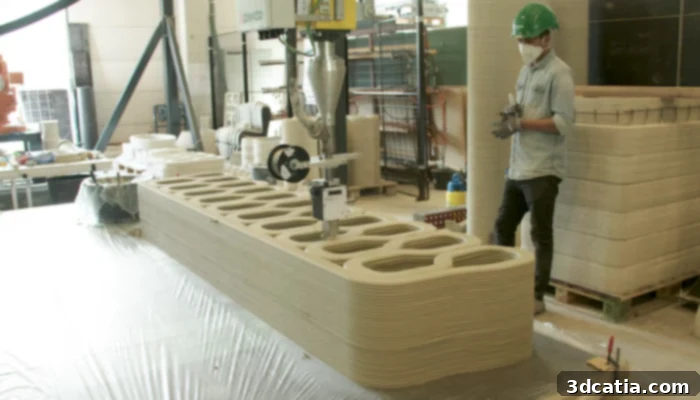
Dr. Webster also eloquently articulated the profound human benefits that automation, specifically through Charlotte, brings to the construction industry. He pointed out that traditional earthbagging methods, while offering sustainable building options, are notoriously labor-intensive, physically demanding, and frequently expose workers to hazardous conditions, ranging from heavy lifting injuries to repetitive strain. By integrating sophisticated robotic assistance like Charlotte, Crest Robotics aims to drastically improve worker safety by removing humans from the most dangerous and strenuous tasks, while simultaneously boosting productivity on an unprecedented scale. This is particularly crucial in regions facing severe housing shortages and labor constraints, where there is more demand for construction than available skilled workers. Dr. Webster elaborated on this, referencing Australia’s ongoing housing crisis, remarking, “We’ve got more work than we could possibly do. As we bring these technologies to market, we can actually increase accessibility of these jobs to the broader community while protecting people from the most dangerous work.” This vision suggests a future where human ingenuity is augmented by robotic precision, creating a safer, more efficient, and more inclusive construction sector. It also implies a shift in required skill sets, moving towards supervising and operating advanced machinery, thereby attracting a wider range of talent to the construction industry by mitigating its physically demanding and risky aspects.
Sustainable Materials and Cost Efficiency: A Paradigm Shift in 3D Printing Construction
One of Charlotte’s most compelling advantages, setting it apart from many contemporary 3D printing in construction systems, is its innovative reliance on low-cost, readily available local resources. Unlike solutions that necessitate expensive, specialized materials – often plastics, proprietary concrete mixes, or metals – Charlotte harnesses the abundant supply of natural elements like sand and clay. This strategic shift in material sourcing delivers multiple significant benefits: it dramatically mitigates supply chain risks, which are a common vulnerability in traditional construction projects often reliant on distant suppliers and complex logistics. Furthermore, this localized approach renders the entire building process exceptionally cost-effective compared to conventional methods, as it reduces material acquisition and transportation expenses. This innovation represents a profound re-imagining of how 3D printing can be applied in construction, moving away from reliance on synthetic or energy-intensive materials towards a more harmonious integration of automation with natural, sustainable resources. By leveraging earth’s own bounty, Charlotte not only makes construction more affordable and accessible but also significantly reduces its environmental footprint, paving the way for truly green and resilient building practices that are beneficial for both communities and the planet.
Unprecedented Automation: Revolutionizing Earthbagging with Advanced Delivery Systems
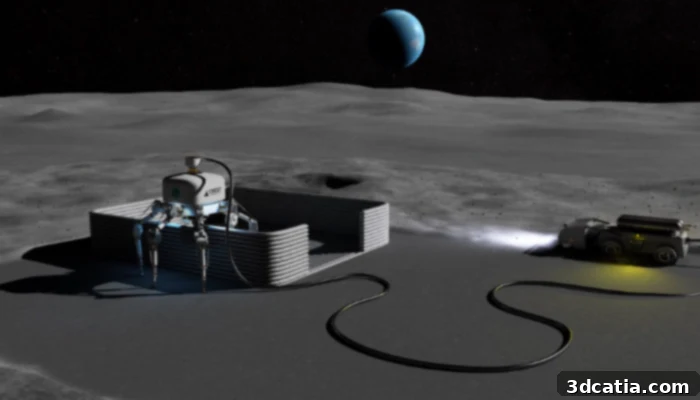
While 3D printing technologies have been steadily gaining momentum within the broader construction sector, particularly for creating complex geometries or accelerating certain building phases, Charlotte introduces an entirely novel dimension: the first-ever comprehensive automation of the earthbagging technique. This innovative system employs advanced air pressure delivery mechanisms to efficiently transport bulk materials directly from a local source to the robotic construction unit. This method drastically enhances productivity and consistency compared to manual earthbagging processes, which are notoriously slow and labor-intensive, and significantly reduces dependence on complex, often fragile, conventional supply chains. The ability to source raw materials either directly on-site or from nearby quarries further amplifies the system’s efficiency and environmental credentials. This localized sourcing strategy not only drives down overall project costs by minimizing procurement and transport expenses but also plays a critical role in minimizing carbon emissions associated with material transportation, marking a substantial step towards more sustainable and self-sufficient construction practices. The autonomy and localized resource utilization inherent in Charlotte’s design make it a truly disruptive force, capable of operating in diverse, even remote, environments.
A Dual Solution: Addressing Earth’s Housing Crisis and Paving the Way for Space Habitation
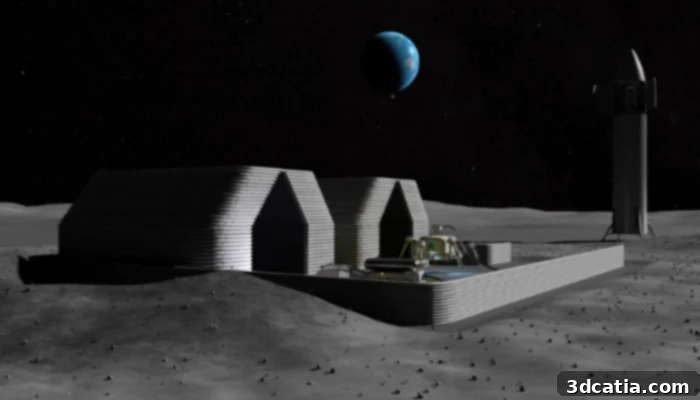
The vision behind Charlotte is ambitious and multi-faceted, positioning the robot as a potent response to several critical global challenges. On Earth, it directly confronts the escalating housing crisis evident in many nations, including Australia, where construction productivity has alarmingly stagnated, and demand for affordable homes far outstrips supply. Charlotte’s ability to rapidly construct durable, low-cost homes using sustainable, locally available materials offers a tangible and scalable solution to this pressing issue, promising to alleviate shortages, reduce costs, and improve living standards for countless communities. Beyond our planet, Charlotte’s unique attributes make it an invaluable asset for future extraterrestrial endeavors. Its lightweight, foldable design – crucial for efficient transport and deployment – combined with its ingenious reliance on local, in-situ materials, makes it perfectly suited to support the establishment of lunar bases or Martian habitats. In environments where transporting traditional building supplies from Earth is not only prohibitively expensive and energy-intensive but often logistically impossible due to extreme conditions and vast distances, Charlotte offers a self-sufficient, sustainable construction paradigm. This dual application highlights the robot’s unparalleled versatility and its profound potential to impact humanity’s future both on and off Earth, addressing fundamental needs for shelter and infrastructure in the most challenging contexts imaginable.
The Road Ahead: Global Impact and Collaborative Scaling
The revolutionary Charlotte robot is slated to be a focal point at the prestigious 76th International Astronautical Congress in Sydney. This pivotal international event will serve as an invaluable platform for Crest Robotics and its esteemed partners to showcase the technology’s immense capabilities to a global audience of experts, innovators, and potential investors, and actively seek out international collaborators. The goal is to accelerate the scaling of this innovative solution, bringing its myriad benefits – from rapid construction to environmental sustainability – to a global audience facing similar challenges. With its unparalleled potential to deliver genuinely affordable, high-quality, and low-carbon housing solutions here on Earth and to enable sustainable, self-sufficient construction in the challenging environments of space, Charlotte represents more than just a technological advancement. It embodies a bold, visionary step forward in the realm of 3D printed architecture, robotic construction, and sustainable engineering. Its widespread adoption could herald a new era where sustainable, rapid, and accessible building becomes the norm, addressing critical infrastructure needs across our planet and beyond, fundamentally reshaping how we build and inhabit our world, both terrestrial and extraterrestrial.
We’re eager to hear your thoughts on Charlotte and its potential impact! Share your comments below or engage with us on our LinkedIn or Facebook pages! And don’t miss out – sign up for our free weekly Newsletter to receive the latest 3D printing news directly in your inbox. You can also explore our video content on our YouTube channel. For more in-depth coverage of 3D printing news within the aerospace and defense sectors, be sure to visit our dedicated page HERE.
*All Photo Credits: Crest Robotics