
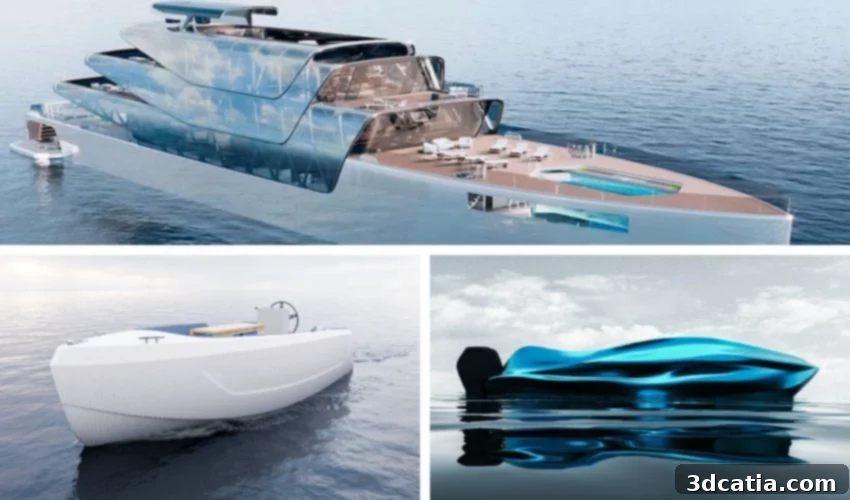
The Nautical Revolution: Exploring the World of Fully 3D Printed Boats and Maritime Vessels
Additive manufacturing, commonly known as 3D printing, has transcended its origins as a rapid prototyping tool to become a pervasive and indispensable production method across a multitude of industries. Its influence is now felt not only on land but also in the air, in the vast expanse of space, and significantly, deep beneath the ocean’s surface. The maritime sector, in particular, has enthusiastically embraced 3D technologies, leveraging them for an ever-increasing array of applications. From crafting intricate components for sophisticated marine vessels and robust boat structures to producing essential spare parts for submarines and even optimizing the design of current turbines, the potential is vast. However, this article delves into an even more groundbreaking frontier: the creation of entirely 3D printed boats. From the very bow to the stern, join us as we explore how these innovative 3D printing applications are fundamentally transforming the construction, design, and capabilities of modern maritime vessels, ushering in an era of unprecedented customization, efficiency, and sustainability.
UMaine: Pioneering Large-Scale 3D Printed Marine Vessels
The University of Maine (UMaine) has consistently stood at the forefront of large-scale additive manufacturing, particularly within the maritime domain. In 2019, UMaine made global headlines with the unveiling of the 3Dirigo, a colossal vessel that shattered records as the largest boat ever to be fully 3D printed. This remarkable achievement showcased the immense potential of large-format additive manufacturing for marine applications. Not content to rest on their laurels, UMaine surpassed its own benchmark in 2022 by producing two even larger boats for the US Marines. While precise details, including imagery, remain undisclosed due to national security considerations, it is known that one of these vessels was approximately twice the size of the original 25-foot, 5,000 lbs 3Dirigo patrol boat, marking a significant escalation in scale and complexity.
These formidable new vessels are designed as advanced logistics vessels for the Department of Defense. Their impressive capabilities include the capacity to transport two standard shipping containers along with a Marine rifle squad, equipped with three days’ worth of essential supplies. This represents an astonishing milestone in composite manufacturing, demonstrating the strategic utility and operational advantages that large-scale 3D printing brings to military logistics. The boats were meticulously fabricated using state-of-the-art polymeric composites, materials chosen for their exceptional strength-to-weight ratio, durability, and resistance to harsh marine environments. The manufacturing process relied on the world’s largest polymer 3D printer, a groundbreaking machine commissioned by UMaine in 2019, which also played a crucial role in the creation of the record-setting 3Dirigo. This continuous innovation from UMaine highlights the accelerating pace of additive manufacturing in producing functional, large-scale, and mission-critical components for the maritime and defense industries.
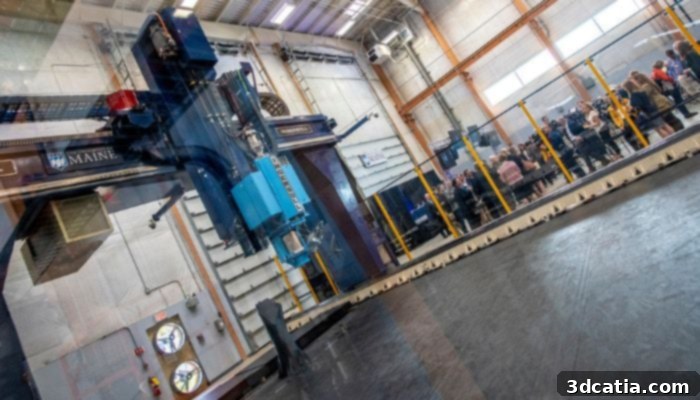
UMaine’s 3D printer was used to print the boat (photo credits: The University of Maine)
MAMBO: The First Functional 3D Printed Fiberglass Boat to Sail
The year 2019 also saw the debut of MAMBO (Motor Additive Manufacturing Boat), a revolutionary vessel unveiled at Formnext, one of the world’s leading additive manufacturing exhibitions. Designed by Moi Composites in a collaborative effort with industry giants like Autodesk, Catmarine, Micad, and Owens Corning, MAMBO represented a significant leap forward in marine additive manufacturing. This innovative boat measures 12 feet 4 inches (6.5 meters) in length and 8 feet 2 inches (2.5 meters) in width, with a total weight of approximately 1763.7 lbs (800 kg). Its most distinguishing feature, and indeed its claim to fame, is its status as the world’s first functional 3D printed fiberglass boat to successfully navigate Italian waters during the prestigious Genoa Boat Show. This achievement unequivocally demonstrated the viability and seaworthiness of additively manufactured composite boats.
The development of MAMBO was a testament to the power of advanced additive manufacturing with continuous fiber composite materials. The process employed a sophisticated robotic system, featuring two synchronized robots that meticulously fabricated the boat’s various components. These components were then assembled to form the complete hull. This cutting-edge manufacturing approach offers numerous advantages over traditional boat building methods. It enables the creation of parts that are significantly lighter, yet simultaneously robust and exceptionally durable, critical attributes for any marine vessel. Furthermore, this method dramatically limits material waste, a key benefit for both environmental sustainability and cost efficiency. Crucially, it eliminates the need for complex and expensive molds, which are a cornerstone of conventional boat manufacturing. The MAMBO project serves as a compelling and successful example of the transformative possibilities that 3D printing brings to the maritime sector, showcasing how innovation can lead to superior products and more sustainable production practices.

Photo Credits: Moi Composites
Europe’s First Seaworthy One-Piece 3D Printed Boat
In a pioneering collaboration, the Research Institute of Sweden (RISE) teamed up with Cipax, the owner of the renowned boat company Pioner, to achieve another significant milestone: Europe’s first seaworthy 3D-printed boat manufactured in a single piece. This project focused on creating a 3D-printed version of the popular Pioner 14 Active Dark Line model, a testament to the adaptability of additive manufacturing for established designs. The boat was meticulously produced layer by layer from a specially formulated mixture of plastic and glass fiber, utilizing advanced ABB robotic arms for precise and automated deposition. This single-piece construction method offered benefits in terms of structural integrity and reduced assembly complexity, showcasing another facet of 3D printing’s potential in boat building.
While the project successfully demonstrated the feasibility of printing a seaworthy boat in one piece, the journey towards full commercialization presented specific engineering challenges. One primary hurdle identified was the excessive material density of the initial 3D printed hull. To ensure optimal performance and safety, particularly for potential customers such as police forces or military entities that rely on these vessels, it is essential to compensate for this density with robust floating hulls. Achieving this goal, through further material optimization or integrated design solutions, will be crucial. Once this technical challenge is overcome, the path will be clear for the widespread commercialization of this innovative model, potentially revolutionizing how utilitarian and recreational boats are produced across Europe and beyond. This project underscores the ongoing research and development efforts required to bring novel additive manufacturing techniques from experimental stages to market-ready products, demonstrating the rigorous testing and refinement inherent in such advanced engineering endeavors.
Streamlining Production: 3D Printing for the AC9F
Yachting Developments, a New Zealand-based company with a distinguished history in constructing high-performance boats, particularly those utilizing advanced composite materials, has strategically embraced additive manufacturing to enhance its production capabilities. Recognizing the immense potential for efficiency and speed, the company established a dedicated branch focused on 3D printing to accelerate the manufacturing of its ships and components. One of their most notable recent projects involved leveraging 3D printing for the creation of all the necessary tooling to build the AC9F. This advanced racing boat was a participant in the highly anticipated 36th edition of the America’s Cup, a premier international sailing competition that captivated audiences from March 10 to 21.
In traditional boat building, especially for high-performance vessels, the production of molds and tooling can be an incredibly time-consuming and expensive process. These tools, which dictate the final shape and precision of the boat’s composite parts, often require significant lead times to manufacture. By integrating 3D printing into their workflow for tooling, Yachting Developments was able to drastically reduce the manufacturing time required for the final boat. This approach not only expedited the construction timeline, crucial in the competitive world of yacht racing, but also offered greater design flexibility and the ability to rapidly iterate on tool designs. The success of the AC9F project stands as a prime example of how additive manufacturing can optimize the production of complex, large-scale, and performance-critical components in the marine industry, proving its value far beyond just direct part production.
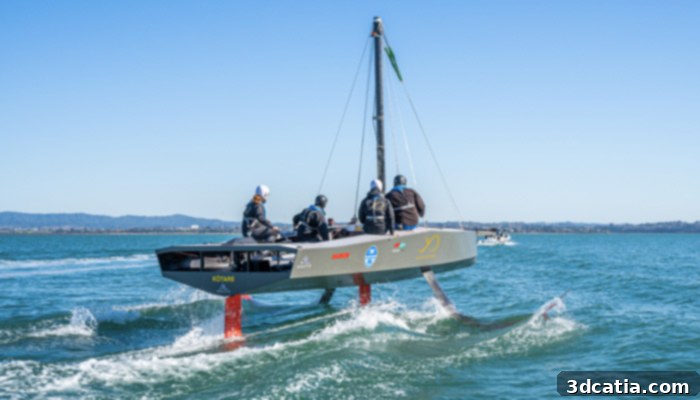
Photo Credits: Yachting Developments / Georgia Schofield
Tanaruz Boats: Navigating Towards a Sustainable Future
Tanaruz, an innovative Dutch company, is redefining boat manufacturing by placing sustainability and the principles of a circular economy at the core of its operations. They specialize in producing 3D printed boats primarily from advanced polymers, with a profound commitment to environmental responsibility. A cornerstone of their philosophy is the ability to recycle their products: boats that have reached the end of their extensive useful life can be shredded, and the reclaimed material then repurposed to create new boats. This closed-loop system significantly minimizes waste and reduces the demand for virgin resources, making their boats approximately 74% more sustainable than conventionally manufactured sloops, as verified by studies from Delft University of Technology.
Tanaruz empowers its customers with unparalleled customization options through an intuitive app. Users can explore a selection of base models, then design and tailor their chosen boat to their precise preferences, ensuring a truly personalized vessel. The commitment to ecological principles permeates every stage of the production process. The primary material utilized is recycled polypropylene (PP), reinforced with 30% glass fibers. This carefully engineered material combination boasts impressive mechanical properties, contributing to the exceptional strength, rigidity, and longevity of the boats, while also stemming from an industrial recycling stream. To ensure efficiency and precision, Tanaruz leverages large-format 3D printing. A robotic arm equipped with an extruder precisely applies the raw material layer by layer, bringing the customer’s bespoke design to life. This additive manufacturing approach offers a multitude of advantages: it dramatically reduces manufacturing time and costs, while also saving significant amounts of energy and raw resources, aligning perfectly with the company’s overarching sustainability goals. Moreover, the inherent flexibility of 3D printing allows for the effortless integration of unique customer requests and complex creative designs that would be challenging or impossible with traditional methods. Once printed, these eco-conscious boats are fitted with efficient electric motors, providing silent and emission-free propulsion. Measuring around 6.5 meters in length, they comfortably accommodate 3 to 7 people, offering a blend of environmental responsibility, personalized design, and leisurely on-water experience.
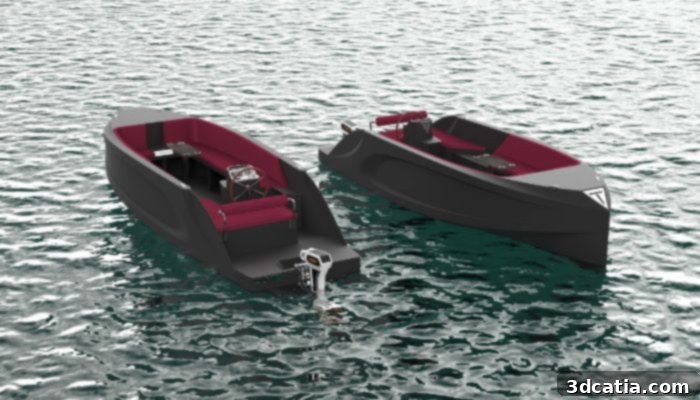
Photo Credits: Tanaruz
Pegasus 88m: The Vision of an ‘Invisible’ and Carbon-Neutral Superyacht
The Pegasus 88m stands as a visionary concept in the world of luxury yachting, pushing the boundaries not only as a 3D-printed superyacht but also by aspiring to be carbon-neutral and, quite literally, ‘invisible.’ The inspiration for this awe-inspiring vessel struck designer Jozeph Forakis on the serene island of Koufonissi. His ambitious goal was to craft a yacht that would seamlessly integrate into its natural surroundings, appearing to float effortlessly like clouds above the water, almost disappearing into the horizon. This philosophy guided every aspect of its design, both inside and out.
The exterior design of the Pegasus 88m consciously echoes the natural colors and textures of the marine environment, creating a harmonious visual blend. Nature’s profound influence extends deeply into the interior design as well, most notably embodied by the “Tree of Life.” This magnificent feature spans four floors, positioned at the heart of a dedicated wellness oasis, bringing a sense of organic tranquility to the vessel. An integrated onboard garden further enhances the connection to nature, providing both fresh air and a source of fresh produce, underlining the overarching theme of unity between humanity, advanced technology, and the natural world. Forakis’ pursuit of “invisibility” transcends aesthetics, encompassing a powerful ecological dimension. The Pegasus 88m is conceptualized to be powered entirely by solar energy, ensuring zero harmful emissions and representing a significant step towards truly sustainable luxury travel. In terms of its manufacturing, the designer prioritized sustainable production methods. A sophisticated 3D printing robot was deployed to construct the yacht’s basic framework. Additive manufacturing, in this context, offers substantial benefits by requiring significantly less energy, time, and material resources compared to traditional shipbuilding techniques. This approach not only facilitates complex designs but also aligns with the deep-seated environmental ethos of the Pegasus 88m, making it a beacon for future sustainable marine architecture.
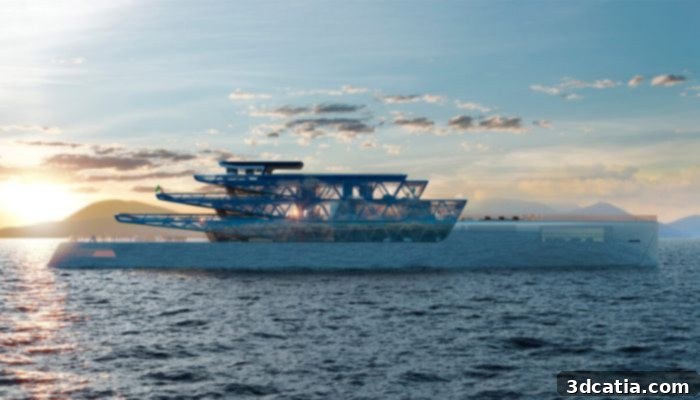
Photo Credits: Strutturaleggera /Jozeph Forakis
Autonomous Ferry: Revolutionizing Public Transport for the Paris 2024 Olympic Games
Another groundbreaking application of 3D printing in the maritime domain is the development of an autonomous ferry, slated for deployment to significantly enhance public transportation on the River Seine during the eagerly anticipated 2024 Olympic Games in Paris. This visionary project is the result of a strategic collaboration between Holland Shipyards Group, Sequana Développement, and Roboat, a consortium that successfully won the competitive call for tenders issued by Voies Navigables de France in December 2022. The primary objectives of this initiative are multifaceted: to alleviate severe road and public transport congestion within the bustling city, while simultaneously contributing to a substantial reduction in carbon dioxide emissions, aligning with Paris’s broader sustainability goals.
Upon completion, this state-of-the-art ferry will measure an impressive 9 meters in length by 3.90 meters in width, officially making it the world’s largest 3D-printed autonomous ferry. Its hull was ingeniously constructed using advanced additive manufacturing techniques, predominantly from recycled materials, underscoring a commitment to eco-friendly design and production. Beyond its impressive dimensions and sustainable origins, the ferry boasts sophisticated features tailored for urban transit. It is entirely autonomous, capable of navigating the Seine without human intervention, and is propelled by an efficient electric propulsion system, ensuring quiet and emission-free operation. Furthermore, both docking and loading procedures will be fully automated, enhancing operational efficiency and passenger convenience. This project represents a remarkable confluence of additive manufacturing, autonomous technology, and sustainable urban planning, offering a glimpse into the future of eco-conscious public transport and smart city infrastructure, especially in the context of major global events.
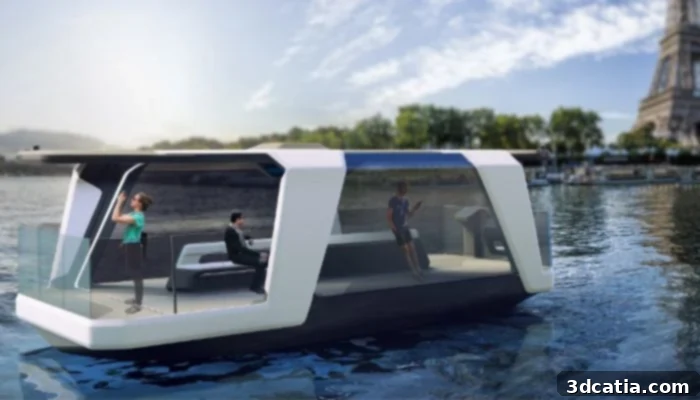
Photo Credits: Holland Shipyards Group
Hydra: The UAE’s First 3D-Printed Unmanned Ship Prototype
The United Arab Emirates has demonstrated formidable progress in the application of additive manufacturing within the maritime sector, marked this year by the unveiling of the nation’s first-ever 3D-printed unmanned ship prototype. Al Seer Marine, a prominent marine equipment manufacturer based in Abu Dhabi, proudly presented ‘Hydra,’ a pioneering 3D printed Unmanned Surface Vessel (USV) prototype, at the prestigious NAVDEX 2023 exhibition. This innovative drone ship, measuring 5 meters in length and weighing 350 kg, signifies a momentous leap forward in 3D printing innovation and its strategic deployment in marine technology.
The development of Hydra was a result of a fruitful collaboration between Al Seer Marine and CEAD, a leading Dutch manufacturer of large-scale 3D printers. Al Seer Marine leveraged CEAD’s advanced AM Flexbot technology, a robotic additive manufacturing system capable of producing large-format components with exceptional precision and speed. While specific details regarding every component were not fully disclosed, the remarkable efficiency of 3D printing was strikingly evident in Hydra’s rapid design and construction, which was completed within an astonishing five-day timeframe. This accelerated production capability dramatically reduces lead times and allows for rapid iteration and deployment, critical for defense and specialized marine applications. Al Seer Marine has ambitious plans for further integration of CEAD’s system, intending to print additional critical parts for the vessel, including an integrated mast and advanced electric motors. The company has also hinted at the upcoming development of an even lighter unmanned drone boat model, further underscoring the immense and evolving potential of 3D printing in advancing marine technology and opening new avenues for autonomous maritime operations, surveillance, and logistics.
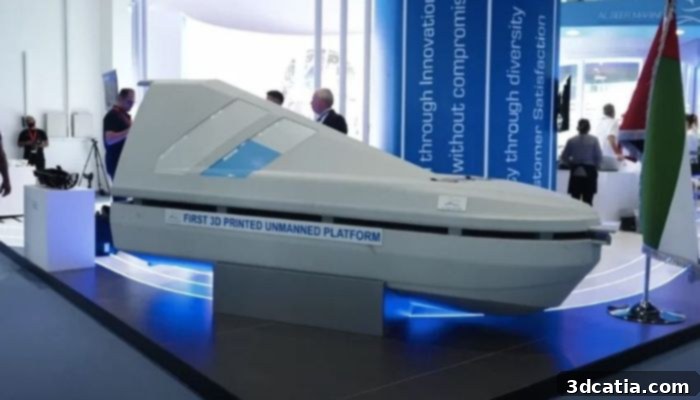
Photo Credits: Naval News
Caracol: The Beluga Sailboat, a Symbol of Sustainable Exploration
Italian manufacturer Caracol is rapidly solidifying its reputation within the 3D printing industry, recognized not only for its innovative large-format additive manufacturing solutions but also for its steadfast commitment to sustainability. These two core principles converge dramatically in one of the company’s most compelling projects: the 3D printed sailboat named Beluga. Developed in a strategic partnership with NexChem, the Beluga project showcases the cutting-edge capabilities of Caracol’s proprietary robotic additive manufacturing system. The hull of this remarkable sailboat was printed as a single, seamless piece, utilizing recycled polypropylene (PP) infused with 30% glass fiber for enhanced strength and durability. This choice of material further reinforces Caracol’s dedication to eco-friendly practices.
Caracol proudly positions the Beluga sailboat as a prime example of the tangible benefits of a circular economy. It stands as compelling proof that upcycled materials, often considered waste, can be successfully employed in advanced, high-performance applications, challenging conventional perceptions of material utility. Beyond its technical achievements, the company articulates that the 3D printed sailing boat carries a profound symbolic meaning. It represents “new beginnings,” a “restarting” of manufacturing paradigms, and the enduring spirit of “exploration.” The Beluga embodies a future where advanced technology, environmental responsibility, and the timeless allure of the open sea converge, demonstrating how innovative manufacturing can pave the way for more sustainable and meaningful maritime endeavors. This project illustrates Caracol’s vision of integrating recycled materials into robust structures, highlighting both environmental stewardship and technological prowess in the evolving landscape of marine construction.
IMPACD Boats: Sustainable Sloops for Eco-Conscious Boaters
IMPACD Boats, an innovative company based in Friesland, the largest province of the Netherlands, is making significant waves in the leisure boating industry with its range of 3D printed, sloop-type boats. Their core philosophy revolves around sustainability, as all their vessels are meticulously crafted from recycled materials, ensuring that the boats themselves are also fully recyclable at the end of their lifecycle. This commitment to a circular economy is not merely a claim; according to a comprehensive study conducted by Delft University of Technology, IMPACD Boats’ creations are an impressive 74% more sustainable than conventional sloops manufactured using traditional methods. This striking difference underscores the profound environmental benefits of their additive manufacturing approach and material choices.
Further enhancing their eco-friendly profile, all IMPACD Boats are powered by efficient and quiet electric motors, eliminating emissions and reducing noise pollution, thereby contributing to cleaner waterways and a more serene boating experience. The company offers a diverse portfolio of sloop models, each designed to cater to varying customer needs and preferences. These include the exclusive 450 Limited, featuring a Mercury Avator 7.5e outboard motor and capable of accommodating up to 5 people, with production limited to just 100 units. For those seeking a more traditional aesthetic, the IMPACD 635 is designed to comfortably carry 8 passengers. The sportier IMPCD 550 caters to a more dynamic boating style, while the IMPACD 570 also seats 8 passengers and boasts a luxurious sun deck, perfect for relaxation. Looking ahead, IMPACD Boats has announced the forthcoming release of two additional models, the 500MB and 680MB, promising further expansion of their sustainable and technologically advanced fleet. IMPACD Boats exemplifies how cutting-edge 3D printing technology, combined with a deep commitment to environmental stewardship, can deliver high-quality, customizable, and exceptionally sustainable leisure vessels for the modern eco-conscious boater.
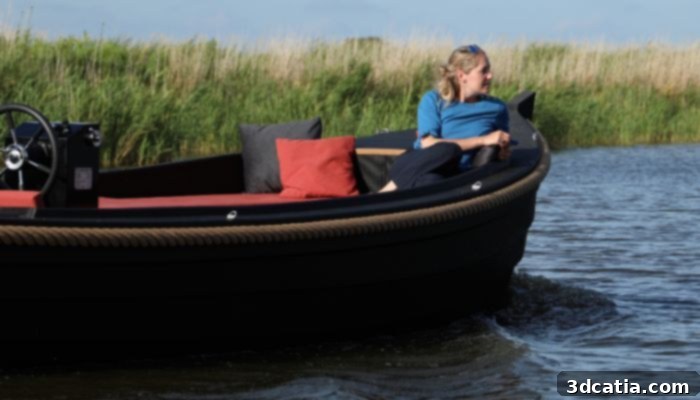
Photo Credits: IMPACD Boats
The rapid evolution of additive manufacturing is clearly reshaping the maritime landscape, enabling innovations that were once confined to science fiction. From record-breaking large vessels to sustainable sloops, autonomous ferries, and even unmanned prototypes, 3D printing is demonstrating its profound impact. It offers unparalleled advantages in terms of design freedom, rapid prototyping, material efficiency, and environmental sustainability, paving the way for a more innovative, customized, and eco-friendly future for boats and marine vessels of all types.
What do you think about these incredible 3D printed boats and the future of maritime manufacturing? Let us know in a comment below or connect with us on our LinkedIn, Facebook, and Twitter pages! Don’t forget to sign up for our free weekly Newsletter here, bringing the latest 3D printing news straight to your inbox! You can also find all our compelling videos on our YouTube channel.