
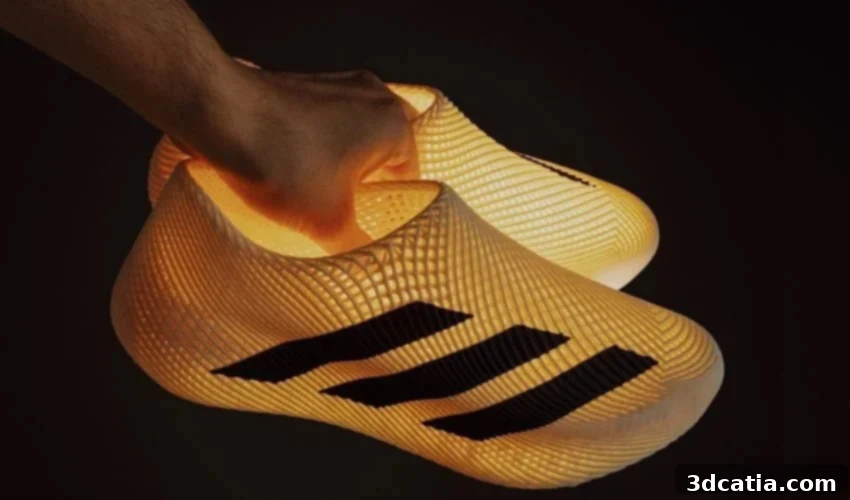
Adidas Climamog: Unveiling the Mystery of the 3D Printed Sneaker Revolution
The world of athletic footwear is no stranger to hype and speculation, but a recent leak involving a mysterious new adidas sneaker has reached unprecedented levels of intrigue. What started as a captivating series of images shared by renowned photographer Tyler Mansour quickly escalated into a global conversation, sparking fervent excitement among sneakerheads, tech enthusiasts, and industry observers alike. With no official announcement from adidas, the veil of secrecy surrounding this avant-garde sports shoe has only fueled the frenzy, leading to widespread speculation about its innovative design, manufacturing process, and a potential moniker: the “adidas Climamog.” This unprecedented buzz underscores the public’s appetite for groundbreaking innovation, especially when it comes from a brand as iconic as adidas.
The story began on Friday, September 13th, when Tyler Mansour, known professionally as arab_lincoln on Instagram, posted several intriguing photographs across his social media channels. These images showcased a truly futuristic athletic shoe proudly bearing the iconic adidas logo. The immediate impact was immense, with the visuals triggering a wave of enthusiasm and curiosity. The absence of any preceding official word from adidas only amplified the mystery, prompting journalists and trend analysts to immediately embark on a quest for answers. While solid information remains scarce, a few tantalizing clues have emerged, painting a partial picture of what many are now tentatively calling the “adidas Climamog.”
At the heart of this unfolding story is Mansour’s firsthand experience. He recently received an unmarked package containing the adidas shoe, accompanied by a single, provocative note: “Want to know what comfort really feels like?” This message perfectly encapsulates the essence of the shoe’s primary appeal. Mansour’s subsequent descriptions highlight a model boasting a distinctly futuristic design, characterized by a sleek, aerodynamic silhouette that immediately sets it apart from conventional footwear. Beyond its striking visual appeal, the photographer claims the shoe delivers exceptional comfort, an assertion that aligns with the intriguing question posed in the accompanying note. Furthermore, its unique structural openings are touted to provide superior breathability, a critical feature for any performance-oriented athletic shoe.
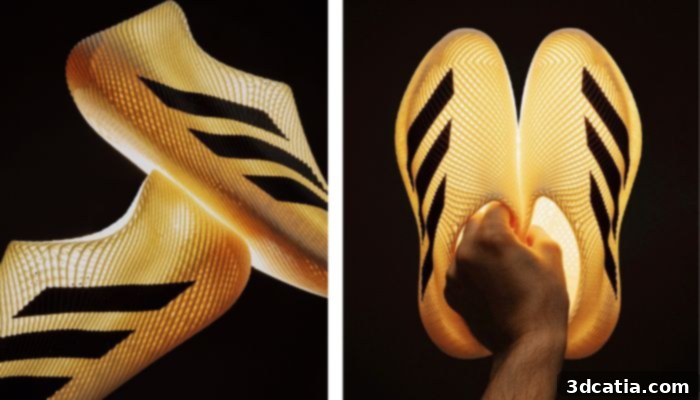
Pictures of the new shoe reveal its unique, perforated design and futuristic aesthetic.
A significant detail gleaned from Mansour’s revelation is the integration of adidas’s renowned CLIMACOOL technology. This advanced system is specifically engineered to wick away sweat and enhance ventilation, keeping the wearer’s feet cool and dry even during intense activity. CLIMACOOL is a cornerstone of adidas’s product strategy, lending its name to an extensive range of apparel and footwear. It is highly probable that this core technology provides the inspiration for the rumored “Climamog” designation for this mysterious new sports shoe, which appears to draw design cues from high-performance running models. However, given that the shoe arrived at Mansour’s studio in an unlabeled box and without any official branding confirming the name, “Climamog” remains a speculative, albeit widely adopted, placeholder for now.
Will Adidas Revolutionize Footwear Manufacturing with “Climamog” and 3D Printing?
Perhaps the most compelling aspect of the alleged “Climamog” is its revolutionary manufacturing method: it is entirely 3D printed in a single piece, utilizing 100% polyurethane. This innovative approach represents a significant leap forward in athletic footwear production. Polyurethane is a versatile polymer known for its durability, flexibility, and lightweight properties, making it an ideal material for high-performance shoes. The one-piece construction, achieved through additive manufacturing, eliminates the need for traditional assembly processes, which typically involve multiple components being cut, stitched, and glued. This not only streamlines production but also opens up unprecedented possibilities for complex geometries and integrated functional elements that are difficult or impossible to achieve with conventional manufacturing.
Visually, the shoe’s one-piece structure has a somewhat chunky yet undeniably organic aesthetic. Its distinctive look has drawn comparisons to other pioneering 3D-printed sneakers, such as those produced by Zellerfeld. While both brands leverage additive manufacturing, adidas’s execution with polyurethane and the CLIMACOOL integration hint at a unique blend of performance and sustainability. However, the exact 3D printing process employed for the “Climamog” remains shrouded in secrecy, fueling further speculation. Is adidas utilizing Selective Laser Sintering (SLS), Digital Light Processing (DLP), or perhaps a proprietary method? The choice of printing technology significantly impacts material properties, production speed, and scalability, making this a critical detail eagerly awaited by the industry.
Furthermore, the identity of adidas’s strategic partner in this advanced manufacturing venture is a subject of intense debate. Adidas has a well-documented history of collaborating with industry leaders in additive manufacturing. Previously, the German sporting goods giant partnered with Carbon, a company renowned for its Digital Light Synthesis (DLS) technology, which played a pivotal role in the production of the celebrated Futurecraft 4D midsole. Another notable collaborator has been OECHSLER, a German engineering firm with expertise in polymer processing and serial additive manufacturing. The question now is: will adidas once again leverage the specialized capabilities of these established partners for the “Climamog,” or has the company significantly expanded its own in-house 3D printing capacities to achieve greater autonomy and control over its innovative production pipeline?
The potential shift towards increased in-house 3D printing capabilities would signify a major strategic investment for adidas, indicating a deeper commitment to integrating additive manufacturing into its core production strategy. This could lead to faster prototyping, more agile product development cycles, and ultimately, greater differentiation in a highly competitive market. Such a move would allow adidas to maintain tighter control over intellectual property, optimize material usage, and potentially reduce supply chain complexities, contributing to a more resilient and responsive manufacturing ecosystem. The decision to produce independently, if confirmed, would reflect adidas’s confidence in its internal expertise and its long-term vision for 3D printing as a cornerstone of future footwear innovation.
It’s important to remember that 3D printing is far from new territory for adidas. The brand has been a pioneer in integrating additive manufacturing into its product lines for years. Beyond the highly successful Futurecraft series, which famously utilized 3D-printed lattices for advanced midsole structures, adidas has also launched specialized products like golf shoes featuring 3D-printed elements designed for enhanced stability and performance. These previous ventures demonstrate adidas’s long-standing commitment to exploring and harnessing the transformative power of 3D printing to push the boundaries of athletic footwear design and functionality. The “Climamog” appears to be the culmination of years of research, development, and strategic partnerships, building upon this rich legacy of innovation.
Beyond performance enhancements, adidas’s continued embrace of 3D printing is a clear signal of its deep commitment to sustainability. Additive manufacturing inherently offers several environmental advantages over traditional production methods. It allows for localized production, reducing transportation emissions and lead times. It also facilitates significant material waste reduction, as products are built layer by layer only where material is needed, minimizing scrap. Furthermore, the single-piece construction of the “Climamog” could potentially simplify recycling processes at the end of the shoe’s life cycle, contributing to a more circular economy. This forward-looking approach to manufacturing provides a compelling outlook for how adidas intends to blend cutting-edge technology with ecological responsibility in its future product lines.
As of now, an official release date for the “Climamog” remains elusive, adding to the product’s enigmatic allure. However, the vigilant eyes of the press and sneaker enthusiasts have reportedly spotted the mysterious shoe on various retail sites across Asia, specifically mentioning availability in Malaysia and Singapore. These early sightings suggest a potential phased rollout or an initial market test in select regions. The estimated price point, ranging between $146 and $168 USD for an off-white hue, positions the “Climamog” as a premium offering, reflecting its advanced technology and innovative manufacturing. This pricing is competitive for a cutting-edge 3D-printed sneaker and indicates adidas’s intent to make this advanced technology accessible to a broader, albeit discerning, consumer base. We are actively monitoring all developments and will be sure to provide updates as soon as more concrete information emerges about this highly anticipated release.
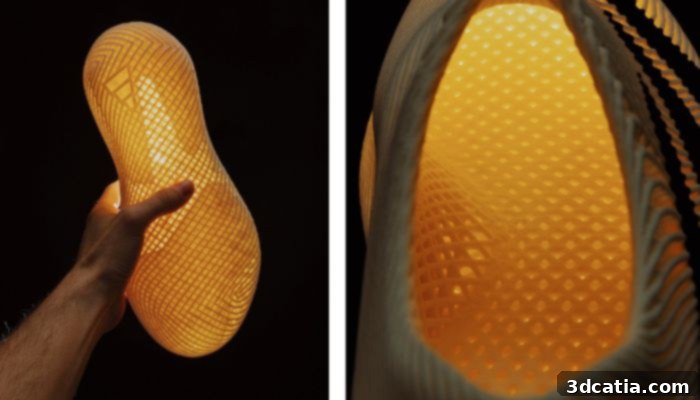
Detailed angles emphasize the fully 3D printed nature of the new adidas sneaker, showcasing its intricate, lattice-like structure.
The “Climamog” represents not just a new shoe but a potential paradigm shift in how performance footwear is designed, manufactured, and consumed. Its fusion of advanced 3D printing, sustainable materials, and adidas’s established CLIMACOOL technology positions it as a significant milestone in sneaker innovation. The excitement generated by Tyler Mansour’s initial leak highlights the power of social media in modern product launches, even unofficial ones, and underscores the industry’s eagerness for true breakthroughs. As we await further details, the “Climamog” stands as a testament to adidas’s relentless pursuit of innovation, hinting at a future where footwear is not only comfortable and breathable but also entirely custom-engineered for optimal performance and environmental responsibility.
What are your thoughts on the enigmatic “adidas Climamog” and its groundbreaking 3D-printed design? Do you believe this represents the future of athletic footwear? Share your insights and predictions in a comment below or join the conversation on our LinkedIn, Facebook, and Twitter pages! Don’t forget to sign up for our free weekly newsletter here to receive the latest 3D printing news and exclusive content directly to your inbox! You can also explore all our insightful videos and interviews on our YouTube channel for more in-depth coverage of additive manufacturing trends and innovations.
*All Photo Credits: Tyler Mansour aka arab_lincoln, Instagram