
Unveiling the Future: Top 5 Must-Watch Videos on 3D Printing Innovations and Additive Manufacturing Breakthroughs
Welcome to our curated collection showcasing the most exciting advancements in additive manufacturing. This week, we dive into five groundbreaking videos that illuminate how 3D printing technology is fundamentally transforming diverse industries, from precision medical applications to robust automotive components and large-scale construction projects. These innovations aren’t just incremental improvements; they represent a paradigm shift in design, production efficiency, and material science. As industries globally embrace the unparalleled capabilities of additive manufacturing, staying informed about the latest developments is crucial. Our selection offers a glimpse into how this revolutionary technology is shaping the future of various sectors, pushing boundaries and enabling previously impossible feats. From intricate designs in the medical field to rapid prototyping in the automotive industry, these videos provide compelling insights into real-world applications and future potentials. Prepare to be inspired by the ingenuity and progress demonstrated by leaders in the 3D printing industry. Don’t forget to explore our YouTube channel for an even deeper dive into the world of additive manufacturing videos. We hope you find this compilation both insightful and enjoyable!
Discover the Latest in 3D Printing Innovations: Our Top 5 Picks
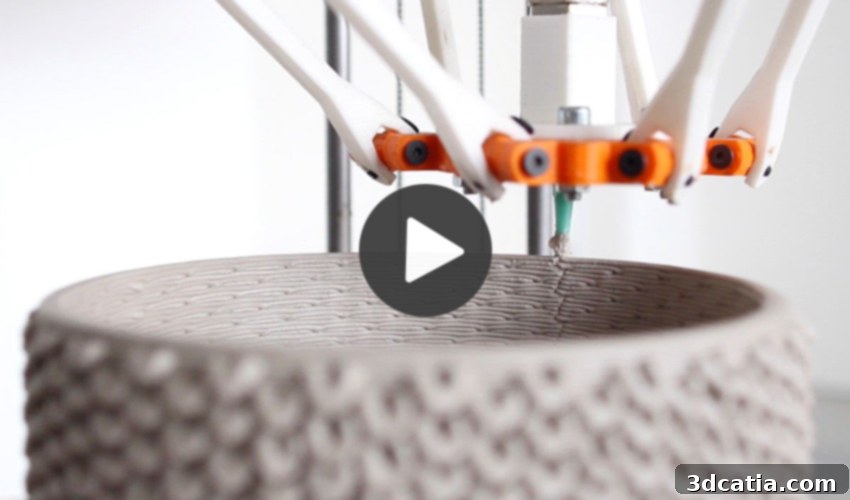
1. The Immense Opportunities of Ceramic 3D Printing
The world of 3D printing has continually evolved, embracing an ever-expanding array of materials. Among the most exciting recent developments is the adaptation of additive manufacturing technologies to work with technical ceramics. These advanced materials are renowned for their exceptional high-performance properties, including superior strength, heat resistance, chemical inertness, and wear resistance, making them ideal for demanding applications. The ability to 3D print ceramics unlocks unprecedented design freedom, allowing for intricate geometries and customized components that are impossible to achieve with traditional manufacturing methods.
Numerous industries are now rapidly leveraging these new capabilities, recognizing the transformative potential of ceramic additive manufacturing. The automotive sector, for instance, benefits from lightweight yet robust ceramic parts for engines and braking systems, enhancing performance and fuel efficiency. In medical applications, biocompatible ceramic implants and surgical tools can be precisely tailored to patient needs. Perhaps most significantly, the aerospace industry is utilizing 3D printed ceramic components for high-temperature resistant engine parts and structural elements, where extreme conditions necessitate materials of superior durability.
The market for ceramic 3D printing is experiencing explosive growth, with projections estimating its value to soar to an impressive $3.6 billion by 2028. This forecast underscores the widespread adoption and increasing confidence in this technology’s ability to deliver tangible benefits across critical sectors. The fundamental question arises: is ceramic 3D printing poised to become the next major revolution in the broader additive manufacturing landscape? The video below delves deeper into these remarkable advancements, exploring the processes, applications, and future outlook for this cutting-edge technology.
2. Ford Motor’s Strategic Investment in Large-Format 3D Printing with BigRep
In a testament to the transformative power of additive manufacturing, the automotive industry behemoth, Ford Motor Company, has made significant strides by investing in large-format 3D printing solutions. Collaborating with BigRep, a renowned leader in industrial-scale 3D printers, Ford is pioneering new methods for prototyping and production within its vast operations. With a rich history spanning over three decades in leveraging advanced manufacturing techniques, Ford recognized the critical need to further enhance its prototyping capabilities to remain competitive and innovative in a fast-evolving market.
The integration of BigRep’s cutting-edge technology yielded immediate and remarkable results. By utilizing these advanced large-format printers, Ford was able to drastically reduce lead times for prototyping – achieving an astounding 94% reduction in delivery time. This efficiency gain is not merely about speed; it translates into faster design iterations, quicker product development cycles, and a substantial competitive advantage in bringing new vehicle models and components to market. The ability to rapidly produce full-scale prototypes or even end-use parts allows engineers to test and refine designs with unprecedented agility, minimizing errors and optimizing performance before mass production.
Encouraged by the initial success with the BigRep ONE machine, which demonstrated its robustness and efficiency in handling diverse prototyping needs, Ford further scaled up its investment. Recognizing the growing demand for increased manufacturing capacity and the potential for even larger-scale applications, the company acquired a BigRep PRO. This strategic expansion underscores Ford’s commitment to integrating additive manufacturing deeper into its production ecosystem, moving beyond just prototyping to potentially include tooling, jigs, fixtures, and even certain low-volume end-use parts. The video below offers an in-depth look at this successful partnership, showcasing the BigRep printers in action and detailing the profound impact on Ford’s design and manufacturing processes.
3. Pioneering Construction: COBOD and Kamp C 3D Print a Two-Storey House
The potential of 3D printing in construction continues to redefine what’s possible in architecture and civil engineering. A remarkable project in Belgium, which we previously highlighted, has now released a compelling video showcasing its successful completion. This ambitious endeavor saw Kamp C, a Belgian sustainable building organization, partner with COBOD, a leader in construction 3D printing technology, to construct a groundbreaking two-storey house.
The project utilized COBOD’s state-of-the-art BOD2 concrete 3D printer, a modular system known for its speed and precision. The result was nothing short of extraordinary: a substantial 90-square-meter structure was erected in an astonishingly short period of just three weeks, and critically, as a single, cohesive block. This achievement dramatically illustrates the efficiency and integration capabilities that additive manufacturing brings to the often slow and labor-intensive construction sector. Traditional construction methods for a building of this size would typically require significantly more time, material, and manual labor, underscoring the revolutionary impact of this technology.
It’s important to note that this innovative structure currently serves as a model house rather than a dwelling intended for immediate habitation. Its primary purpose is to vividly demonstrate the immense potential and versatility of additive manufacturing in the construction industry. Kamp C and COBOD aim to inspire architects, developers, and policymakers to consider 3D concrete printing as a viable solution for future housing, infrastructure, and urban development challenges. This demonstration project highlights benefits such as reduced waste, faster build times, increased design flexibility, and the potential for automated, safer construction sites. The video provides a fascinating inside look at the entire process, from printer setup to the final structure, illustrating the dawn of a new era in building technology.
4. Exploring Innovation: Inside LEHVOSS’ State-of-the-Art 3D Printing Lab
While much attention is given to 3D printers themselves, the materials that fuel these machines are equally, if not more, crucial to the success of additive manufacturing. The Lehvoss Group, a venerable company with over 125 years of experience supplying chemicals and minerals to industrial clients, stands at the forefront of this material science innovation. Established in Hamburg in 1894, Lehvoss has grown into a global entity with significant operations across key European markets, demonstrating a long-standing commitment to industrial advancement.
Recognizing the burgeoning importance of 3D printing technology, the Lehvoss Group has established a dedicated state-of-the-art 3D printing laboratory located in Wandsbek. This specialized facility is not focused on developing printing hardware but rather on pioneering and refining the advanced materials essential for high-performance additive manufacturing applications. Within this lab, researchers work with a diverse range of 3D printers, including those based on popular technologies like Fused Deposition Modeling (FDM) and Selective Laser Sintering (SLS). This hands-on approach allows them to rigorously test and optimize their proprietary polymer compounds and composites, ensuring they meet the stringent requirements of various industries.
Lehvoss’s unique position as a material developer, rather than a machine manufacturer, enables them to collaborate broadly across the industry, driving forward the capabilities of countless 3D printing systems. Their expertise allows them to create materials with specific mechanical, thermal, and chemical properties, enabling manufacturers to produce parts that are stronger, lighter, more durable, or perform better under extreme conditions. This commitment to material innovation is vital for unlocking new applications and expanding the potential of additive manufacturing across sectors. The video offers an exclusive tour of this cutting-edge laboratory, providing insight into the meticulous research and development processes that underpin the future of 3D printed materials.
5. Mighty Buildings: Revolutionizing Housing with Advanced 3D Printed Homes
Building on the exciting developments in 3D printed construction, we highlight Mighty Buildings, an innovative Oakland-based company that is fundamentally reshaping how we think about housing. Their core mission is to address the global need for affordable and sustainable homes by leveraging advanced robotics, automation, and cutting-edge 3D printing technology. Unlike traditional on-site construction, Mighty Buildings focuses on off-site manufacturing, producing components and entire structures in a controlled factory environment.
What truly sets Mighty Buildings apart is its proprietary printing technology, which utilizes a unique thermosetting composite material known as Light Stone Material (LSM). This revolutionary material boasts exceptional properties: it hardens rapidly when exposed to ultraviolet (UV) light, allowing for fast and efficient printing processes. The resulting structures are not only durable and robust but also offer superior insulation and structural integrity. This innovative approach to material science and curing technology allows for the creation of seamless, energy-efficient building envelopes with significantly less waste compared to conventional building methods.
Beyond the printing process itself, Mighty Buildings offers a significant competitive advantage through its streamlined delivery and installation model. Entire structural components or complete modular units can be manufactured in their factory and then transported to the client’s desired location for quick and efficient assembly. This “print and ship” methodology dramatically reduces on-site construction time, minimizes disruption, and ensures consistent quality, regardless of the building site’s conditions. This holistic approach, from material innovation to efficient installation, truly represents a revolution in the broader construction sector. By accelerating build times, reducing labor costs, and promoting sustainable practices, Mighty Buildings is paving the way for a future where high-quality, eco-friendly, and affordable housing is more accessible to everyone. The accompanying video offers a compelling visual narrative of their innovative process and the stunning results.
These five videos offer just a glimpse into the dynamic and rapidly evolving world of 3D printing and additive manufacturing. From high-performance ceramics revolutionizing aerospace and medical fields, to large-scale automotive prototyping, and the monumental task of 3D printing multi-story homes, the pace of innovation is truly breathtaking. The underlying theme across all these advancements is a relentless pursuit of efficiency, customization, and sustainability, driven by brilliant minds and groundbreaking technologies.
We hope this curated selection has provided valuable insights into how additive manufacturing is not only changing production methods but also addressing critical challenges in various industries worldwide. The future of manufacturing is here, and it’s being built layer by layer. What were your favorite highlights from these compelling demonstrations of 3D printing technology in action? We’d love to hear your thoughts! Share your comments below or engage with our vibrant community on our Facebook and Twitter pages. For continuous updates on all the latest news, trends, and breakthroughs in the 3D printing industry, make sure to sign up for our free weekly Newsletter – delivered directly to your inbox!