
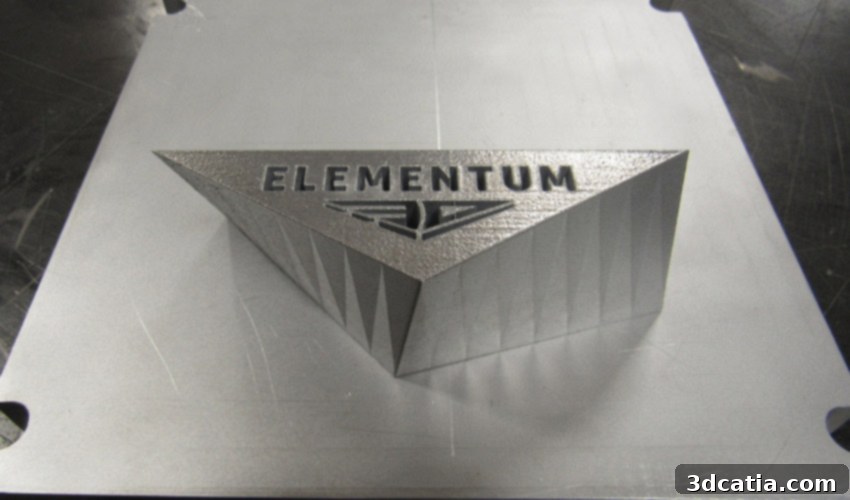
Unlocking Advanced Materials: Elementum 3D’s RAM Technology Revolutionizing Metal Additive Manufacturing
The landscape of 3D printing is continuously evolving, and at the heart of this revolution lies the relentless pursuit of innovative materials. What once began with a limited selection of plastics and polymers, such as PLA and high-performance options like PEKK, has dramatically expanded to encompass a sophisticated range of metals, composites, and even previously unthinkable substances like copper and bone. This rapid advancement underscores the dynamic nature of additive manufacturing, constantly pushing the boundaries of what’s possible. Yet, despite these significant strides, the quest for superior and more diverse 3D printable materials remains a critical frontier. To delve deeper into this exciting field, we had the privilege of speaking with Dr. Jacob Nuechterlein, the President and founder of Elementum 3D. Based in America, Elementum 3D is a pioneering additive manufacturing research and development company renowned for its specialization in creating advanced metals, composites, and ceramics. Our conversation with Dr. Nuechterlein offered invaluable insights into their groundbreaking Reactive Additive Manufacturing (RAM) technology and the broader trajectory of the metal additive manufacturing sector.
The Journey into Additive Manufacturing: Dr. Jacob Nuechterlein’s Path
 In an industry characterized by rapid innovation, new expertise emerges constantly, driving the field forward at an incredible pace. Dr. Jacob Nuechterlein, President and founder of Elementum 3D, embodies this dynamic evolution. With a robust background in materials science and powder metallurgy, Dr. Nuechterlein’s initial foray into 3D printing technologies was relatively recent, beginning only after he established Elementum 3D in 2014. In what seems like a remarkably short span of time, his company has ascended to become a global leader in the development of advanced materials for additive manufacturing. This swift rise not only highlights Dr. Nuechterlein’s vision and expertise but also serves as a testament to the industry’s exponential growth and the continuous emergence of pioneering minds.
The Genesis and Mission of Elementum 3D: Pioneering Material Innovation
The inception of Elementum 3D in 2014 was driven by a clear vision: to revolutionize additive manufacturing through advanced material development. Dr. Nuechterlein’s journey began humbly, securing a modest amount of seed money with the support of his mentor, Quinton Hennigh. His initial workspace was a small corner of a warehouse, where he began developing novel materials using a modified laser engraver, ingeniously adapted for three-dimensional printing. This period of intense, hands-on development laid the foundation for Elementum 3D’s future successes.
Soon after filing crucial patents for his innovative processes and materials, the company embarked on a significant expansion. Dr. Nuechterlein brought in additional staff, fostering a team of dedicated experts, and critically, acquired Elementum 3D’s first laser powder bed (LPB) 3D printer from EOS. This acquisition marked a pivotal moment, enabling the company to scale its research and development efforts significantly. Since then, Elementum 3D has remained at the forefront of developing groundbreaking materials specifically tailored for LPB additive manufacturing, relentlessly pushing the boundaries of what metal 3D printing can achieve.
Demystifying RAM Technology: A Breakthrough in Material Science
At the core of Elementum 3D’s innovative approach is their proprietary Reactive Additive Manufacturing, or RAM, technology. This advanced process represents a significant leap forward in materials science for 3D printing. RAM functions by forming microstructure-controlling precipitates in-situ, meaning these critical structural elements are created directly within the material during the actual printing process. This groundbreaking capability is what enables Elementum 3D to achieve the printability of materials that were previously considered impossible or impractical for additive manufacturing.
Beyond simply enabling printability, RAM technology empowers Elementum 3D to engineer and develop materials precisely for the unique demands of additive manufacturing. A prime example of this is their creation of sophisticated metal matrix composites. By precisely controlling the material’s microstructure at a fundamental level during printing, RAM allows for the creation of tailored properties, opening up new avenues for performance and application. While RAM is undoubtedly Elementum 3D’s flagship technology and a cornerstone of their success, it is important to note that it is not their sole tool for materials development. The company continues to explore and innovate across a broad spectrum of material science, ensuring a comprehensive approach to advancing the capabilities of additive manufacturing.
Addressing the Evolving Needs of the Metal AM Community
The additive manufacturing community continually seeks materials that can meet increasingly stringent and specific property requirements. One of the primary limitations of conventional additive manufacturing has been the relatively restricted selection of materials capable of delivering high-performance characteristics. Elementum 3D actively addresses this challenge by focusing on three critical areas frequently requested by industries: superior thermal conductivity, exceptional high-temperature performance, and unparalleled high strength. These properties are vital for applications ranging from aerospace and defense to medical devices and advanced electronics.
In recent developments, Elementum 3D has made remarkable progress in materials designed for elevated temperature applications. They have successfully developed advanced aluminum alloys that can operate at temperatures 200°C higher than traditional cast aluminum alloys. This breakthrough significantly expands the operational envelope for aluminum components in demanding environments. Furthermore, Elementum 3D has recently introduced nickel superalloys that demonstrate operational capabilities at temperatures well exceeding those of IN718, which is currently considered the industry standard. These innovations provide crucial advantages for components subjected to extreme heat and stress.
Beyond these impressive high-performance materials, Elementum 3D offers a comprehensive portfolio catering to a diverse range of applications. This includes specialized materials for sensitive radio frequency devices, robust solutions for engine blocks requiring high durability, and advanced thermal management materials crucial for optimizing the performance and longevity of server farms and other high-density electronic systems. By consistently pushing the boundaries of material science, Elementum 3D is empowering industries to unlock new possibilities with additive manufacturing, enabling the creation of components that were previously impossible to produce efficiently or with the desired performance attributes.
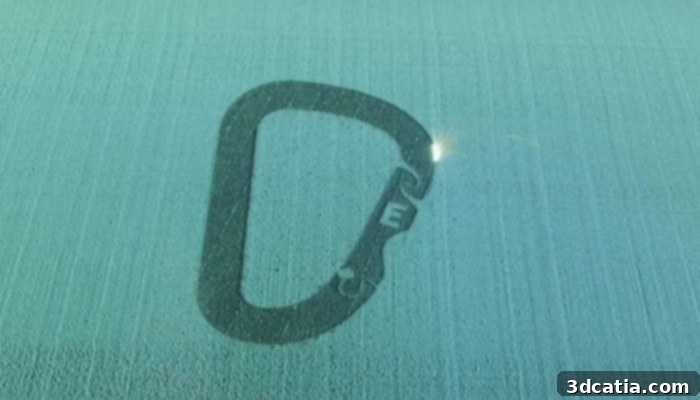
A metal carabiner being printed using LBPF (photo credits: Elementum 3D)
Navigating the Hurdles: Barriers to Quality Materials in Metal AM
While the potential of metal additive manufacturing is vast, several significant barriers impede the widespread creation and adoption of high-quality materials. One of the foremost challenges is the rate of new customer adoption of AM in general. A slower pace of adoption directly translates into restricted funding for technological innovations. Developing advanced materials is an inherently complex and resource-intensive endeavor, demanding substantial investment in expensive and iterative testing cycles. Without a broader customer base and corresponding financial support, the pace of material innovation can be significantly hampered.
Another major barrier to broader adoption and seamless material development is the conspicuous lack of a global, standardized set of international testing protocols for additive manufacturing. In its current state, the industry operates with fragmented, individual requirements from each customer, creating a multitude of hurdles. This absence of universal standards forces manufacturers to undertake repeat expenses and time-consuming efforts to adhere to disparate specifications, stifling efficiency and slowing down market penetration. A unified framework of standards would streamline the validation process, reduce costs, and accelerate the acceptance of AM parts across industries.
Furthermore, the very nature of the 3D printing process presents unique challenges. During printing, the material microstructure forms under dynamic conditions, and if the process is not meticulously controlled, inconsistencies can arise. This challenge is exacerbated when the process window for a specific material is too tight, meaning there’s very little room for variation in printing parameters without compromising the final part’s integrity and properties. Achieving robust and repeatable results with diverse materials requires not only advanced material science but also sophisticated process control and a deep understanding of how material-machine interactions influence microstructural development.
Who is Driving Metal AM Today? Key Sectors and Applications
The transformative potential of metal additive manufacturing is being recognized and embraced across a wide array of industries, each leveraging its unique benefits to varying degrees. Sectors such as aerospace, space exploration, defense, medical, high-end automotive, thermal management, energy, and oil and gas are actively integrating AM into their operations.
The space and defense sectors, in particular, have been among the fastest adopters of additive manufacturing. This rapid integration is primarily driven by compelling logistical and space-saving business cases. For mission-critical components in space, AM enables the creation of complex, lightweight parts that reduce payload weight and optimize fuel efficiency. In defense, it facilitates rapid prototyping, on-demand manufacturing of spare parts in remote locations, and the consolidation of multiple components into single, more robust structures. This reduces lead times and simplifies supply chains, which are crucial for operational readiness.
Beyond these leading sectors, many companies are now demonstrating powerful business cases where additive manufacturing can not only compete with but also surpass traditional manufacturing methods like CNC machining. In the medical field, customized implants and prosthetics tailored to individual patient anatomy are revolutionizing treatment options. High-end automotive manufacturers are using AM for performance parts, lightweighting, and rapid design iteration. The energy sector benefits from AM’s ability to produce complex geometries for turbines and heat exchangers, leading to increased efficiency and performance. Across these diverse applications, the ability to produce intricate designs, reduce material waste, and accelerate product development cycles positions metal AM as a strategic manufacturing solution.
Forecasting the Future: Evolution of the Metal AM Sector in the Next 5 Years
Looking ahead, the metal additive manufacturing sector is poised for significant and transformative growth over the next five years. Dr. Nuechterlein anticipates a substantial increase in flexible manufacturing spaces, characterized by their ability to ramp up production rapidly and efficiently. This shift will play a crucial role in reducing the need for extensive warehouse space traditionally dedicated to spare parts inventory, moving towards a more agile, on-demand production model. As more companies successfully demonstrate the viability and benefits of replacing traditionally machined parts with additive manufactured alternatives, the logistical advantages will increasingly outweigh the perceived risks associated with adopting a new manufacturing method.
Recent advancements have focused heavily on increasing printing speed, which directly translates into lower production costs. These improvements have already opened the door to numerous new applications that were previously economically unfeasible. However, two primary factors have somewhat held back broader adoption: the relatively limited selection of materials available for AM and the pervasive lack of comprehensive performance data for these materials. To truly unlock the full potential of metal AM, continued innovation in material science is paramount. This includes developing a wider array of high-performance materials with validated, reliable data regarding their mechanical properties, durability, and long-term performance under various conditions. As these barriers are systematically addressed, the metal AM sector will undoubtedly accelerate its trajectory towards becoming a foundational element of global manufacturing.
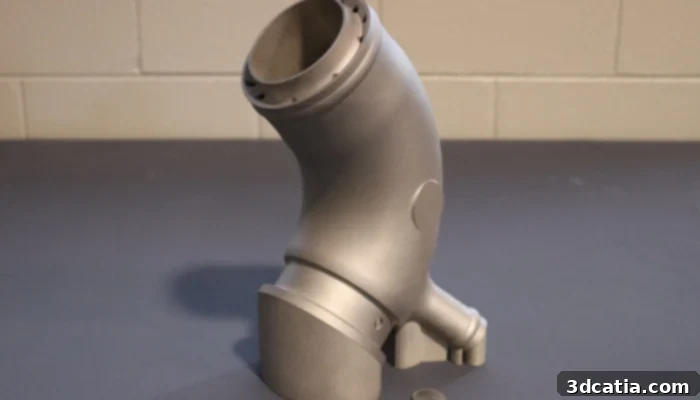
A piece made with Elementum 3D’s nickel superalloy (photo credits: Elementum 3D)
Final Thoughts: The Exponential Growth of Additive Manufacturing
Additive manufacturing stands on the brink of an era of exponential growth, poised to revolutionize industries worldwide. For this transformative journey to continue its forward momentum, the unwavering development of high-quality materials and a broader range of material options are not just beneficial, but absolutely essential. 3D printing has already proven its capability to replace traditional manufacturing methods in numerous critical applications, delivering unprecedented advantages in design freedom, performance, and efficiency.
In today’s rapidly evolving technological landscape, companies that are not actively considering or integrating additive manufacturing into their strategies are, quite simply, already falling behind the curve. The benefits are too significant, and the pace of innovation too fast, to ignore this powerful manufacturing paradigm shift. To learn more about the cutting-edge work and innovative materials being developed by Elementum 3D, you can find further information HERE.
We value your insights! What are your thoughts on Elementum 3D’s contributions to additive manufacturing and the future of 3D printable materials? Share your comments below or engage with us on our Facebook and Twitter pages! Don’t miss out on the latest news and innovations in 3D printing; sign up for our free weekly Newsletter to receive all the crucial updates directly in your inbox.
*Thumbnail photo credits: Elementum 3D