
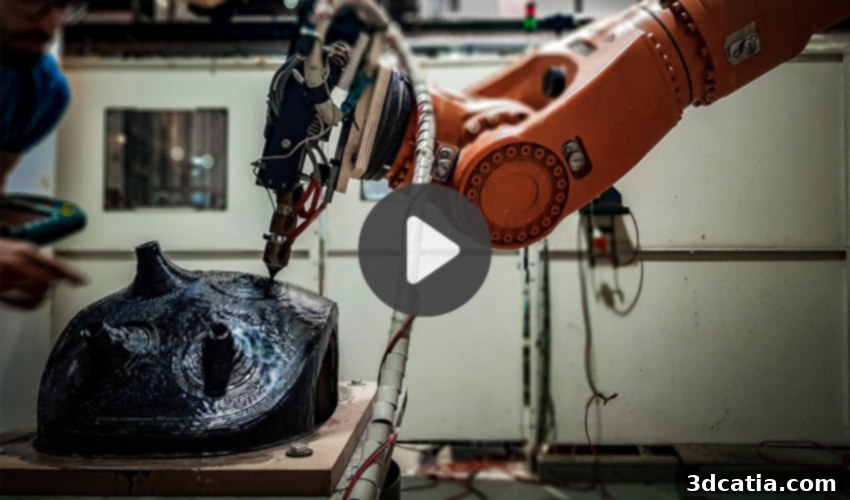
Discover the Latest Innovations: Top 5 3D Printing Videos Shaping Our World
Welcome to our weekly roundup of the most captivating videos in the world of 3D printing! Additive manufacturing continues to revolutionize countless industries, from transforming complex medical procedures to reimagining the automotive sector and even changing how we approach food production. This week, we dive into five groundbreaking applications that highlight how this innovative technology is not just evolving but actively shaping our modern society. From monumental architectural feats crafted with 3D-printed concrete to intelligent hybrid furniture designs, and from advanced medical solutions using silicone to the fascinating future of 3D-printed cuisine, these videos offer a glimpse into the cutting edge of innovation. Stay ahead of the curve and explore these remarkable advancements with our curated selection. For even more insights and inspiring content, be sure to visit our Youtube channel. Let’s delve into the exciting future of additive manufacturing!
TOP 1: The Marvel of Concrete 3D Printing in Architecture
Kicking off our list is an extraordinary project demonstrating the architectural prowess of 3D printing with concrete. The “Concrete Choreography” initiative, spearheaded by talented students from ETH Zurich, showcases nine intricately designed 3D-printed concrete columns. These impressive structures were created for a prestigious dance festival in Switzerland, pushing the boundaries of what’s possible in construction and artistic expression. The accompanying video offers a comprehensive journey through the entire project lifecycle, from initial CAD modelling – where complex geometries are first conceptualized in digital space – to the fascinating process of their physical realization using a sophisticated robotic arm for 3D printing. The result is truly remarkable: nine concrete structures, each standing 2.7 meters high, featuring a diverse array of complex and organic shapes that would be incredibly challenging, if not impossible, to achieve with traditional construction methods. This project not only highlights the aesthetic potential of additive manufacturing in architecture but also its efficiency and precision. Concrete 3D printing offers significant advantages such as waste reduction, increased design freedom, and accelerated construction timelines, proving once again that additive manufacturing is set to profoundly impact the architectural field, promising a future of more sustainable and aesthetically dynamic buildings.
TOP 2: Innovative Design with Hybrid Manufacturing: The Lightweight Chair
Our second highlight brings us to the forefront of innovative design, courtesy of the Institute of Advanced Architecture of Catalonia (IAAC). IAAC is renowned for its dedication to integrating cutting-edge technologies, particularly additive manufacturing, into the architectural and design landscape. Their latest project unveils a groundbreaking chair prototype developed through the principles of hybrid manufacturing – a sophisticated approach that combines both subtractive (material removal) and additive (material layering) methods. This synergy allows for unparalleled material optimization and structural integrity. The design philosophy behind this chair focuses on achieving maximum strength with minimal material, leading to an incredibly lightweight yet robust product. The prototype boasts an impressive capability to comfortably support an individual weighing up to 100 kg, while the chair itself weighs a mere 2.5 kg. This is a monumental achievement when compared to conventional plastic chairs, which typically feature a uniform thickness of around 5 mm. In stark contrast, the IAAC’s hybrid chair achieves its exceptional performance with material thicknesses as slender as 3 mm in certain areas. This innovative manufacturing technique not only conserves material but also opens new avenues for creating highly optimized, customizable, and sustainable furniture designs, proving the immense potential of integrating different manufacturing processes for superior outcomes in product development and beyond.
TOP 3: Advancing Medical Solutions with 3D Printed Silicone
Our third featured video highlights the profound impact of additive manufacturing in the medical sector, where it enables incredible advancements using a diverse range of materials. While high-performance polymers have their place, this segment specifically focuses on the transformative advantages of 3D printing with silicone for critical medical applications. Silicone, known for its biocompatibility, flexibility, and durability, is an ideal material for crafting intricate and patient-specific medical devices and implants. The video delves into how 3D-printed silicone is revolutionizing areas such as reconstructive surgery. The primary objective in these procedures is not merely aesthetic; it is to restore the body’s essential functions or to reinstate a normal appearance by precisely reconstructing defective or damaged body parts. The ability to create highly customized prosthetics, implants, and anatomical models from silicone perfectly tailored to an individual patient’s needs drastically improves surgical outcomes, reduces recovery times, and significantly enhances patient comfort and quality of life. Furthermore, by helping patients regain their physical normalcy, these innovative solutions play a crucial role in restoring their self-confidence and emotional well-being. Beyond reconstructive surgery, 3D-printed silicone holds immense promise for applications in prosthetics, orthotics, surgical planning models, and even soft robotics for rehabilitation, truly marking a new era in personalized medicine.
TOP 4: The Future of Culinary Innovation: 3D-Printed Food
Prepare for a culinary journey as our fourth video explores the fascinating and rapidly evolving world of 3D printing food and its potential to revolutionize our eating habits, including novel approaches to meat production. This report sheds light on numerous projects currently underway that are intensely focused on the creation of 3D-printed meat alternatives. In many instances, these innovative products are plant-based, with each company developing its unique blend of ingredients and proprietary techniques to achieve desirable textures, flavors, and nutritional profiles. The concept of consuming a 3D-printed steak might still evoke skepticism among some consumers, but the underlying motivations for this technology are compelling and address critical global challenges. 3D-printed food offers a sustainable alternative to environmentally harmful livestock farming, which contributes significantly to greenhouse gas emissions and resource depletion. Beyond sustainability, this technology also promises personalized nutrition, allowing for food items to be tailored to specific dietary needs, allergies, or even desired nutrient content. It also enables creative culinary experiences, producing complex geometries and textures not achievable through traditional cooking methods. As research and development continue to advance, 3D-printed food stands to play a pivotal role in creating a more sustainable, efficient, and customizable food system for the future.
TOP 5: Unveiling Formlabs’ New Generation 3D Printer: The Form 3
Rounding out our top five is an in-depth look at a significant development in the desktop 3D printing market: the new 3D printer from Formlabs, the Form 3. This highly anticipated machine introduces the innovative Low Force Stereolithography (LFS) technology, marking a substantial evolution from traditional SLA (Stereolithography Apparatus) printing. The video provides a comprehensive overview of the Form 3, beginning with the fundamental principles of its operation and then delving into its key features and tangible benefits for users. It meticulously explains how the LFS process works, from the initial design in software, through the precise layering of liquid resin cured by a laser, to the crucial post-processing steps and the wide array of compatible materials. The LFS technology significantly reduces the peel forces during printing, leading to incredibly smooth surface finishes, improved part accuracy, and enhanced reliability, even for intricate geometries. This reduction in force also allows for lighter support structures, making post-processing easier and less damaging to the final part. The Form 3 is designed with user-friendliness at its core, making this desktop machine relatively simple to operate. Its robust capabilities, combined with ease of use and a versatile material library, position the Form 3 as an ideal tool for professionals across various industries, including product design, engineering, dentistry, and jewelry. It empowers users to bring high-resolution, functional prototypes and end-use parts to life with unparalleled precision and efficiency, solidifying Formlabs’ reputation as a leader in professional desktop additive manufacturing.
We hope you thoroughly enjoyed our curated selection of 3D printing videos this week, showcasing the incredible diversity and transformative power of additive manufacturing. From architectural marvels to medical breakthroughs, and from sustainable design solutions to the future of food, these innovations are truly shaping our world in profound ways. We’d love to hear your thoughts on these advancements! Feel free to drop a comment below or engage with us on our Facebook and Twitter pages. To ensure you never miss out on the latest news, trends, and developments in the dynamic 3D printing industry, don’t forget to sign up for our free weekly Newsletter, delivered straight to your inbox!