
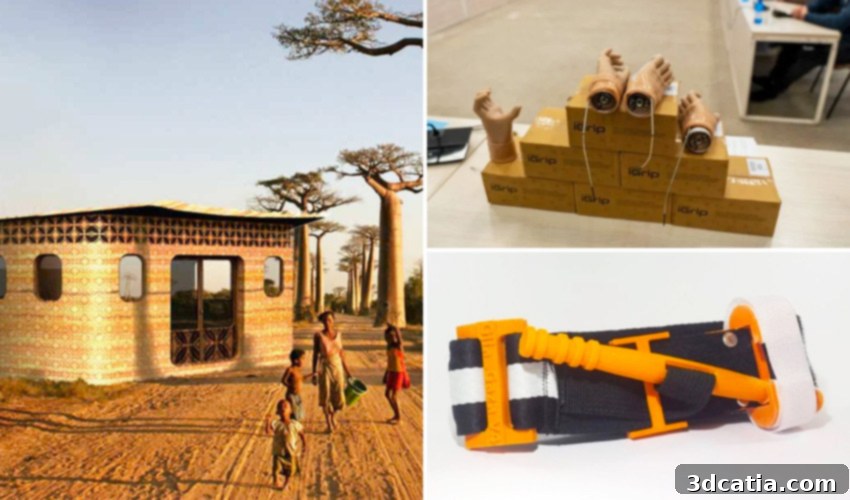
Transforming Lives: How 3D Printing Powers Global Humanitarian Aid and Disaster Relief
Humanitarian aid, as comprehensively defined by the European Commission, signifies the vital act of “delivering life-saving assistance to those in need, without any adverse distinction.” This indispensable form of support operates strictly outside the boundaries of politics, religion, and military involvement, singularly focused on alleviating suffering endured by populations affected by natural disasters, armed conflicts, and other profound crises. However, the inherent chaos, infrastructural damage, and often remote locations characteristic of these circumstances frequently present formidable logistical challenges, making it extraordinarily difficult to deliver timely and effective care to every individual who desperately requires it. Traditional supply chains are prone to disruption, essential infrastructure can be obliterated, and specialized resources often remain tragically scarce.
Within this landscape of urgent global need and complex operational hurdles, 3D printing—also widely known as additive manufacturing—has rapidly emerged as a groundbreaking technological solution. Increasingly, these innovative technologies are being skillfully leveraged to provide quicker, more tailored, and significantly more resilient aid to communities caught in conflict zones or areas devastated by severe environmental phenomena such as hurricanes, earthquakes, and tsunamis. By enabling on-demand, localized production of crucial items, 3D printing effectively bypasses many of the conventional bottlenecks inherent in disaster relief efforts, introducing a new, highly efficient paradigm for rapid humanitarian response and sustainable long-term recovery.
But what specific applications of this transformative technology are already making a tangible and life-changing difference on the ground? In this comprehensive listing, we take a closer look at some of the most inspiring and impactful projects where additive manufacturing is being deployed for critical humanitarian relief. From the rapid construction of sustainable homes and educational facilities to the provision of life-saving medical aid and custom prosthetics, these initiatives powerfully showcase the immense potential of 3D printing in addressing some of the world’s most urgent humanitarian challenges. Join us as we explore these exciting advancements and their profound impact in the field.
Field Ready: 3D Printed Hospital Supplies Revolutionize Aid in Haiti
Field Ready is an esteemed American non-profit charity unequivocally dedicated to assisting people residing in disaster and conflict zones across the globe. To achieve this crucial mission, the organization has spearheaded numerous innovative projects aimed at uplifting communities from poverty and profound suffering. Their impactful Haiti program stands out as a prime example of this dedication. Following the catastrophic magnitude 7.0 earthquake that tragically struck the island nation in 2010, the country was confronted with the monumental and overwhelming challenge of immediate relief and subsequent reconstruction. Recognizing the urgent and critical need for readily available medical instruments and supplies, Field Ready ingeniously implemented 3D printing technology to locally manufacture essential items. This strategic choice circumvented the typical delays and complexities associated with international supply chains, allowing for rapid deployment.
Through this innovative approach, numerous vital medical supplies were developed and produced on-site, including umbilical cord clamps, oxygen splinters, infusion bag hooks, and even customized prostheses. Beyond these specialized medical tools, the versatility of 3D printing also extended to producing more common but equally necessary hospital materials, such as buckets. The ability to create these items locally provided an immediate and flexible solution to pressing shortages. Furthermore, Field Ready’s commitment went beyond merely providing physical goods; their dedicated team delivered comprehensive training in the fundamental principles of CAD (Computer-Aided Design) and 3D printing. This invaluable educational component offered the local population in Haiti the opportunity to acquire marketable skills, fostering pathways to earn a sustainable living and empowering them to break free from cycles of dependency, thereby building greater resilience and self-sufficiency within their communities.
Thinking Huts: Improving Education Through 3D Printed Schools in Madagascar
Thinking Huts was founded in 2015 by the visionary Maggie Grout, driven by the profound aim of providing equitable access to education for underserved populations globally. The company’s inaugural project, famously dubbed “Bougainvillea,” was a testament to perseverance, taking seven dedicated years to materialize. The culmination of these efforts was the construction of a pioneering 3D-printed school in Fianarantsoa, a strategically important city situated in south-central Madagascar. This innovative undertaking demonstrated a significantly more eco-friendly and sustainable approach to infrastructure development, which is critically important in regions with limited resources and vulnerable ecosystems.
The East African island nation of Madagascar currently faces an acute and widespread shortage of educational facilities. According to a concerning UNESCO report, an alarming 97% of Malagasy children aged 10 struggle to read even a single sentence, positioning Madagascar as one of the most educationally disadvantaged countries globally. The primary obstacles exacerbating this crisis are severe school overcrowding and the prohibitively long distances children must travel to reach existing schools. Experts estimate that an astounding 22,000 additional schools are urgently needed across Madagascar to adequately address this massive educational deficit. Thinking Huts firmly champions the belief that 3D printing construction represents a transformative path forward. By accelerating the building process, significantly reducing construction costs, and enabling the use of locally sourced or sustainable materials, additive manufacturing can play a pivotal role in meeting this critical demand, ensuring that more children gain access to vital educational opportunities and the promise of a brighter future.
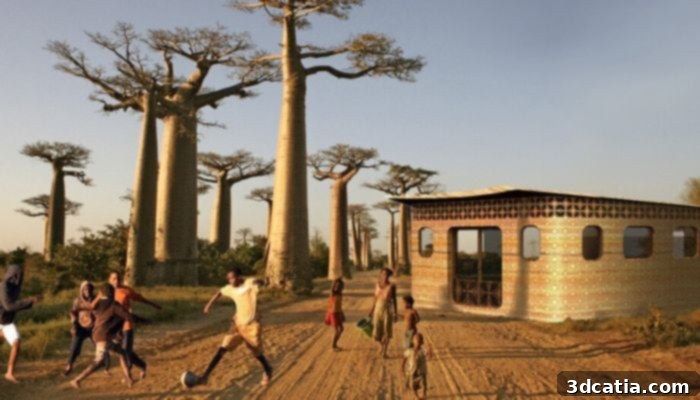
Photo Credits: Thinking Huts
Glia’s Life-Saving Innovation: 3D Printed Tourniquets in Ukraine
Amidst the brutal and ongoing crisis in Ukraine, triggered by the Russian invasion, Canadian company Glia has launched an urgent and remarkably innovative initiative. They are actively urging medical professionals globally with access to 3D printers to download and freely utilize their open-source 3D-printed tourniquet template. Tourniquets are undeniably critical medical devices, absolutely indispensable for rapidly stemming severe bleeding in emergency situations, particularly prevalent and dire in active war zones where access to conventional medical supplies is often severely limited, delayed, or entirely nonexistent. Glia’s overarching mission is to significantly enhance the global accessibility of essential medical components, and they have already achieved substantial progress in developing 3D printed clinical devices, including crucial items like goggles and stethoscopes, alongside these life-saving tourniquets.
The 3D printed tourniquets, meticulously manufactured using advanced additive manufacturing techniques and durable ABS plastic, offer a highly cost-effective and rapidly deployable solution that significantly outperforms conventionally manufactured alternatives in crisis contexts. This blend of affordability and ease of production is paramount when every second counts. Glia has ambitious plans to produce 1,500 tourniquets through a dedicated fundraising campaign, with the express aim of distributing them swiftly to hospitals and civilians across Ukraine who are at heightened risk of serious injury. Demonstrating a profound and unwavering commitment to global humanitarian efforts, the organization has unequivocally pledged that should the conflict in Ukraine conclude before their production goal is fully met, any remaining tourniquets will be immediately redirected to another war-torn region in desperate need. This free-accessible design empowers communities and medical responders to leverage the unparalleled potential of 3D printing to play a vital, immediate role in saving lives and providing essential medical support in dire crisis areas, showcasing the agility and impact of additive manufacturing in humanitarian response.
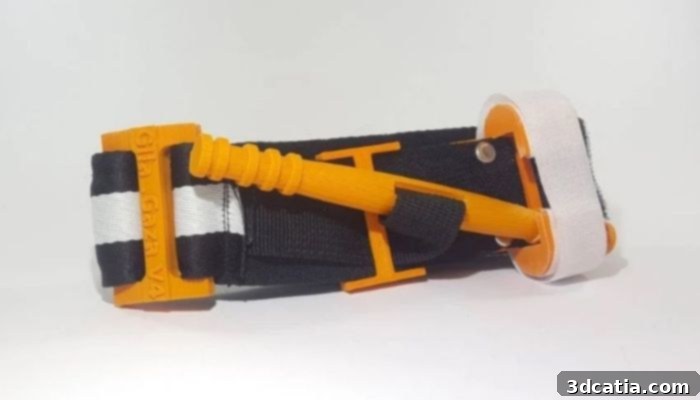
Photo Credits: Glia
New Story & ICON: Building Hope with the World’s First 3D Printed Community
Another profoundly impactful humanitarian aid project, made possible through the innovative application of 3D printing technology, was collaboratively realized by New Story in partnership with ICON. New Story, a dedicated non-profit organization, is driven by the crucial mission of building a more inclusive and equitable housing market for vulnerable families worldwide. Recognizing the inherent inefficiencies, time consumption, and elevated costs associated with traditional construction methods, they made the strategic and forward-thinking decision to embrace 3D-printed homes. This cutting-edge approach offers numerous distinct advantages: it dramatically accelerates the construction timeline, inherently enhances building quality, and significantly reduces overall costs, enabling the creation of more affordable, resilient, and higher-quality housing solutions that often surpass existing industry standards.
This pioneering collaboration culminated in the construction of the world’s very first community composed entirely of 3D-printed homes, strategically located in Latin America. This monumental achievement provided much-needed sanctuary, stability, and dignity for numerous families who were previously living in precarious or inadequate conditions. Each individual house within this innovative community was printed in an astonishingly short timeframe—approximately 24 hours—utilizing a proprietary cement mix known as Lavacrete. This innovative material is expertly derived from readily available local resources, and its precise application through 3D printing generated virtually zero construction waste, powerfully underscoring the project’s deep commitment to environmental sustainability and responsible resource management. The initiative not only delivered immediate and vital shelter but also established a scalable and replicable model for rapidly addressing severe housing shortages in communities grappling with extreme poverty and displacement globally.
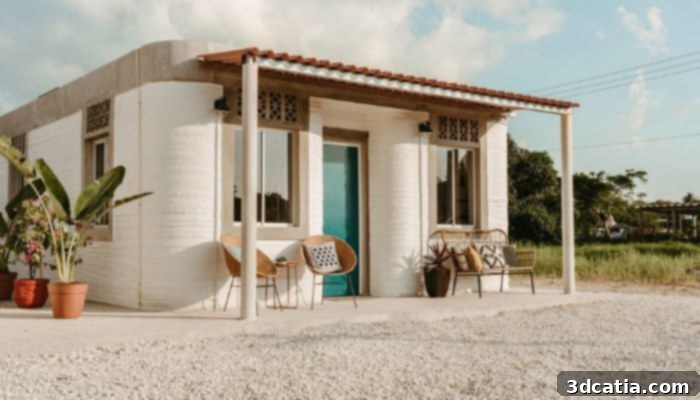
Photo Credits: ICON
Restoring Hope: 350 3D Printed Prosthetic Hands for Ukrainian War Victims
The devastating war in Ukraine continues to inflict immense suffering upon its civilian population, leaving countless individuals with their lives severely disrupted and often resulting in horrific injuries, including traumatic amputations. This tragic and widespread consequence has created an urgent and overwhelming demand for comprehensive humanitarian aid, particularly in the specialized realm of rehabilitative care and mobility solutions. In the face of such profound tragedy and immense need, 3D printing has emerged as a powerful beacon of hope, offering a tangible pathway to restoring mobility, independence, and a semblance of normal life for war victims.
At the forefront of this critical humanitarian effort is Gerwin Smit, a highly dedicated researcher from Delft University of Technology in the Netherlands. Smit has ingeniously developed a method for creating remarkably affordable, yet exceptionally high-quality, handcrafted prostheses by employing a sophisticated hybrid approach that combines advanced 3D printing technology with precise laser cutting techniques. This innovative methodology significantly reduces both the prohibitive cost and lengthy production time typically associated with traditional prosthetic limbs, thereby making them accessible to a much broader population in desperate need. Thanks to the extraordinary generosity and collaborative spirit of Vispala, an impactful Indian social enterprise, and Cisco, a leading American technology company, a remarkable donation of 350 of these crucial prostheses has been made to Ukraine. This initiative not only provides essential physical aid but also offers profound psychological support, empowering individuals to regain their independence, enhance their quality of life, and rebuild their futures amidst the daunting challenges of post-conflict recovery.
Community First! Village: 3D Printed Homes for the Homeless in Austin, Texas
In a pioneering and deeply compassionate effort within the United States, specifically in Austin, Texas, the Mobile Loaves & Fishes organization is actively championing a transformative lifestyle model rigorously designed to significantly improve living conditions for the chronically homeless. This ambitious vision has magnificently materialized in the development of the “Community First! Village” neighborhood. Spanning an expansive area of over 30 acres, this innovative and purpose-built community features durable, affordable, and permanent housing solutions primarily constructed using cutting-edge 3D printed concrete technology, expertly deployed by ICON. This groundbreaking approach enables the village to provide safe, stable, and dignified homes for over 500 formerly homeless men and women, offering them a true foundation for recovery and integration.
The ambitious goal of Community First! Village is to house a substantial 40% of Austin’s chronically homeless population, offering not just shelter but a holistic, supportive environment meticulously designed for long-term recovery, well-being, and community integration. The neighborhood is thoughtfully designed to foster strong community bonds and enhance overall quality of life, incorporating a diverse range of essential facilities. These include traditional motorhomes, compact micro-homes, a vibrant community market that provides both goods and employment opportunities, an organic farm that offers fresh produce and vocational training, and a communal cinema, among many other amenities intended to enrich residents’ lives. These essential facilities were established during Phase 1 of the project, while Phase 2 focused on significantly expanding the residential capacity to comfortably house over 500 individuals. Demonstrating the remarkable versatility and efficiency of 3D printing in urban development, the neighborhood has also seen the strategic addition of 3D-printed office buildings, further solidifying its infrastructure and operational capabilities. This project serves as a powerful, replicable model for how innovative construction technologies can be leveraged to effectively address complex social challenges like homelessness, offering dignity, stability, and a profound sense of community to those most in need. You can find out more in the inspiring video below:
HIT’s HIVE Project: A 3D Printed Elementary School in War-Torn Ukraine
Humanitarian Innovative Technologies (HIT), a dynamic and forward-thinking startup at the forefront of leveraging advanced technology for effective disaster response, has set itself the inspiring goal of responding to profound humanitarian disasters using the transformative power of 3D printing. Since the outbreak of the devastating full-scale war in Ukraine in February 2022, the urgent need for comprehensive reconstruction and revitalization has become an overriding national concern. While almost all Ukrainian industries are currently dedicating their invaluable resources and expertise to the immediate war effort, foreign companies and international organizations are stepping in to provide crucial support for rebuilding essential infrastructure and delivering vital aid initiatives.
Among these pivotal contributors is HIT, which in December 2022 launched a groundbreaking pilot project to construct an elementary school in Lviv. This key initiative, aptly named HIVE, places a strong emphasis on creating sustainable, technologically integrated, and modern learning spaces that foster a positive educational environment. By meticulously utilizing 3D printing technology, HIT powerfully demonstrates that it is entirely possible to build rapidly, cost-effectively, and with environmental consciousness, even amidst the ongoing challenges of a conflict zone. The primary objectives of the HIVE project are two-fold and equally crucial: firstly, to ensure that children’s education continues uninterrupted despite the pervasive war, providing a stable, safe, and nurturing learning environment that protects their future. Secondly, by establishing essential childcare facilities, the project aims to enable parents to remain economically active, which in turn helps to stimulate the local economy and contributes significantly to the long-term rebuilding of critical national infrastructure.
Behind HIT’s impactful and visionary work is a dedicated team of seasoned humanitarians and innovative technology entrepreneurs, collectively led by CEO Jean-Christophe Bonis and co-founder Dominique Piotet. Piotet, with his extensive on-the-ground experience in Ukraine and recognized expertise in digital transformation, plays a crucial strategic role in guiding HIT’s ambitious strategies for Ukrainian reconstruction. Their combined knowledge, leadership, and visionary foresight are instrumental in furthering the nation’s rebuilding efforts. Beyond this pioneering school project, HIT harbors even more ambitious plans for the future, including the large-scale construction of an additional 10,000 homes using advanced 3D printing techniques, promising a significant and lasting contribution to Ukraine’s recovery and future development.
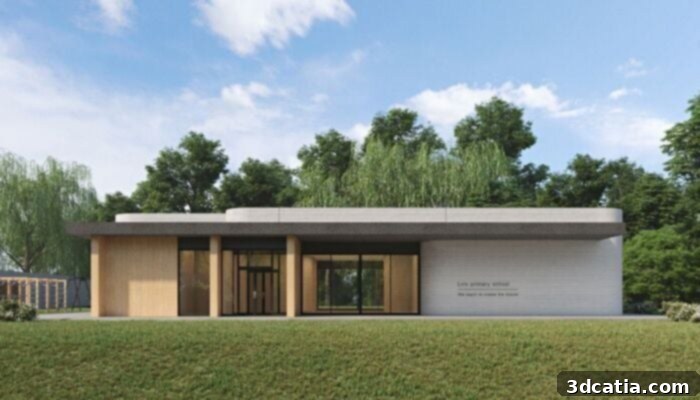
As part of the HIVE project, HIT built this elementary school for a hundred Ukrainian children in Lviv (photo credits: wearehit)
Field Ready: 3D Printed Pipes and Fittings for Disaster Zones as Humanitarian Aid
The next compelling example highlights yet another ingenious case from Field Ready in their ongoing and tireless efforts to provide crucial material aid to populations who are tragically victims of natural disasters. This specific initiative focuses on an often-overlooked but utterly essential component of modern infrastructure: pipes and their critical fittings. In disaster-stricken areas, access to functional plumbing and reliable water infrastructure is almost invariably compromised, leading to significant and widespread health and sanitation risks that can quickly escalate into secondary crises. Field Ready has ingeniously addressed this fundamental challenge by developing a robust, three-stage process that empowers local member organizations to manufacture vital O-rings—critical seals used in pipe fittings—directly in locations where they are simply not readily available through conventional means, thereby ensuring essential repairs can be made on the spot.
The innovative process begins with Field Ready expertly leveraging 3D printing to create a series of precise molds corresponding to a variety of standard O-ring sizes. These initial 3D printed molds are then utilized to produce more durable and field-appropriate silicone molds, which are much better suited for deployment in challenging environments. These resilient silicone molds, along with castable polyurethane material, are subsequently transported directly into the affected areas. This comprehensive approach enables local teams and communities to fabricate the required O-rings on the spot, allowing for immediate repairs and the rapid construction of essential pipe fittings. This localized manufacturing capability dramatically reduces reliance on external and often disrupted supply chains, significantly accelerating the restoration of vital services like clean water and sanitation. Further enhancing this innovative approach, Field Ready, in close collaboration with a dedicated team from Imperial College London, has also developed an intuitive application called MakeFit. This powerful tool provides users with clear diagrams and essential CAD models for creating molds by simply inputting basic parameters such as the number of pipes to be connected, their specific size, and the desired fitting type (e.g., a T-fitting or other configurations). This holistic solution powerfully exemplifies how 3D printing can empower communities to rebuild and restore essential infrastructure quickly and autonomously after a devastating disaster.
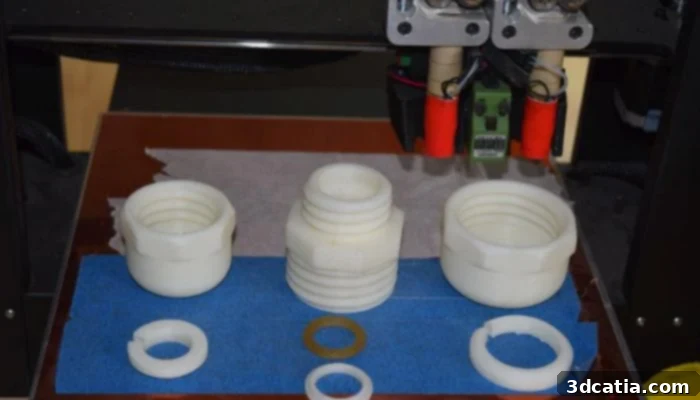
Photo Credits: Field Ready
Oxfam & MyMiniFactory: Using 3D Printing to Reduce the Risk of Sickness in Refugee Camps
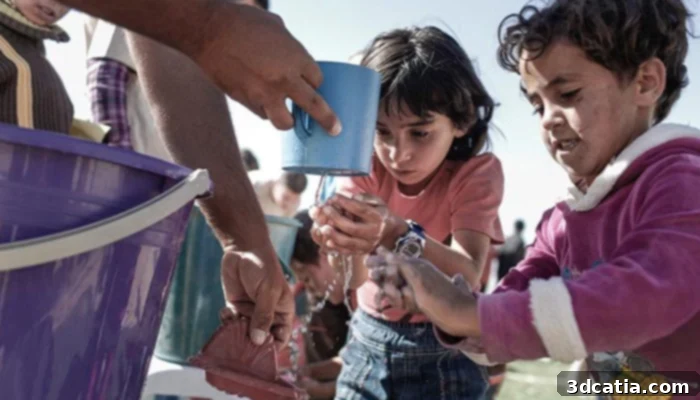
In a crucial and proactive effort to safeguard public health and significantly mitigate the risk of disease transmission within highly vulnerable communities, Oxfam has forged a strategic partnership with MyMiniFactory. Their joint initiative focuses intensely on harnessing the innovative capabilities of 3D printing to create and rapidly deploy practical solutions designed for improved hygiene practices. The specific aim was to develop a localized hand disinfection device, tailored to promote enhanced hygiene among Syrian refugees who are residing in the extremely challenging and often overcrowded conditions of camps in Lebanon. These particular environments are frequently characterized by high population density, severely limited access to clean water, and woefully inadequate sanitation facilities, all of which cumulatively elevate the risk of infectious disease outbreaks to alarming levels.
What makes this particular project especially impactful and noteworthy is its open-source nature: the entire program is openly accessible to all, actively encouraging designers, engineers, and innovators globally to contribute their creativity and expertise by developing new and improved designs for these essential hygiene devices. This collaborative approach not only fosters a powerful sense of community ownership but also drives rapid innovation and adaptation to specific local needs. Thanks to the remarkable flexibility, speed, and customization potential of 3D design and additive manufacturing, these devices can be produced on-demand and often directly on-site, providing refugees with safe, effective, and readily available means to wash and disinfect their hands. By drastically improving fundamental personal hygiene, this initiative plays an absolutely vital role in reducing the incidence of debilitating waterborne diseases and other preventable illnesses within these often crowded and precarious communities, thereby profoundly enhancing overall public health, dignity, and quality of life for those displaced by conflict and crisis.
The myriad examples highlighted in this article merely scratch the surface of how 3D printing is progressively redefining and revolutionizing the landscape of humanitarian aid and disaster relief globally. From rapidly deployable medical supplies and essential infrastructure components to sustainable housing and critical educational facilities, additive manufacturing offers unparalleled advantages in terms of speed, cost-effectiveness, customization capabilities, and the crucial ability to produce items locally in crisis-affected regions. This technological leap empowers aid organizations to be significantly more responsive, resilient, and effective, shifting away from traditional, often sluggish, top-down supply chains towards more localized, needs-driven, and empowering solutions. As the underlying technology continues its rapid evolution, its pivotal role in addressing complex global challenges, alleviating widespread suffering, and fostering long-term community recovery is only set to expand dramatically, promising a future where aid is delivered more efficiently, equitably, and profoundly effectively to those who need it most, truly transforming lives around the world.
What are your thoughts on these innovative humanitarian aid projects where 3D printing played such a crucial role? We invite you to share your insights, opinions, and questions in a comment below or join the vibrant conversation on ourLinkedIn,Facebook, andTwitter pages! Don’t forget to sign up for our free weeklyNewsletter here to receive the very latest 3D printing news and breakthroughs directly to your inbox! You can also find all our compelling videos on ourYouTube channel, showcasing even more incredible applications and advancements in additive manufacturing.