
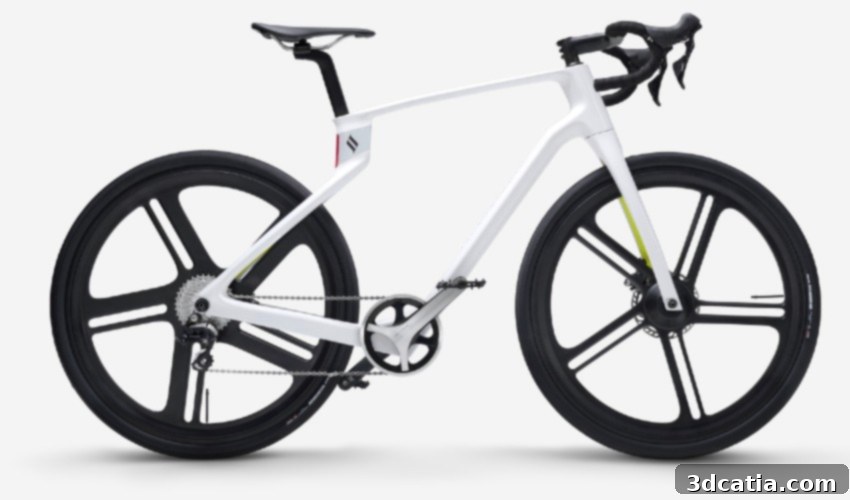
Superstrata Unleashes the Future of Cycling: The World’s First 3D Printed Unibody Carbon Fiber Bicycle
The world of cycling is constantly evolving, driven by innovation in materials, design, and manufacturing techniques. Among the vanguard of this evolution is the Californian bicycle manufacturer Superstrata, a company that has not only pushed the boundaries of what’s possible but has also successfully delivered on its ambitious promises. Their journey began with a remarkable crowdfunding campaign that captured global attention. In July, Superstrata launched its funding initiative, which saw an unprecedented response, raising over USD 1 million within a single day. This initial surge was a clear indicator of immense public interest and confidence in their revolutionary concept. The momentum continued, culminating in a total of over USD 5.8 million raised from an impressive 4,500 backers. This overwhelming support wasn’t just a financial victory; it was a powerful endorsement of their vision for a next-generation bicycle. This substantial funding allowed Superstrata to transition from concept to concrete reality, moving into full-scale production and achieving a pivotal milestone this month: the first delivery of its groundbreaking 3D printed bicycle to eager customers worldwide. This accomplishment marks not just a win for Superstrata, but a significant leap forward for additive manufacturing in consumer goods.
What truly sets Superstrata’s 3D printed bike apart from conventional bicycles is its innovative unibody frame, a masterpiece of modern engineering. This entire frame is meticulously 3D printed in a single, continuous process, a feat made possible by AREVO’s advanced Directed Energy Deposition (DED) technology. DED, a robust additive manufacturing method, is particularly adept at handling high-performance composite materials, building complex structures layer by layer with exceptional precision and strength. The use of sophisticated composite materials, primarily carbon fiber, in conjunction with this cutting-edge printing process, offers a multitude of advantages. This combination leads to significant weight reductions without compromising structural integrity, simultaneously minimizing production errors often associated with traditional multi-part frame construction. The result is a carbon fiber frame that isn’t just remarkably lightweight—weighing only 1.7 kg (approximately 3.75 lbs) for both its standard and electric versions—but also extraordinarily durable. To put its strength into perspective, the Superstrata frame is an astonishing 61 times stronger than steel and 15 times stronger than titanium, materials traditionally revered for their robustness in bicycle manufacturing. This unparalleled strength-to-weight ratio ensures a ride that is not only agile and responsive but also incredibly resilient against the stresses of varied terrains and intense cycling. The ability to produce such a strong, lightweight, and complex unibody structure in a single print job represents a paradigm shift in bicycle manufacturing, offering optimized performance and a truly unique riding experience.

Demonstrating its exceptional lightness, the Superstrata bike can be effortlessly lifted with just two fingers, a testament to its advanced material science and 3D printing innovation.
Unprecedented Customization: Tailoring Your Ride
Beyond its revolutionary construction, Superstrata champions the concept of mass customization, allowing riders to truly personalize their bicycles to an unprecedented degree. According to the manufacturer, an astounding up to 500,000 unique configurations are possible. This level of personalization moves far beyond simple color choices; it encompasses critical aspects of the bike’s fit and performance. Customers can embark on this bespoke journey through the Superstrata Studio online shop, which has been live since October. Here, riders can specify frame geometry tailored precisely to their body measurements, ensuring optimal comfort and power transfer, a feature traditionally reserved for extremely high-end, custom-built bikes. One prominent option, for instance, is the choice of rim material, which can be either traditional metal for robust everyday use or lightweight carbon fiber for enhanced performance and reduced rotational mass. The configuration possibilities extend to various components and aesthetic elements, allowing each Superstrata bike to be a unique reflection of its owner’s preferences and riding style. Naturally, the extent of customization influences the final price. The standard Superstrata Terra starts at an accessible USD 2,799, offering a premium 3D printed experience. For those seeking electrified assistance, the electric Superstrata Ion version begins at USD 3,999, maintaining the same lightweight frame and customizability. In addition to the base price, shipping costs apply, which are calculated based on the destination country. Superstrata has partnered with FedEx for worldwide delivery, ensuring that this innovative bicycle can reach enthusiasts across the globe, bringing the future of cycling to doorsteps everywhere.
Scaling Innovation: Production and the Future of Additive Manufacturing
Superstrata officially commenced full-scale production operations at the end of November, marking a pivotal moment after months of meticulous planning and development. Prior to initiating customer shipments, the company undertook a rigorous series of intensive tests, ensuring that every bicycle met their stringent standards for quality, safety, and performance. To keep pace with the exceptionally high demand generated by their successful crowdfunding campaign, Superstrata leverages the advanced 3D printers owned by AREVO, which operate tirelessly, 24 hours a day, 7 days a week. This continuous operation underscores the commitment to fulfilling orders efficiently and quickly. Looking ahead, Superstrata is actively working on scaling its production capabilities. This involves not only increasing the number of active 3D printers but also continuously optimizing the printing process itself. Through ongoing iterations and technological refinements, the company hopes to significantly shorten printing times per frame, thereby boosting overall production volume. With the successful first shipment of its groundbreaking 3D printed bicycle, Superstrata confidently proclaims to be in full production mode, ready to meet the burgeoning global interest. This momentous achievement sparks a compelling question for the entire manufacturing sector: Is Superstrata’s journey the definitive start of future mass production models leveraging advanced additive manufacturing? Their success certainly demonstrates the viability of using 3D printing for producing high-performance, customizable consumer goods at a significant scale, potentially inspiring other industries to rethink their traditional manufacturing paradigms and embrace the efficiencies and design freedoms offered by 3D printing.
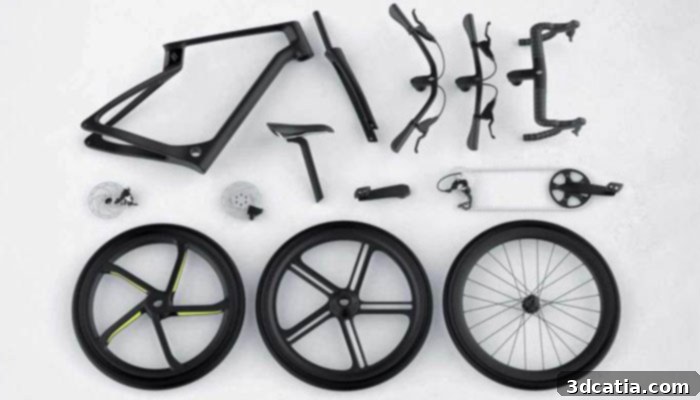
The implications of Superstrata’s approach extend beyond just cycling. Their ability to deliver a complex, high-performance product like a bicycle frame as a single, durable, and lightweight unibody structure challenges conventional manufacturing wisdom. Traditional bicycle frames often involve multiple components welded, bonded, or bolted together, introducing potential weak points and limiting design flexibility. By contrast, AREVO’s DED technology, utilized by Superstrata, enables engineers to create organic, optimized geometries that are impossible with traditional methods, leading to frames that are not only stronger and lighter but also potentially more comfortable and aerodynamically efficient. This leap in design freedom and material efficiency, coupled with the ability to offer extensive customization without incurring exorbitant costs or lengthy lead times, positions Superstrata as a significant disruptor in the competitive bicycle market. It illustrates a compelling case for how 3D printing can move beyond prototyping to become a core production method for high-value, consumer-ready products, bridging the gap between bespoke craftsmanship and industrial scale manufacturing. This innovative model promises a future where products are not just mass-produced, but mass-personalized, precisely meeting the individual needs and desires of consumers.
For those keen to delve deeper into the pioneering efforts of Superstrata and follow their continued progress, comprehensive information and updates can be found HERE on their Indiegogo campaign page. The introduction of such a revolutionary product naturally sparks conversation among cycling enthusiasts and technology aficionados alike. What are your thoughts on this truly innovative 3D printed bike? Do you believe it represents the next frontier in bicycle design and manufacturing? We invite you to share your perspectives and engage with our community by leaving a comment below, or by joining the discussion on our official Facebook and Twitter pages. To stay abreast of all the latest developments in the fast-paced world of 3D printing, including more groundbreaking innovations like Superstrata, don’t forget to sign up for our free weekly Newsletter, delivering cutting-edge news directly to your inbox!