
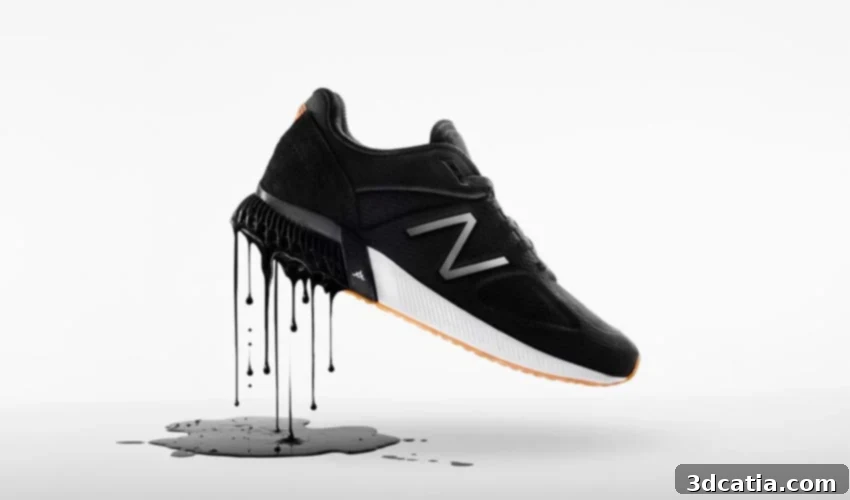
New Balance and Formlabs Unveil TripleCell: Revolutionizing Athletic Footwear with Advanced 3D Printing
Boston-based New Balance, a global leader in athletic apparel and footwear, has achieved a significant milestone in manufacturing innovation with the launch of its groundbreaking TripleCell platform. This cutting-edge platform, developed in close collaboration with 3D printing pioneer Formlabs, is set to redefine the performance and design possibilities of athletic footwear. TripleCell is not merely a new technology; it represents a strategic shift in how New Balance approaches product development, manufacturing, and consumer customization. This revolutionary platform made its debut with the highly anticipated 990 Sport and is also integral to the upcoming FuelCell Echo, signaling a new era for advanced footwear.
The partnership between New Balance and Formlabs, a company celebrated for democratizing professional 3D printing, began in 2017. Their initial announcement hinted at an ambitious goal: to jointly develop high-performance materials, sophisticated hardware, and an optimized manufacturing process specifically tailored for athlete footwear. This long-term commitment bore fruit in the form of a new, proprietary photopolymer resin aptly named Rebound Resin. This innovative material is engineered to facilitate the creation of springy, highly resilient lattice structures. Unlike traditional materials, Rebound Resin offers the unique combination of exceptional durability, unwavering reliability, and the longevity typically associated with injection-molded thermoplastics, yet with the unparalleled design freedom of 3D printing.
The Genesis of a Game-Changing Collaboration: Formlabs and New Balance
The journey to TripleCell began with a shared vision: to push the boundaries of what’s possible in athletic footwear. New Balance, with its rich heritage in performance and craftsmanship, recognized the transformative potential of additive manufacturing. Formlabs, on the other hand, brought its deep expertise in resin development and hardware innovation. The challenge was to create not just a novel material, but an entire ecosystem that could produce functional, durable, and high-performance components for demanding athletic applications. Traditional manufacturing methods, while effective, often involve lengthy tooling processes and design constraints that limit true innovation in complex geometries and material properties. The collaboration aimed to bypass these limitations, allowing for a more agile and data-driven design philosophy.
The development of Rebound Resin was a critical breakthrough. Existing 3D printing resins often fell short in meeting the stringent requirements of athletic footwear, particularly regarding energy return, cushioning, and long-term durability under repetitive stress. Rebound Resin was specifically formulated to address these gaps. Its unique chemical composition allows it to cure into a material that is not only robust but also possesses an inherent springiness crucial for athletic performance. This springiness, combined with its ability to form intricate lattice structures, ensures that TripleCell midsoles can provide superior impact absorption and energy return compared to conventional foams, while also significantly reducing weight.
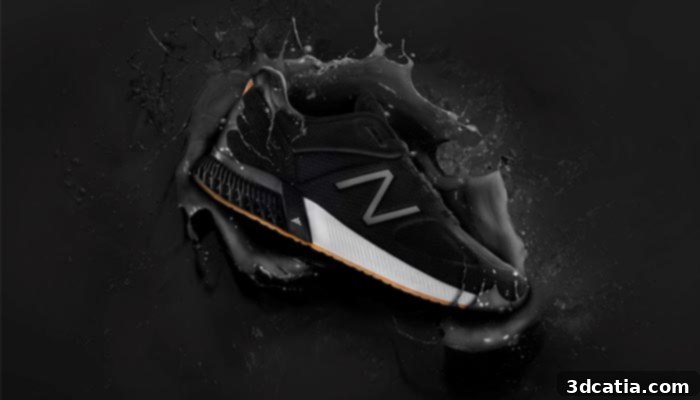
New Balance 990 Sport | Credits: New Balance
TripleCell: The Epitome of Data-Driven Design
Katherine Petrecca, New Balance General Manager of the Innovation Design Studio, eloquently articulated the significance of this advancement: “TripleCell will deliver the industry’s pinnacle expression of data to design with seamless transitions between variable properties underfoot. This new, cutting-edge, digitally manufactured technology is now scaling exclusively within New Balance factories in the U.S. further establishing us as a leader in 3D printing and domestic manufacturing. Formlabs has been an integral partner to bring this to life. We’re really going to be able to disrupt the industry not only in performance, but also in athlete customization and speed to market.” Her statement highlights several key advantages of the TripleCell platform.
Firstly, “data to design” is central to TripleCell. This means that biomechanical data, athlete feedback, and performance metrics can be directly translated into precise design modifications for the shoe’s sole. Unlike traditional methods where design changes are constrained by tooling costs and time, 3D printing allows for rapid iteration and optimization. The “seamless transitions between variable properties underfoot” refer to the ability of 3D printing to create complex lattice structures where different areas of the sole can have varying levels of cushioning, stability, and responsiveness. This level of granular control is virtually impossible with conventional foam molding, offering unprecedented customization and performance tuning tailored to specific needs of an athlete or the demands of a particular sport.
Secondly, the commitment to scaling this technology within New Balance factories in the U.S. underscores a strategic move towards localized and advanced manufacturing. This not only enhances quality control and intellectual property protection but also significantly reduces lead times and supply chain complexities. It positions New Balance as a pioneer in adopting cutting-edge manufacturing techniques and reinforces its dedication to domestic production, creating a more responsive and efficient operational model. This localization also offers significant sustainability benefits, reducing the carbon footprint associated with global shipping and enabling more precise inventory management to minimize waste.
Product Showcase: 990 Sport and FuelCell Echo
The 990 Sport was the first product to showcase the capabilities of the TripleCell platform. This iteration of the iconic 990 series is designed to deliver the familiar premium cushioning experience that fans of the classic style cherish, but with a remarkable improvement: it is 10% lighter than its predecessor, the 990v5. This weight reduction, achieved without compromising comfort or support, is a direct benefit of the advanced lattice structures enabled by TripleCell technology and Rebound Resin. For athletes and everyday wearers alike, a lighter shoe translates to less fatigue and a more enjoyable experience, whether on a long run or during daily activities. The subtle yet impactful integration of 3D printing in the 990 Sport demonstrates New Balance’s commitment to blending heritage with futuristic innovation.
Beyond the immediate benefits of weight reduction and optimized cushioning, Dávid Lakatos, Chief Product Officer at Formlabs, emphasizes the broader impact of this technology on the manufacturing landscape. He explains, “3D printing is changing how companies approach manufacturing, with this announcement New Balance is pioneering localized manufacturing. By eliminating the dependence on molds and direct printing for both prototyping and production, their team shifts from months to hours in the development and production cycles. We’re moving towards a world where design cycles are closing in on the whim of the consumer and it’s exciting to be on the frontlines of this with New Balance.” This statement highlights the profound shift from traditional, tooling-intensive production to a digital, agile manufacturing paradigm.
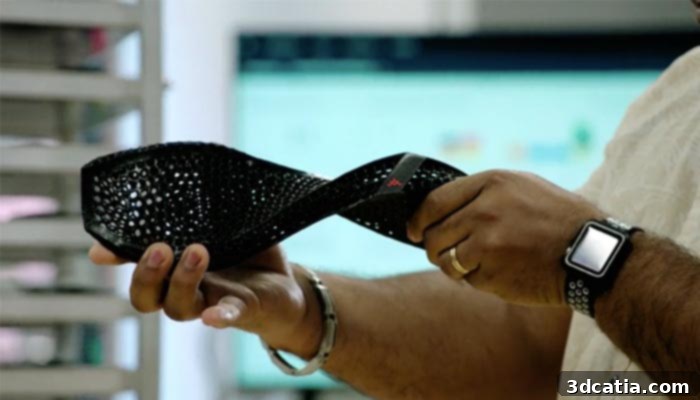
The lattice structure of the sole, created in collaboration with Formlabs | Credits: New Balance
The ability to directly print both prototypes and final production parts without the need for expensive and time-consuming molds drastically accelerates the entire product development lifecycle. Designers can rapidly test new geometries, adjust material properties, and bring innovative concepts to market in a fraction of the time. This responsiveness is crucial in the fast-paced world of athletic footwear, where consumer demands and technological advancements evolve rapidly. It also opens the door to truly mass-customized products, where footwear can be tailored to an individual’s foot shape, gait, and performance requirements, moving beyond standard shoe sizes to a truly personalized fit and feel.
Following the successful launch of the 990 Sport on June 28th, the TripleCell platform will also power the eagerly anticipated FuelCell Echo, set to launch on September 15th. With an expected retail value of $185 for the 990 Sport and $175 for the FuelCell Echo, these products represent a premium offering that justifies their price point through superior performance, innovative technology, and advanced manufacturing. The FuelCell line itself is known for its focus on energy return and speed, and the integration of TripleCell is expected to further enhance these attributes, making the FuelCell Echo a compelling option for runners seeking an edge.
The Future of Footwear: Customization, Speed, and Performance
The collaboration between New Balance and Formlabs, spearheaded by the TripleCell platform, is more than just a product launch; it’s a blueprint for the future of manufacturing in the sports industry and beyond. By harnessing the power of 3D printing, New Balance is not only delivering immediate performance benefits like lighter weight and optimized cushioning but is also laying the groundwork for unprecedented levels of athlete customization. Imagine a future where a runner’s gait analysis data can be directly fed into a 3D printer, creating a midsole perfectly tuned to their unique biomechanics, maximizing efficiency and minimizing injury risk. This level of personalized performance was once a distant dream, but with TripleCell, it’s rapidly becoming a reality.
The impact on speed to market is equally profound. In an industry where trends can shift quickly, the ability to move from concept to consumer in weeks rather than months provides a significant competitive advantage. This agility allows New Balance to respond more rapidly to market demands, introduce innovations more frequently, and stay ahead of the curve. Furthermore, the commitment to domestic, localized manufacturing reduces geographical dependencies and fosters a more sustainable production model. This approach minimizes transportation costs and emissions, streamlines logistics, and supports local economies, aligning with broader corporate social responsibility goals.
In essence, TripleCell represents a paradigm shift. It transforms footwear from a mass-produced commodity to a highly engineered, data-optimized, and customizable piece of athletic equipment. New Balance, with Formlabs as its strategic partner, is not just adopting 3D printing; it is pioneering its application on a significant scale, setting new benchmarks for innovation, performance, and efficiency in the global athletic footwear market. This is a testament to the transformative power of additive manufacturing and a clear indication that the future of footwear is undeniably digital.
For more in-depth information about New Balance’s latest innovations and the TripleCell platform, you can find official announcements and details HERE.
What are your thoughts on this groundbreaking collaboration between New Balance and Formlabs? Do you believe 3D printing will fundamentally change the athletic footwear industry? Share your insights in a comment below or join the conversation on our Facebook and Twitter pages! Don’t forget to sign up for our free weekly Newsletter, to receive all the latest news and innovations in 3D printing directly to your inbox!