
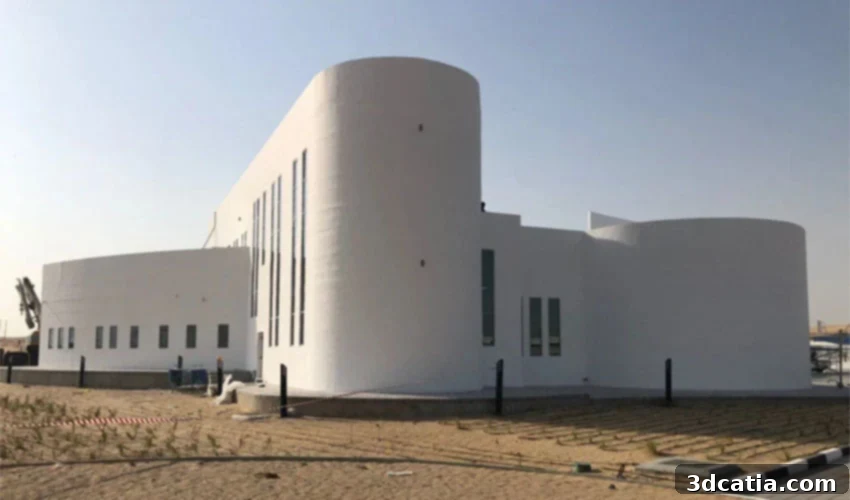
Apis Cor Revolutionizes Construction: Unveiling Dubai’s Landmark Two-Story 3D Printed Building
The landscape of the global construction industry is undergoing a profound transformation, largely driven by advancements in additive manufacturing. At the forefront of this revolution is Apis Cor, a pioneering force that has consistently pushed the boundaries of what’s possible with 3D printing in the construction sector. Their groundbreaking achievement of constructing a functional house in under 24 hours cemented their reputation as innovators. Today, Apis Cor once again captures global attention with the completion of a monumental two-story 3D printed administrative building in Dubai, setting a new benchmark for large-scale additive construction. This ambitious project, undertaken in close collaboration with the Dubai Municipality, underscores a shared vision for a future where construction is faster, more sustainable, and technologically advanced, adhering to the city’s rigorous standards for safety and quality.
The completion of this landmark structure signifies more than just an engineering feat; it represents a pivotal moment for the entire construction industry. Dawoud Al Hajri, the esteemed Director General of Dubai Municipality, emphasized the far-reaching implications of such innovations, stating, “This project is a major turning point in the construction sector. 3D printing technologies in construction will increase the speed of execution and lead to the completion of buildings in record time.” His words highlight Dubai’s strategic commitment to embracing cutting-edge technologies that promise to reshape urban development, offering solutions to traditional construction challenges and paving the way for unprecedented efficiency.
This pioneering initiative in Dubai is not merely about constructing a building; it’s about validating a new paradigm for urban development. By leveraging the precision and speed of 3D printing, Apis Cor and Dubai Municipality are demonstrating how modern technology can accelerate infrastructure projects, reduce timelines, and deliver high-quality structures with remarkable efficiency. This collaboration stands as a testament to Dubai’s forward-thinking approach, aiming to integrate sustainable and innovative practices into the very fabric of its growth and expansion, positioning itself as a global leader in future-proof urban solutions.
Revolutionizing On-Site Construction: The Apis Cor 3D Printing Process
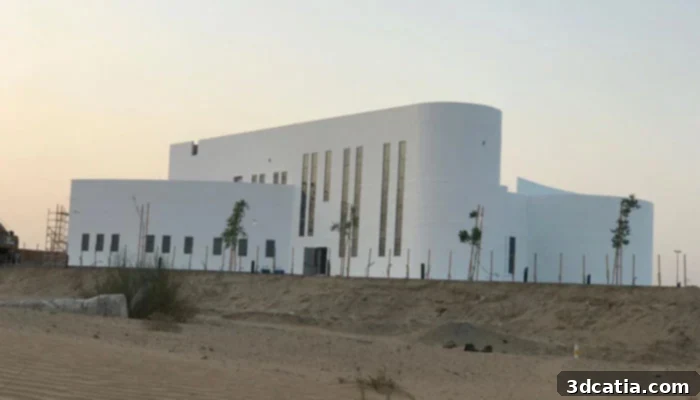
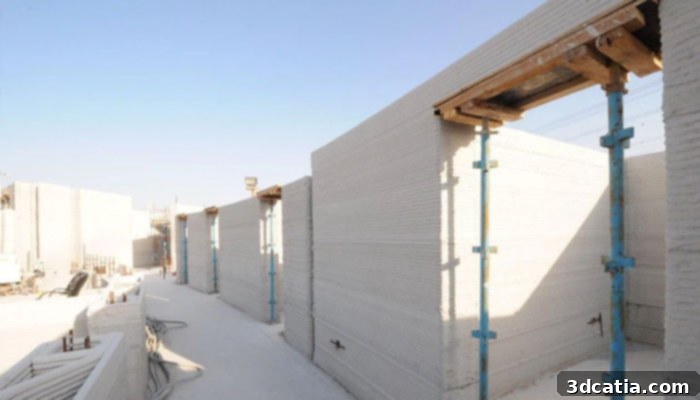
One of the most remarkable aspects of Apis Cor’s project in Dubai is the methodology employed for its construction. Unlike many early 3D printing construction projects that involve off-site fabrication of components before assembly, the two-story administrative building was constructed directly on-site. This innovative approach eliminated the need for complex logistical arrangements for transporting large pre-printed sections and significantly reduced overall project timelines and costs associated with assembly. The integrity and speed of on-site printing under dynamic conditions were critical objectives for Apis Cor, showcasing the true potential of their mobile 3D printing technology to handle complete building structures from the ground up.
The construction process unfolded under natural weather conditions, a particularly challenging environment given Dubai’s intense heat and high humidity. Traditionally, such conditions might necessitate extensive climate control measures, such as large protective tents or modified working hours, to ensure material integrity and worker safety. However, Apis Cor deliberately chose to operate without such coverings, transforming the project into a comprehensive research and development initiative. This extensive R&D was specifically dedicated to rigorously testing the equipment’s resilience and performance under harsh climatic conditions, pushing the boundaries of what additive construction machinery can endure. This included developing and refining specialized 3D printing materials capable of maintaining structural integrity and optimal curing rates in extreme temperatures and humidity. Furthermore, the long-term testing of the equipment itself under continuous operation provided invaluable data for future innovations and applications, ensuring reliability and robustness for subsequent large-scale projects worldwide.
Unlocking Efficiency and Sustainability in Building Construction
The tangible benefits of Apis Cor’s 3D printing approach extend far beyond mere novelty. Dawoud Al Hajri reiterated the economic and societal advantages, explaining, “This will reduce construction costs and contribute to the development of solutions to demographic challenges by reducing the number of construction workers.” Indeed, the project demonstrated a remarkable reduction in labor requirements, utilizing only about half the usual number of construction workers—a lean team of just 15 individuals. This efficiency directly addresses concerns about labor shortages in the construction sector and offers a model for optimizing human resources, leading to significant cost savings and enhanced safety on construction sites.
Beyond labor savings, the environmental impact is equally significant. The 3D printing process generated approximately 60 percent less waste compared to conventional construction methods. This substantial reduction in material waste is a critical step towards more sustainable building practices, aligning perfectly with global efforts to minimize environmental footprints in urban development. By precisely depositing only the necessary material, additive manufacturing inherently reduces scrap, over-ordering, and the need for extensive transportation of bulk materials, leading to both ecological and economic advantages that benefit both developers and the planet.
The completed administrative building stands as an impressive testament to the technology’s capabilities, reaching a height of 9.5 meters and encompassing a total area of 640 square meters. Apis Cor’s proprietary 3D printer operates much like an advanced inkjet printer, but on a massive scale. It utilizes a specially formulated fluid material, meticulously deposited along a predetermined digital route that is mapped out by sophisticated computer-aided design (CAD) software. This mineral-infused fluid possesses unique properties, allowing it to solidify into a robust, concrete-like structure almost instantly upon extrusion. This rapid solidification is key to building complex geometries layer by layer, converting intricate digital models into tangible, three-dimensional objects with unparalleled precision and speed. The ability to create such a large, multi-story structure on-site, with minimal manual intervention, underscores the profound disruptive potential of this technology for modern construction, promising faster project completion and reduced overall costs.

Apis Cor’s innovative 3D printer built a two-story administrative building in Dubai, showcasing the future of additive construction | Image via Apis Cor
Dubai’s Vision: Embracing 3D Printing as the Future of Construction
For Dubai, 3D printing is not just a passing trend but a cornerstone of its strategic future in construction. The city has emerged as a global hub for innovation, actively integrating advanced technologies into its urban development plans. This commitment was vividly demonstrated back in July, when the prominent real estate development company, Emaar Properties, announced its ambitious plan for the construction of its first 3D printed home in Dubai. This pioneering venture involves a strategic collaboration with an international concrete 3D printer manufacturer and a local contractor from the United Arab Emirates, indicating a concerted effort to localize and scale this technology. While specific details about the creation of this house remain under wraps as the project is still in its infancy, its announcement alone signifies a momentous shift. It unequivocally marks the inception of a significant innovation strategy for Dubai’s real estate sector and strongly reinforces the belief that 3D printing is poised to become the definitive future of construction for this rapidly evolving metropolis.
Dubai’s embrace of 3D printing extends beyond individual projects; it is deeply embedded in national policy. We previously reported on a significant announcement from the head of the UAE National Innovation Committee, which had set an ambitious and clear target: to 3D print an impressive 25% of Dubai’s buildings by the year 2030. This isn’t merely a speculative goal; it’s a strategic imperative aimed at positioning Dubai as a global leader in sustainable and intelligent urban development. This bold objective reflects a comprehensive strategy to reduce construction time, lower costs, minimize waste, and enhance the city’s appeal as a hub for advanced manufacturing and technological innovation. Achieving this target will require substantial investment in research, infrastructure, and skilled labor, but Dubai’s track record suggests it is well-equipped to meet such challenges. The city aims to leverage 3D printing to create more affordable housing, expedite infrastructure projects, and even develop unique architectural designs that would be unfeasible with traditional construction methods, fostering a truly innovative and adaptable urban environment.
The implications of Dubai’s 3D printing strategy are profound. It will not only accelerate the pace of urban growth but also foster a more sustainable construction ecosystem. By reducing material consumption and transportation needs, 3D printing helps lower carbon emissions and conserves resources. Moreover, the digital nature of 3D printing allows for greater design flexibility and customization, enabling architects and developers to create structures that are not only efficient but also aesthetically innovative and tailored to specific environmental and cultural contexts. This commitment by Dubai, exemplified by projects like Apis Cor’s two-story building, serves as a powerful testament to the transformative potential of additive manufacturing in shaping the cities of tomorrow, making them more resilient, beautiful, and functional.
The Global Impact and Future Outlook of 3D Printed Architecture
Apis Cor’s achievement in Dubai serves as a crucial case study and a global inspiration for the wider adoption of 3D printing in construction. Their ability to deliver a multi-story building on-site under challenging environmental conditions demonstrates the maturity and scalability of additive construction technologies. This project effectively de-risks future investments in similar technologies and encourages other municipalities and developers worldwide to explore these innovative methods for their own urban development challenges. From addressing affordable housing shortages in developing nations to rapidly constructing resilient structures in disaster-prone areas, the applications of construction 3D printing are vast and transformative, promising a more accessible and efficient way to build.
The future of 3D printed architecture is undeniably bright, characterized by continuous innovation in materials science, robotics, and artificial intelligence. We can anticipate the development of new printable materials with enhanced strength, thermal properties, and sustainability profiles, expanding the range of applications. Printers will become even more autonomous, capable of handling larger structures with greater speed and precision, further reducing human intervention and increasing efficiency. Furthermore, the integration of AI will enable generative design, allowing algorithms to optimize building structures for efficiency, material usage, and environmental performance, pushing the boundaries of architectural form and function. As regulatory frameworks adapt to these new construction paradigms, and as the workforce becomes increasingly trained in digital fabrication techniques, 3D printing will undoubtedly move from being a niche innovation to a mainstream construction method, fundamentally changing how we design and build our world.
Apis Cor’s participation in constructing what is effectively one of the world’s largest two-story 3D printed buildings marks a significant milestone not just for the company, but for the entire industry. It represents a tangible step towards a future where construction is smarter, faster, and more sustainable. What are your thoughts on Apis Cor’s remarkable contribution to advanced construction and Dubai’s ambitious embrace of 3D printing? We invite you to share your perspectives in the comments section below or join the conversation on our Facebook and Twitter pages! Don’t miss out on the latest advancements in additive manufacturing – remember to sign up for our free weekly Newsletter, delivering all the essential news straight to your inbox!