
XEV YoYo: Pioneering Urban Mobility with the 3D Printed Electric Car
Remember the intriguing concept of a compact 3D printed electric car from the innovative Italian company, XEV? When we first delved into the project’s early stages, there was a natural skepticism regarding its feasibility and broader market appeal. However, as often happens in the world of disruptive technology, time has proven to be an ally. XEV has not only overcome initial doubts but has re-emerged into the spotlight with a compelling Kickstarter campaign, aiming to secure a significant investment of €500,000 by February 6th. This crucial funding will unlock the full-scale production of their groundbreaking urban electric vehicle. The resurgence of XEV and its YoYo model prompts a deeper examination: which specific components of this pioneering car are produced using additive manufacturing, and what compelling reasons drove XEV to embrace this advanced production methodology?
XEV’s journey began with a fundamental critique of conventional automotive manufacturing. The industry’s established processes are notoriously slow and capital-intensive, often requiring a cumbersome timeline of four to five years from initial concept to market launch. Such protracted development cycles stifle innovation and make it challenging to respond swiftly to evolving consumer demands. XEV recognized that 3D technologies offered a transformative alternative. Additive manufacturing has long captivated the automotive sector due to its inherent advantages: significantly reduced production times, unparalleled possibilities for customization, and the potential for substantial cost reductions. These three pillars – speed, flexibility, and efficiency – form the bedrock of XEV’s decision to integrate 3D printing. Luo Xiaofan, the visionary founder and CEO of XEV, eloquently articulates this philosophy: “3D printing eliminates 90% of costs and lead times. In addition, it allows to offer several iterations, and to constantly upgrade the vehicle according to market demand and user feedback.” This statement underscores not just a technological shift but a paradigm change in how vehicles can be designed, produced, and evolved, offering a dynamic response to the rapid pace of modern life and the specific needs of urban commuters.
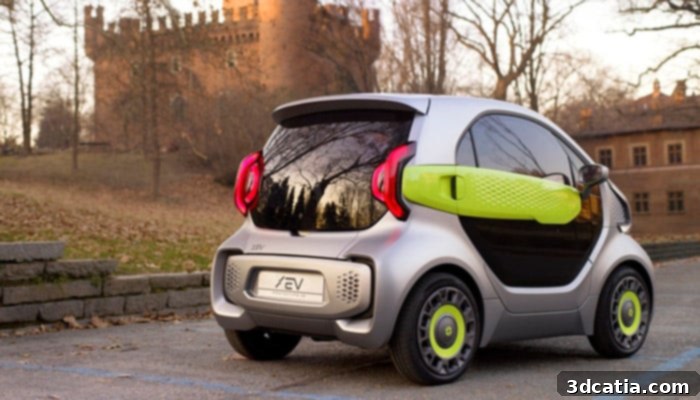
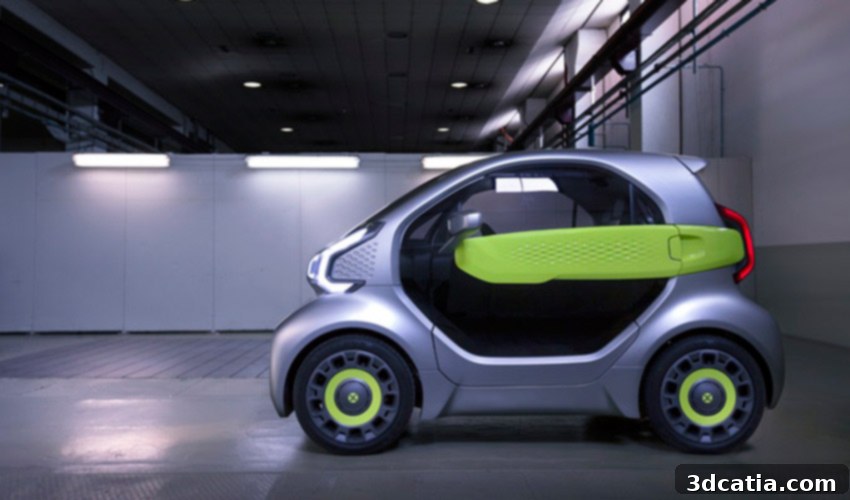
The YoYo electric car showcases sleek design and efficient form factor. | Credits: XEV
The YoYo Manufacturing Process: A New Era of Automotive Production
XEV has leveraged the power of FDM 3D printers – Fused Deposition Modeling – to bring the YoYo to life. This choice of technology is central to the vehicle’s innovative design and production strategy. Rather than fabricating a few isolated parts, XEV utilizes FDM for a significant portion of the YoYo’s structure, including the body panels, the wheel rims, the dashboard, and even elements of its modular chassis. This modular approach is particularly noteworthy, as it empowers an unprecedented level of user customization. Imagine a car where you can personalize its aesthetics and even functional components according to your evolving preferences or specific needs. XEV isn’t just imagining this; they are making it a reality. The company has announced plans for an online library of 3D printable files, a revolutionary concept that will allow YoYo owners to download, modify, and 3D print replacement or custom parts, fostering a truly interactive ownership experience. This level of personalization is a direct outcome of additive manufacturing’s flexibility, a stark contrast to the rigid, mass-produced offerings of traditional carmakers.
Beyond customization, the YoYo is designed for practicality and efficiency in urban environments. Measuring a compact 2.5 x 1.5 meters, it is perfectly suited for navigating congested city streets and fitting into tight parking spaces. Despite its diminutive size, the YoYo boasts impressive performance for its class, achieving a top speed of 70 km/h and offering a respectable range of 150 km on a single charge. A key advantage derived from its 3D printed construction is its remarkably low weight – at just 750 kg, it is approximately half the weight of a conventional car. This significant weight reduction directly contributes to improved energy efficiency and enhanced maneuverability. Inside, the YoYo offers a modern and intuitive user experience, featuring a large touch screen that serves as the central control hub for navigation, entertainment, and vehicle settings, aligning with contemporary automotive design trends.
One of the most astonishing claims by XEV is the assembly time for the YoYo: a mere three days from component fabrication to a fully functional vehicle rolling off the line. This rapid assembly is a testament to the core design philosophy of component reduction and simplification, where additive manufacturing played a pivotal role. By integrating multiple functionalities into single 3D printed parts, XEV drastically reduced the total number of individual components required for the car. This not only streamlines the assembly process but also leads to fewer material requirements and ultimately, a lower overall production cost. The ability to consolidate parts minimizes the complexity of the supply chain and manufacturing logistics, contributing to both speed and cost efficiency – critical factors for bringing an innovative electric vehicle to market at an affordable price point.
While XEV has been transparent about its use of FDM technology, the specific thermoplastic material employed for the YoYo’s structural components remains undisclosed. This is a crucial point, especially for potential investors considering the Kickstarter campaign. For a vehicle to be roadworthy, its materials must possess exceptional characteristics: high strength-to-weight ratio, resistance to thermal variations, impact absorption capabilities, and long-term durability to withstand various environmental stresses and potential accidents. One could reasonably speculate the use of advanced composite materials, perhaps a carbon fiber-filled thermoplastic, which offers enhanced stiffness and strength without adding excessive weight. Alternatively, high-performance polymers such as PEEK or ULTEM, known for their excellent mechanical properties and resistance to extreme conditions, might be considered, though these materials typically come with a higher cost. The material choice directly impacts the vehicle’s safety, longevity, and overall performance. Full disclosure on this front would undoubtedly boost investor confidence and address legitimate concerns about the YoYo’s structural integrity and crashworthiness, paving the way for broader acceptance and regulatory approvals.
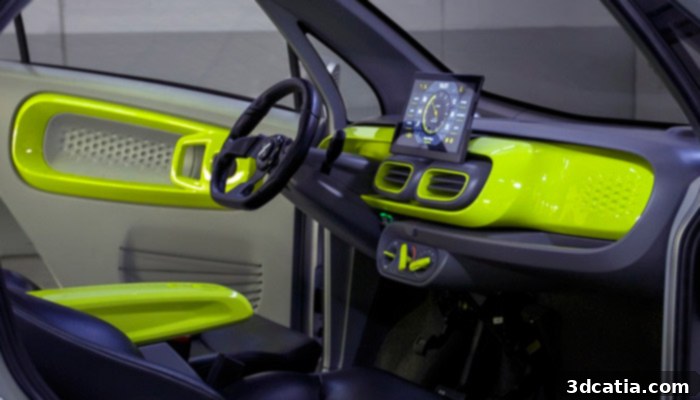
A look inside the YoYo car, highlighting its modern, minimalist cabin and touchscreen interface. | Credits: XEV
With all its innovative features, the XEV YoYo also boasts an incredibly attractive price point. At €7,995, this compact electric car is positioned as a truly affordable option, making sustainable urban mobility accessible to a wider demographic. This aggressive pricing strategy, combined with the groundbreaking manufacturing process, positions the YoYo as a potential game-changer in the electric vehicle market, especially for those seeking a practical, eco-friendly, and cost-effective personal transport solution for city living. The success of the current Kickstarter campaign is paramount; if XEV achieves its €500,000 funding goal by the February deadline, the company plans to kickstart full-scale production in August 2020. This ambitious timeline underscores XEV’s confidence in its technology and its ability to rapidly move from fundraising to market delivery.
The XEV YoYo represents more than just a new electric car; it embodies a bold vision for the future of automotive manufacturing and personal transportation. By harnessing the power of 3D printing, XEV is demonstrating how innovation can disrupt established industries, offering solutions that are faster, more customizable, more efficient, and potentially more sustainable. The implications of a genuinely 3D printed car extend beyond mere novelty; they point towards a future of localized production, reduced waste, and vehicles that can evolve and adapt to user needs throughout their lifecycle. While challenges remain, particularly in gaining widespread regulatory acceptance for such novel manufacturing methods and ensuring the long-term durability of printed components, XEV’s pioneering efforts with the YoYo are undoubtedly charting a new course for the automotive industry. It serves as a compelling case study for how additive manufacturing can revolutionize design, production, and the very concept of car ownership.
What are your thoughts on the revolutionary YoYo electric car and its ambitious 3D printing strategy? Do you believe this heralds a new era for urban mobility? We invite you to share your insights in a comment below or join the conversation on our Facebook and Twitter pages! Don’t miss out on the latest advancements in additive manufacturing – sign up for our free weekly Newsletter to get all the cutting-edge news delivered directly to your inbox!