

The Future of Desktop 3D Printing: Ultimaker and MakerBot Merge to Revolutionize Additive Manufacturing
The landscape of additive manufacturing is one of relentless innovation and strategic evolution. Following a particularly active year in 2021 marked by significant mergers and acquisitions, the momentum in the 3D printing industry shows no signs of slowing down in 2022. In a move poised to reshape the desktop 3D printing sector, two prominent leaders, MakerBot and Ultimaker, have officially announced their agreement to merge. This strategic consolidation aims to dramatically accelerate the global adoption of additive manufacturing, particularly within the accessible desktop segment. The newly formed entity promises to deliver an unparalleled, comprehensive desktop 3D printing ecosystem, seamlessly integrating state-of-the-art hardware with advanced software solutions and a diverse range of high-quality materials.
The significance of this merger is underscored by the impressive growth and dynamic nature of the desktop 3D printer market. While the broader 3D printing industry demonstrated resilience during the recent global pandemic, the desktop segment experienced an exceptional boom. As individuals sought new ways to engage their creativity, pursue hobbies, and even establish home-based businesses, desktop 3D printers became an increasingly popular tool. Although 2021 saw a shift with a notable increase in industrial 3D printer shipments, the market for desktop units remains robust and expansive. According to a comprehensive report by Emergen Research, the global desktop 3D printer market was valued at a substantial $1.4 billion in 2019 and is projected to reach an impressive $5 billion by 2027. This rapid expansion highlights the segment’s potential and its increasing relevance across various applications.
The sheer volume of manufacturers actively competing in this space further emphasizes its vitality and fierce competition. From technological hubs in the USA to manufacturing powerhouses in China and innovative companies across Europe, the desktop 3D printer market is one of the most saturated within the additive manufacturing landscape. This intense competition has driven continuous innovation and pushed the boundaries of what these accessible machines can achieve. By uniting two of the most recognized and respected names in desktop 3D printing, this merger represents a powerful effort to streamline offerings, enhance user experience, and ultimately propel desktop 3D printing from a niche technology into a mainstream tool for professionals, educators, and prosumers worldwide.
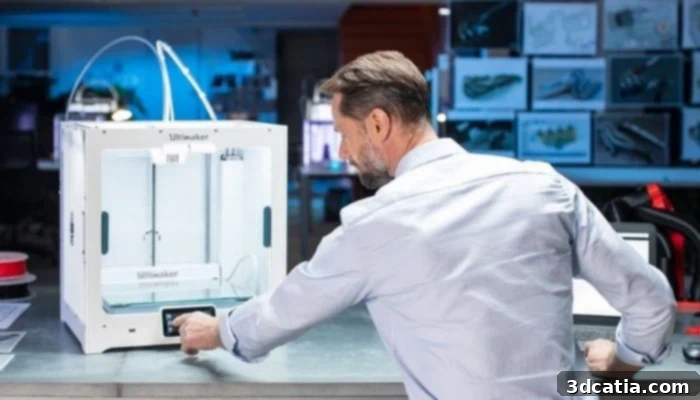
Photo Credits: Ultimaker
Key Details of the Ultimaker and MakerBot Merger: A New Powerhouse Emerges
The official announcement on Thursday detailed a definitive business combination agreement between Ultimaker and MakerBot. The overarching objective of this agreement is the formation of a brand-new, unified entity that will strategically position itself with dual headquarters – one in the Netherlands, reflecting Ultimaker’s origins, and another in New York, a nod to MakerBot’s American roots. This structure is designed to leverage the best of both worlds, fostering a truly global perspective and operational efficiency. The leadership of this formidable new company will be shared by two seasoned executives: Nadav Goshen, the current CEO of MakerBot, and Jürgen von Hollen, the current CEO of Ultimaker, who will serve as co-CEOs. This dual leadership model aims to ensure a smooth transition and harness the distinct strengths and visions of both companies.
Financial backing for this ambitious venture is substantial, with existing investors NPM Capital and Stratasys providing crucial support. Stratasys, a global leader in industrial additive manufacturing and the parent company that acquired MakerBot in 2013, is making a significant planned cash investment of $62.4 million. This considerable capital injection is expected to play a pivotal role in empowering the new entity to aggressively pursue expansion into nascent markets and to significantly accelerate research and development, driving unparalleled innovation across its hardware, software, and material offerings. This strategic investment from Stratasys further highlights the potential and strategic importance of the combined desktop 3D printing force within the broader additive manufacturing industry.
While a merger of this magnitude might initially appear surprising to some, it represents a highly logical convergence of two companies that have each carved out distinct leadership positions in the desktop 3D printing arena. MakerBot, an undeniable pioneer, emerged from the groundbreaking RepRap movement in 2009. It was instrumental in democratizing 3D printing, making the technology accessible to a far wider audience than ever before through its user-friendly desktop FDM machines. Beyond its hardware, MakerBot is also renowned for Thingiverse, its vast online repository which boasts the largest collection of user-generated downloadable digital designs, fostering a vibrant community and a rich ecosystem for sharing 3D models.
On the other hand, Ultimaker burst onto the scene in 2013, quickly establishing itself as a benchmark for reliable, professional-grade desktop 3D printers. Its machines are celebrated for their precision, consistency, and suitability for demanding applications in engineering, education, and small-scale manufacturing. Crucially, Ultimaker is also the driving force behind Cura, an open-source slicing software that has become a household name among 3D printing enthusiasts and professionals alike. Cura’s intuitive interface, powerful features, and continuous development have made it one of the most widely used and respected slicers in the industry. The fusion of these two titans will allow the new entity to strategically play to the unique strengths of both companies. This synergy will enable them to offer an even broader spectrum of easy-to-use, highly accessible, and exceptionally reliable desktop 3D printing solutions tailored for a diverse array of applications, from educational settings and creative pursuits to professional prototyping and small-batch production. The ultimate goal is to remove barriers to entry and accelerate 3D printing adoption, firmly cementing desktop 3D printers as indispensable tools across numerous market segments.
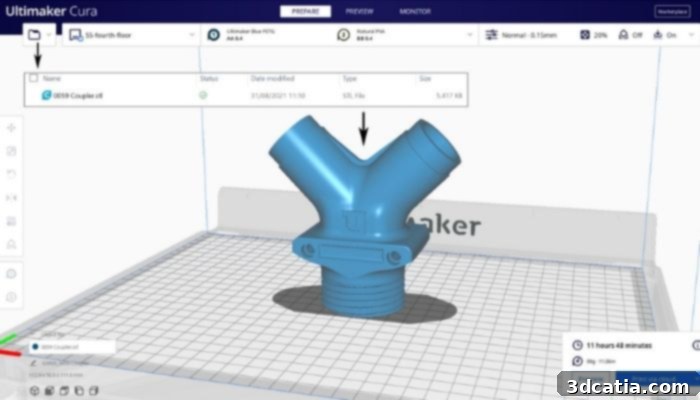
Ultimaker Cura is recognized as one of the most popular and powerful slicers on the market (photo credits: Ultimaker)
Jürgen von Hollen, CEO of Ultimaker, emphasized the transformative potential of this merger in his concluding remarks: “This merger marks an important milestone for Ultimaker and MakerBot. Innovation and growth are both critical to bringing desktop 3D printing from a specialty technology into mainstream business adoption. The new company will leverage and expand its combined global footprint with sales and operations in the Americas, EMEA and APAC, ensuring that our cutting-edge solutions reach a broader customer base and catalyze further industry growth.” This statement clearly articulates the ambition behind the consolidation – to drive not just incremental but exponential growth for desktop 3D printing. The expanded global footprint signifies a strategic approach to market penetration, enabling the new entity to offer localized support, sales, and services across major continents, enhancing customer satisfaction and fostering deeper engagement within diverse regional markets.
The transaction, while agreed upon, is still subject to the customary process of consultation with appropriate employee representative bodies and securing necessary regulatory approvals. These steps are standard for mergers of this scale, ensuring fair practices and adherence to market regulations. Despite these procedural requirements, the closing of this landmark agreement is optimistically anticipated to occur within the second or third quarters of 2022. This timeline suggests a relatively swift integration period, allowing the combined forces of Ultimaker and MakerBot to begin executing their unified vision in the near future. Further detailed information regarding this significant development can be found in the official press release linked HERE. This merger is not just about combining two companies; it’s about setting a new standard for desktop additive manufacturing, promising a future where 3D printing is more accessible, powerful, and integrated than ever before.
We are eager to hear your thoughts on this monumental merger between MakerBot and Ultimaker. What impact do you foresee this having on the desktop 3D printing industry, and how might it influence your own engagement with additive manufacturing? Share your insights and predictions in a comment below, or join the conversation on our social media channels: LinkedIn, Facebook, and Twitter! Don’t miss out on the latest updates and breaking news from the world of 3D printing – be sure to sign up for our free weekly Newsletter here, delivered straight to your inbox. For a visual dive into the world of additive manufacturing, you can also find all our compelling videos on our dedicated YouTube channel.