
Pioneering 3D Printing Materials: Recreus Drives Industrial Innovation with Flexible Filaments and Sustainable Polypropylene
For many years, Fused Filament Fabrication (FFF) technology, a cornerstone of additive manufacturing, was primarily associated with the burgeoning maker community and hobbyists. Its potential for industrial applications was often underestimated. However, significant advancements in FFF machines and the relentless evolution of high-performance materials have propelled this technology into the industrial sector, making it a formidable competitor in advanced manufacturing processes. The development of specialized 3D filaments has been instrumental in this transformative journey. According to a recent study by Ameco Research, the global market for 3D filaments is projected to reach an impressive value of $255 million by 2024, signaling remarkable growth and a pivotal role for material innovation.
In light of this explosive growth and the increasing demand for advanced 3D printing materials, we recently had the opportunity to speak with Ignacio García, the visionary CEO of Recreus. This Spanish company has garnered international recognition for developing the world’s first flexible 3D filament, Filaflex, a material that redefined what was possible with FFF technology. Building on its legacy of innovation, Recreus announced a strategic collaboration with the energy multinational Repsol a few months ago. This partnership marks the next crucial step in developing even more revolutionary materials for the FDM (Fused Deposition Modeling) 3D printing sector, with a clear focus on addressing demanding industrial applications.
To truly grasp the profound importance of material science in driving industrial additive manufacturing forward, and to understand Recreus’s ambitious global expansion plans, we delved deeper with Ignacio García. He shared fascinating insights into how the groundbreaking idea for such a disruptive flexible material first emerged and offered a preview of the exciting new innovations Recreus plans to unveil at the upcoming Formnext exhibition, a premier global event for additive manufacturing.
3DN: Could you introduce yourself and elaborate on the genesis of Recreus?
 I am Ignacio García, the proud founder and CEO of Recreus, and my background is rooted in industrial engineering. From my earliest days, I’ve always been driven by a deeply creative, inquisitive, and entrepreneurial spirit. This intrinsic curiosity fueled my passion for design and technology, ultimately leading me down the path of additive manufacturing.
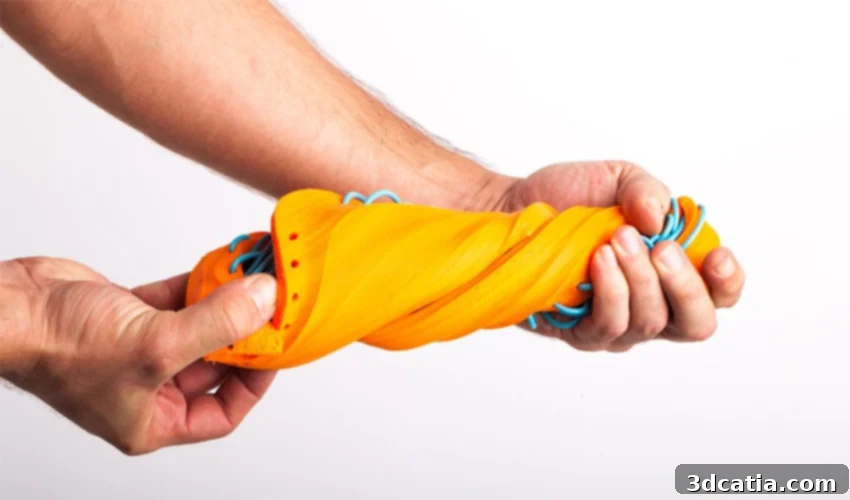
The remarkable journey of Recreus truly began in 2010. It was then that I attended the Euromold fair in Germany, captivated by the world of design and emerging technologies. There, I first encountered 3D printing and 3D printers, and I was immediately fascinated. As I began experimenting with these new machines, I quickly recognized a significant limitation in creating certain projects and parts due to the rigid nature of all existing materials on the market. This realization sparked an intense desire to innovate. I started conducting research in my parents’ garage, driven by the ambition to develop a material that would offer significantly more elasticity and flexibility. This dedicated effort culminated in 2013 with the birth of FilaFlex – the world’s first truly elastic filament for 3D printers. It was a completely novel and profoundly disruptive material that opened up a new realm of possibilities for additive manufacturing.
Once this groundbreaking product was perfected, we officially founded Recreus as a brand and company to bring it to market. Our company’s philosophy and core values, which have always guided me, are encapsulated in our name: REcycling, CREating, and USing – a testament to our commitment to innovation, utility, and sustainability in 3D printing.
3DN: What has the development of a globally recognized filament like FilaFlex meant for Recreus?
FilaFlex has meant everything to Recreus; it was the foundational spark from which our entire company emerged. Recreus was born out of the creative imperative to innovate and to disrupt the conventional boundaries of the 3D printing sector, opening it up to an entirely new class of materials. With FilaFlex, we demonstrated to the world that you could print your very own functional slippers using a home 3D printer, leveraging the unique properties of our flexible filament! At that time, everything about it was groundbreaking. The FFF 3D printing technology itself was innovative, but FilaFlex truly showcased the immense potential of additive manufacturing for creating functional, everyday objects with previously impossible characteristics.
We were also quite frankly tired of seeing the same typical, often repetitive 3D printed pieces displayed at trade fairs. We wanted to break away from that mold and offer something genuinely practical and useful for daily life. I vividly recall how the news of our flexible 3D printed slippers and FilaFlex reverberated across the globe. Our innovative product was featured in virtually every major international media outlet, from Japan to the USA and Russia. It was an incredibly inspiring moment, something truly extraordinary! This widespread recognition has continuously motivated us to persist in innovating and working diligently to expand our capabilities, ensuring we remain at the forefront of disruptive material science in 3D printing. The success of FilaFlex solidified our identity as pioneers and continues to drive our mission to push the boundaries of what’s achievable with additive manufacturing.
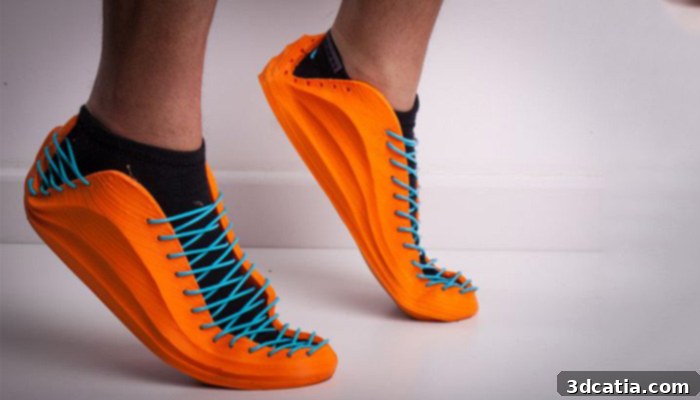
3D printed shoes using the FilaFlex 3D printing filament | Recreus
3DN: This year, you initiated a significant collaboration with the multinational Repsol. What projects are you jointly developing?
Precisely. Our continuous hard work and commitment to innovation eventually led us to seek a strategic investment partner that could genuinely add value to our growing company. It was clear to us that for Recreus to achieve its ambitious growth objectives, external support and expertise would be essential. Being in the right place at the right time, coupled with our established reputation for pioneering flexible filaments, brought us into contact with Repsol.
Repsol, on the other hand, demonstrated a strong strategic interest in betting on advanced 3D printing technology and the development of cutting-edge materials. This alignment of interests created a powerful synergy. Their investment has enabled us to significantly scale our business operations and to embark on new, ambitious projects that we had envisioned, leveraging the extensive expertise of their chemistry department teams. Specifically, a key focus of our collaboration has been the development of a specialized polypropylene for 3D printing. Considering that polypropylene (PP) is the most widely used material in the traditional plastic processing industry, accounting for nearly 20% of all plastics, our challenge was to create a polypropylene filament that not only performs exceptionally in 3D printing but also offers superior mechanical properties compared to existing products on the market. Furthermore, our overarching aim with this development has been to significantly accelerate the adoption of industrial 3D printing across diverse industries by enabling new applications and expanding the range of functional uses for additive manufacturing. This partnership is designed to push the boundaries of material science, making industrial 3D printing more versatile and accessible.
3DN: What exciting news can we expect from Recreus at the next edition of Formnext?
At Formnext, the flagship novelty will undoubtedly be the highly anticipated global launch of our innovative and revolutionary material: polypropylene specifically engineered for 3D printing. This new filament boasts a unique combination of properties, including high impact resistance, excellent chemical resistance, and exceptional ease of use in 3D printing, which has historically been a challenge for polypropylene. Furthermore, it delivers low warpage during printing and produces parts with a remarkably smooth finish, addressing common pain points for industrial users seeking reliable and high-quality prints.
In addition to the polypropylene filament itself, another significant innovation we will unveil is the “3D Polypropylene Primer” with which it will be exclusively marketed. Each spool of our new polypropylene filament will be accompanied by this revolutionary primer, designed to be applied to the print bed before the filament extrusion begins. This primer is essential for ensuring perfect adhesion of the printed part to the build plate. Among its many advantages, we can highlight its exceptionally strong adhesion, allowing for effective printing with the PP filament at a low bed temperature of just 40ºC. To effortlessly remove the printed piece, users simply need to raise the bed temperature to 80ºC, and it detaches cleanly. This primer is also remarkably easy to apply, and a single spool can be reused for at least three or more prints, leading to considerable energy savings and reduced material waste. We are incredibly proud of the comprehensive solution we’ve developed, and we are confident that this innovative pairing of polypropylene filament and specialized primer will mark a before and after in the industrial 3D printing sector, setting a new standard for performance and user experience.
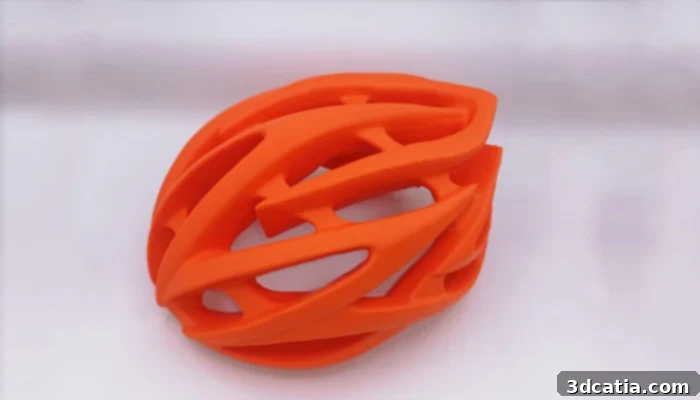
3D printed part with the new material Polypropylene 3D Primer | Recreus
Beyond our material innovations, Formnext will also serve as the platform for the premiere and official launch of our renewed corporate image. This refresh signifies a significant change and an exciting evolution currently underway at Recreus, an evolution we are eager for the world to notice and embrace. It reflects our continued commitment to growth, innovation, and our expanding presence in the industrial 3D printing landscape.
3DN: How do you envision the future trajectory of 3D printing filaments and FFF technology?
Without a doubt, in the short to medium term, I foresee an exponential growth in the demand for advanced 3D materials and filaments. This surge is being driven by the increasing democratization and widespread adoption of additive manufacturing technologies across various industrial sectors. Industries are increasingly integrating 3D printing into their production processes, not just for rapid prototyping but also for customizing final parts, creating tooling, and exploring a myriad of new applications. They are rapidly recognizing the immense potential that FFF technology offers for specific sectors. For example, in the orthopaedic sector, additive manufacturing provides a substantial competitive advantage in the precise creation and personalized design of custom orthopaedic templates and devices. Here, our FilaFlex filament, with its unique flexibility and durability, offers significant benefits, enabling the production of more comfortable, functional, and tailored solutions for patients.
I believe that the primary challenge for FFF technology moving forward will be the development of much more reliable, efficient, and significantly faster machinery. These advanced printers will need to enable the mass production of high-quality parts at a reduced cost, making additive manufacturing competitive for larger-scale industrial production. Furthermore, the contribution of FFF technology to the Circular Economy will become an increasingly essential part of its evolution. This involves the innovative use of plastic waste for the creation of new applications and valuable products. We must actively invest in and champion the development of technologies that can be applied locally, within cities, to transform urban plastic waste into new objects or articles, thereby generating new value and fostering sustainable practices. This integration of circular economy principles is not just an opportunity but a responsibility for the future of additive manufacturing.
3DN: What are Recreus’s key projects planned for 2020?
Building upon our core objective of solidifying our position as market leaders in flexible filament manufacturing, and with a strong commitment to transferring our advanced technology and innovative materials to the broader industrial ecosystem, our strategic projects for 2020 are clearly defined. We will intensively focus on expanding our B2B business segment. A major initiative will be the highly anticipated launch of an industrial 3D printer specifically engineered to print our unique range of materials. This purpose-built machine will provide a critical competitive advantage for various key sectors, including but not limited to medicine, textiles, orthopaedics, footwear, and many more. It represents a significant step towards providing a complete solution for industrial clients.
Becoming a manufacturer of additive manufacturing machinery has been a deeply considered decision, a plan we have meticulously developed over several years. What ultimately motivated us to commit to this venture and dedicate ourselves to its realization was the glaring lack of specialized solutions on the market that focus exclusively on creating parts with elastic materials. Many industrial printers are optimized for rigid materials, leaving a significant gap for applications requiring flexibility. Our new industrial printer will fill this void, providing unprecedented capabilities for working with our flexible filaments at an industrial scale. Therefore, 2020 is set to be a truly pivotal and transformative year for Recreus, and we are confident that our upcoming innovations will generate considerable excitement and discussion within the additive manufacturing industry.

Danit Peleg’s dress for Amy Purdy during the Paralympics using FilaFlex
3DN: Do you have any final message for our valued readers?
I would like to extend my sincere gratitude to all those pioneers who believed in and championed 3D printing technology from its earliest beginnings. My thanks go to everyone who, often starting from a garage or a humble room, contributed tirelessly to the growth and evolution of this incredible technology, generously sharing their knowledge. It is through their collective efforts that this technology has matured to a point where industries worldwide are now adapting it into their mainstream productive processes, guiding us towards a more sustainable and coherent future. It is genuinely inspiring to witness how the Fourth Industrial Revolution is unfolding from the grassroots levels of society, actively helping to transform our communities in a local, independent, and inherently sustainable manner.
I earnestly hope that you, our readers, will continue to drive this vital revolution forward. Each one of us plays a fundamental role in confronting humanity’s most pressing challenge: ensuring our continued ability to thrive on this planet. To discover more about our innovative 3D filaments and stay updated on our upcoming launches, I invite you to visit our official website HERE.
What are your thoughts on Recreus’s groundbreaking work in the evolving 3D printing filament sector? We invite you to share your insights and comments below, or engage with us on our Facebook and Twitter pages! Don’t forget to subscribe to our free weekly Newsletter to receive all the latest news and innovations in 3D printing delivered directly to your inbox!