
3D Printing in Space: Eight Ways Additive Manufacturing is Propelling Humanity Beyond Earth
The ambition to conquer space has always captivated humanity, with each technological leap bringing us closer to this monumental goal. In recent years, 3D printing, also known as additive manufacturing, has emerged as a truly transformative asset for the space industry. While its prominence might seem new, its application in this extreme frontier has a surprisingly established history.
A pivotal moment arrived in 2014 when the first 3D printer was successfully sent into space. This marked a significant turning point, demonstrating the viability of this technology in the harsh environment of microgravity. Since then, its applications have diversified and deepened considerably. Far beyond simply facilitating minor repairs or conducting basic experiments in weightlessness, 3D printing is now intricately integrated into the design and production of rockets, spacecraft components, and even opens the door to unprecedented possibilities like on-site manufacturing in extraterrestrial environments. But why is 3D printing so crucial for space endeavors? Let’s explore eight compelling reasons that highlight its invaluable role.
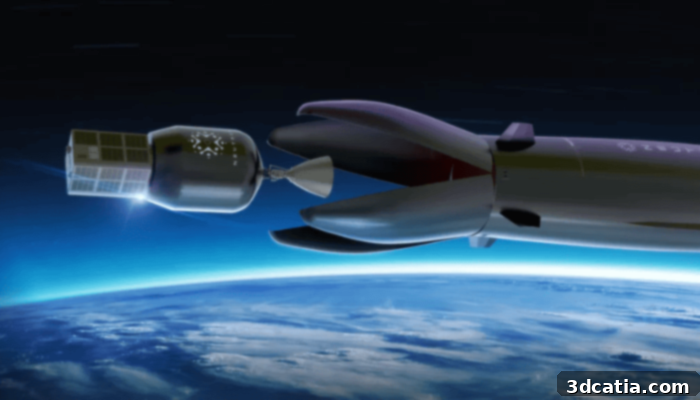
Neutron is a space launcher, designed for partial reuse, developed by Rocket Lab. (photo credits: Rocket Lab)
Enhancing Space Launch and Exploration
#1: Optimizing Rocket and Spacecraft Components for Peak Performance
In the demanding realm of space exploration, every single gram of weight is critical. The lighter a rocket or satellite, the more cost-effective and fuel-efficient its launch becomes. Reducing the mass of a spacecraft directly translates to less fuel consumption and increased payload capacity for valuable scientific instruments or crew supplies. To achieve this crucial weight reduction without compromising structural integrity, 3D printing offers an unparalleled solution: it enables the design and production of highly customized parts that are simultaneously robust and lightweight.
Leveraging techniques like Design for Additive Manufacturing (DfAM), and particularly topology optimization, engineers can create intricate, organic-like geometries that are simply unachievable with conventional manufacturing methods. These complex shapes can significantly reduce material usage while maintaining or even enhancing strength. A prime example can be seen in the advanced cooling ducts within rocket engines. These tiny, labyrinthine channels are essential for dissipating the intense heat generated around the combustion chamber. With 3D printing, these ducts can be seamlessly integrated directly into the main engine components, a feat that would be prohibitively difficult, costly, and restrictive with traditional machining or injection molding processes. This integration not only saves weight but also improves thermal efficiency and overall engine performance.
#2: Harnessing Advanced Materials for Superior Performance in Extreme Conditions
The space sector presents an incredibly challenging environment for materials, which must endure a gauntlet of extreme conditions: scorching temperatures, harmful radiation, drastic pressure fluctuations, and severe thermal shocks. Today, additive manufacturing unlocks the capability to utilize an expansive array of advanced materials specifically engineered to thrive under these rigorous constraints. These include high-performance metal alloys such as titanium, aluminum, and Inconel, all celebrated for their exceptional strength-to-weight ratios and outstanding thermal resistance. Furthermore, fiber-reinforced composites offer an excellent balance of strength, flexibility, and a further reduction in weight, making them ideal for structural components.
However, the true potential of these advanced materials is fully realized when combined with appropriate 3D printing processes. Technologies like Directed Energy Deposition (DED), Laser Powder Bed Fusion (LPBF), Direct Metal Laser Sintering (DMLS), and material extrusion transform these raw inputs into complex, precise, and optimally structured parts. These additive processes intricately influence the microstructure of the printed materials, allowing for the creation of customized components with tailored mechanical properties. Beyond metals and composites, 3D printing also facilitates working with technical ceramics. For instance, Zirconia exhibits remarkable resistance to heat, wear, and corrosive environments, even becoming electrically conductive at very high temperatures. Other specialized ceramics also offer invaluable properties for components that must operate reliably under the most extreme conditions encountered in the space industry, ranging from engine nozzles to protective shields.
#3: Streamlined Assembly and Substantial Cost Reduction
By adopting 3D printing, aerospace manufacturers can produce critical components, such as sophisticated engine parts, far more economically and efficiently. Unlike traditional subtractive or formative manufacturing methods, additive manufacturing significantly simplifies the entire production pipeline. It also dramatically accelerates the iterative prototyping phase, allowing engineers to rapidly test and refine designs before committing to the final product, leading to faster development cycles and reduced time-to-market for new spacecraft and launch vehicles.
A profound advantage of 3D printing is its ability to consolidate multiple parts into a single, integrated component, thereby drastically reducing the total number of individual parts required for a spacecraft. This “part consolidation” can eliminate the need for assembling thousands of separate pieces, which traditionally involves complex supply chains, extensive labor, and potential points of failure. For example, SAB Aerospace recently achieved a breakthrough by 3D printing a rocket nozzle as a single, monolithic unit – a component that conventionally demands the assembly of thousands of smaller parts. Similarly, Relativity Space has revolutionized the construction of its Terran 1 rocket by utilizing large-scale 3D printing, reducing the overall component count by an astonishing 1,000, leading to a much simpler, faster, and more robust manufacturing process. This simplification translates directly into lower manufacturing costs, fewer opportunities for error, and faster production timelines.
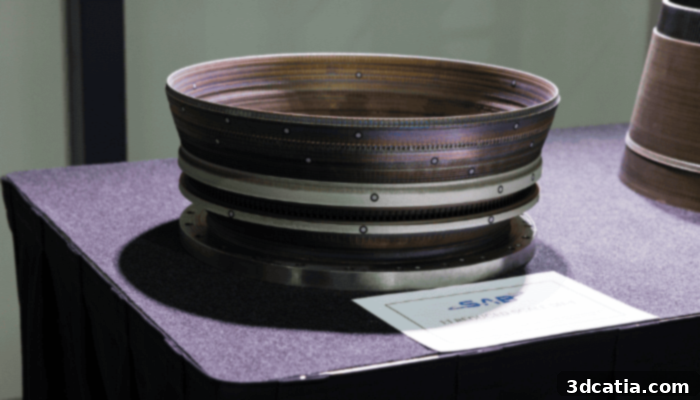
SAB Aerospace’s 3D-printed rocket nozzle (photo credits: SAB Aerospace)
Improving Astronauts’ Lives and Mission Autonomy
#4: On-Demand Manufacturing of Spare Parts in Microgravity
One of the most immediate and impactful applications of 3D printing in space is its capability to manufacture objects directly within a spacecraft or orbital outpost. This pioneering advancement significantly reduces the mission’s reliance on costly and time-consuming resupply missions from Earth. Instead of enduring weeks or even months for a crucial spare part to arrive from an external launch, crew members can now design and produce exactly what they need, precisely when they need it, right on board their vessel.
This newfound technical autonomy is invaluable, especially in the face of unforeseen equipment failures or operational contingencies. If a vital tool breaks, a critical component wears out, or a specialized adapter is suddenly required, astronauts can simply print a replacement or a new tool on the spot. This dramatically enhances the safety, efficiency, and resilience of long-duration missions by minimizing operational interruptions and empowering crews to be more self-sufficient. Several groundbreaking experiments are continually underway to rigorously explore and validate the full potential of 3D printing in the unique environment of space. A significant milestone was achieved in 2024 when the first metal part was successfully manufactured directly on board the International Space Station (ISS), building on earlier plastic printing successes. Such tests unequivocally demonstrate the technology’s functionality and adaptability under true space conditions, even as research and development continue to refine its capabilities.
#5: Advancing Food 3D Printing for Sustained Missions
Provisioning food poses a formidable logistical and nutritional challenge for space missions, particularly those extending over several months or even years. Astronauts traditionally have to carry vast quantities of pre-packaged food, which consumes significant space and adds considerable launch weight. Food 3D printing offers an innovative solution by enabling the preparation of fresh, hot meals directly on board, utilizing basic, shelf-stable ingredients in paste or powder form. This approach can vastly reduce the volume and weight of food stores required for long voyages.
Beyond logistical benefits, this technology allows for the creation of personalized meals tailored precisely to each crew member’s individual dietary needs, preferences, and even cultural backgrounds. This not only ensures optimal nutrition but also provides a much-needed psychological boost by offering variety and familiarity. Furthermore, food 3D printing significantly minimizes food waste by allowing precise portion control and preventing spoilage, thereby optimizing the utilization of onboard resources. Early tests have already demonstrated the feasibility of creating nutrient-rich foods, including meat substitutes, using 3D printing in zero-gravity conditions, as proven on the International Space Station (ISS). Concurrently, scientists are diligently exploring how this promising technology can evolve into a robust and reliable solution for sustainably feeding astronauts on future long-duration missions to the Moon, Mars, and beyond.
#6: Printing Medical Devices and Pioneering Bioprinting in Space
On extended space missions, the feasibility of carrying a comprehensive range of medical equipment and supplies is often limited. 3D printing offers a revolutionary capability for astronauts to manufacture essential medical devices on-site, enabling them to effectively address injuries or various health issues that may arise. For instance, they can rapidly print custom splints for fractures, specialized surgical tools, or even custom dental aligners, all adapted precisely to the unique situation at hand. This empowers crews to react swiftly to medical emergencies, providing immediate care without the critical delay of waiting for deliveries from Earth. This level of medical autonomy is paramount for astronaut safety and mission success.
Moreover, bioprinting – the sophisticated process of printing living tissues and organs – is also making significant strides in the space environment. Redwire Corporation, a leader in in-space manufacturing, has notably achieved the successful 3D printing of a human meniscus in microgravity. This groundbreaking accomplishment demonstrates the immense potential of bioprinting to one day facilitate the repair of biological tissues and organs directly in space, offering transformative solutions for astronaut health, or even supporting advanced biological research that could lead to medical breakthroughs on Earth. Further research in this area also explores printing organoids for drug testing and disease modeling in a microgravity environment, providing unique insights.
#7: Tailoring and Printing Advanced Spacesuits
The ability to manufacture or rapidly customize spacesuits on Earth, using additive manufacturing techniques, represents a major strategic advantage for future lunar and Martian missions. Merely reaching the Moon or Mars is not enough; astronauts must also be able to operate safely and effectively once they arrive. In 2023, Axiom Space unveiled a prototype of a next-generation spacesuit designed for the astronauts of NASA’s Artemis program. This advanced model was developed using a synergistic approach that combined sophisticated CAD software, advanced 3D printing processes, and traditional sewing techniques. This hybrid manufacturing approach enables unprecedented levels of customization, allowing suits to be precisely adapted to individual astronaut body types and specific mission requirements. This capability also allows for rapid prototyping of suit components, speeding up development cycles. Furthermore, on-site 3D printing capabilities could potentially allow for quick repairs of damaged suit components or the production of specialized tools that integrate directly with the suit, greatly enhancing astronaut safety and operational flexibility in harsh extraterrestrial environments.
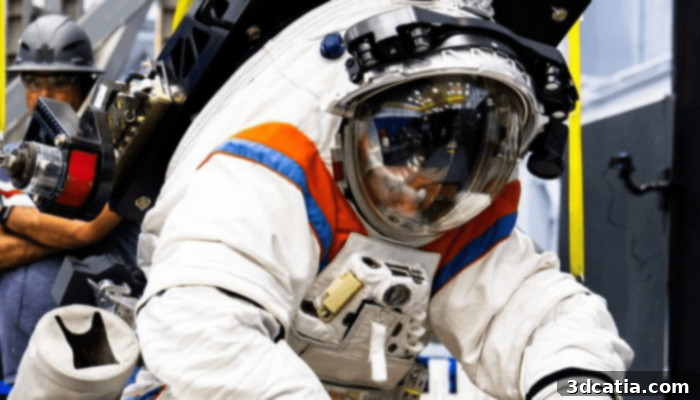
Spacesuits for Artemis astronauts (photo credits: Axiom Space)
Accelerating the Vision of Space Colonization
#8: Constructing Space Structures and Future Habitats Beyond Earth
For humanity to establish a truly sustainable and long-term presence on the Moon or Mars, simply deploying temporary shelters will not suffice. This is where the transformative potential of 3D printing truly shines. With additive manufacturing, we gain the unprecedented capability to construct a vast array of essential infrastructure directly on-site in extraterrestrial environments. This includes not just resilient housing and living quarters, but also crucial support structures such as solar power plants, landing pads, radiation shields, and other vital facilities necessary for a burgeoning off-world community. A paramount advantage of this technology is its ability to utilize local, in-situ materials, most notably regolith (lunar or Martian soil), as the primary building material. This significantly reduces the need to transport heavy construction materials from Earth, which is incredibly expensive and logistically complex.
By employing regolith-based 3D printing, viable and robust structures can be erected efficiently and sustainably on the lunar or Martian surface. Furthermore, 3D printing allows engineers to design and construct tailor-made structures that are precisely optimized to address the unique and formidable challenges of space. These challenges include providing robust protection against harmful cosmic radiation, insulating against extreme temperature fluctuations, and ensuring structural integrity under low-gravity conditions. These advanced construction methods pave the way for the creation of self-sufficient lunar outposts and Martian colonies, bringing the long-held dream of space colonization closer to reality by providing the foundational infrastructure for future extraterrestrial living.
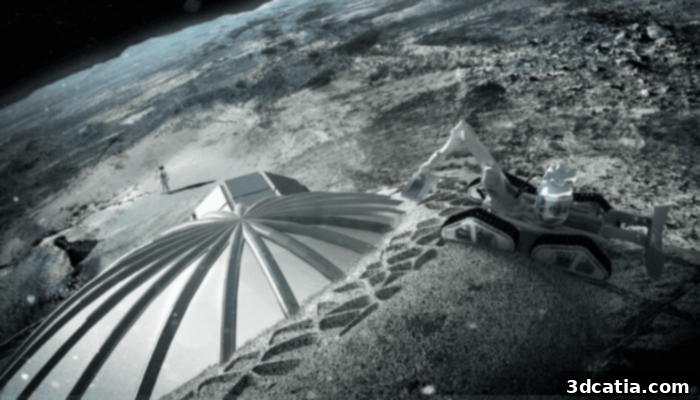
Photo Credits: ESA
What are your thoughts on the pivotal role of 3D printing in advancing space exploration and future colonization efforts? We invite you to share your perspectives in a comment below or join the conversation on our LinkedIn, Facebook, and Twitter pages! Don’t forget to sign up for our free weekly Newsletter here to receive the latest 3D printing news directly to your inbox! You can also find all our insightful videos on our YouTube channel. For more in-depth coverage of 3D printing news in the aerospace and defense sectors, be sure to explore our dedicated page HERE.
*Cover Photo Credits: Pixabay