
Cutting-Edge 3D Printing Innovations: From Sustainable Camper Vans to Medical Breakthroughs and Custom Footwear
The world of 3D printing, also known as additive manufacturing, continues to revolutionize industries across the globe. This week, we dive into a fascinating array of advancements, showcasing how this transformative technology is pushing the boundaries of design, sustainability, and functionality. We’ll explore an innovative, compact trailer camper van partially designed with 3D printing and crafted from over 7,000 recycled plastic bottles, embodying a new era of eco-conscious travel. Further on, we introduce Nike’s latest creation, a groundbreaking 3D-printed sneaker produced on the Zellerfeld platform, signaling a shift towards highly customizable and performance-optimized footwear. Medical innovation takes center stage with a look at 3D-printed anatomical brain models revolutionizing complex surgical planning. We also highlight a new, affordable, and eco-friendly filament brand making its debut at Formnext 2024, promising to democratize high-quality 3D printing. Finally, we marvel at a stunning 3D-printed wooden pavilion, blending sustainable materials with intricate architectural design. Join us as we uncover these remarkable applications that redefine what’s possible with additive manufacturing. Happy reading and have a great weekend!
Pioneering Sustainable Travel: A Mini Camper Van Forged from 3D Printing and Recycled Bottles
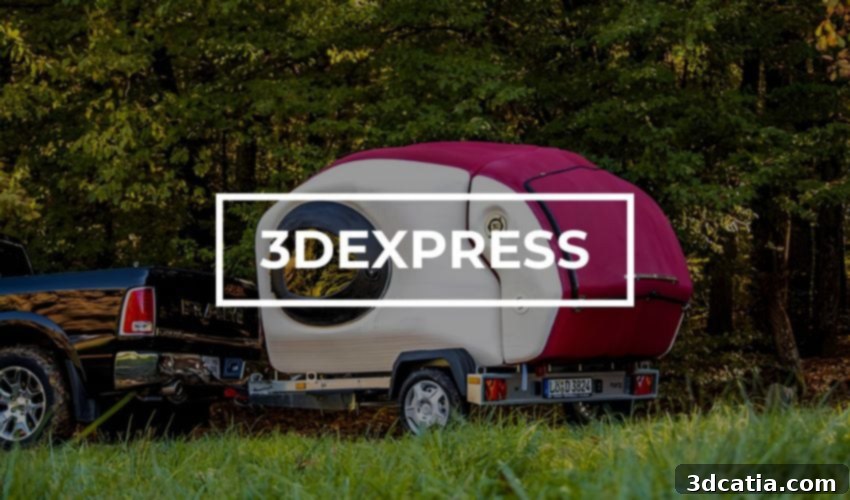
As the desire for unique, flexible, and environmentally conscious travel experiences grows, more holidaymakers are embracing nomadic lifestyles, hitting the open road in motorhomes or attaching camper vans to their vehicles. The DISCOVER 3D concept elevates this trend with an even more innovative and sustainable approach. This small, ultra-functional trailer camper van stands out not only for its clever design but also for its pioneering use of additive manufacturing and recycled materials. A significant portion of its structure has been meticulously crafted using 3D printing technology, distinguishing it from conventional manufacturing methods. To emphasize its commitment to sustainability, the project leaders ingeniously utilized 7,500 recycled plastic bottles to construct its lightweight yet robust framework. This innovative material choice contributes significantly to its remarkably low weight of just 400 kilograms, making it exceptionally easy to transport and tow with smaller vehicles.
Beyond its environmental credentials, the DISCOVER 3D camper van is a marvel of compact engineering. Despite its modest dimensions, it seamlessly integrates a comprehensive suite of amenities essential for comfortable travel. Its interior boasts efficient kitchen equipment, complete with a small sink, allowing travelers to prepare meals on the go. Thoughtfully designed entertainment accessories ensure occupants can relax and enjoy their journeys, while clever storage solutions maximize the usable space, proving that sustainability doesn’t come at the cost of functionality. The expertise of iScale3D, a company renowned for its large-scale additive manufacturing capabilities, appears to be central to the production process. The fabrication was carried out using an advanced robotic arm, a method that offers unparalleled precision and the ability to work with unconventional, recycled materials like those derived from plastic bottles. This robotic approach enables the creation of complex geometries and integrated structures that would be challenging, if not impossible, to achieve with traditional manufacturing techniques, further enhancing the camper van’s efficiency and unique design. The DISCOVER 3D camper van represents a significant leap forward in sustainable vehicle design, proving that advanced manufacturing can create practical, eco-friendly, and highly functional products for the modern explorer. Discover more about this incredible 3D printed trailer camper van in the video below, showcasing its innovative construction and features:
Revolutionizing Neurosurgery: 3D Printed Anatomical Models of the Brain for Enhanced Surgical Planning
In a significant breakthrough for medical science and surgical precision, a dedicated team of engineers and medical professionals from the esteemed University of Southampton has pioneered an innovative surgical planning process. This groundbreaking approach leverages the power of additive manufacturing to create highly detailed, patient-specific anatomical replicas, fundamentally transforming how complex surgeries, particularly those involving intracranial aneurysms, are prepared and executed. This integrated methodology skillfully combines advanced medical imaging techniques, sophisticated data processing algorithms, and state-of-the-art 3D printing technology, proving indispensable for procedures that demand the utmost precision and foresight.
The project, a collaborative effort at the forefront of neuroscience and engineering, was expertly led by two prominent figures: neurosurgeon Professor Diederik Bulters and Dr. Orestis Katsamenis. Their vision centered on creating an exact, tangible replica of the patient’s unique brain anatomy, including the delicate aneurysm and the intricate surrounding bony structures. This was achieved by meticulously processing data acquired from high-resolution MRI (Magnetic Resonance Imaging) and CT (Computed Tomography) scans. These scans provide a wealth of diagnostic information, which is then translated into a digital 3D model. This digital model serves as the blueprint for the subsequent 3D printing process, ensuring an unparalleled level of accuracy and detail in the physical replica.
Once printed, this detailed 3D anatomical model became an invaluable tool for preoperative planning. Surgeons could physically hold, examine, and manipulate a true-to-life representation of the patient’s unique pathology, allowing for a realistic simulation of the entire surgical procedure. This tactile reference offered insights that flat, two-dimensional images simply cannot provide, enabling the surgical team to anticipate challenges, identify optimal surgical approaches, and refine their techniques before even stepping into the operating room. This was particularly crucial in a remarkably challenging case involving a giant 7 cm aneurysm, for which conventional surgical methods were deemed infeasible due to the inherent risks and complexities. The ability to simulate the procedure on the 3D model allowed the team to devise a successful strategy, minimizing risks and maximizing the chances of a positive outcome. Thanks to this cutting-edge 3D printing technology and meticulous planning, the complex operation was not only successful, but the patient experienced a remarkably swift recovery, being discharged from the hospital just two days later. This case vividly demonstrates the profound impact of 3D-printed anatomical models in enhancing surgical safety, precision, and patient outcomes, heralding a new era for personalized medicine and complex surgical interventions.
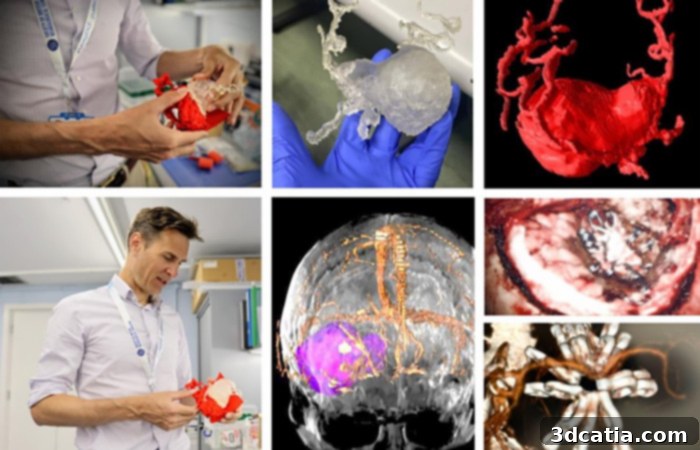
Photo Credits: University of Southampton
Formnext 2024 Anticipation: New Filament Brand “The Filament” Set for Grand Debut
As Formnext 2024, the world’s leading exhibition and conference for additive manufacturing and industrial 3D printing, draws near, the industry is buzzing with excitement and a flurry of announcements. Companies from across the globe are preparing to unveil their latest innovations, ranging from advanced machinery to revolutionary materials. Among these highly anticipated debuts is the launch of a brand-new filament line set to make a significant impact on the 3D printing community: “The Filament.” This new brand is not just another addition to the market; it comes with the substantial backing and expertise of Spectrum Group, recognized as one of Europe’s largest and most reputable filament manufacturers, ensuring a foundation of quality and reliability from day one.
According to an official press release, The Filament has been meticulously developed with a clear vision: to cater specifically to “3D printing users who value practicality, functionality, and affordability.” This strategic positioning aims to address a critical need in the market for high-quality, dependable materials that don’t break the bank. The brand’s philosophy is encapsulated in its ‘no-frills’ range, designed to be accessible and effective for everyone, from enthusiastic beginners taking their first steps into the world of 3D printing to seasoned makers and professional users seeking consistent performance without unnecessary complexities. The initial product lineup reflects this commitment to versatility and core functionality, featuring widely used and highly dependable materials such as PLA (Polylactic Acid), PETG (Polyethylene Terephthalate Glycol), and a specialized PLA High Speed variant for faster printing applications. Furthermore, the brand is pushing the envelope with pre-colored carbon-reinforced PLA and PETG options, offering enhanced strength and rigidity for more demanding projects, broadening the scope of what users can achieve.
A cornerstone of The Filament’s brand identity is its strong commitment to environmental sustainability. In an industry increasingly aware of its ecological footprint, The Filament distinguishes itself by utilizing “Second Life Plastic” spools, significantly reducing reliance on virgin plastics and giving a second purpose to materials that would otherwise contribute to waste. Complementing this, all packaging is made from FSC-certified materials, guaranteeing that the wood pulp used comes from responsibly managed forests. These eco-conscious practices are not merely marketing ploys but integral to the brand’s core values, aiming to minimize plastic waste throughout the entire product lifecycle. Perhaps most impressively, this blend of quality, functionality, and sustainability comes at an remarkably accessible price point, with filament starting at just €15.90 for a 1kg PLA spool. This aggressive pricing strategy, combined with the brand’s sustainable initiatives and the backing of Spectrum Group’s manufacturing prowess, underscores The Filament’s overarching goal: to make high-quality 3D printing materials universally accessible without ever compromising on performance or environmental responsibility. Its debut at Formnext 2024 is set to be one of the show’s most anticipated events, marking a new chapter for accessible and sustainable 3D printing.
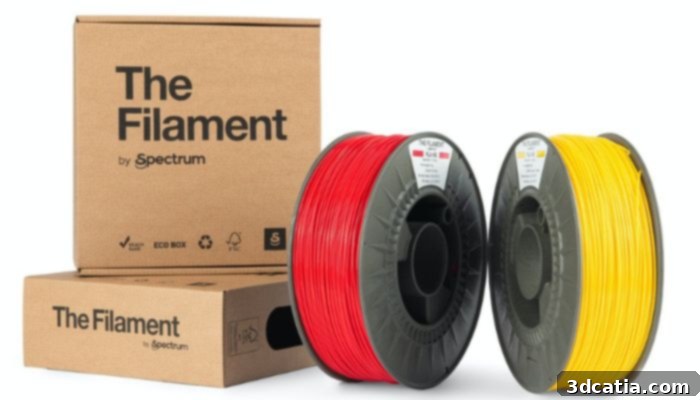
Photo Credits: The Spectrum Group
Nike’s Leap into the Future: Introducing the 3D-Printed Air Max 1000 Sneaker
Nike, a global titan in sports equipment and a perpetual innovator in athletic footwear, is once again setting new benchmarks with its latest release, the Air Max 1000. While you are undoubtedly familiar with the enduring legacy and widespread appeal of Nike’s iconic Air Max 1 – a comfortable retro sneaker beloved for its diverse colorways and timeless design – the Air Max 1000 represents a monumental leap forward. This new version isn’t just an iteration; it’s a revolutionary statement, distinguished by its unique feature: it is predominantly 3D printed. This bold move underscores Nike’s unwavering commitment to pushing the boundaries of design, performance, and customization in the highly competitive footwear market.
This innovative project is a testament to the power of strategic partnerships, forged through a significant collaboration with Zellerfeld, a pioneer and leader in the field of 3D printed footwear. By teaming up with Zellerfeld, Nike aims to deliver a sneaker that is not only customized to an unprecedented degree but also embodies an innovative and distinctively offbeat aesthetic. While specific details regarding the intricate construction of the Air Max 1000 are still emerging, it is understood that Zellerfeld’s advanced printing platform employs sophisticated material deposition techniques. This method allows for the precise layering of materials, enabling the creation of complex geometries that are impossible with traditional manufacturing. A key element of this advanced construction is the strategic integration of lattice structures. These intricate, open cellular designs are not merely for show; they are engineered to optimize performance by providing targeted cushioning, enhanced breathability, superior flexibility, and significant weight reduction, all while maintaining exceptional structural integrity. This approach ensures that the Air Max 1000 delivers unparalleled comfort and responsiveness tailored to the wearer.
John Hoke, Chief Innovation Officer at Nike, articulates the profound potential of this collaboration: “As an innovator, what’s most exciting to me about the Air Max 1000 are the new solutions we can achieve with next-level manufacturing. It’s control, times precision, times expression — all of which are vital to sport and to design. When those variables of control, precision, and expression are multiplied at once, the future of our product really does feel unlimited.” Hoke’s statement encapsulates the core benefits of 3D printing in footwear: unparalleled “control” over material placement and properties, leading to incredible “precision” in design and functionality, which in turn enables limitless “expression” in aesthetics and customization. These three elements, when combined through advanced additive manufacturing, unlock a future where sneakers can be tailored not just for size, but for individual biomechanics, performance needs, and personal style, creating a truly bespoke experience. The Air Max 1000 marks a pivotal moment, signaling Nike’s vision for a future where mass customization and on-demand production, powered by 3D printing, redefine the entire footwear industry, promising a new era of personalized athletic gear.
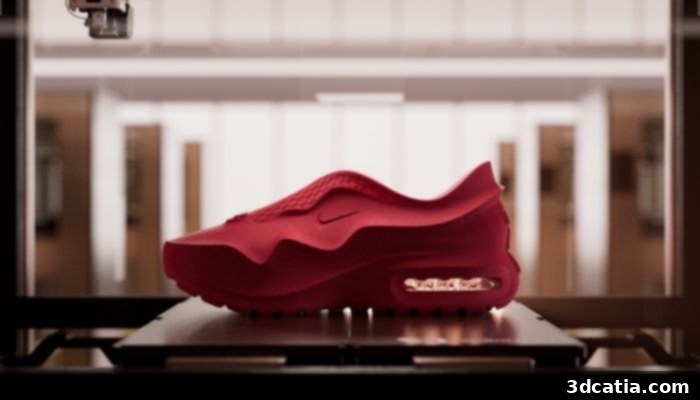
Photo Credits: Nike
Architectural Innovation: A Stunning 3D-Printed Wooden Pavilion Inspired by Japanese Culture in Dubai
Once again, the transformative power of 3D printing has been harnessed to conceptualize and construct an architectural masterpiece: an original, bespoke pavilion named “The Warp.” This awe-inspiring structure is strategically set amidst the iconic buildings of Dubai, a city renowned for its audacious and forward-thinking architectural landscape. “The Warp” stands out not only for its contemporary design but also for its profound inspiration drawn from the rich traditions of Japanese culture, masterfully blending ancient aesthetics with cutting-edge manufacturing techniques. The pavilion is a complex assembly of approximately 900 unique pieces, each one distinct in its form and contributing to the overall intricate tapestry of the structure.
To bring this ambitious vision to life, the visionary architects behind “The Warp” meticulously employed advanced 3D printing technology, utilizing a specially developed composite material. This material is a testament to sustainable innovation, comprising 30% recycled sawdust and 70% bioplastic. This conscious choice reflects the designers’ deep commitment to environmental responsibility, as they sought to produce a structure that was not only aesthetically striking but also environmentally friendly, generating significantly less waste throughout its construction lifecycle. The integration of recycled sawdust gives the pavilion a natural, organic feel, echoing traditional Japanese woodworking, while the bioplastic binder ensures structural integrity and allows for complex shaping.
The adoption of additive manufacturing proved pivotal in overcoming traditional architectural limitations. By leveraging 3D printing, the designers were able to imagine and fabricate highly complex, curved parts and intricate geometries that would be virtually impossible to achieve using conventional construction methods. This freedom from geometric constraints allowed for unparalleled artistic expression and structural optimization. Furthermore, one of the most remarkable aspects of “The Warp” is how additive manufacturing liberated the project from typical assembly constraints. The design ingeniously eliminated the need for conventional fasteners – no nails, connectors, or even glue were used in its construction. This suggests an interlocking design, where each 3D-printed piece precisely fits into its neighbors, forming a robust and cohesive structure through intricate joinery, much like traditional Japanese carpentry but realized through digital fabrication. This not only minimizes material waste but also simplifies the assembly process, demonstrating the immense potential of 3D printing in creating sustainable, complex, and highly integrated architectural forms that are both visually captivating and environmentally conscious, pushing the boundaries of what wooden structures can be.
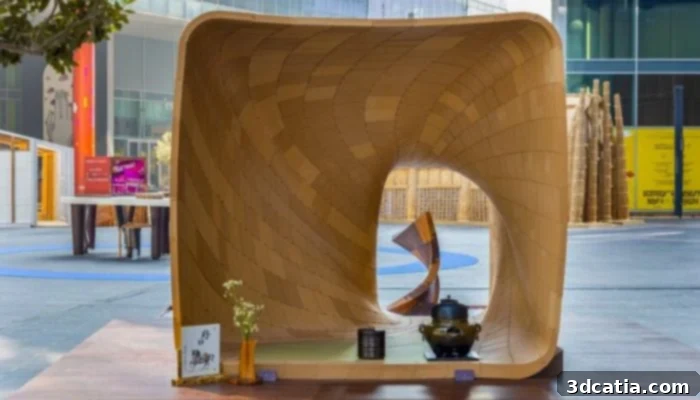
Photo Credits: DUA Photography Studio
The innovations we’ve explored this week highlight the incredible versatility and transformative power of 3D printing across diverse sectors – from creating sustainable, compact camper vans out of recycled plastic bottles, to revolutionizing neurosurgical planning with patient-specific anatomical models, and pushing the boundaries of footwear design with Nike’s 3D-printed sneakers. The emergence of new, eco-friendly filament brands at major events like Formnext 2024 further underscores the industry’s commitment to accessibility and sustainability. And in architecture, projects like “The Warp” pavilion demonstrate how additive manufacturing can fuse cultural inspiration with advanced materials to create breathtaking, waste-reducing structures. What do you think of these cutting-edge applications, especially the mini-caravan designed using 3D printing and recycled materials? We’d love to hear your thoughts and insights! Let us know in a comment below or join the conversation on our LinkedIn, Facebook, and Twitter pages! Don’t forget to sign up for our free weekly Newsletter here to get the very latest 3D printing news straight to your inbox every week! You can also find all our compelling videos and further insights on our YouTube channel, where we showcase the future of additive manufacturing.