
Transformative Advances in Additive Manufacturing: From Orbital Factories to Medical Miracles and Next-Gen Construction
The world of additive manufacturing continues its relentless pace of innovation, pushing boundaries that were once considered science fiction into tangible reality. This week’s headlines from the 3D printing sector vividly illustrate this rapid evolution, showcasing how diverse applications are being revolutionized. From enabling sustained human presence in space to pioneering breakthroughs in personalized medicine and redefining architectural construction, 3D printing is proving itself to be an indispensable technology across an ever-widening spectrum of industries. Join us as we explore some of the most compelling developments, including the deployment of a metal 3D printer into space, a landmark FDA clearance for a gastric device, the incredible leaps in submicron printing, significant growth in microscale manufacturing, and the completion of Europe’s largest 3D-printed residential structure. These stories collectively paint a picture of a dynamic industry poised for even greater impact.
Pioneering Space Manufacturing: AddUp and Airbus Send a Metal 3D Printer to the ISS
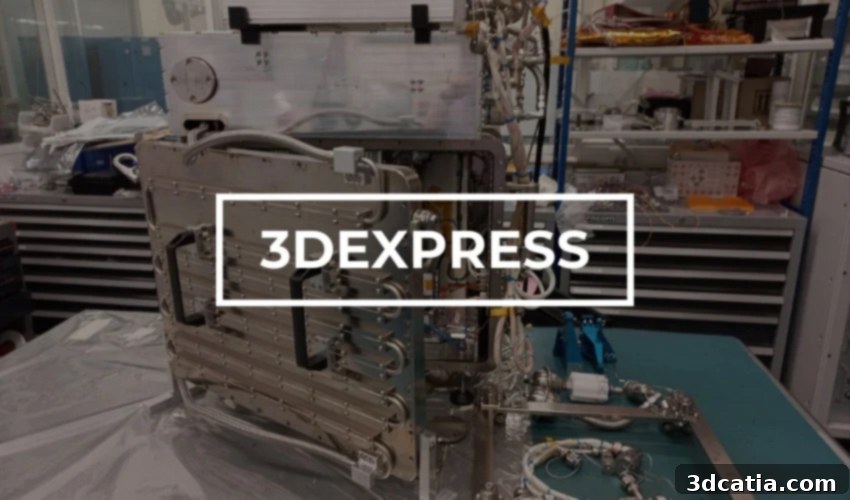
In a monumental step towards establishing autonomous manufacturing capabilities beyond Earth, French company AddUp, a renowned manufacturer of metal 3D printing solutions, has officially announced the successful delivery of a fully operational metal 3D printer to the European Space Agency (ESA). This groundbreaking achievement, developed in close collaboration with Airbus Defense & Space, signifies a critical milestone in humanity’s quest to explore and inhabit space. The customized metal additive manufacturing solution is specifically engineered to operate under the unique conditions of microgravity aboard the International Space Station (ISS), enabling the creation of intricate and functional metal parts in orbit. This ambitious project, initiated in 2016, addresses one of the most significant logistical challenges of long-duration space missions: the immediate availability of spare parts and tools.
The printer is slated for installation within the ISS’s Columbus scientific module, where it will embark on its inaugural mission to produce four distinct metal components. These parts will subsequently be returned to Earth for exhaustive analysis, allowing engineers and scientists to meticulously evaluate the structural integrity, material properties, and overall performance of objects manufactured in space. The ultimate objective is to validate the viability and reliability of metal additive manufacturing in a microgravity environment, paving the way for a future where astronauts can fabricate essential items on demand. This capability could dramatically reduce reliance on costly and infrequent resupply missions, enhance mission flexibility, and even support future lunar bases or Martian settlements by allowing for in-situ repair and construction. The ability to print metal components could extend mission durations, ensure crew safety by providing immediate access to critical spare parts, and foster truly self-sustaining space exploration endeavors, transforming our approach to venturing beyond our home planet.
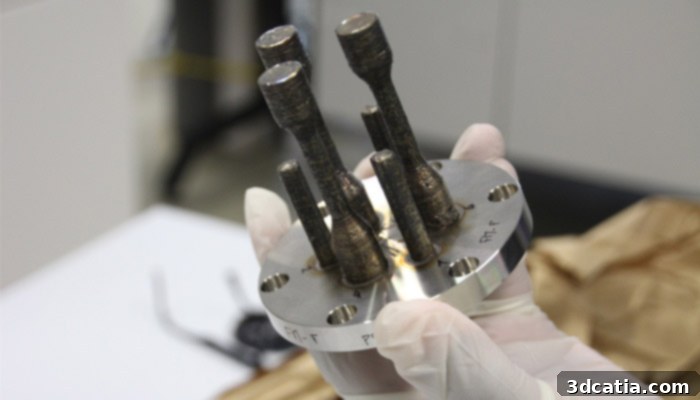
Test parts made by the metal 3D printer before its launch into space (photo credits: ESA)
Triastek’s FDA-Approved 3D Printed Gastric Device Revolutionizes Drug Delivery
In a groundbreaking development within the medical sector, Triastek has announced that its innovative 3D-printed gastric retention device, named T22, has received crucial clearance from the U.S. Food and Drug Administration (FDA). This landmark approval makes T22 the very first 3D-printed gastric retention device to achieve this prestigious certification, signaling a new era for advanced pharmaceutical delivery systems. The component was meticulously engineered using Triastek’s proprietary Melt Extrusion and Micro-Injection Molding (MED&MIM) process, a sophisticated additive manufacturing technique that allows for unparalleled control over drug release profiles and complex geometric designs, crucial for effective gastric retention.
This pioneering development holds immense promise for patients suffering from serious conditions such as pulmonary arterial hypertension (PAH) and chronic thromboembolic pulmonary hypertension (CTEPH). These conditions often necessitate strict and frequent dosing regimens, which can be challenging for patients to adhere to, impacting treatment efficacy and quality of life. T22 is designed to address this by significantly reducing the frequency of administration to a convenient once-daily dosage. By ensuring the medication remains in the stomach for an extended period, the device facilitates a controlled and sustained release of the active pharmaceutical ingredient. This not only simplifies the dosing regimen for patients but also substantially improves treatment compliance, leading to better therapeutic outcomes. The FDA clearance is a testament to the rigorous scientific validation and safety profile of Triastek’s technology, highlighting the increasing acceptance of 3D printing in producing highly specialized and effective medical devices and pharmaceuticals. Following this pivotal approval, Triastek is now preparing to initiate clinical studies with T22, aiming to further accelerate product development and bring this innovative solution to patients who stand to benefit most from its advanced drug delivery capabilities.
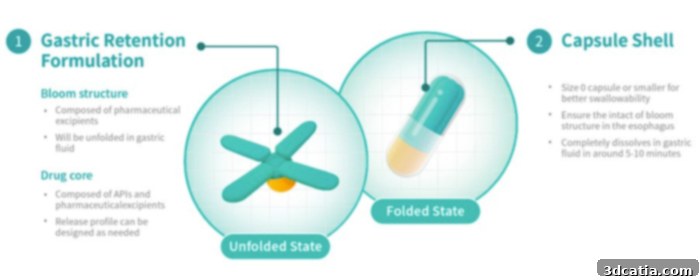
The 3D-printed gastric device (photo credits: Triastek)
Scrona and Avantama Achieve Breakthroughs in Submicron 3D Printing for MicroLED Displays
A significant collaboration between Scrona, an ETH spin-off, and Avantama has yielded remarkable results in the realm of ultra-high precision additive manufacturing, enabling the realization of 3D printing at an unprecedented sub-micron scale. This technological leap is particularly impactful for the burgeoning sector of MicroLED displays, an area that demands extreme precision and novel manufacturing techniques. MicroLED technology offers substantial advantages over traditional displays, including superior brightness, enhanced energy efficiency, faster response times, and the potential for flexible form factors. However, their mass production has been hampered by the intricate challenges of placing millions of tiny LED chips with micron-level accuracy.
The synergistic partnership leverages Scrona’s groundbreaking electrohydrodynamic (EHD) inkjet technology, which distinguishes itself by its ability to process very high-viscosity inks – a capability far beyond that of conventional printheads. Unlike traditional inkjet systems where material drips from the nozzle, Scrona’s EHD technology precisely extracts the material from the nozzle using an electric field. This controlled extraction mechanism prevents undesirable spreading and allows for the deposition of materials with exceptional accuracy, achieving resolutions down to the micrometer and even sub-micron level. Complementing this, Avantama contributes its expertise in manufacturing high-performance quantum dot inks. These specialized inks boast very high absorption coefficients, making them ideally suited for integration into MicroLED displays where efficient light conversion is paramount. The combination of Scrona’s precise deposition system and Avantama’s advanced material science creates a powerful solution for manufacturing not only MicroLED displays but also opens new avenues for the production of advanced semiconductors, high-density microdisplays, and a wide array of miniaturized electronic components. This innovation promises to accelerate the development of next-generation devices that are smaller, more powerful, and more efficient.
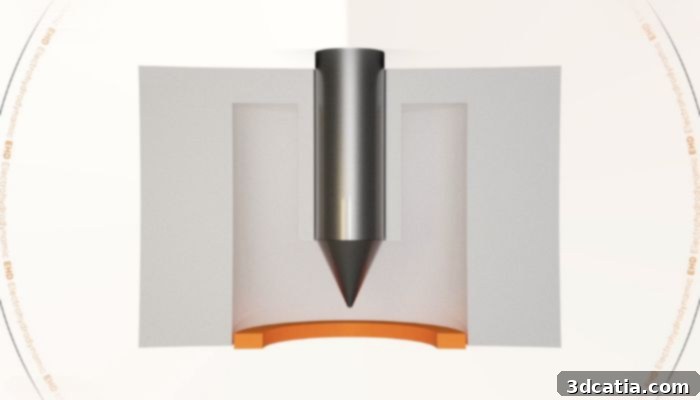
Photo Credits: Scrona
Boston Micro Fabrication Soars with 30% YoY Growth Amidst Market Challenges
Boston Micro Fabrication (BMF), a recognized leader in microscale additive manufacturing solutions, has reported an impressive 30% year-on-year growth following a landmark 2023. This significant expansion is particularly noteworthy given the prevailing economic headwinds and the challenging market conditions faced by many companies within the broader additive manufacturing industry. BMF’s success underscores its strategic positioning and the growing demand for ultra-high precision applications across various sectors. The company’s specialized focus on creating incredibly small, highly detailed parts through its Projection Micro Stereolithography (PµSL) technology has allowed it to carve out a unique and valuable niche.
In a recent press release, BMF highlighted several key drivers behind its exceptional performance. The company successfully secured its Series D funding, providing substantial capital for continued innovation and market penetration. Furthermore, BMF strategically expanded into new and lucrative markets, most notably the dental sector, where its microscale capabilities are ideally suited for producing custom aligners, highly accurate surgical guides, and intricate micro-implants with unparalleled precision. The company also strengthened its research and development capabilities by expanding its San Diego Research Institute (SDRI), reinforcing its commitment to pushing the boundaries of micro 3D printing technology. John Kawlo, CEO of BMF, articulated the company’s pride in its achievements, stating, “Amid a challenging economic environment on both a global stage and for the 3D printing industry, we are very proud of the progress made over the last year to help our customers push the boundaries on what is possible with our technology. And while a lot of this success is due to strong execution from our team, much of it is based on our product-market focus and the fact that we are building a high value, differentiated business.” This statement emphasizes BMF’s ability to deliver distinct value to its customers through innovative solutions, securing its robust growth trajectory and solidifying its position as a frontrunner in the specialized field of micro-additive manufacturing. Their success reflects a broader trend of miniaturization across industries, from advanced medical devices to high-performance electronics and intricate industrial components, all requiring the precision and complexity that BMF’s technology can deliver.
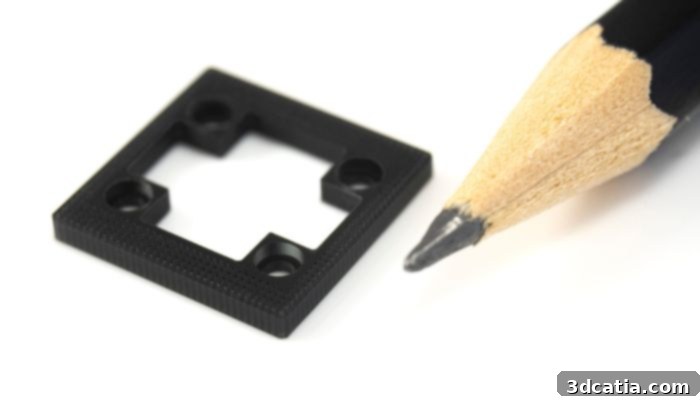
BMF is known for its additive manufacturing solutions for microscale parts (photo credits: BMF)
Europe’s Largest 3D Printed House Reaches Completion in Heidelberg, Germany
A significant milestone in construction technology has been reached in Heidelberg, Germany, with the official completion of Europe’s largest 3D-printed house. This monumental project, which garnered considerable attention throughout its development, showcases the immense potential of additive manufacturing in revolutionizing the construction industry. The structural printing of the house was achieved in a remarkably short span of just 170 hours, utilizing a specialized concrete mixture developed by Heidelberg Materials. This rapid construction time is a testament to the efficiency and speed that 3D printing brings to building processes, far surpassing traditional construction methods for complex designs.
While the printing process itself was swift, the unique and undulating architectural design of the house presented an interesting challenge: fitting a conventional roof over its unconventional shape. This highlighted an important aspect of integrating novel construction technologies with established building practices, often requiring innovative solutions and adaptive approaches. Nevertheless, these challenges were successfully overcome, leading to the project’s full completion and the ceremonial handover of keys this week. The building is now set to become the new premises for IT company HeidelbergiT, demonstrating that 3D-printed structures are not just conceptual prototypes but viable, functional spaces ready for occupancy and practical use. Despite the initial hurdles in its construction, this 3D-printed house stands as an important pilot project, offering invaluable insights into the future of home construction. It exemplifies how additive manufacturing can enable greater design freedom, reduce material waste, potentially lower construction costs, and accelerate building timelines. This project serves as a compelling proof-of-concept for the scalability and practical application of large-scale 3D printing in architecture, paving the way for more sustainable, efficient, and creatively designed residential and commercial properties across Europe and beyond.
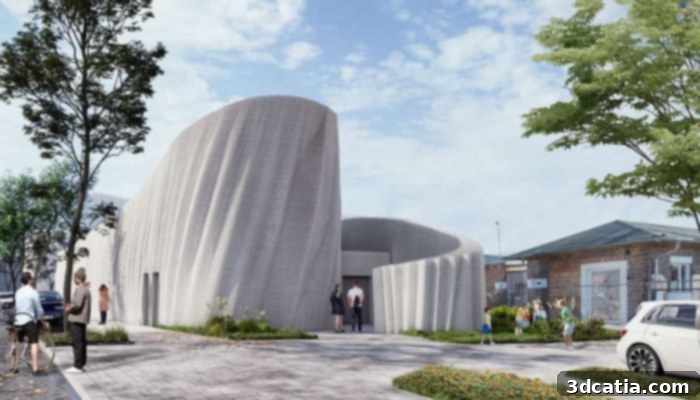
Photo Credits: Heidelberg Materials
The past week’s developments in additive manufacturing underscore the incredible breadth and depth of innovation currently underway. From enabling astronauts to print vital metal parts thousands of miles above Earth, to bringing revolutionary drug delivery systems closer to patients, and constructing grand, complex architectural marvels, 3D printing is rapidly transforming our capabilities across virtually every sector. These breakthroughs not only demonstrate technological prowess but also hint at a future where manufacturing is more agile, precise, personalized, and sustainable. What are your thoughts on these monumental strides in 3D printing, especially the prospect of a metal 3D printer in outer space, or the impact of FDA-approved medical devices? We invite you to share your insights in a comment below or engage with us on our LinkedIn, Facebook, and Twitter pages! Don’t forget to sign up for our free weekly Newsletter here, ensuring the latest 3D printing news is delivered straight to your inbox. You can also explore all our insightful videos on our YouTube channel for more in-depth content.