
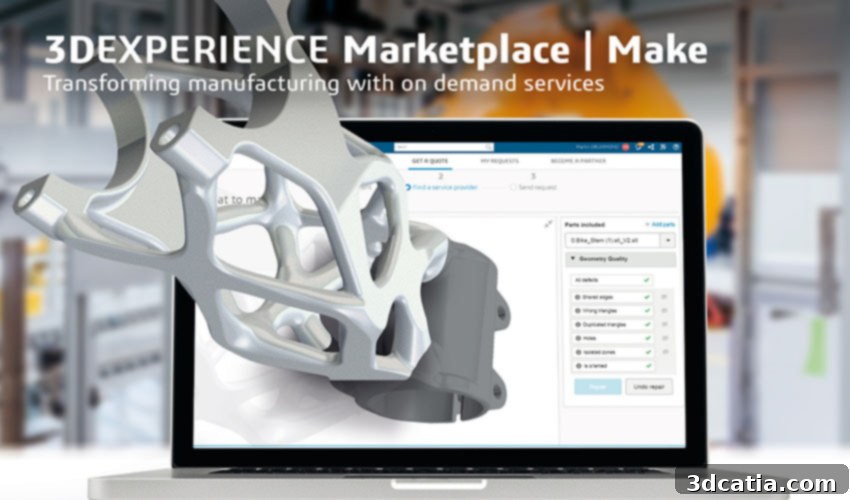
Dassault Systèmes’ 3DEXPERIENCE Make: Revolutionizing On-Demand 3D Printing and Additive Manufacturing
Dassault Systèmes, a global leader renowned for its innovative 3D design software, advanced 3D Digital Mock Up capabilities, and comprehensive Product Lifecycle Management (PLM) solutions, has significantly expanded its offerings with the introduction of its pioneering On-Demand Manufacturing service, known as 3DEXPERIENCE Make. This transformative service, deeply integrated within the company’s powerful 3DEXPERIENCE Platform, is meticulously designed to serve as a complete, end-to-end solution for businesses of all sizes looking to seamlessly adopt or integrate the transformative power of 3D printing into their operational workflows.
Historically, companies embarking on 3D printing projects would navigate a complex landscape of individual 3D printing service providers, often involving extensive research and multiple points of contact. Recognizing this challenge, Dassault Systèmes strategically chose not to simply create another stand-alone 3D printing service. Instead, 3DEXPERIENCE Make stands out as a sophisticated intermediation ecosystem. It intelligently connects users directly with a diverse network of 3D printing service providers, facilitating transparent comparisons of various offers to ensure optimal project execution. To gain deeper insights into this groundbreaking ecosystem and the profound benefits it aims to deliver to the rapidly evolving additive manufacturing industry, we had the privilege of speaking with Guillaume Drapier, an influential Product Manager at Dassault Systèmes, who shared his invaluable perspective.
3DN: Could you introduce yourself and tell us about your relationship with 3D printing technologies?
My academic journey primarily unfolded in England, where I pursued and successfully obtained a master’s degree in industrial design engineering from the esteemed Royal College of Art. Concurrently, I further honed my technical and business acumen at Imperial College London, earning a Master of Science in mechanical engineering and an MBA specializing in innovation management. My very first significant encounter with additive manufacturing (AM) occurred during my graduation project, a pivotal period in my education. The curriculum placed a strong emphasis on a high iteration rhythm, demanding frequent and rapid prototyping. In such an environment, the traditional method of creating mockup products by hand proved to be simply unfeasible, both in terms of the speed required and the expected quality standards. It was at this juncture that AM technologies truly took industrial design education by storm, bringing forth both immensely positive advancements and, at times, posing challenges to students’ foundational understanding of traditional manufacturing techniques. The efficiency and precision of AM quickly became indispensable for bringing complex designs to life.
During my initial professional roles as an Industrial Project Manager, working across diverse landscapes in China and Europe, additive manufacturing consistently emerged as the preferred, go-to solution for a wide array of challenges. AM’s unparalleled versatility allowed us to achieve remarkable efficiencies. With a single process and often a single, trusted supplier, we were able to rapidly produce a variety of critical components and assets. This included highly functional prototypes for rigorous testing, aesthetically precise cosmetic prototypes for market evaluation, and compelling marketing assets for demonstrations and tradeshows – all delivered within a matter of days. Furthermore, AM proved invaluable in producing specialized tooling that enabled us to run essential pre-production batches of injection molding parts, significantly de-risking and accelerating the product development cycle. This period was truly thrilling, characterized by an intense and productive competition among the various bureaus I collaborated with, each striving to deliver the fastest and most superior AM solutions possible. These bureaus were not content with standard offerings; they actively modified their machines and ingeniously mixed AM with other advanced techniques, often driven by the demanding and sophisticated orders placed by larger conglomerates in the automotive and aerospace sectors. Witnessing the additive manufacturing field mature and evolve on a monthly basis was an incredible experience, highlighting its dynamic growth and expanding capabilities.
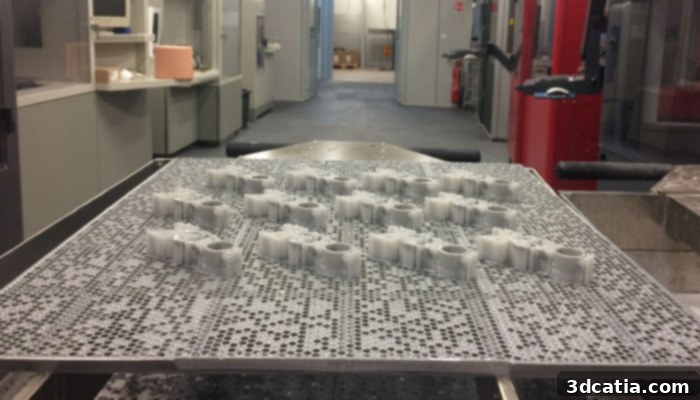
Further along in my career, I transitioned to a dynamic startup that specialized in optimizing laser paths for Direct Metal Laser Sintering (DMLS) as applied to intricate micro lattices. In this role, I was instrumental in leading the development and strategic direction of our Software-as-a-Service (SaaS) product, alongside actively seeking and acquiring new clients for this cutting-edge technology. By this time, the additive manufacturing landscape had matured considerably, becoming a more established and recognized industrial process. As the startup’s core software was still gaining traction and not yet generating substantial revenue, we strategically pivoted to offer consulting services in highly specialized fields. Our expertise was sought after for developing thermal components, complex aeronautics engine components, and bespoke medical implants. This period truly underscored how domesticated AM had become. We were relentlessly striving to optimize the DMLS process itself, focusing intently on critical parameters such as reducing build time while simultaneously increasing repeatability and reliability – factors essential for industrial adoption. What truly astonished me was the incredible journey this technology had undertaken in such a remarkably short span of time. It had evolved from what was once perceived as a niche technique primarily for “trinket-making” into a legitimate, robust, and indispensable process for producing critical, made-to-measure implants and highly engineered components.
My journey ultimately led me to Dassault Systèmes, where I assumed the role of Product Manager for what was then recognized as the “3D Printing service.” The subsequent evolution and expansion of this initiative into what we know today as 3DEXPERIENCE Make is, as they say, history.
3DN: How did 3DEXPERIENCE Make start? And why did Dassault Systèmes decide to launch such a service?
While I wasn’t present in the very first meetings when the idea for 3DEXPERIENCE Make was conceived, the underlying strategic logic behind its inception is quite clear and compelling. Dassault Systèmes, as a forward-thinking technology company, was actively seeking to significantly expand its e-commerce footprint across various burgeoning technological sectors. A fundamental cornerstone and indeed the very “raison d’être” of the company’s powerful 3DEXPERIENCE platform has always been to ensure digital continuity throughout the entire product lifecycle – from initial concept to final manufacturing and beyond. In parallel, the market was witnessing the exciting emergence and rapid growth of various on-demand manufacturing service providers, particularly gaining traction in key regions like the US and Europe.
Considering these converging trends, it became eminently sensible and strategically imperative for Dassault Systèmes to establish a strong presence in this dynamic field. The introduction of 3DEXPERIENCE Make was designed to allow its extensive existing customer base to seamlessly overcome what was often the “last hurdle” in their digital manufacturing journey. Traditionally, after meticulously designing a product within their beloved CAD suite – be it CATIA, SOLIDWORKS, or another platform – users would then have to transition into the complex realm of a shop floor Enterprise Resource Planning (ERP) solution and engage directly with their often limited, established network of manufacturers. Our vision with 3DEXPERIENCE Make was to fundamentally transform this process. We aimed to empower buyers by dramatically expanding their ability to easily compare prices, access a wider pool of capabilities, and ultimately secure the best possible deal for their manufacturing needs. Simultaneously, the platform was conceived to serve as a powerful catalyst for additive manufacturing champions – the service bureaus and individual experts – allowing them to effectively showcase their specialized know-how, attract new clients, and thrive within a vibrant, interconnected marketplace. This dual benefit underscores the strategic brilliance behind 3DEXPERIENCE Make.
3DN: What does 3DEXPERIENCE Make offer as of today?
As of today, 3DEXPERIENCE Make boasts a suite of exceptionally powerful features. Each of these capabilities is impressive in its own right, delivering significant value to users. However, when these features are synergistically combined and seamlessly integrated with our overarching 3DEXPERIENCE platform, they collectively yield an unparalleled advantage, saving users a tremendous amount of time and effort throughout the manufacturing process.
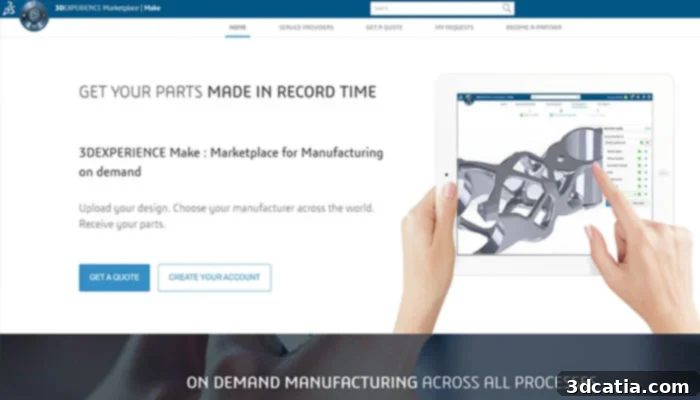
Firstly, a core strength of 3DEXPERIENCE Make is its deep and intuitive integration with your existing CAD system. This means that engineers and designers can effortlessly push their part designs directly from popular Dassault Systèmes applications such as CATIA and SOLIDWORKS straight into the on-demand manufacturing platform. This direct linkage eliminates cumbersome export/import steps, reduces the risk of data loss or corruption, and significantly streamlines the entire design-to-manufacturing workflow.
Secondly, the platform incorporates intelligent mesh repair functionalities. It automatically detects and fixes common tessellation or mesh errors that frequently occur with .STL files, a prevalent format in 3D printing. These errors, if left unaddressed, can lead to failed prints or subpar part quality. The automated repair capability saves users valuable time and effort that would otherwise be spent on manual mesh manipulation, ensuring that models are print-ready from the outset.
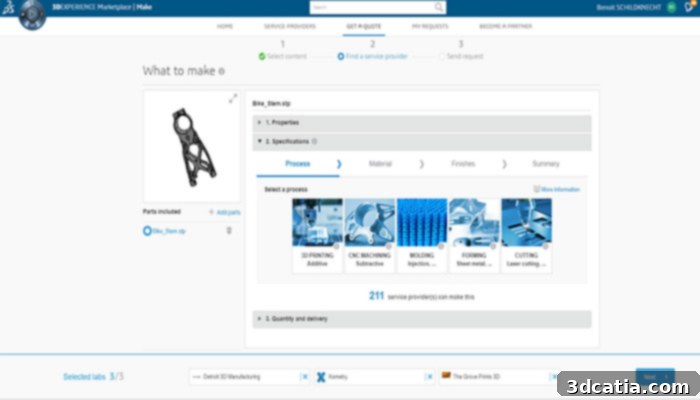
Thirdly, 3DEXPERIENCE Make excels at supplier matching. Based on your specific part geometry and detailed manufacturing specifications – including desired material, process, tolerances, and even geographic preferences – the platform intelligently identifies and connects you with service providers capable of fulfilling your needs. This intelligent matchmaking eliminates the time-consuming process of endlessly browsing various websites or making countless phone calls to bureaus to verify their capabilities or material stock.
Fourthly, the service offers immediate and transparent pricing. For many orders, it provides an instant, exact price, allowing users to directly purchase the manufactured part with confidence and speed. Alternatively, for more complex or strategic projects, the platform facilitates requesting a quote from up to three qualified suppliers, enabling a comparative analysis to secure the most competitive and suitable offer.
Fifthly, 3DEXPERIENCE Make centralizes all communication and exchanges with your selected suppliers. This unified communication hub means no more sifting through endless email threads or scattered messages across different platforms. All project-related discussions, updates, and clarifications are consolidated in one place, enhancing collaboration, transparency, and traceability throughout the manufacturing process.
Sixthly and finally, the platform takes on the complex and often time-consuming administrative burden of handling payments, facilitating quote editions, generating invoices, and calculating taxes on your behalf. These back-office tasks, while essential, can be a significant drain on resources. By automating and streamlining these processes, 3DEXPERIENCE Make allows businesses to focus more on innovation and core design activities, rather than getting bogged down in administrative intricacies.
While many of these individual possibilities might exist as separate products or services elsewhere, the true power of 3DEXPERIENCE Make lies in its holistic approach. Streamlining this entire process into a cohesive, integrated platform perfectly aligns with the fundamental essence of additive manufacturing, where speed, efficiency, and agility are paramount to success.
3DN: Who can use the service and why?
3DEXPERIENCE Make offers a flexible two-tiered approach to cater to diverse organizational needs: a public offering termed “Community” and a private, tailored solution known as “Enterprise.” Within both of these distinct offerings, we categorize users into two primary profiles: Buyers, who are seeking to procure manufactured parts, and Sellers, who produce and provide these parts as service providers.
For the 3DEXPERIENCE Make Community, our buyer profile primarily targets small and medium-sized companies (SMEs). These organizations are typically looking to significantly streamline their on-demand manufacturing process, actively seeking the most competitive deals, and keen on discovering new, innovative service providers to expand their supply chain. From the seller’s perspective, service bureaus and individual manufacturers leverage the 3DEXPERIENCE Make Community as a powerful platform to generate new revenue streams, acquire a broader base of new clients they might not otherwise reach, and substantially increase their overall web presence and market visibility. It acts as an open marketplace fostering growth for both sides.
In stark contrast, 3DEXPERIENCE Make Enterprise is an entirely different proposition, meticulously designed and targeted specifically for larger companies and multinational corporations. For these organizations, we establish a bespoke, internal on-demand manufacturing marketplace. In this Enterprise model, both the buyers and sellers operate within the confines of the same company, or belong to an existing, pre-approved network of suppliers with whom they already have established agreements. 3DEXPERIENCE Make Enterprise serves as an invaluable tool that helps these large entities to streamline, standardize, and formalize their internal on-demand manufacturing processes. This includes optimizing internal resource allocation, improving inter-departmental collaboration, ensuring consistent quality control, and gaining greater visibility and control over their entire internal manufacturing ecosystem, ultimately leading to enhanced operational efficiency and cost savings within a controlled environment.
3DN: What are your plans for the future? Where do you see 3DEXPERIENCE Make in 5 years?
Looking ahead over the next five years, my vision for 3DEXPERIENCE Make is one of continuous evolution and deeper integration, solidifying its position as an indispensable tool in the advanced manufacturing landscape. I foresee an even more profound and seamless integration with the broader Dassault Systèmes ecosystem. This means strengthening the connections with our powerful design, simulation, and manufacturing planning tools, creating an unbroken digital thread from the initial spark of an idea to the final manufactured product. This enhanced synergy will further empower users with unparalleled continuity and efficiency, breaking down traditional silos between design and production.
Beyond our own ecosystem, I anticipate significant integration with other complementary marketplaces. This strategic expansion will allow 3DEXPERIENCE Make to broaden its reach, offering users an even wider array of specialized services, materials, and technologies, while also connecting with diverse manufacturing capabilities beyond just additive manufacturing. This will create a truly comprehensive and versatile manufacturing network.
Furthermore, we are committed to achieving an increasingly streamlined and intelligent ordering process. This will involve leveraging cutting-edge technologies like artificial intelligence and machine learning to optimize supplier matching, predict potential challenges, and provide even more accurate and rapid quoting. The user experience will be continually refined, making the process of ordering custom parts as effortless and intuitive as possible. Our ultimate aspiration is for 3DEXPERIENCE Make to become the definitive, end-to-end design marketplace solution, guiding and facilitating every stage from initial inception and conceptualization all the way through to the successful, high-quality manufacturing of complex components. This holistic vision underpins our development roadmap, ensuring we remain at the forefront of digital manufacturing innovation.
3DN: Do you have any last words for our readers?
Absolutely. If you, like me, possess a deep passion for manufacturing and perhaps regret having missed the formative years and revolutionary birth of technologies like CNC machining or injection molding, then now is the opportune moment to immerse yourself fully into the world of Additive Manufacturing. This field is currently experiencing an unprecedented period of innovation, growth, and transformation. It is truly where the most exciting developments are happening, presenting immense opportunities for both established professionals and aspiring newcomers. The potential for innovation, problem-solving, and career advancement within AM is truly vast and continues to expand at a remarkable pace.
For more comprehensive information and to explore the capabilities of 3DEXPERIENCE Make in detail, please visit our dedicated platform HERE.
We’d love to hear your thoughts! What do you think of Dassault Systèmes’ on-demand manufacturing service for additive manufacturing? Share your insights and feedback by leaving a comment below, or join the conversation on our Facebook and Twitter pages! Don’t miss out on the latest news and innovations in 3D printing – sign up for our free weekly Newsletter and get all the essential updates delivered straight to your inbox!