
Driving Efficiency in Australian Meat Processing: AMPC, Markforged, and Konica Minolta Pioneer 3D Printing for Critical Spare Parts
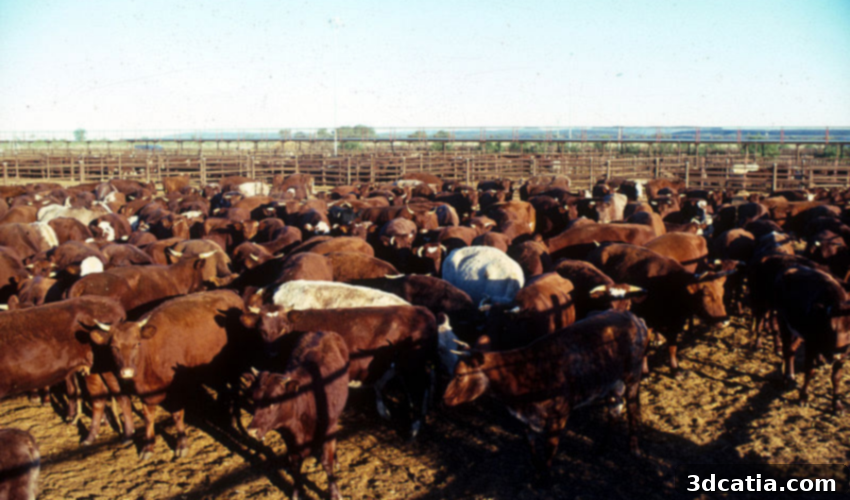
In a groundbreaking initiative poised to redefine operational efficiency within the nation’s vital red meat sector, the Australian Meat Processor Corporation (AMPC) has forged a pioneering alliance with additive manufacturing leader Markforged and technology solutions provider Konica Minolta. This strategic partnership aims to establish the world’s first industry-owned 3D printing service model, specifically designed to facilitate the rapid replacement of essential components in red meat processing facilities across Australia. This ambitious collaboration will unfold over a comprehensive three-year program, meticulously crafted to ensure that meat processing plants nationwide can fully harness the transformative benefits of on-demand additive manufacturing. Given Australia’s prominent position as one of the world’s leading exporters of red meat, the AMPC has been actively exploring innovative methodologies to mitigate productivity losses stemming from common operational challenges, such as equipment malfunctions and broken machinery. In this pursuit, 3D printing emerged as the optimal technology to address these critical needs, promising to bolster supply chain resilience and operational continuity.
The Critical Need for Innovation in Australia’s Red Meat Industry
The Australian red meat industry represents a cornerstone of the national economy, contributing significantly to agricultural output, employment, and export revenues. As a consistent fixture among the top three global red meat exporting countries, Australia supplies high-quality products to major international markets including the United States, South Korea, Japan, and China. The sheer volume and international demand necessitate robust, uninterrupted processing capabilities. However, traditional manufacturing and supply chains for industrial spare parts often introduce significant vulnerabilities. When a critical machine component fails, processors typically face lengthy lead times awaiting replacement parts from original equipment manufacturers (OEMs), which can be located overseas. This waiting period translates directly into costly downtime, reduced production capacity, and potential impacts on product freshness and delivery schedules, ultimately threatening the sector’s competitive edge.
Recognizing the immense economic importance of this industry, the AMPC, as the Rural Research and Development Corporation dedicated to supporting the red meat processing sector throughout Australia, has consistently championed innovation. Their mission is to identify and integrate cutting-edge technologies that can revolutionize and streamline operations. The selection of 3D printing, also known as additive manufacturing (AM), as a key strategy underscores its potential to fundamentally alter how parts are sourced and maintained, thereby helping to ensure a continuous and reliable supply of meat products for both domestic consumption and international markets.
Additive Manufacturing: A Game-Changer for Spare Parts Production
One of the most impactful applications of industrial 3D printing in the manufacturing landscape is the rapid production of replacement parts. Additive manufacturing empowers companies to drastically reduce lead times, as printing a component in-house or through a localized service takes significantly less time than placing an order with an external supplier and waiting for shipment. This advantage is particularly crucial in high-volume production environments, such as meat processing plants, where even the failure of a small, seemingly insignificant part can lead to substantial and costly losses in productivity. The complexity of modern processing machinery means that numerous custom or specialized components are often required, making their availability a constant concern.
Chris Taylor, CEO of the Australian Meat Processor Corporation, articulated the urgency and potential impact of this technology: “Meat processors rely on a multitude of equipment, with multiple components, each critical to the overall operation. Even a small component failure can be a costly exercise, impacting not just the immediate production line but potentially wider supply chains. The ability to simply print a replacement part could drastically reduce downtime and minimise the need to wait for parts, significantly reducing the chance of supply being at risk and safeguarding our industry’s output.” This ability to quickly fabricate custom components, from gears and pulleys to brackets and specialized fixtures, offers an unprecedented level of control and responsiveness that traditional supply chains simply cannot match.
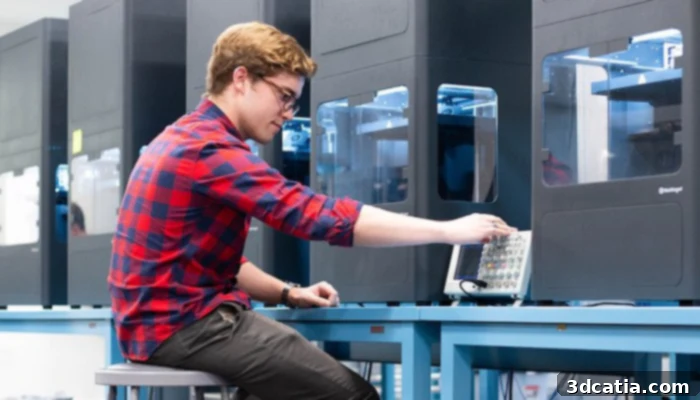
Photo Credits: AMPC
The Vision: A World-First Industry-Owned 3D Printing Service Model
This collaborative venture marks an unprecedented milestone globally, representing the first time such an extensive and strategically integrated approach to deploying 3D technologies has been undertaken within the meat industry. While innovative applications of 3D printing are emerging across various sectors, the establishment of an industry-owned service model specifically for meat processing sets a new standard. It is fitting that such a pioneering initiative would take root in Australia, a nation deeply invested in the efficiency and sustainability of its primary industries.
The AMPC’s foresight in adopting this technology highlights its commitment to fostering an innovative and resilient processing sector. By embracing additive manufacturing, the organization aims to empower processors with the capability to maintain continuous operations, protect their reputation for reliability, and solidify Australia’s position in the global red meat market. This paradigm shift from a reactive, dependency-driven maintenance model to a proactive, self-sufficient one promises substantial long-term benefits, not just for individual plants but for the entire national food supply chain.
Strengthening Sovereign Capability and Local Manufacturing
The global disruptions experienced in recent years have underscored the critical importance of robust domestic supply chains and sovereign manufacturing capabilities. For Australia, a vast continent with long supply lines and a reliance on international trade, strengthening local production is paramount. Matthew Hunter, Innovation Product Marketing Manager at Konica Minolta, emphasized this point, stating, “The need for sovereign capability for the Australian supply chain, coupled with Australian government support for local food and beverage manufacturing, has resulted in organizations looking to adopt innovative practices. Konica Minolta Australia is proud to partner with AMPC in getting this world-first capability off the ground.”
By integrating 3D printing directly into meat processing operations, this initiative empowers plants to significantly localize their production of spare parts. This not only reduces dependency on international suppliers but also dramatically shortens the time required to acquire critical components. The ability to quickly print a needed part on-site or from a local hub means that processors can virtually eliminate worries about supply chain breakdowns, customs delays, or geopolitical factors that could disrupt the flow of essential repairs. This strategic shift enhances national resilience, secures domestic food production, and fosters a more agile and self-reliant manufacturing ecosystem within Australia’s vital food and beverage sector.
Strategic Implementation: On-Site and Centralized 3D Printing Solutions
The collaborative program is meticulously structured to maximize the impact and accessibility of 3D printing technology across various processing plants. As part of this comprehensive strategy, two state-of-the-art Markforged X7 industrial 3D printers, renowned for their ability to print strong, continuous carbon fiber reinforced parts, will be strategically shipped to Australian processing plants. At each location, processing staff will undergo intensive training, equipping them with the knowledge and skills necessary to operate the machines, identify suitable applications, and ultimately assess whether a permanent 3D printing unit would constitute a sound long-term investment for their specific facility.
These X7 units will typically remain on-site for a period of one to two months, providing ample time for staff to gain hands-on experience and explore a wide range of potential applications. Following this initial deployment phase, the printers will rotate to another plant, ensuring broad exposure and education across the industry. Konica Minolta plays a pivotal role in this process by providing dedicated on-site support, guidance, and expertise, helping meat processors not only to understand the nuances of the technology but also to fully leverage its capabilities for their unique operational needs.
Beyond the on-site plastic and composite printing capabilities, the partnership also includes a sophisticated centralized hub for metal part production. One of Markforged’s advanced metal printing industrial units, specifically the innovative Metal X system, will be established at Konica Minolta’s Sydney location. This dedicated facility will serve as a specialized manufacturing center for red meat processing parts requiring the superior strength, durability, and hygiene properties of metal. The workflow is designed for seamless integration: plastic prototypes or functional parts created at the individual processing locations using the X7 printers can be swiftly sent to the Sydney hub to be reproduced in robust materials such as stainless steel or other industrial metals. This process can be completed in as little as 24 hours, dramatically accelerating the turnaround time for critical metal components.
This hybrid approach — on-site composite printing for rapid prototyping and non-load-bearing parts, combined with a centralized metal printing hub for high-strength, durable components — provides the Australian red meat industry with a comprehensive and highly flexible solution for on-demand spare part manufacturing. It ensures that processors have access to the right materials and technologies for every specific repair need, from quick fixes to critical load-bearing parts that must withstand harsh operating environments. You can find out more about this historical collaboration in AMPC’s official press release HERE.
Beyond Downtime: Broader Impacts on Productivity and Sustainability
The benefits of this initiative extend far beyond merely reducing downtime. By empowering meat processors with additive manufacturing capabilities, the AMPC, Markforged, and Konica Minolta partnership is also paving the way for broader improvements in operational efficiency, innovation, and even sustainability. The ability to produce parts on-demand fosters a culture of iterative design and continuous improvement. Engineers and maintenance teams can experiment with custom designs, optimize existing part geometries for better performance or lighter weight, and even consolidate multiple components into single, more robust 3D-printed parts. This leads to not only more resilient machinery but also potentially more energy-efficient operations.
Furthermore, localized 3D printing can contribute to more sustainable manufacturing practices. By producing parts closer to the point of use, the environmental footprint associated with transportation is significantly reduced. The precise nature of additive manufacturing also minimizes material waste compared to traditional subtractive methods, where material is cut away from a larger block. Over time, these cumulative advantages will not only enhance the economic viability of Australian meat processors but also align the industry with global best practices in modern, sustainable manufacturing.
This pioneering model serves as a powerful testament to the transformative potential of additive manufacturing when strategically applied within specific industrial contexts. The success of this collaboration in the Australian red meat industry is expected to serve as a blueprint, inspiring similar initiatives in other critical sectors seeking to enhance supply chain resilience, drive innovation, and embrace the future of localized, on-demand manufacturing. It underscores a forward-thinking approach to industrial challenges, positioning Australia at the forefront of adopting advanced technologies for essential economic sectors.
What do you think of this new collaboration and its potential impact on the industry? Let us know your thoughts in a comment below or join the conversation on our Facebook and Twitter pages. Don’t forget to sign up for our free weekly newsletter, ensuring you receive all the latest news in 3D printing delivered straight to your inbox!
*Thumbnail Photo Credits: Malcolm Paterson/CSIRO/Wikimedia Commons