
Unlocking the Potential of Steel 3D Printing: A Comprehensive Guide to Materials, Technologies, and Industrial Applications
Steel stands as a cornerstone in modern industrial production and has rapidly emerged as a critical material within the burgeoning field of metal 3D printing. This versatile alloy, primarily composed of iron (Fe) and carbon (C), often incorporates other elements such as chromium (Cr), nickel (Ni), molybdenum (Mo), zinc (Zn), or silicon (Si) to enhance its characteristics. These alloying elements are meticulously combined to modify iron’s inherent properties, yielding materials with superior strength, increased hardness, exceptional corrosion resistance, or improved weldability. Due to its remarkable adaptability and robustness, steel is extensively utilized across countless sectors, serving as a fundamental resource in infrastructure and construction, and as the raw material for a vast array of tools, components, and intricate mechanical parts. This comprehensive guide aims to delve deeper into the unique properties of steel, explore its diverse applications, and thoroughly examine its compatibility and transformative potential within additive manufacturing processes, providing valuable insights for engineers, manufacturers, and enthusiasts alike.
Understanding the Characteristics and Types of Steel for Additive Manufacturing
Like many other metals suitable for advanced manufacturing, steel for 3D printing is typically produced in a powdered form, obtained through specialized processes. The most prevalent method is atomization, an intricate process where the chosen metal or alloy is first melted to a liquid state. Subsequently, this molten metal is subjected to high-pressure jets of gas (such as inert nitrogen or argon to prevent oxidation) or water, which effectively disperses it into a fine spray of tiny droplets. As these droplets rapidly cool, they solidify into spherical or irregularly shaped powder particles, ideal for additive manufacturing. Using inert gases during atomization is crucial for minimizing powder oxidation, thereby preserving the material’s integrity and performance. After atomization, these metal powders can be further refined or blended with additional alloying elements or other specialized powders to achieve a precise chemical composition tailored for specific applications. The diversity of steel types available makes it suitable for a wide range of industrial requirements, each offering distinct advantages when processed through 3D printing. The most common and influential types of steel employed in metal additive manufacturing include:
- 316L Stainless Steel: Renowned for its exceptional balance of properties, 316L is arguably the most widely adopted stainless steel in 3D printing. Its composition typically includes iron, chromium, nickel, and molybdenum, coupled with a very low carbon content. This specific alloy delivers outstanding resistance to corrosion, particularly against pitting and crevice corrosion, making it highly suitable for marine environments, medical instruments, and chemical processing equipment. Beyond its corrosion resistance, 316L also exhibits excellent ductility, allowing for complex geometries without risk of brittle fracture, and possesses good thermal properties, crucial for consistent performance in varying temperatures. Its biocompatibility further expands its use into custom medical implants and devices.
- Martensitic Stainless Steel: Characterized by a distinctive metallographic structure known as martensite, this highly alloyed steel typically contains significant amounts of chromium and other strengthening elements. Martensitic steels are celebrated for their remarkable hardness and high strength, which can be further enhanced through heat treatment processes. For the same weight, martensitic steel can offer strength performance comparable to certain aluminum alloys, but often at a considerably more economical price point. This combination of strength, hardness, and cost-effectiveness makes it an attractive choice for applications requiring robust mechanical properties, such as tooling, automotive components, and wear-resistant parts.
- 17-4PH Stainless Steel: This precipitation-hardening (PH) stainless steel is a material of choice for applications demanding a superior combination of high strength and excellent resistance to both corrosion and wear. The “17-4” refers to its approximate composition of 17% chromium and 4% nickel, along with copper and niobium. It is one of the leading hardenable steels compatible with additive manufacturing, capable of achieving very high yield strength and hardness through heat treatments. Its impressive mechanical properties make it invaluable in aerospace, defense, and oil & gas industries for producing durable parts that withstand harsh conditions and extreme stresses.
- 304 Stainless Steel: As an austenitic stainless steel, 304 is widely recognized for its excellent all-around properties. It generally contains a minimum of 18% chromium and 8% nickel, with a maximum of 0.08% carbon, making it a very common and cost-effective grade. This composition provides good weldability, making it easier to integrate into larger assemblies, alongside impressive resistance to both corrosion and oxidation. Furthermore, 304 stainless steel offers excellent toughness, particularly at cryogenic temperatures, broadening its applicability to diverse industrial uses, from food processing equipment to architectural components where aesthetic appeal and durability are paramount.
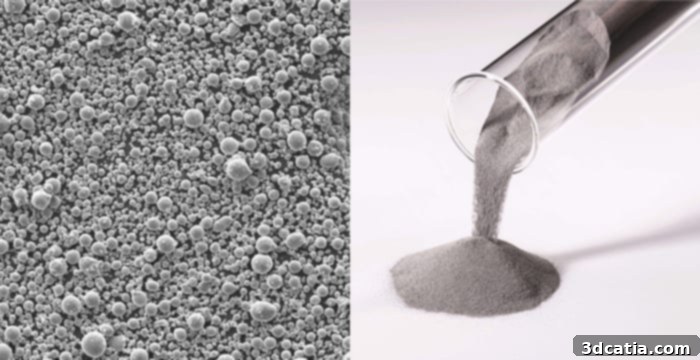
Within the large family of steels, a number of them are compatible with additive manufacturing processes, offering diverse mechanical and chemical properties.
Advanced Processes for 3D Printing Steel Parts
The versatility of steel extends to its compatibility with a comprehensive range of metal 3D printing technologies, each offering unique advantages for specific applications and production requirements. The choice of technology often depends on factors such as part complexity, desired mechanical properties, production volume, and cost considerations. The most common and impactful methods for additively manufacturing steel include:
One of the most widely adopted techniques is **Laser Powder Bed Fusion (PBF)**, which encompasses technologies like Direct Metal Laser Sintering (DMLS) and Selective Laser Melting (SLM). In this precision-driven process, a thin layer of fine metal powder, specifically steel powder, is spread across a build plate. A high-powered laser, or in some variants an electron beam, precisely melts and fuses selected areas of the powder layer according to the digital design. This molten material then solidifies, forming a solid cross-section of the part. The build plate then lowers, another layer of powder is applied, and the process repeats. PBF technologies are celebrated for their ability to produce highly dense, functionally robust parts with intricate geometries and excellent surface finish, making them ideal for high-performance steel components in aerospace, medical, and tooling sectors.
Another significant 3D printing technique compatible with steel is **Binder Jetting (BJ)**, sometimes referred to as powder binding. Unlike PBF, binder jetting does not involve melting the metal powder directly during the printing stage. Instead, a layer of steel powder is spread onto the build platform, and an industrial print head precisely deposits a liquid binding agent onto the powder particles in areas corresponding to the desired part geometry. This binder acts as a glue, joining the powder particles together to form a “green” part. Once the printing process is complete, the green part, which is relatively fragile, undergoes a crucial post-processing step known as sintering (and often infiltration). During sintering, the part is heated in a furnace to a temperature just below the steel’s melting point, burning off the binder and fusing the metal particles together to create a dense, strong final component. Binder jetting offers advantages in producing larger parts, at higher speeds, and potentially lower material costs compared to PBF, making it attractive for batch production of steel parts.
Finally, it is also possible to create robust steel components using **Directed Energy Deposition (DED)** technology. DED differs from powder bed methods by introducing material and energy simultaneously to create the part. In this process, the steel material, either in the form of a fine powder or a wire filament, is fed through a nozzle. A high-energy source, typically a laser or an electron beam, is precisely directed at the point of deposition, melting the incoming material as it is applied layer by layer onto a substrate. DED is particularly well-suited for repairing existing components, adding features to existing structures, or producing large-scale steel parts. Its ability to work with a wide range of materials, including dissimilar metals, and its potential for high deposition rates make it a valuable technology for industrial applications requiring strong, durable steel components with custom geometries or repair capabilities.
Regardless of the specific metal 3D printing method employed, the fundamental principle of additive manufacturing involves building parts layer by layer, meticulously repeating these steps until the final, geometrically complete part is formed. However, when working with metals, particularly steel, the journey from printed part to functional component is not complete without appropriate post-processing. This crucial phase is tailored to the technology used: for PBF and BJ technologies, it includes tasks such as depowdering (removing any unmelted or unbound powder) and heat treatments (like stress relief, hot isostatic pressing (HIP) for density improvement, or sintering for binder jetting parts). For DED, post-processing might involve machining to achieve final dimensional accuracy or using various surface finishing tools to improve surface quality and mechanical performance. These post-processing steps are essential to achieving the desired mechanical properties, surface finish, and overall quality of the final steel parts.
Main Applications, Economic Considerations, and Future Prospects of Steel 3D Printing
The capabilities offered by steel 3D printing have opened doors to an expansive array of applications across numerous demanding industrial sectors. These industries frequently require parts that not only exhibit high quality but also possess advanced properties, making additive manufacturing of steel an increasingly attractive solution. One prominent area is medicine and healthcare. As a biocompatible material, certain grades of stainless steel (like 316L) are extensively used to create a wide range of customized medical implants, intricate surgical instruments, and high-precision medical devices. The ability to produce patient-specific geometries allows for better fit, enhanced functionality, and improved surgical outcomes. Examples include custom bone plates, surgical guides, and sophisticated prosthetic components.
Beyond medicine, steel’s exceptional mechanical properties—including superior resistance to corrosion, high temperatures, and wear—make it highly attractive to other critical industries. The aerospace and defense sectors leverage steel 3D printing for producing lightweight yet robust components that can withstand extreme operational conditions. This includes complex structural brackets, specialized engine parts, and critical fastening elements, where weight reduction and performance are paramount. Similarly, the automotive industry benefits significantly from steel additive manufacturing, using it for prototyping, creating highly optimized exhaust systems, intricate injection molds, specialized tooling, and producing final end-use parts. The ability to design and produce complex internal geometries for fluid flow, for instance, can lead to more efficient and durable automotive components.
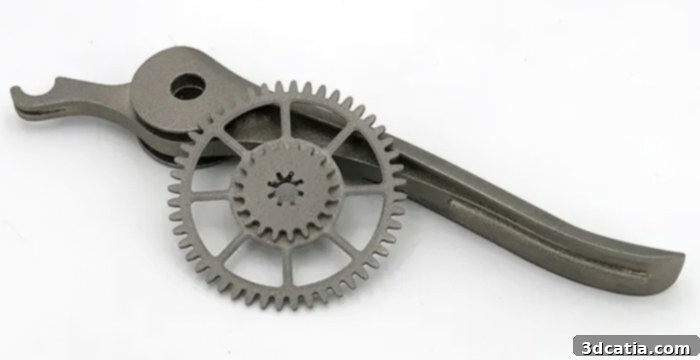
Photo credits: Sculpteo. Steel 3D printed parts demonstrating complex geometries and robust performance.
While the applications are compelling, it is crucial to address the economic considerations associated with metal 3D printing technologies. These processes are inherently more complex and typically involve higher operational costs compared to additive manufacturing of plastics or resins. Although steel itself is not considered a precious metal, its specialized powdered form, required for most 3D printing processes, can be quite expensive due to the energy-intensive atomization process and stringent quality control. Furthermore, manufacturing metal parts often involves heating materials to their melting point, which necessitates controlled cooling rates to prevent warping or internal stresses, thereby prolonging the overall build time and reducing machine utilization compared to faster technologies like Selective Laser Sintering (SLS) for polymers. Consequently, the high initial investment required for metal 3D printing machines, coupled with ongoing material costs, energy consumption, and specialized post-processing, are significant factors that companies must carefully evaluate. Despite these challenges, the unique benefits of steel 3D printing—such as the ability to produce highly customized parts, complex internal structures, optimized designs, and consolidate multiple components into one—often outweigh the costs for specific, high-value applications. The decision to adopt steel additive manufacturing requires a thorough cost-benefit analysis, assessing whether the excellent results obtained on metal parts justify the investment and operational expenditures. As the technology continues to mature, material costs are expected to decrease, and machine efficiency will improve, making steel 3D printing even more accessible and cost-effective for a broader range of industrial applications in the future.
Have you ventured into the exciting world of 3D printing steel? We’d love to hear about your experiences and insights! Share your thoughts in a comment below or connect with us on our social media channels: LinkedIn, Facebook, and Twitter. Don’t miss out on the latest advancements and news in additive manufacturing—sign up for our free weekly Newsletter here to get essential 3D printing updates delivered straight to your inbox! You can also explore all our informative videos and engaging content on our YouTube channel for a deeper dive into the world of 3D printing.
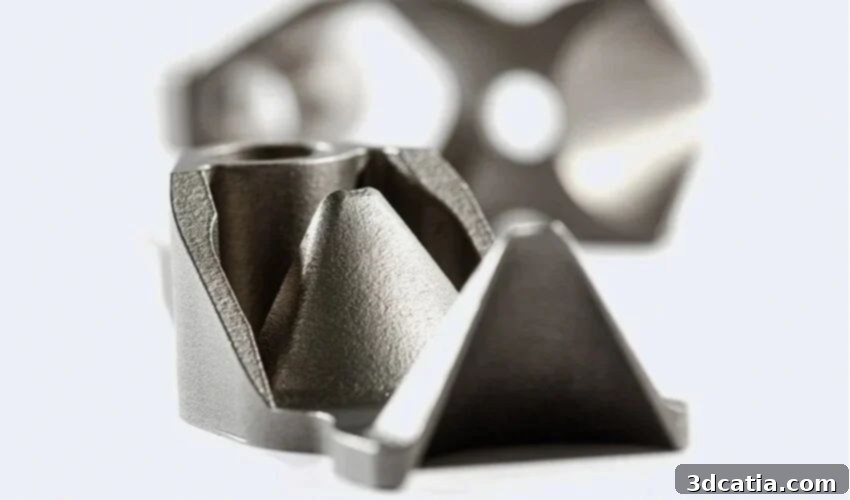
*Cover Photo Credit: Materialise. Showcasing the innovative possibilities with 3D printed steel.