
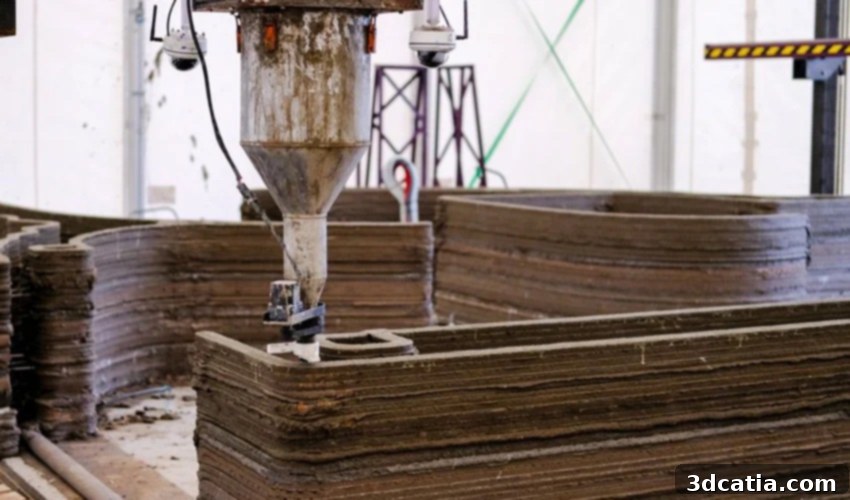
Building Tomorrow: How 3D Printing is Revolutionizing Colombia’s Construction Sector and Addressing the Housing Crisis
Across Latin America, the adoption of additive manufacturing, commonly known as 3D printing, is still in its nascent stages. However, a noticeable and steady growth trend is emerging, a phenomenon at least partly fueled by the establishment of key initiatives like the Additive Manufacturing Consortium in Latin America (CONMAD) in 2018. This consortium has played a crucial role in fostering collaboration, knowledge sharing, and accelerating the integration of these advanced technologies across the region. Within this broader context, Colombia stands out as a nation where 3D printing is progressively making significant inroads, transforming various sectors and application areas. Historically, Colombia’s construction industry faced decades of stagnant productivity, largely attributable to a deep-seated resistance to change and a reliance on conventional methods. However, in recent years, the sector has embarked on a profound series of transformations, driven by a renewed embrace of technological innovations. This shift is fundamentally aimed at streamlining processes, substantially boosting productivity, and significantly reducing both project timelines and overall costs. In this ongoing evolution and modernization of Colombia’s construction landscape, additive manufacturing is increasingly recognized as a pivotal technology, poised to reshape traditional building practices and unlock unprecedented efficiencies.
In the realm of modern construction techniques, the Building Information Modeling (BIM) methodology has firmly established itself as a robust and reliable approach, offering comprehensive digital representations of physical and functional characteristics of places. While BIM remains a foundational element for efficiency and coordination, it is far from being the sole method gaining traction in Colombia. Daniel Castro-Lacouture, a distinguished professor and former director of the School of Building Construction, emphasizes that the full potential of BIM adoption can only be realized when it is synergistically coupled with other complementary techniques, with 3D printing being a prime example. He highlights how the integration of 3D printing can dramatically curtail the overall construction process, mitigate common risks, and significantly reduce the likelihood of accidents on job sites by enabling more precise prefabrication and on-site assembly. Beyond its role as a supplementary tool, additive manufacturing holds a profoundly promising future as a standalone method within Colombia’s dynamic construction sector. Castro further articulates that the successful integration of groundbreaking technologies like 3D printing demands substantial resources and a wealth of specialized experience within Colombia. He asserts that now is a critical juncture for stakeholders to meticulously formulate strategic approaches that effectively address the pressing challenges of sustainability and competitiveness, ensuring that these technological advancements serve the long-term economic and environmental interests of the nation.
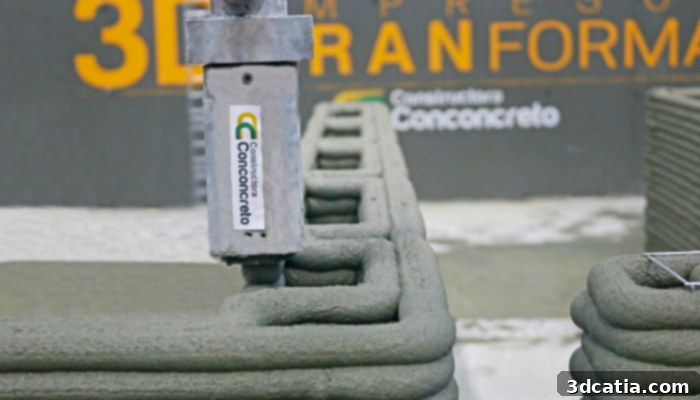
Photo Credits: Conconcreto
Colombia Leads the Way in Concrete 3D Printing for Sustainable Housing
The innovative application of concrete 3D printing in Colombia’s construction sector offers a potent and timely solution to the nation’s critical housing crisis, a challenge that resonates globally. According to sobering projections from UN Habitat, by the year 2030, an staggering number of over 3 billion people worldwide will require reliable access to adequate housing, essential basic infrastructure, and robust water and sanitation systems. In light of this formidable forecast, additive manufacturing emerges as a transformative technology capable of building complex, resilient structures with significantly less material waste and remarkably accelerated construction timelines compared to conventional methods. This efficiency is particularly crucial in regions facing rapid urbanization and resource scarcity. Pioneering the initial strides in this promising field is Conconcreto, a distinguished Colombian construction firm that has achieved a monumental milestone: developing the first large-format 3D printer in the Latin American region. Conconcreto’s ambitious primary objective is to spearhead the creation of social housing on an unprecedented, massive scale, ensuring that these homes are not only rapidly deployable but also exceptionally affordable, thereby making dignified living spaces accessible to a much broader segment of the population. This initiative holds the potential to profoundly impact the lives of countless families, offering a tangible pathway to addressing the housing deficit with speed, sustainability, and economic viability.
The extraordinary advantages inherent in concrete 3D printing technology have been unequivocally showcased through innovative projects such as the highly acclaimed Casa Origami. This remarkable endeavor involved the rapid manufacturing of a 23-square-meter housing module, constructed with astonishing speed in the bustling city of Medellin, completing the entire process in a mere 27 hours. The success of the Casa Origami project was not merely in its speed but in its methodical approach. Through this groundbreaking method, engineers and architects achieved a remarkable standardization of the entire printing process for structural elements. This standardization is critical for scalability and replicability, allowing for consistent quality and predictable outcomes across multiple units. The project focused intensely on incorporating advanced sustainability components from the outset, carefully considering factors such as optimized energy consumption through intelligent design and material choices, as well as integrating architectural aspects that enhance both the functionality and environmental performance of the prototype habitable house. The rapid construction time, coupled with a keen focus on sustainability and standardization, positions Casa Origami as a powerful testament to the transformative potential of additive manufacturing in rapidly delivering high-quality, eco-conscious housing solutions. This project serves as a beacon, illustrating how innovative technologies can fundamentally redefine the benchmarks for efficiency, cost-effectiveness, and environmental responsibility in modern construction practices.
Furthermore, the implications of such rapid construction extend beyond immediate housing needs. The ability to quickly deploy standardized, yet customizable, housing units has profound potential for humanitarian aid, disaster relief, and addressing the urgent needs of displaced populations. In scenarios where immediate shelter is paramount, 3D printing offers an unparalleled advantage, transforming weeks or months of traditional construction into mere days. This speed significantly reduces the vulnerability of affected communities and accelerates recovery efforts. The reduction in material waste, inherent in precise additive manufacturing, also contributes to a cleaner, more sustainable construction cycle, minimizing the ecological footprint often associated with conventional building practices. The efficient use of resources and the ability to fabricate on-demand further underscore the environmental benefits, aligning perfectly with global initiatives for sustainable development and resource conservation. The localized production capabilities facilitated by 3D printing also stimulate local economies, creating new job opportunities and fostering a skilled workforce in additive manufacturing, contributing to long-term economic resilience and technological advancement within the region.
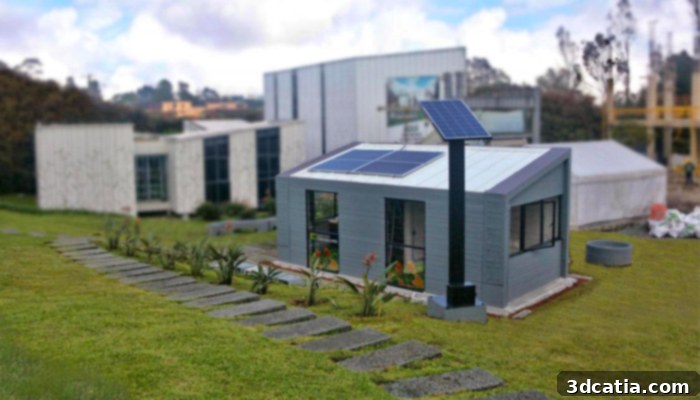
The Origami House project (photo credits: Conconcreto)
The broader global paradigm shift towards Industry 4.0 has proven to be a catalyst, bestowing a distinct and significant added value upon the Colombian construction sector through the pervasive integration of automation and digitalization. While the sector has, in historical terms, been characterized by a notable slowness in embracing transformative changes and maximizing the productivity of its activities, it is now experiencing an unprecedented boom. This revitalization is a direct consequence of its proactive adoption of innovative methods and advanced technologies. The principles of Industry 4.0, which encompass concepts such as the Internet of Things (IoT), artificial intelligence (AI), big data analytics, and cyber-physical systems, are fundamentally reshaping how construction projects are conceived, managed, and executed. 3D printing, as a cornerstone of this digital revolution, enables unprecedented design freedom, allowing architects to create intricate geometries and optimize structural forms that were previously impossible or prohibitively expensive with traditional building techniques. This not only enhances aesthetic appeal but also contributes to structural integrity and material efficiency, paving the way for truly sustainable and high-performance buildings.
The integration of these digital tools also facilitates a higher degree of precision and quality control throughout the construction lifecycle. Digital models generated by BIM are directly translated into physical structures via 3D printers, significantly reducing the margin for human error and ensuring a consistent level of quality across all fabricated components. This digital thread from design to fabrication streamlines workflows, reduces rework, and ultimately accelerates project completion. Furthermore, the ability to rapidly prototype and iterate designs using 3D printing allows for thorough testing and optimization before full-scale production, saving both time and resources. As Colombia continues its journey towards a more technologically advanced and sustainable future, the synergy between Industry 4.0 principles and additive manufacturing in construction will undoubtedly play a critical role. This convergence promises not only to address immediate challenges such as the housing crisis but also to position Colombia as a leader in innovative, efficient, and environmentally responsible building practices, fostering economic growth and improving the quality of life for its citizens for generations to come.
What are your thoughts on the accelerating adoption of concrete 3D printing technology within Colombia’s construction industry, and how do you envision its impact on the future of urban development and affordable housing solutions? We invite you to share your insights and opinions by leaving a comment below, or by engaging with our community on our vibrant Linkedin, Facebook, and Twitter pages! For those eager to stay abreast of the very latest developments and breakthroughs in the dynamic world of 3D printing, don’t forget to sign up for our complimentary weekly Newsletter here, delivering the freshest news directly to your inbox. Additionally, you can explore a wealth of informative and engaging content, including interviews, demonstrations, and case studies, by visiting our dedicated YouTube channel, where all our videos are readily available for viewing.