
3D Printing’s Transformative Role in Nuclear Energy: Driving Innovation and Efficiency
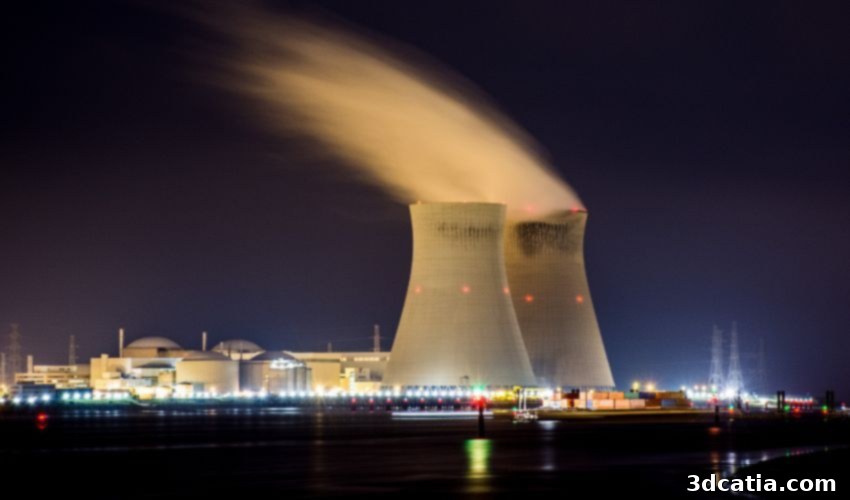
In recent years, additive manufacturing, commonly known as 3D printing, has emerged as a truly disruptive technology across numerous industries. While its applications in sectors like aerospace, medical, and automotive are well-documented, its increasing influence in the energy sector, particularly nuclear power, often goes overlooked. Nuclear energy stands as a critical component of global low-carbon power generation. Data from the World Nuclear Association highlights its significance, reporting 438 operable reactors across 33 countries in 2019, making it the world’s second-largest source of low-carbon electricity. The U.S. Energy Information Administration (EIA) further noted that in 2020, total world nuclear electricity generation reached 2,591 billion kWh, contributing 10.1% to the global electrical supply. Given this substantial and growing role, it’s only logical that the nuclear power industry is keenly exploring advanced technologies like additive manufacturing to enhance safety, efficiency, and cost-effectiveness. This article delves into how 3D printing is being strategically applied in nuclear power plants, showcasing leading examples of its transformative impact.
A Revolutionary 3D Printed Reactor Core by ORNL
The Oak Ridge National Laboratory (ORNL) in the United States stands at the forefront of integrating additive manufacturing into nuclear technology. For years, ORNL’s dedicated teams have been exploring how 3D printing can fundamentally reshape the design and production of nuclear energy systems. A landmark achievement occurred in May 2020, when ORNL unveiled the prototype of the world’s first 3D printed metal reactor core. This groundbreaking component was fabricated using a Directed Energy Deposition (DED) 3D printing machine, a process capable of building complex geometries layer by layer from melted metal powder or wire. This ambitious project is a cornerstone of ORNL’s “Transformational Challenge Reactor Demonstration” (TCR) program, an initiative aimed at developing energy systems that are not only more economical but also significantly more productive, all within dramatically reduced timelines. The speed of innovation was particularly impressive: the reactor core was designed, printed, and post-processed in an astonishing three months. The actual printing phase alone demanded 40 hours of continuous operation, with temperatures soaring to 1,400°C. This rapid prototyping capability demonstrates the immense potential of additive manufacturing to accelerate research and development in a traditionally slow-moving industry, paving the way for more agile and responsive nuclear energy solutions.
Ultra Safe Nuclear Corporation Collaborates with ORNL for Advanced Micro Reactors
Further solidifying the synergistic relationship between additive manufacturing and nuclear innovation, the Ultra Safe Nuclear Corporation (USNC), a leading US nuclear firm, announced a significant collaboration with Oak Ridge National Laboratory in 2022. USNC’s mission is to develop and integrate safe, clean, and commercially viable nuclear solutions, with a strong focus on advanced micro modular reactors. This partnership leverages ORNL’s unparalleled additive manufacturing capabilities, specifically Binder Jetting technology, to produce intricate components for these next-generation microreactors. The selection of Binder Jetting is particularly strategic because it allows USNC to overcome significant manufacturing challenges associated with silicon carbide, a high-performance technical ceramic ideal for nuclear applications due to its exceptional thermal and radiation resistance. Traditional manufacturing methods for silicon carbide are often costly and restrictive in terms of geometric complexity. By employing Binder Jetting, the team can achieve unprecedented design freedom, enabling the creation of more complex and efficient geometries that were previously impossible or prohibitively expensive. This approach not only promises substantial cost savings but also facilitates the development of safer and more compact reactor designs, crucial for the deployment of microreactors in diverse environments.
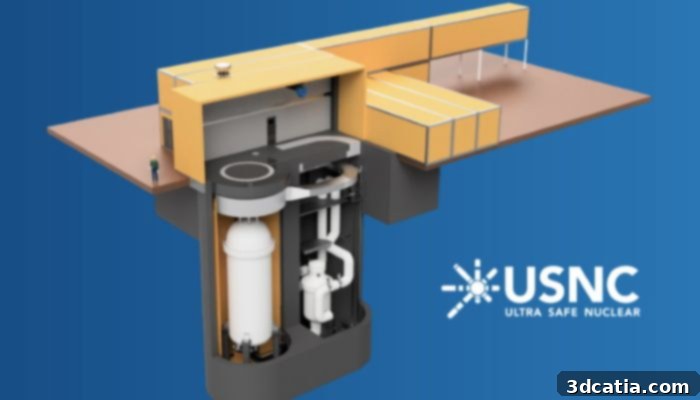
Photo credit: USNC
Czech Energy Firm ČEZ Optimizes Supply Chain with 3D Printing
The ČEZ Group, a prominent utility company and the largest public enterprise in Central and Eastern Europe, has strategically adopted additive manufacturing to bolster its supply chain resilience and minimize operational downtime within its nuclear division. Collaborating with the Czech nuclear company Škoda JS, ČEZ has already demonstrated the tangible benefits of this approach, producing an impressive 4,159 plastic and metal parts using 3D printing in a single year. The impetus for this shift became particularly pressing in the wake of global geopolitical disruptions, including the COVID-19 pandemic and the conflict in Ukraine, which severely exacerbated existing supply chain vulnerabilities. Traditional procurement of specialized spare parts for aging nuclear infrastructure often involves lengthy lead times and high costs, making reactors susceptible to prolonged outages. By investing in large-scale metal 3D printers capable of fabricating parts weighing up to 600 kg, ČEZ can rapidly produce critical components on demand. Bohdan Zronek, a member of ČEZ’s board of directors and director of the nuclear energy division, emphasized that while geometrically simpler parts can still be produced conventionally, 3D printing excels at creating complex components such as specialized gearwheels. This capability significantly reduces the time required to replace defective parts, thereby enhancing operational continuity and reducing the economic impact of downtime.
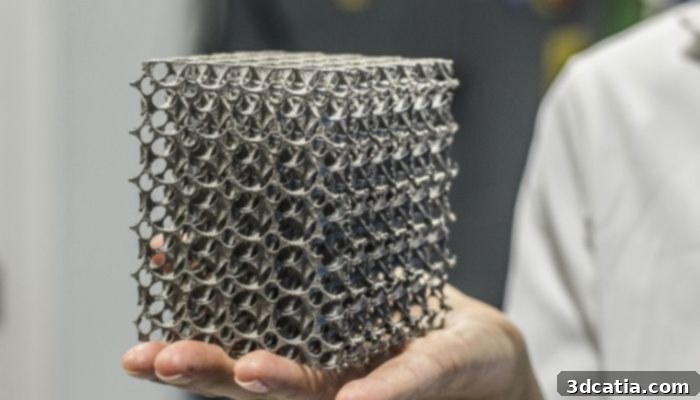
In addition to plastic, metal 3D printing has been the preferred method of nuclear companies (Image: Markforged)
Deploying Safety Critical Components in an Alabaman Reactor
The United States operates 93 nuclear power plants, according to EIA data, a significant portion of the global nuclear fleet. Among these, the Tennessee Valley Authority’s Browns Ferry Nuclear Plant in Athens, Alabama, stands out not only as one of the country’s most powerful nuclear facilities but also as a pioneer in adopting 3D printed components. In a landmark achievement in 2021, four 3D printed fuel assembly brackets were installed in Plant Unit 2 of the Browns Ferry facility. This project was a collaborative effort involving TVA, Framatome, and the DOE Office of Nuclear Energy-funded Transformational Challenge Reactor (TCR) program, based at Oak Ridge National Laboratory (ORNL). This deployment marked a crucial milestone: it was the first time qualified 3D printed components were used in an operational nuclear reactor in the US, demonstrating the viability of additive manufacturing in highly regulated and safety-critical environments. The fuel assembly brackets, classified as safety-critical components, were manufactured using laser powder bed fusion, an advanced metal AM technique, and TruForm 316 (Fe-271), a specialized metal powder alloy containing iron, nickel, chromium, and molybdenum. Additive manufacturing was specifically chosen for its ability to produce the fasteners’ non-symmetric geometry with high precision and material integrity, which would be challenging and more costly with conventional methods. This successful installation has opened new avenues for integrating AM into existing nuclear infrastructure, promising enhanced safety and performance for critical reactor parts.
Siemens’ Pioneering Role in Slovenia: The Krško Plant
Siemens made a significant historical contribution to the application of 3D printing in nuclear power with the installation of the very first operational 3D printed part in a nuclear power plant. This pioneering achievement took place at the Krško nuclear power plant in Slovenia. The component in question was a 108-mm-diameter metal impeller for a fire pump, a device that operates continuously and is critical for plant safety. The impeller, designed and additively manufactured by Siemens, addressed a pressing challenge: the original impeller had been in continuous operation since the plant’s commissioning in 1981, and its original manufacturer was no longer in business, making traditional replacement parts unobtainable. The Siemens team in Slovenia embarked on a meticulous process of reverse engineering, creating a precise “digital twin” of the obsolete part. This digital model then served as the blueprint for additive manufacturing. The ability to recreate a complex, fully functional component using Metal Additive Manufacturing not only solved an immediate operational problem but also set a new precedent. The successful operation of this 3D printed part, after passing all stringent tests required for nuclear power applications, underscored the reliability and safety potential of AM in one of the most demanding and regulated industries globally. This project significantly advanced the AM industry by proving that 3D printed components could meet the rigorous performance and safety standards of nuclear facilities.
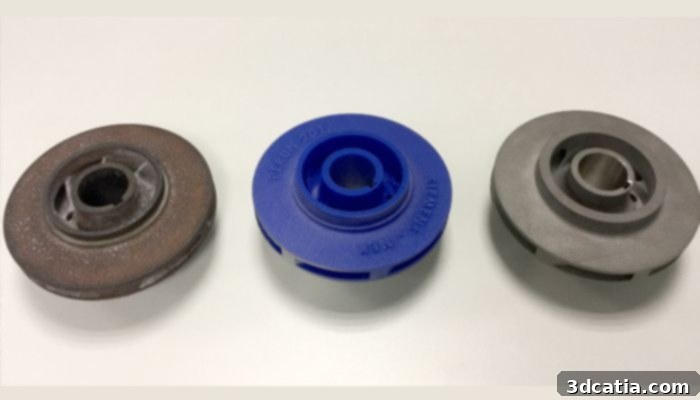
Photo credit: Siemens
The University of North Dakota Develops Advanced Nuclear Reactor Components
Innovation in nuclear technology extends beyond industrial applications to academic research, with institutions like the University of North Dakota (UND) playing a vital role. A research team led by Professor of Mechanical Engineering Roy Sougata at UND is actively engaged in a project focused on developing 3D printed nuclear reactor components using reinforced steel. Their approach utilizes austenitic steel, a high-performance metal alloy, which is further reinforced with nitrogen to enhance its properties. This specially treated austenitic steel is intended to be the primary raw material for the construction process of these advanced components. While specific details regarding the 3D printer and manufacturing process used have not yet been disclosed, the core objective of the project is to rigorously evaluate whether these additively manufactured components can outperform their conventionally designed counterparts in terms of efficiency, durability, and safety. The initial design and fabrication of the parts are being carried out at the University of North Dakota, while subsequent comprehensive analysis and testing will be conducted in collaboration with Oak Ridge National Laboratory (ORNL), leveraging ORNL’s extensive expertise and specialized facilities. A critical aspect of the component testing will focus on their tribological properties—the science of wear, friction, and lubrication—particularly under the extreme high-temperature conditions prevalent within nuclear reactors. This research is crucial for understanding the long-term performance and reliability of 3D printed materials in demanding nuclear environments.
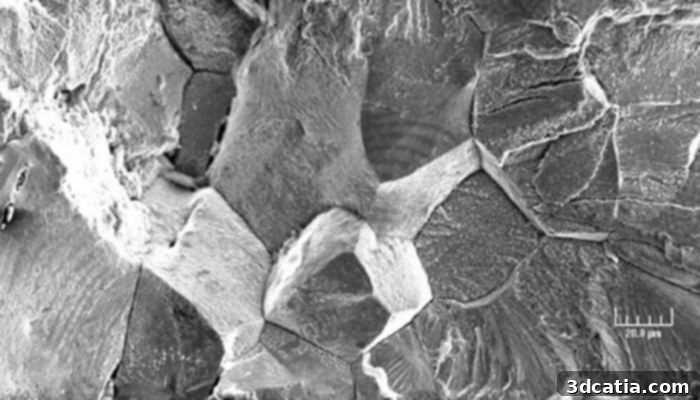
Austenitic steel will be used as the main material (Photo credits: Dr. K. Natesan)
Westinghouse Electric Company Forges Industry Firsts with 3D Printing
Westinghouse Electric Company has consistently demonstrated leadership in integrating 3D printing into nuclear reactor operations, achieving several industry firsts that underscore the technology’s growing importance for functional parts. In 2020, Westinghouse made headlines by installing a 3D printed thimble plugging device in one of its nuclear reactors, a pioneering move at the time. This initial success galvanized the company’s commitment to additive manufacturing, leading to further innovations. Just two years later, Westinghouse broke new ground once again with the deployment of the StrongHold AM debris filter, a state-of-the-art 3D printed component, in two Boiling Water Reactor (BWR) units located in Finland and Sweden. These advanced debris filters are engineered with enhanced capture features, significantly improving the removal of foreign materials that could otherwise damage fuel assemblies or obstruct coolant flow. The successful installation and operation of both the thimble plugging device and the StrongHold AM filters represent a substantial step forward for Westinghouse, showcasing its capability to leverage additive manufacturing for critical reactor components. These achievements highlight the technology’s potential to improve reactor performance, enhance safety, and extend the operational life of nuclear power plants, further solidifying AM’s integral role in the future of nuclear energy.
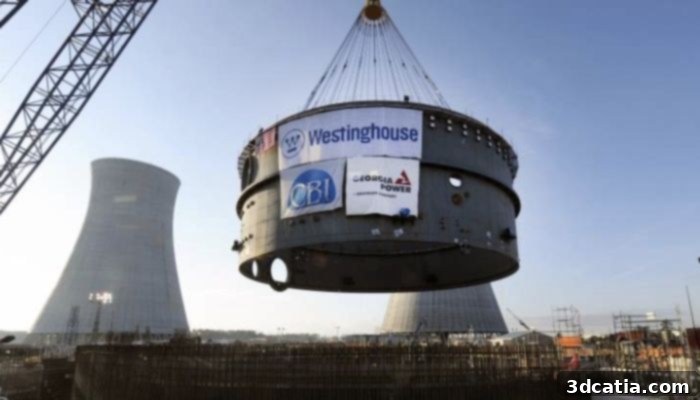
Photo credits: Westinghouse
3D Printing for French Nuclear Firm Framatome
The French multinational nuclear firm Framatome has also made significant strides in adopting additive manufacturing for critical reactor components. The company successfully developed and installed a 3D printed stainless steel fuel assembly component at the Forsmark nuclear power plant in Sweden, operated by Vattenfall. This achievement represents a pivotal moment for Framatome, marking their first successful deployment of such a component in an operational reactor. The specific part manufactured was a top end grid, a crucial element designed to securely hold the fuel rods—metal tubes containing cylindrical pellets of sintered uranium dioxide—in place within the reactor core. Beyond its structural function, the top end grid also plays a vital role in preventing bulky debris from entering the fuel assembly, thereby enhancing reactor safety and operational integrity. While Framatome confirmed the use of a 3D laser printing technology for its production, the precise method was not disclosed. This successful deployment by a major player like Framatome underscores the increasing confidence in additive manufacturing for producing safety-critical parts in the demanding nuclear industry, demonstrating its capability to meet stringent quality and performance standards.
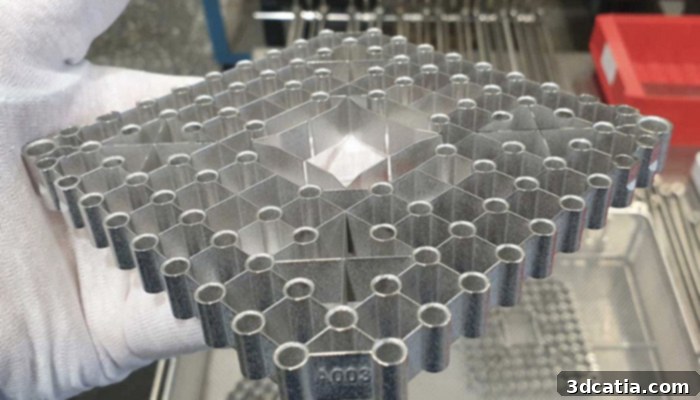
Photo credits: Framatome
Purdue University Pioneers AI-Driven 3D Printed Microreactors
The future of nuclear energy is increasingly intertwined with advanced digital technologies, a trend exemplified by Purdue University in Indiana, USA. Purdue received a substantial $800,000 grant from the U.S. Department of Energy to contribute to the creation of a 3D printed microreactor, a project that is part of the broader Transformational Challenge Reactor Demonstration Program. In this program, Oak Ridge National Laboratory (ORNL) is leading the effort to develop the first operational 3D printed microreactor by 2023. Purdue’s specific mission within this ambitious initiative is to develop cutting-edge artificial intelligence (AI) technology aimed at ensuring the highest quality of additively manufactured nuclear reactor components. This integration of additive manufacturing with artificial intelligence techniques promises a more data-rich, efficient, and cost-effective qualification process for nuclear components. Specifically, Purdue University’s solution employs reinforcement learning, a sophisticated form of artificial intelligence that leverages advanced machine learning strategies. This AI system will be trained to fine-tune and optimize critical additive manufacturing process parameters, such as printing speed and melting temperature, in real-time. By guiding the decision-making process with AI, the goal is to make the manufacturing of complex nuclear components more efficient, faster, and inherently reliable, minimizing defects and ensuring compliance with rigorous safety standards. This groundbreaking research is essential for scaling up the production of reliable 3D printed components for future microreactor designs.
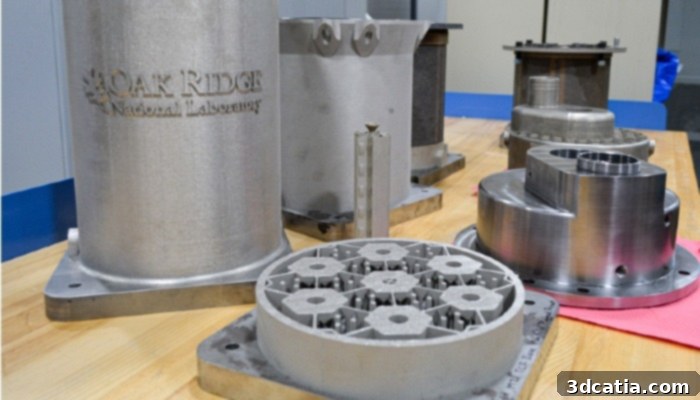
3D printed components of the nuclear reactor. (Photo credits: ORNL)
BWX Technologies and ORNL Collaborate on High-Temperature Alloys for Nuclear Components
The collaboration between BWX Technologies and Oak Ridge National Laboratory (ORNL) exemplifies another critical frontier in additive manufacturing for nuclear applications: the development of advanced metal 3D printing technologies for high-performance nuclear components. Their joint efforts are focused on creating parts capable of operating under extreme conditions, specifically for powering nuclear reactors. To achieve this, the partners are concentrating on producing components from specialized high-temperature alloys, primarily based on nickel and refractory metals, known for their exceptional thermal stability and strength. BWX Technologies has utilized an electron beam melting system for the 3D printing process, a technology particularly well-suited for processing such challenging materials with high precision. According to the company, the strategic choice of these advanced materials, combined with electron beam melting, has enabled researchers to significantly enhance the components’ resistance to temperatures up to 1,482°C. This increased thermal resistance directly translates into overall plant efficiencies of approximately 50 percent, marking a substantial improvement in energy conversion. Furthermore, additive manufacturing offers profound benefits in terms of cost reduction, particularly by streamlining part maintenance and repair processes. It also dramatically accelerates the component prototyping stage, allowing for quicker iterations and faster development cycles, thereby speeding up the deployment of next-generation nuclear reactor designs.
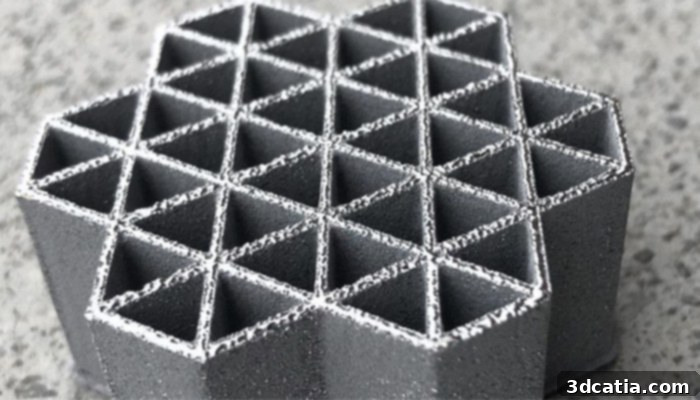
Photo credits: Oak Ridge National Laboratory
The integration of 3D printing into the nuclear power sector is no longer a distant vision but a present reality, actively driving innovation, enhancing safety, and optimizing efficiency across numerous applications. From the rapid prototyping of entire reactor cores by ORNL to the strategic supply chain optimization by ČEZ, and the deployment of safety-critical components by companies like Westinghouse and Framatome, additive manufacturing is proving its invaluable worth. Academic institutions like the University of North Dakota and Purdue are pushing the boundaries of material science and artificial intelligence to refine and qualify these advanced components, promising even more robust and reliable nuclear systems in the future. As demonstrated by Siemens’ operational impeller in Slovenia, 3D printing offers a powerful solution for obsolete parts, extending the life of existing infrastructure while enabling the development of next-generation reactors. This synergy between advanced manufacturing and nuclear energy is set to revolutionize how we design, build, and maintain these critical power sources, ensuring a safer, more sustainable, and more resilient energy future.
*Cover Photo Credits: Nicolas HIPPERT on Unsplash