
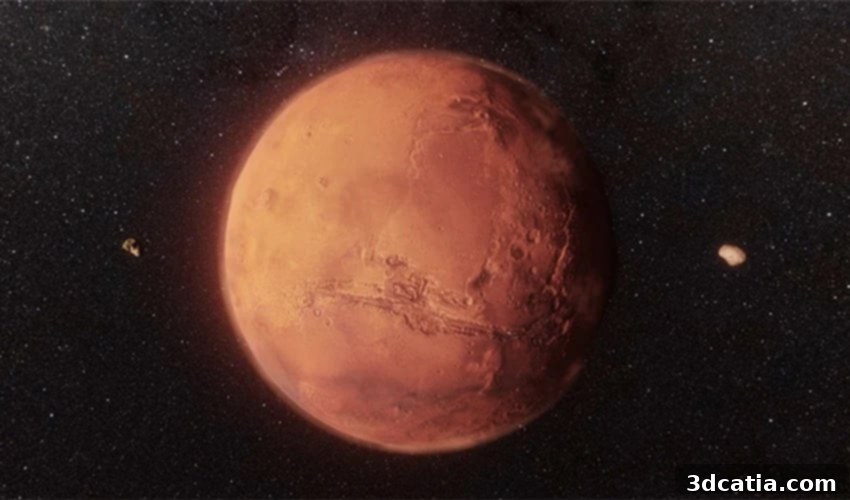
3D Printing on Mars: Revolutionizing Off-World Manufacturing with Martian Regolith
The long-held dream of living on Mars has consistently fueled scientific inquiry and technological innovation. Central to realizing this ambitious vision is the ability to establish self-sustaining operations on the Red Planet, minimizing reliance on costly and infrequent resupply missions from Earth. This monumental challenge underscores the critical importance of developing on-site manufacturing capabilities. Addressing this head-on, researchers at Washington State University (WSU) have made significant strides, demonstrating the transformative potential of 3D printing technology to support future human exploration and settlement on Mars. Their recent breakthrough involves successfully creating a robust, high-performance composite material, specifically tailored for 3D printing essential tools, spare parts, and even rocket components directly on the Martian surface.
This pioneering material is a sophisticated blend of Martian regolith—the loose, unconsolidated rock and dust that blankets the Martian landscape—and a resilient titanium alloy. Martian regolith, often simulated as a black powdery substance for laboratory testing, was chosen due to its ubiquitous presence and abundant availability across the Red Planet. Its integration represents a cornerstone of In-Situ Resource Utilization (ISRU), a strategy vital for reducing the mass and cost of missions by processing and using local materials. Titanium alloy, a material highly prized in space exploration, contributes exceptional properties such as superior heat resistance, remarkable strength-to-weight ratio, and excellent corrosion resistance. The synergistic combination of these two materials, processed through advanced additive manufacturing techniques, marks a substantial advancement towards creating truly self-sufficient outposts beyond Earth, dramatically decreasing logistical complexities and mission costs.
Innovative Composite: Martian Regolith Enhances Titanium’s Strength
Under the leadership of WSU professor Amit Bandyopadhyay, the research team conducted an exhaustive study into the optimal compositions of this novel Martian composite. They systematically 3D printed numerous test specimens, each incorporating a different volumetric percentage of simulated Martian regolith blended with the titanium alloy. The results were particularly insightful and carried profound implications for the future of off-world manufacturing. Intriguingly, components fabricated with a modest 5% concentration of the Martian black powder exhibited significantly greater strength than those made exclusively from pure titanium. This counter-intuitive finding suggests that at low concentrations, Martian regolith does not merely act as a filler but rather as a reinforcing agent, strategically enhancing the overall mechanical integrity and performance of the titanium matrix. This discovery is a potential game-changer, indicating that minimal processing of locally sourced Martian material could yield structural components that surpass the strength of their pure Earth-supplied metal counterparts, offering unprecedented advantages for Martian infrastructure.
However, the study also meticulously highlighted the limitations when the regolith content was substantially increased. Objects 3D printed using 100 percent Martian regolith, without the strengthening effect of the titanium alloy, demonstrated significantly reduced durability. These pure regolith components proved highly susceptible to cracking and generally lacked the structural robustness required for critical applications like precision tools, load-bearing structures, or vital rocket components. Despite these structural shortcomings, this pure regolith material still offers considerable value. The researchers identified its promising utility in the development of protective coatings. These coatings could serve as a crucial barrier, shielding delicate equipment and habitat structures from the relentless harshness of the Martian environment, including abrasive dust, potentially corrosive elements, and the intense, damaging radiation prevalent on the planet’s surface. This dual-purpose potential—offering both structural enhancement with composites and environmental protection with pure regolith—underscores the remarkable versatility of Martian resources in supporting future missions.
The Advanced 3D Printing Process for Martian Composite Materials
The meticulous methodology employed by Professor Amit Bandyopadhyay, supported by his dedicated graduate students Ali Afrouzian and Kellen Traxel, leveraged a sophisticated powder-based 3D printer. This advanced technique, often referred to as Selective Laser Melting (SLM) or Selective Laser Sintering (SLS), is exceptionally well-suited for producing intricate metal parts with high precision, density, and complex geometries. In this process, the finely milled simulated Martian rock dust was homogeneously mixed with powdered titanium alloy. This meticulously prepared composite powder was then distributed in ultra-thin, uniform layers across a build platform. A high-powered laser, guided with extreme precision by computer-aided design (CAD) data, selectively scanned and melted specific regions of each powder layer. The laser generated an immense amount of thermal energy, elevating the material temperatures to over 2,000°C (~3600°F). This intense heat ensured the complete melting and thorough metallurgical bonding of the composite components, creating a dense and unified structure.
Following the melting and fusion of each layer, the molten mixture rapidly solidified. The build platform then incrementally lowered, allowing for the precise deposition and subsequent laser fusion of the next thin layer of powder. This iterative, layer-by-layer additive process enabled the researchers to construct complex, three-dimensional parts of various sizes and shapes with remarkable accuracy and control. The inherent precision and geometric freedom offered by this additive manufacturing technique are paramount for fabricating components with exact functionalities and specialized geometries critical for space applications. Once a complete part was fabricated and allowed to cool naturally, it underwent a rigorous and comprehensive series of tests. These evaluations meticulously assessed its mechanical properties, including tensile strength (resistance to pulling apart), compressive strength (resistance to squeezing), hardness, and overall durability under simulated Martian environmental stresses. Such thorough testing is indispensable for validating the material’s suitability and reliability for real-world deployment in the extreme conditions of Mars, ensuring it can withstand the rigors of launch, landing, and long-term operation.
The Crucial Role of In-Situ Resource Utilization (ISRU) for Mars Missions
The profound implications of this groundbreaking innovation for future Mars missions cannot be overstated; it truly represents a revolutionary shift in our approach to space exploration. The capability to manufacture vital components directly on Mars, utilizing 3D printing with locally sourced materials, embodies the fundamental principle of In-Situ Resource Utilization (ISRU). As Professor Amit Bandyopadhyay eloquently states, “In space, 3D printing is something that has to happen if we want to think of a manned mission because we really cannot carry everything from here, and if we forgot something, we cannot come back to get it.” This powerful statement perfectly encapsulates the formidable logistical challenges and exorbitant costs associated with traditional Earth-dependent space logistics. Transporting even minimal materials and equipment from Earth into space incurs astronomical expenses, with conservative estimates placing the cost at approximately $54,000 for merely a single kilogram of cargo. To contextualize this, a relatively small, specialized tool weighing just a few kilograms could add hundreds of thousands of dollars to an already multi-billion-dollar mission budget.
Consequently, any technology that facilitates the production of necessary items directly in space or on Mars offers immense, multifaceted benefits. These advantages extend beyond mere convenience, encompassing substantial financial savings, critical weight reduction for spacecraft payloads, and enhanced mission resilience. Imagine a hypothetical scenario where astronauts on Mars encounter an unexpected equipment failure, requiring a specialized wrench, a replacement bracket for a habitat module, or a crucial component for a scientific instrument. Instead of facing years of waiting for a complex resupply mission or the impracticality of carrying an exhaustive inventory of every conceivable spare part, they could simply 3D print the required item on demand, leveraging readily available Martian resources. This profound paradigm shift, from Earth-reliant logistics to self-sufficient off-world manufacturing, is not merely about operational efficiency; it is fundamental to enabling longer-duration missions, significantly enhancing crew safety, and transforming permanent Martian settlements from speculative concepts into tangible, realistic objectives. ISRU, empowered by additive manufacturing, is thus indispensable for reducing overall mission mass, dramatically increasing mission flexibility, and ultimately establishing truly sustainable human exploration and eventual colonization of the solar system.
Expanding Horizons: Future Research and Capabilities of Martian 3D Printing
While the current study marks a monumental initial step, Professor Amit Bandyopadhyay readily acknowledges that this pioneering research is still in its nascent stages. The WSU team remains committed to pushing the boundaries of what is possible and is actively pursuing various promising avenues for further advancement. One key direction involves extensive experimentation with diverse types of metals beyond the current titanium alloy. Exploring the inclusion of other Earth-sourced metals, such as aluminum for lightweight structural components or nickel for enhanced corrosion resistance, could lead to a new generation of composites with tailored or superior properties. Furthermore, the team aims to investigate the potential of metals that might be extractable from Martian meteorites or concentrated in specific geological regions on Mars, which could significantly broaden the range of printable objects and their specialized applications.
In addition to exploring new material compositions, the WSU team plans to rigorously investigate alternative 3D printing techniques. While powder-based systems like SLM/SLS are robust and precise, other methods such as Directed Energy Deposition (DED) or binder jetting may offer distinct advantages in terms of speed, material versatility, or suitability for fabricating larger-scale structures. For instance, DED could prove invaluable for repairing existing components directly on Mars or for constructing very large structural elements. Binder jetting, on the other hand, might enable faster production of complex geometries that could then be post-processed through sintering. Advancements in these additive manufacturing technologies will be absolutely crucial for scaling up Martian manufacturing capabilities. This expansion is necessary to move beyond simply printing small tools to encompassing the production of larger, more complex infrastructure components, including habitat modules, sophisticated scientific instruments, and even crucial parts for eventual return rockets. The overarching goal is to establish a comprehensive, versatile, and highly reliable 3D printing ecosystem on Mars that can effectively address the diverse and evolving needs of a permanent human settlement, ultimately paving the way for the Red Planet to become humanity’s second home.
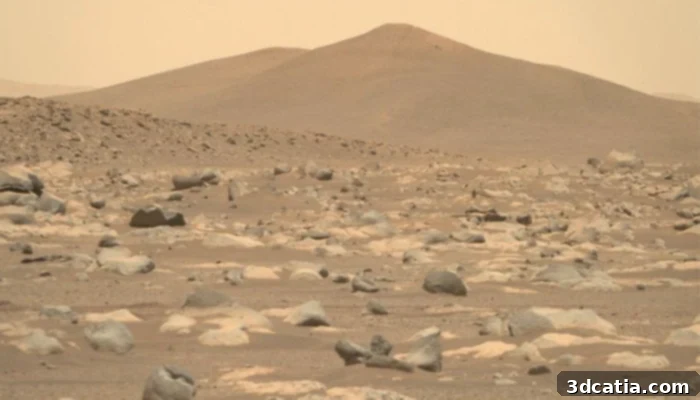
The surface on Mars (photo credits: Nasa)
Navigating the Challenges for Sustainable Martian Manufacturing
While the promise and potential of 3D printing on Mars are undeniably immense, there are numerous formidable challenges that must be meticulously addressed and overcome to transform this vision into a tangible reality. The Martian environment itself presents a unique array of obstacles. The planet’s ultra-thin atmosphere, extreme temperature fluctuations, pervasive fine dust, and significant levels of radiation all demand exceptionally robust and highly specialized equipment. Any 3D printer destined for deployment on Mars must be engineered to operate with unwavering reliability under these profoundly harsh conditions, demonstrating superior resistance to dust contamination, thermal cycling stresses, and cumulative radiation damage. Furthermore, the practical processing of raw Martian regolith presents its own set of complexities. Unlike the relatively uniform simulated regolith used in laboratory settings, actual Martian soil exhibits varying chemical compositions, potentially contains volatile compounds, and includes abrasive particles that could significantly impact the 3D printing process and the ultimate quality and consistency of the final product. Developing efficient and effective methods for sorting, refining, and precisely preparing Martian regolith for additive manufacturing is therefore a critical and ongoing area of intensive research.
Another substantial challenge revolves around scaling up this innovative technology. While successful laboratory demonstrations are crucial proof-of-concept, adapting these techniques for the large-scale production of entire habitat components or complex industrial machinery on Mars will necessitate monumental engineering efforts. This includes the development of sophisticated automated systems for seamless material handling, advanced robotics for autonomous operation and maintenance, and highly efficient, resilient power sources specifically designed to function optimally under Martian conditions. Moreover, ensuring stringent quality control and verifying the structural integrity of 3D printed components under the unique gravitational forces and atmospheric pressures of Mars is absolutely paramount for guaranteeing both crew safety and overall mission success. Successfully addressing these multifaceted challenges will undoubtedly require sustained international collaboration, extensive interdisciplinary research spanning multiple scientific and engineering fields, and significant, continuous technological advancements. These collective efforts will ultimately pave the way for truly sustainable human exploration and eventual permanent settlement beyond the confines of Earth.
Conclusion: Building Humanity’s Future on the Red Planet
The pioneering research undertaken by Washington State University into 3D printing with Martian regolith and titanium alloy represents a monumental and transformative leap forward in humanity’s ambitious quest to colonize Mars. By conclusively demonstrating the feasibility of creating high-performance, structurally sound materials directly from indigenous Martian resources, the WSU team has meticulously laid a crucial foundational stone for the future of off-world manufacturing. The remarkable discovery that even a small percentage of Martian regolith can significantly enhance the strength of titanium composites opens up unprecedented possibilities for crafting essential tools, critical structural components, and even vital rocket parts directly on the Red Planet. This innovative approach promises to drastically mitigate the astronomical costs and immense logistical complexities inherent in deep space missions, thereby bringing the dream of a long-duration human presence on Mars much closer to a tangible reality.
As this cutting-edge research continues to evolve, pushing boundaries by exploring novel material compositions and developing advanced 3D printing techniques, the compelling vision of a self-sufficient Martian outpost steadily moves closer to full realization. The ability to effectively “print” our way to a future on Mars is far more than just an extraordinary engineering feat; it represents a fundamental paradigm shift in how we envision and approach space exploration. It powerfully embodies the spirit of innovation, resourcefulness, and adaptability that will undoubtedly define humanity’s multi-planetary future. This pivotal WSU study unequivocally underscores that with unwavering ingenuity, dedicated perseverance, and a commitment to scientific discovery, the formidable challenges of establishing a sustained human presence beyond Earth can indeed be transformed into unparalleled opportunities for profound scientific and technological advancement. You can find the original press release with more comprehensive details HERE.
What are your thoughts on utilizing 3D printing technology to manufacture objects directly on Mars? Do you envision this innovative technology as the ultimate key to achieving sustainable human settlement and thriving communities on the Red Planet? We invite you to share your valuable insights, perspectives, and join the ongoing conversation by leaving a comment below or connecting with us across our social media platforms onLinkedIn,Facebook, andTwitter! Additionally, don’t miss out on the latest advancements and breaking news in the world of 3D printing; be sure to sign up for our free weeklyNewsletter here, delivered straight to your inbox! For more captivating content, educational videos, and in-depth discussions, you can also find all our compelling videos on our dedicatedYouTube channel.
*Cover Photo Credits: Vito Technology