
Revolutionizing Art Access: How 3D Printing Powers Tactile Exhibitions for the Visually Impaired – The Smart Art Project
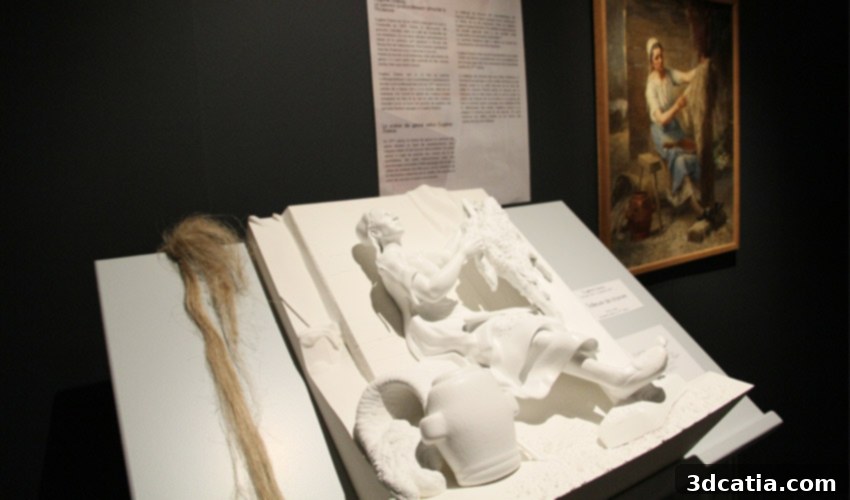
The world of art and culture is increasingly striving for greater inclusivity, ensuring that masterpieces are accessible to everyone, regardless of their sensory abilities. A shining example of this commitment is the Smart Art project, a pioneering French consortium that unites diverse stakeholders from the Greater East region, particularly Champagne Ardenne. This innovative collaboration recently captivated audiences with an extraordinary exhibition titled “The Essential is invisible to the eyes,” specifically curated for the visually impaired community. Unlike traditional art displays, the works featured were entirely tactile, meticulously crafted to be explored by touch, and thoughtfully complemented by immersive soundtracks. This multi-sensory approach aimed to offer a profound and intimate experience, bridging the gap between individuals and the rich tapestry of culture and art.
A significant portion of these groundbreaking works leveraged the power of 3D printing technology, vividly demonstrating the transformative link between advanced digital fabrication and disability inclusion. This initiative stands proudly alongside other impactful projects, such as See3D, highlighting a growing movement to harness technology for social good. To delve deeper into the origins, methodologies, and remarkable outcomes of this exhibition, we had the privilege of speaking with Vincent Marquet, an accomplished engineer at FabLab SmartMaterial, based at the prestigious University of Reims Champagne-Ardenne. His insights provide a comprehensive understanding of how Smart Art is redefining cultural accessibility.
Unveiling the Collaborative Force Behind Smart Art: Project Partners and Roles
The Smart Art project is a testament to the strength of inter-organizational collaboration, bringing together a consortium of dedicated partners, each playing a vital role in its successful realization. At the heart of this initiative, serving as its main bearer, is the association Lire Aussi. Their expertise in promoting literacy and cultural access for all was instrumental in guiding the project’s foundational principles. The Michel Fandre Institute, renowned for its work with individuals with visual impairments, partnered with the esteemed Musée de l’Ardenne in Charleville-Mézières (CM). This powerful duo was responsible for the crucial task of selecting the original artworks to be reproduced and meticulously organizing the exhibition’s logistics and presentation. Their deep understanding of art history and museum curation, combined with insights into the needs of visually impaired visitors, ensured that the chosen masterpieces were both culturally significant and suitable for tactile interpretation.
The technical backbone of the project was provided by the Laboratory of Engineering and Materials Science (LSIM) at the University of Reims Champagne-Ardenne. It was within their advanced facilities that the complex process of 3D printing the tactile works took place, translating digital models into physical objects that could be experienced by touch. Complementing this technical expertise, the University of Technology of Troyes contributed significantly by producing the detailed specifications and requirements, ensuring that all aspects of the project met rigorous standards of quality and functionality. This synergistic approach, combining artistic vision, educational insights, and cutting-edge technological capabilities, created a robust framework for an exhibition that was both innovative and impactful.
The Genesis of Innovation: How the Smart Art Project Came to Life
The Smart Art project did not emerge in isolation but was the culmination of years of preparatory work and focused collaborations, demonstrating a natural evolution towards a more ambitious goal. For an extended period, the IFTS of Charleville-Mézières had fostered a productive partnership with the association Valentin Haüy. This collaboration manifested through various student projects specifically designed for modeling and realizing tactile models, laying crucial groundwork in the field of accessible design. Simultaneously, the University of Technology of Troyes (UTT) and the association Lire Aussi were deeply immersed in the “Seeit” project, an initiative dedicated to enhancing the welfare and fostering the autonomy of blind and visually impaired individuals. These parallel endeavors equipped each organization with invaluable expertise and a shared commitment to improving the lives of those with visual impairments.
Recognizing the unique and complementary skills they collectively possessed, these distinct organizations strategically united to respond to a significant regional opportunity: the “Innov’action” call for projects launched by the regional council. This prestigious call sought innovative proposals that could deliver tangible societal benefits, and the collective vision of the partners perfectly aligned with its objectives. Their joint proposal, boldly titled Smart Art, envisioned an exhibition that would feature tactile models representing 13 iconic masterpieces from the museums of Charleville-Mézières. The resulting exhibition, named “L’essentiel is invisible to the eyes” (The Essential is Invisible to the Eyes), resonated deeply with its purpose and ran for a successful duration of three months. This strategic convergence of prior experience, specialized skills, and a timely funding opportunity was the fertile ground from which the transformative Smart Art project truly blossomed, setting a new benchmark for cultural inclusivity.
The Journey of Creation: Stages of the Smart Art Project from Concept to Exhibit
The realization of the Smart Art exhibition was a multi-faceted process, meticulously planned and executed through several critical stages, each demanding specialized skills and dedicated effort. The initial phase focused on the digital recreation of the artworks. We embarked on the intricate task of modeling the chosen masterpieces using the versatile Blender software. This intensive work, carried out in close collaboration with the Valentin Haüy association, required approximately 70 hours to translate the visual nuances of two-dimensional art into a three-dimensional, tactile format. The challenge here was not merely to replicate shapes but to interpret how different textures and volumes could convey the essence and emotion of the original piece to a non-sighted individual. User feedback from the Valentin Haüy association was invaluable in refining these models, ensuring they were genuinely informative and engaging for tactile exploration.
Once the 3D models were perfected, the subsequent step involved preparing these digital files for physical production. The Laboratory of Engineering and Materials Science (LSIM) meticulously prepared the obtained files for 3D printing. This included utilizing sophisticated CAM (Computer-Aided Manufacturing) software to optimize the models for the specific printing technologies, a process that often involved slicing the digital models into layers and planning toolpaths for efficient and accurate fabrication. The precision of this preparation was crucial for ensuring high-fidelity tactile reproductions. The next, and perhaps most time-intensive, stage was the combined process of 3D printing and machining, which collectively consumed approximately 130 hours. This stage saw the digital designs manifest into physical forms, with various 3D printing technologies chosen based on the specific tactile requirements of each artwork.
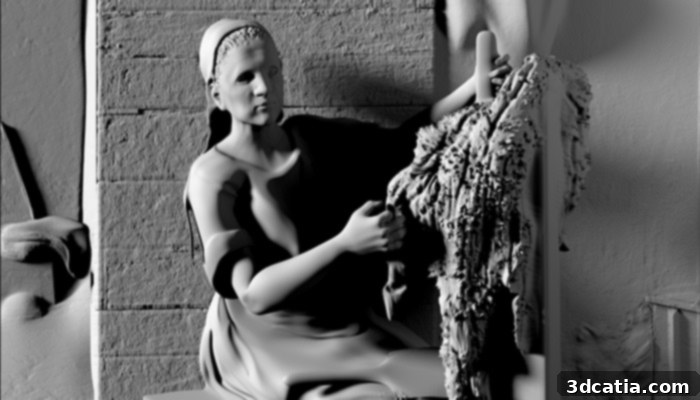
Modeling in Blender
Following the primary fabrication, a critical post-treatment phase ensued, requiring an additional 40 hours. This involved meticulous assembly of multi-part prints, precise gluing to ensure structural integrity, and careful painting to differentiate various elements or add specific tactile cues. The choice of colors, while not directly perceived by visually impaired visitors, was essential for sighted companions and for maintaining the aesthetic integrity of the exhibit. All these sophisticated processes leveraged the cutting-edge equipment available at the FabLab SmartMaterial, situated within the University of Reims Champagne-Ardenne. This well-resourced facility boasts a diverse array of fabrication tools, including FDM 3D printers, such as models from Ultimaker, which are ideal for robust, larger prints; high-resolution SLA and DLP printers for intricate details and smoother finishes; and essential post-processing tools like a CNC machine and a laser cutter. This versatility allowed us to work with a range of materials including PLA (Polylactic Acid) for its ease of use and environmental friendliness, EPOXY for durable and smooth surfaces, and LAB, a specialized polyurethane foam, which offered unique tactile properties. On average, we were able to create substantial tactile panels, typically measuring 600 x 400 x 100 mm, providing ample surface area for comprehensive tactile exploration.
Cultivating Independence and Empathy: The Core Purpose of the Exhibition
Beyond merely presenting tactile artworks, one of the paramount objectives of “The Essential is invisible to the eyes” exhibition was to empower the visually impaired visitor, granting them unprecedented independence in shaping their individual visit and artistic journey. This was achieved through a thoughtfully designed, multi-layered sensory experience. Each artwork was accompanied by an accessible soundtrack, offering visitors two distinct modes of engagement: either an adapted musical piece, carefully composed to evoke the emotions and themes of the artwork, or a detailed audio description, providing rich contextual information and guiding tactile exploration. Crucially, visitors were given the autonomy to choose between these two options, allowing them to tailor their experience to their personal preferences and learning styles. This focus on individual choice underscored the exhibition’s commitment to user-centric design and accessibility.
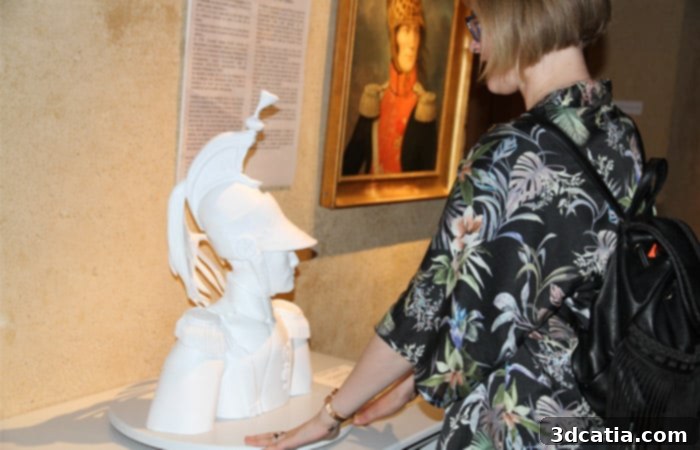
Furthermore, the exhibition was ingeniously designed to foster a unique form of social inclusion by creating a profound experience for sighted visitors as well. By engaging with the tactile artworks, sighted individuals were encouraged to momentarily “put themselves in a situation of mischief” – a state of unfamiliarity or even slight disorientation, mirroring some aspects of visual impairment. This deliberate design choice aimed to cultivate empathy and understanding, prompting sighted visitors to appreciate art from a different sensory perspective and to recognize the challenges and alternative methods of perception. This “crossed visitor experience” was not just a side benefit but a core pillar of the exhibition’s strategy, designed to break down barriers, promote dialogue, and ultimately meet its overarching objectives of social inclusion. By making the experience meaningful for both visually impaired and sighted audiences, Smart Art effectively demonstrated how art can serve as a powerful catalyst for empathy and connection within the community.
A Journey Through Tactile Masterpieces: What Visitors Explored
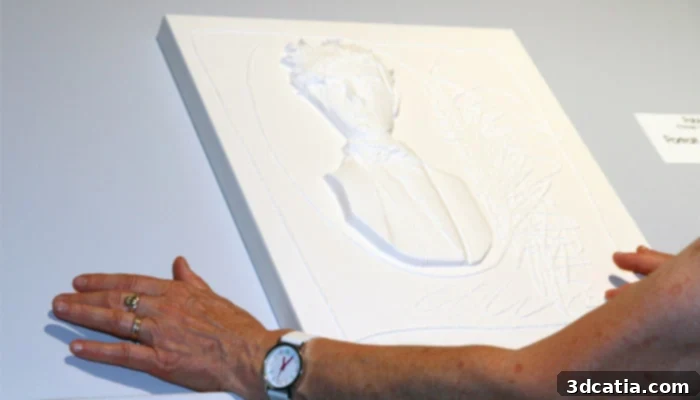
The “Essential is invisible to the eyes” exhibition offered a diverse and captivating selection of tactile artworks, meticulously recreated to invite exploration by touch. Visitors were able to engage not only with traditional tactile paintings but also with three-dimensional busts, adding another layer of sensory richness to the experience. Among the notable pieces, visitors could feel the contours of the head of Arthur Rimbaud, depicting him wounded in Brussels in 1873. This particular sculpture allowed for an intimate connection with the poet’s historical moment, bringing a sense of presence to his biography. Another fascinating exhibit invited visitors to plunge their hand into the pot of the Hemp Toolbox, an everyday object immortalized by Eugene Damas in the nineteenth century. This tactile interaction provided a tangible link to historical domestic life and artisanal tools, transforming a simple object into a vessel of cultural narrative. As for the paintings, the exhibition proudly featured tactile renditions of masterpieces by renowned artists such as Pablo Picasso and Alfred Sisley. Recreating these iconic works in a tactile format involved interpreting their visual elements – brushstrokes, forms, and compositional depth – into textures and elevations that could be understood through touch. Each piece was carefully selected not only for its artistic significance but also for its potential to offer a compelling and meaningful tactile experience, ensuring that the exhibition presented a rich and varied artistic journey for all.
The Transformative Power of 3D Printing in Art and Culture Accessibility
When considering the profound impact of 3D printing on accessibility in art and culture, it becomes clear that this technology offers far more than just a simple reproduction of images. For the first time, 3D printing provides an “extra dimension” to the creation of tactile models. Unlike traditional embossed or relief representations, 3D printed objects allow characters, objects, and architectural elements to truly emerge from the background, creating a genuine sense of volume, depth, and spatial relationship. This volumetric fidelity significantly enhances a visitor’s understanding of the artwork’s composition, allowing for a more intuitive and comprehensive tactile interpretation than was previously possible. Imagine feeling the contours of a figure, discerning its posture, and understanding its position relative to other elements within the scene—this level of detail unlocks a richer narrative.
Furthermore, the inherent diversity of materials and the various types of 3D printing technologies available—from FDM to SLA and DLP—are instrumental in defining even more detailed textures and intricate nuances. This precision directly translates into an enriched sensory experience, deepening the visitor’s feeling and emotion as they explore the artwork. Different materials can mimic various surfaces, from the rough texture of a landscape to the smooth drape of fabric, or the delicate lines of a portrait. This tactile differentiation allows for a more nuanced interpretation of the artist’s original intent and the subject matter. The ability to reproduce minute details, previously lost in less sophisticated tactile reproductions, ensures that the artwork’s integrity and aesthetic value are preserved and communicated effectively.
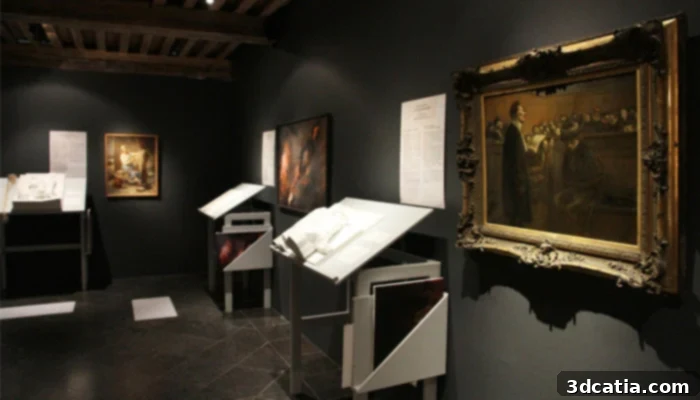
General view of the exhibition
However, it is crucial to recognize that the tactile panel itself is not an end in itself; it is a powerful tool within a broader, multi-sensory experience. The technical barriers that 3D printing has allowed us to overcome are merely a means to an end: to offer an innovative and unparalleled instrument for a truly sensitive and profound discovery of artwork. By integrating 3D printed tactile models with audio descriptions, musical interpretations, and contextual narratives, projects like Smart Art create a holistic engagement. This approach transforms art consumption from a passive viewing experience into an active, exploratory, and deeply personal journey. 3D printing empowers cultural institutions to move beyond simply accommodating disability to actively designing for universal access, fostering a truly inclusive environment where art can be appreciated and understood by everyone, transcending traditional visual limitations and unlocking new dimensions of cultural engagement for the future.
The Smart Art initiative stands as a brilliant example of how innovative technology and dedicated collaboration can transform cultural accessibility, making art a universal experience. What are your thoughts on projects like Smart Art and the potential of 3D printing in cultural heritage? Let us know what you think in a comment below or share your perspectives on our Facebook and Twitter pages! Don’t forget to sign up for our free weekly Newsletter, where you’ll receive all the latest news and advancements in 3D printing delivered straight to your inbox!