
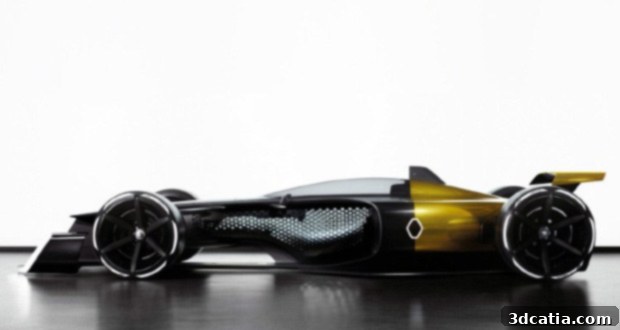
Renault RS 2027: Unveiling F1’s Future of Sustainable Racing with 3D Printing Innovation
At the bustling Shanghai Motor Show in China, French automotive giant Renault captivated audiences by pulling back the curtain on its groundbreaking vision for the future of Formula 1 motorsports: the Renault RS 2027. This audacious concept car isn’t merely a design exercise; it offers an exhilarating glimpse into the potential trajectory of high-performance racing, championing pivotal themes such as advanced technological integration, radical sustainability practices, and the transformative power of 3D printing. Renault’s reveal underscores a bold commitment to shaping not just the next generation of race cars, but also the very ethos of competitive motorsport.
The RS 2027, while existing purely as a conceptual masterpiece, is meticulously engineered to embody the pinnacle of future F1 performance. At its core lies a formidable turbocharged V6 engine, a nod to the hybrid power units dominating contemporary F1, yet augmented with significantly enhanced capabilities. Complementing this potent internal combustion engine is a sophisticated two-part Kinetic Energy Recovery System (KERS). This advanced hybrid powertrain is designed to deliver an astounding 500kW of power, showcasing a future where raw speed and energy efficiency coalesce seamlessly. Beyond its sheer power, the car boasts a remarkable advantage: the ability to operate in an entirely all-electric mode. This functionality would be crucial in strategic scenarios, allowing the vehicle to navigate the pit lane or cruise during safety car periods with zero emissions and minimal noise, a significant departure from today’s roaring machines and a clear step towards environmentally conscious racing.
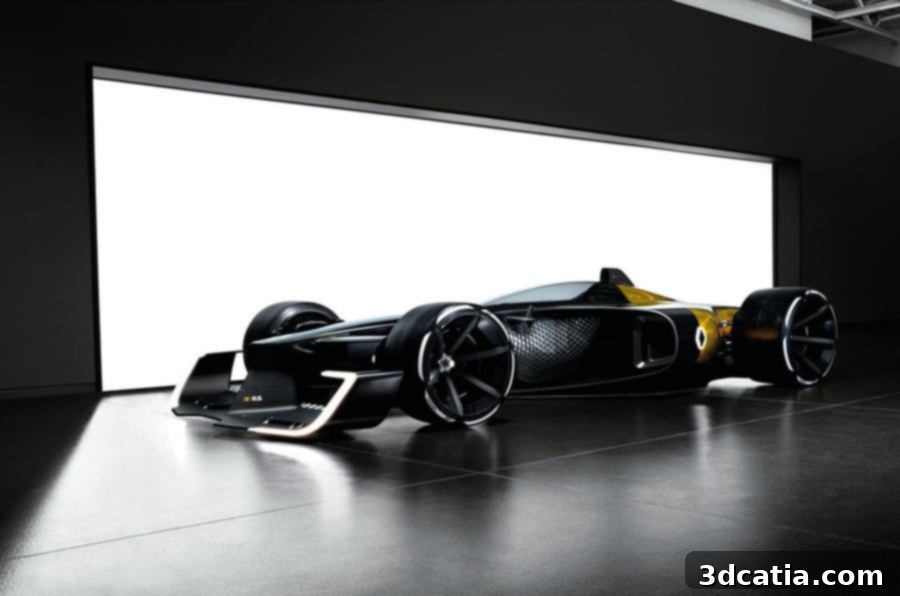
The body of the Renault RS 2027 was created using recycled material & 3D printing
However, amidst these impressive technological advancements in propulsion and energy management, the true showstopper and perhaps the most revolutionary aspect of the Renault RS 2027 is its innovative cockpit structure. This critical component, vital for driver safety and vehicle integrity, is crafted entirely using cutting-edge 3D printing technology. This radical approach signifies a paradigm shift in automotive manufacturing, particularly within the demanding realm of Formula 1 where precision, lightweight design, and bespoke components are paramount. The utilization of additive manufacturing allows for unprecedented design freedom, enabling engineers to create complex geometries and integrated functionalities that would be impossible or prohibitively expensive with traditional methods.
The application of 3D printing extends beyond just the cockpit, playing a fundamental role in the overall construction of the Renault RS 2027’s body. By leveraging this transformative technology, Renault was able to produce featherlight composite parts. These meticulously engineered components contribute to the car’s astonishingly low overall weight, tipping the scales at a mere 600kg – a figure that pushes the boundaries of current F1 regulations and promises unparalleled agility and speed. What makes this achievement even more remarkable is the integration of recycled materials into the 3D printing process. This forward-thinking approach not only results in an exceptionally lightweight vehicle but also positions the RS 2027 as an ecologically responsible racing machine. This conscious decision perfectly aligns with Renault’s overarching brand goal of incorporating both sustainability and imaginative innovation into the very DNA of their vehicles, demonstrating that high performance doesn’t have to come at the expense of environmental stewardship.
The strategic intent behind such a visionary concept was articulated by Cyril Abiteboul, the Managing Director of Renault Sport Racing. “One role of Renault Sport Racing is to anticipate the future of Formula 1 so that it draws a maximum number of fans in an environment consistent with Groupe Renault’s objectives,” Abiteboul explained. This statement highlights the dual ambition of the RS 2027: not only to push technological boundaries but also to reinvigorate F1’s appeal to a broader audience. In an era where motorsports must evolve to remain relevant and engaging, concepts like the RS 2027 provide a tangible vision for the future, one that promises enhanced spectacle, technological marvels, and a greater alignment with global societal values.
Abiteboul further emphasized the interactive nature of this conceptual reveal: “We look forward to generating inspired conversations with the racing community, fans, and enthusiasts through this concept that highlights our ideas and desires.” The RS 2027 is designed to be a catalyst for dialogue, sparking discussions about the direction of F1, the role of sustainability, and the profound impact of emerging technologies like 3D printing. This open invitation for feedback and engagement underscores Renault’s commitment to a collaborative future for motorsports, where innovation is shared and debated, ultimately leading to a more dynamic and exciting sport for everyone involved.
The implications of the Renault RS 2027 extend far beyond its immediate unveiling. This concept challenges conventional thinking in F1 design, performance, and manufacturing. The transparent cockpit, for instance, offers enhanced visibility for the driver and an exciting visual experience for fans, potentially increasing driver protection through advanced materials and integrated safety features while making the driver more visible. The emphasis on lightweight design through recycled, 3D-printed composites points towards a future where F1 cars are not only faster and more agile but also produced with significantly reduced environmental footprints, minimizing waste and optimizing resource consumption.
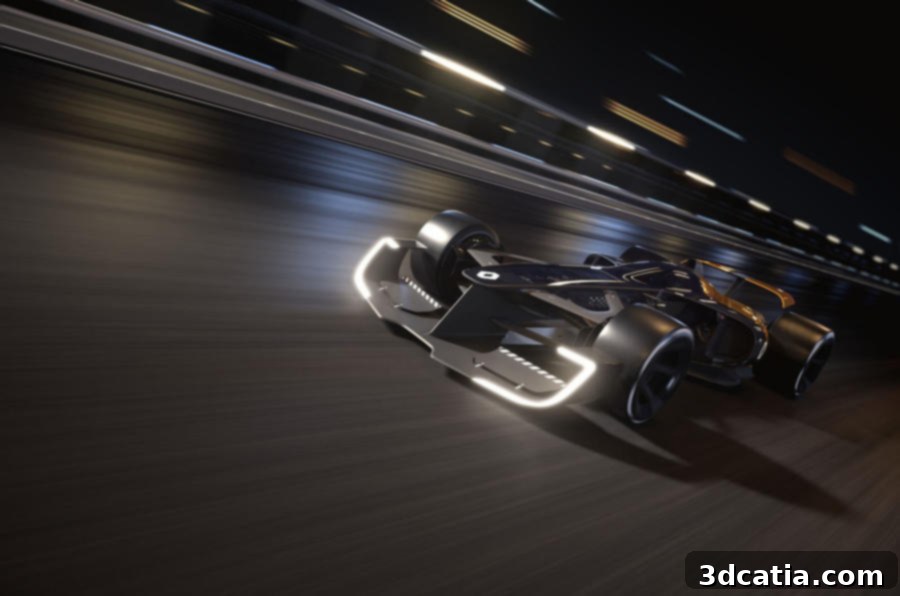
The Renault RS 2027 is only a concept car, but could be the future of racing.
Furthermore, the RS 2027 envisions a future F1 where technological advancements are not merely performance-driven but also enhance the fan experience. Features like active LED lighting integrated into the wheels, displaying information about the car’s energy consumption or driver’s position, could revolutionize how audiences interact with the race. While the RS 2027 remains a concept, its detailed blueprint of innovation, combining hybrid power, advanced lightweight materials, and eco-conscious manufacturing through 3D printing, paints a compelling picture of what Formula 1 could and perhaps should look like by 2027 and beyond. It serves as a powerful testament to Renault’s foresight and their dedication to pushing the boundaries of automotive engineering and sustainable motorsports. This vision could inspire rule changes, foster new partnerships between automotive and additive manufacturing industries, and ultimately lead to an even more thrilling and relevant global racing series.
To delve deeper into the intricate details of this innovative F1 racecar concept and explore Renault’s comprehensive vision, interested enthusiasts are encouraged to visit their official website by clicking here.
The unveiling of the Renault RS 2027 sparks critical questions about the evolution of motorsports. Do you believe that Renault’s RS 2027 truly embodies the future of racing, setting a new benchmark for performance and sustainability? Do you anticipate an even greater integration of 3D printing technology into the design and production of future racecars, from F1 to other categories, unlocking new possibilities in customization, weight reduction, and material science? We invite you to share your thoughts, predictions, and insights by leaving a comment below or engaging with us on our vibrant Facebook and Twitter pages!