
3D Printing Solves a Murder: How Additive Manufacturing is Revolutionizing Forensic Evidence
In a compelling narrative that blurs the lines between advanced technology and forensic investigation, additive manufacturing, more commonly known as 3D printing, has emerged as a pivotal tool in securing a murder conviction in the United Kingdom. This groundbreaking application saw a precisely 3D printed skull, developed through a collaborative effort between the Hampshire and the Isle of Wight Constabulary and academic experts, presented as a crucial piece of evidence. Its tangible presence in the courtroom played a significant role in guiding the jury towards a unanimous decision, ultimately leading to the conviction of four individuals responsible for a brutal attack after an intensive eight-week trial.
The tragic case centered on Frazer Brabant, who was discovered with severe head injuries in his front garden on October 31, 2019. Despite initially surviving the horrific assault, Mr. Brabant suffered catastrophic brain damage, plunging him into a coma. He valiantly fought for months but ultimately succumbed to his injuries on January 21, 2020, at the tender age of 31. The 3D printed replica of his skull served as an indispensable visual aid, allowing the court to fully grasp the profound extent of his injuries and vividly comprehend the immense trauma inflicted upon the victim’s head. Traditional medical diagrams and verbal descriptions, while informative, often fall short in conveying the visceral reality of such damage to a lay jury. The physical model bypassed this limitation, offering an unparalleled level of clarity.

The victim Frazer Brabant (photo credits: Hampshire Constabulary)
The Genesis of the 3D Printed Skull: A Fusion of Science and Justice
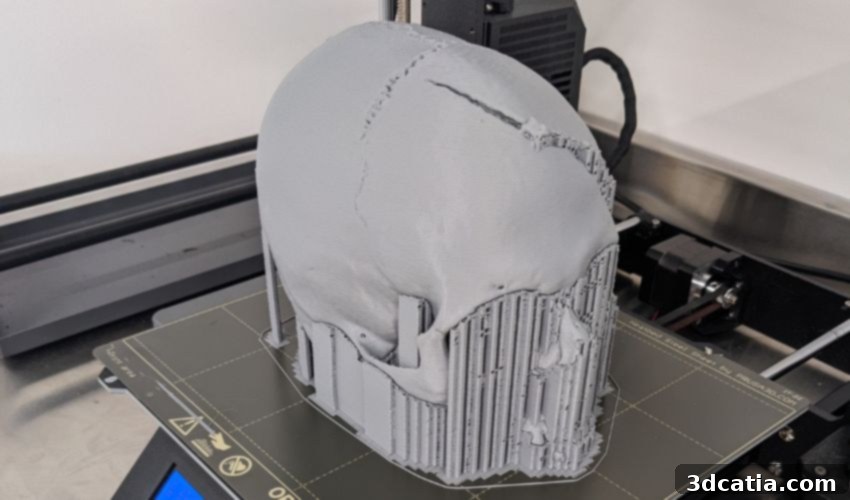
The intricate design and fabrication of the forensic 3D printed skull were spearheaded by Dr. Morgan Lowther, a Senior Scientific Official from the University of Portsmouth’s School of Mechanical and Design Engineering. His expertise proved instrumental in translating complex medical data into a physically understandable exhibit. Dr. Lowther recounted his experience, highlighting the profound impact the model had during the proceedings: “I attended the trial and saw the pathologist use the model to help guide the jury through the injuries sustained by the victim. He was able to demonstrate the order in which the blows were likely to have occurred, whether they’d come at the same angle, and whether they would have come from the same assailant or the same weapon.” This ability to spatially demonstrate the sequence and nature of the assault provided a level of detail and comprehension unattainable through verbal testimony alone. He further emphasized the model’s critical role: “The jurors were allowed to handle the model and take it into the deliberation room. I think it was a valuable piece of evidence to help them understand the severity of the attack.” The tactile interaction allowed jurors to form a deeper, more personal connection with the evidence, fostering a clearer understanding of the profound violence inflicted.
From CT Scan to Courtroom Exhibit: The Technical Process
While the final 3D printing was meticulously carried out by experts at the University of Portsmouth, the crucial initial stages involved close collaboration with the Imaging Unit. This unit played an indispensable role in acquiring and processing the foundational data. They utilized high-resolution data from a Computed Tomography (CT) scan, which precisely mapped every injury sustained by the victim. CT scans, renowned for their ability to generate detailed cross-sectional images of the body, provided an unparalleled level of anatomical fidelity. These hospital-quality x-ray scans ensured that the intricate anatomy of the skull, including all fractures and points of impact, could be recreated with exceptional accuracy in a digital model.
Once the digital model was meticulously prepared and verified for accuracy, Dr. Lowther and his dedicated team proceeded with the physical fabrication. They employed a widely accessible and reliable desktop FDM (Fused Deposition Modeling) 3D printer, specifically a Prusa i3, and used Polylactic Acid (PLA) filament as the printing material. PLA is a popular choice in such applications due to its ease of use, biodegradability, and ability to produce models with sufficient detail for educational and forensic purposes. To ensure that the model was robust enough for repeated handling by jurors and for presentation in court without risk of damage, an internal scaffold was ingeniously integrated into its design. This structural reinforcement guaranteed the model’s stability and longevity as a key piece of forensic evidence.
Beyond the Courtroom: The Expanding Role of 3D Printing in Medicine and Forensics
While the use of a 3D printed skull in a murder trial might initially strike some as an unusual or futuristic concept, it represents a natural extension of established practices within the medical field. Additive manufacturing technologies are already widely utilized for creating highly accurate anatomical models, particularly in hospitals and research institutions worldwide. Techniques such as material jetting, which allows for multi-material and multi-color printing with high detail, and FDM, as demonstrated in this particular case for its cost-effectiveness and versatility, are routinely employed. These models are invaluable for a variety of critical applications, including intricate surgical planning, where surgeons can practice complex procedures on a patient-specific replica, thereby reducing risks and improving outcomes. They are also fundamental to advanced medical training, enabling students and professionals to gain hands-on experience with realistic anatomical structures.
This recent example from the justice system compellingly illustrates the burgeoning utility of 3D printing beyond its traditional medical confines. Its capacity to transform complex, often abstract, medical information into a tangible, easily digestible format holds immense potential for the legal sphere. By providing juries with a physical representation of injuries, internal structures, or even crime scene elements, 3D printing can bridge the gap between expert medical jargon and the comprehension level of laypersons. This not only enhances clarity but also ensures a more equitable and informed decision-making process in courtrooms.
Paul Taylor, the National Policing Chief Scientific Advisor, profoundly underscored the transformative potential of this technology:
“This innovative use of 3D technology to explain evidence to jurors shows how policing is embracing the rapid developments in scanning and computer modelling capabilities to bring justice to victims. We are rapidly moving to a place where presentations of expert evidence can and should be more than 2D pictures. I anticipate 3D printing will continue to help make complex evidence more accessible for jurors in years to come.”
Taylor’s insightful commentary highlights a paradigm shift in how forensic evidence can be presented. The traditional reliance on static 2D images or purely verbal descriptions can often fail to fully convey the three-dimensional reality of injuries or crime scenes. 3D printing offers a dynamic, interactive solution that aligns with the rapid advancements in digital imaging and computational modeling. This case sets a precedent, demonstrating that tangible, physical evidence derived from digital data can significantly enhance juror understanding and contribute to fairer legal outcomes. The future of forensic science and criminal justice is undoubtedly moving towards a more immersive and technologically advanced approach, with additive manufacturing at its forefront. This ensures that the pursuit of justice is supported by the clearest, most impactful presentation of facts possible.
You can read more about this pioneering case on the University of Portsmouth’s website HERE. What are your thoughts on the groundbreaking use of a 3D printed skull to help secure a murder conviction? How do you envision the role of additive manufacturing evolving in police work, criminal investigations, and the broader justice system in the coming years? Share your insights and perspectives in a comment below or engage with us on ourLinkedIn,Facebook, andTwitter pages! Don’t forget to sign up for our free weeklyNewsletter here to receive the latest 3D printing news and developments straight to your inbox! You can also find all our informative videos and content on ourYouTube channel.