
Revolutionary 3D Printed Polymers: Rice University Engineers Create Bullet-Resistant Lattice Structures
In a groundbreaking development that pushes the boundaries of materials science and additive manufacturing, researchers at Rice University in Houston have successfully engineered 3D printed polymer cubes capable of withstanding the impact of high-velocity projectiles, including bullets. This remarkable achievement is not merely about using stronger materials, but rather about a sophisticated design philosophy rooted in the precise arrangement of internal lattice structures within these polymer cubes. These intricate designs significantly enhance the material’s inherent resistance, allowing the innovative cubes to absorb and dissipate the immense kinetic energy of a bullet traveling at an astounding 5.8 kilometers per second – an impact force comparable to striking a diamond. This pioneering work vividly underscores the critical importance of design for additive manufacturing (DfAM). The meticulous design phase, particularly when leveraging the freedoms offered by 3D printing, has a profound and transformative impact on the final properties of the manufactured part, influencing factors such as its weight, structural integrity, and overall strength. This research not only showcases the potential of advanced polymers but also highlights how intelligent design can unlock unprecedented performance from seemingly conventional materials.
The inspiration behind these exceptionally durable polymer cubes comes from highly complex theoretical structures known as tubulanes. These fascinating microscopic arrangements, first predicted by visionary chemist Ray Baughman from the University of Texas at Dallas and physicist Douglas Galvão, are composed of cross-linked carbon nanotubes. Theoretically, such structures promise extraordinary strength due to their unique molecular geometry and interconnected network. For decades, these tubulane designs remained largely theoretical constructs, their intricate forms too challenging to manifest using traditional manufacturing techniques. However, the rapid evolution of additive manufacturing technologies has finally made it possible to translate these theoretical concepts into tangible, physical objects. The American scientists at Rice University embarked on a project to recreate these forms, starting with existing tubulane models. They then digitally enlarged and meticulously reworked these designs using specialized software, optimizing them for 3D printing. The refined designs were subsequently brought to life through advanced 3D printing processes, utilizing robust polymer materials. This interdisciplinary approach, merging theoretical chemistry with cutting-edge manufacturing, has opened new avenues for creating materials with previously unimaginable properties.
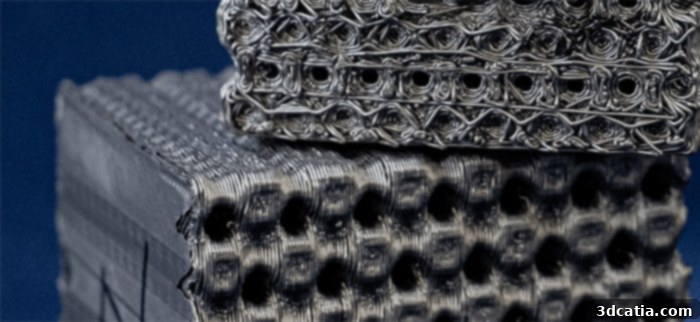
The researchers were inspired by tubular shapes to create the innovative lattice structures.
Unlocking Extreme Resistance: The Science Behind Tubulane-Inspired Cubes
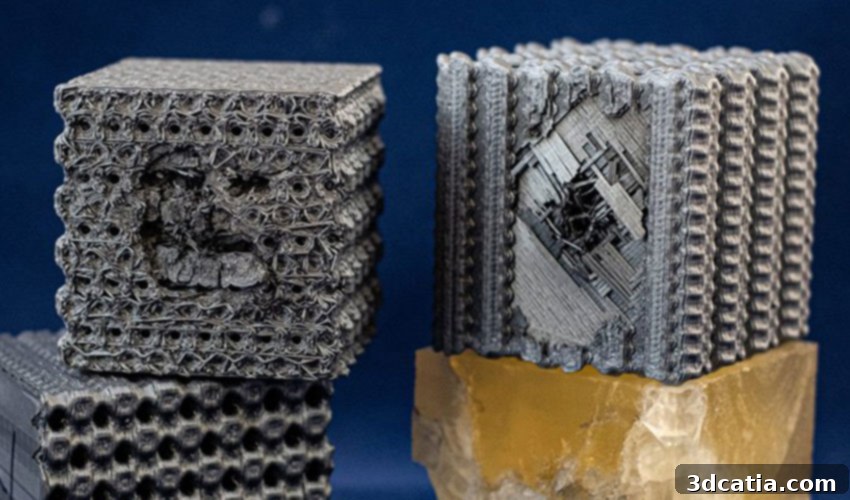
To thoroughly assess the impact of tubulane-inspired structures on the material’s strength, the Rice University team conducted a series of rigorous tests. The methodology involved a direct comparison between a conventionally structured polymer cube and one engineered with the novel lattice design. The initial phase of the experiment involved creating a standard, solid polymer cube. As anticipated, when subjected to the high-velocity bullet impact, this conventional cube failed dramatically, suffering extensive damage and demonstrating minimal resistance. This served as a baseline to highlight the transformative potential of the engineered design. Following this, the researchers 3D printed a second cube, this time meticulously imitating the complex, interconnected structure of the theoretical carbon nanotubes – the tubulane design. The results were astounding: according to the research team, this innovatively designed cube proved to be an astonishing 10 times more resistant than its solid counterpart. When a bullet was fired at the incredible speed of 5.8 kilometers per second, it was not only slowed but effectively trapped within the second internal layer of the porous polymer structure, preventing its full penetration and subsequent damage to the entire block.
Seyed Mohammad Sajadi, the lead author of this pivotal research, provided a vivid account of the experimental observations. He stated, “The bullet was trapped in the second layer of the structure while in the solid block, the cracks spread throughout the structure.” This key observation revealed a fundamental difference in how the two materials reacted to extreme force. In the solid polymer, the energy of the impact generated widespread fractures and catastrophic failure. In contrast, the tubulane-inspired lattice structure exhibited a localized and controlled response. Further laboratory tests utilizing a press to apply controlled pressure demonstrated how this unique porous polymer network facilitated the tubulane blocks to collapse on themselves in a highly efficient manner, critically without cracking. This controlled collapse mechanism is central to the material’s superior energy absorption capabilities. Instead of fracturing, the intricate lattice distorts and compacts, effectively dissipating the kinetic energy of the impactor. This discovery challenges conventional assumptions about material strength and porosity, suggesting that a well-designed porous structure can, paradoxically, lead to enhanced resilience.
Beyond Bullet Resistance: Applications and Future Impact of Advanced Polymer Structures
Initially, the research team, like many in materials science, had a working hypothesis that a porous structure would inherently reduce the stopping power or overall strength of an object. This is a common intuition, as solid materials are often perceived as more robust. However, through diligent practical tests and meticulous observation, they discovered a counter-intuitive but profoundly significant principle: the specific lattice structure of these 3D printed polymer cubes possesses an extraordinary ability to compress and collapse in a controlled fashion. This remarkable mechanism allows the material to absorb the kinetic energy of an impact far more effectively than a solid block, thereby controlling and mitigating damage. This revelation opens up a myriad of possibilities, particularly demonstrating how more affordable and lightweight polymers could be utilized as advanced alternatives to traditional, heavier metals for creating exceptionally durable parts and components. The economic and environmental benefits of using lighter polymer-based materials, which are often easier to process and potentially recyclable, are immense.
The implications of this research are far-reaching and extend across several critical sectors. We can envision transformative applications in fields such as aerospace, where lighter yet incredibly strong components could lead to significant fuel efficiency improvements and enhanced safety. Imagine aircraft parts, satellite components, or drone casings that are both lighter and more resistant to impacts. In the medical sector, this technology could revolutionize the design of patient-specific implants, prosthetic devices, and protective gear, offering superior strength-to-weight ratios and potentially better biocompatibility. For instance, customized cranial implants or joint replacements could be designed to withstand unexpected forces without compromising comfort or weight. The defense industry stands to benefit immensely from these innovations, with potential applications in advanced ballistic protection for personnel and vehicles, lightweight armor systems, and protective casings for sensitive electronic equipment. The ability to create materials that are not only bullet-resistant but also lighter and potentially more cost-effective could lead to next-generation protective solutions. This breakthrough signifies a paradigm shift in how we approach material design, demonstrating that intelligent structural engineering can unlock unprecedented performance from readily available polymers, driving innovation and efficiency across diverse industries. For more in-depth information about this fascinating research, you can visit the official Rice University website HERE.
The Future of Material Science: Innovation Through Additive Manufacturing
The work by Rice University’s engineers represents a significant leap forward in material science, challenging established notions about strength and durability. By harnessing the precision and flexibility of 3D printing, they have transformed theoretical concepts like tubulanes into practical, high-performance materials. This research highlights the power of biomimicry and theoretical physics when combined with advanced manufacturing techniques. The capacity of these polymer cubes to absorb kinetic energy through controlled deformation, rather than succumbing to brittle fracture, positions them as ideal candidates for a wide array of applications demanding exceptional impact resistance. Furthermore, the ability to utilize less expensive and lighter polymers instead of traditional metals offers considerable advantages in terms of manufacturing cost, ease of processing, and potential for sustainable material cycles. As additive manufacturing continues to evolve, the possibilities for creating bespoke materials with tailored properties will only expand, leading to innovations that were once confined to the realm of science fiction.
This pioneering research not only solves a specific challenge – creating bullet-resistant polymers – but also provides a robust framework for future material design. It emphasizes that material strength is not solely dependent on the chemical composition of a substance but can be dramatically enhanced through sophisticated architectural design at the micro and macro levels. By carefully controlling the internal geometry and porosity, engineers can fine-tune material responses to various stresses and impacts. This approach will likely inspire further exploration into other theoretical structures and their potential translation into practical, high-performance materials through 3D printing. The advancements at Rice University are a testament to the ongoing revolution in additive manufacturing and its profound impact on engineering, promising a future where materials are not just strong, but intelligently strong, designed from the ground up to meet the most demanding challenges across diverse industries.
*Cover Picture Credits: Jeff Fitlow / Rice University
What are your thoughts on these revolutionary 3D printed bullet-resistant polymer cubes? Do you foresee these materials playing a major role in future aerospace, medical, or defense applications? We’d love to hear your insights! Let us know your comments below or engage with us on our Facebook and Twitter pages! Don’t miss out on the latest advancements and breaking news in the world of 3D printing. Sign up for our free weekly Newsletter to receive all the essential updates and cutting-edge innovations directly to your inbox!