
Revolutionizing Ocean Conservation: Low-Cost 3D Printed Microscopes and AI for Microplastic Detection
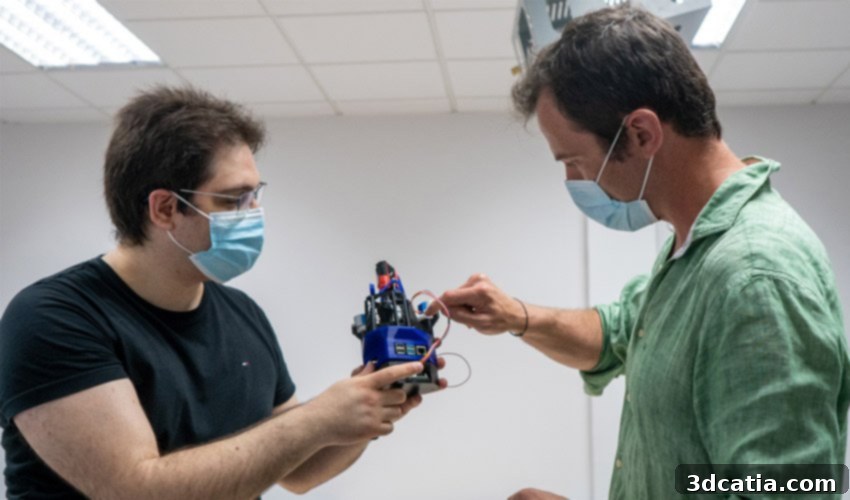
The global challenge of microplastic pollution in our oceans demands innovative and accessible solutions. Researchers from the Microplastics Detection Assistant (MIDAS) team, a collaborative effort involving the Polytechnic University of Cartagena, Navantia, S.M.E, and the Cartagena Institute of Oceanographic Research, have spearheaded a groundbreaking initiative. They have successfully developed a low-cost, 3D printed microscope specifically designed to detect microplastics found on the seafloor and within marine ecosystems. This pioneering project leverages the power of additive manufacturing to create a practical, open-source tool, empowering scientists, educators, and environmentalists worldwide to join the critical fight against ocean plastic pollution.
Microplastics, defined as small plastic fragments less than 0.5 centimeters in size, represent an insidious form of pollution. Their minute dimensions make them invisible to the naked eye, complicating detection and remediation efforts significantly. Traditional methods often require expensive, specialized equipment, limiting broad-scale application. The MIDAS team’s approach addresses this bottleneck directly by utilizing 3D printing technology, drastically reducing manufacturing costs and making advanced detection capabilities more widely available. By offering an open-source design, they aim to foster a collaborative environment where other research groups and environmental organizations can easily replicate and deploy these microscopes, accelerating global monitoring and research efforts.
The Pervasive Threat of Microplastics: An Environmental Crisis
For decades, the world’s seas and oceans have borne the brunt of relentless plastic pollution, with statistics revealing a truly alarming picture. While larger plastic debris, such as bottles, bags, and fishing nets, are readily visible floating on the surface or washed ashore, microplastics pose a far more complex and pervasive threat. These tiny fragments infiltrate every corner of the marine environment, from the surface waters to the deepest ocean trenches, and even polar ice caps. Their diminutive size belies their immense danger, as they are often ingested by a vast array of marine organisms, from microscopic plankton to large whales, disrupting digestive systems, causing internal injuries, and potentially transferring harmful chemicals up the food chain, ultimately impacting human health.
The scale of microplastic contamination is staggering. Scientists estimate that billions of plastic particles are floating in our oceans, with countless more embedded in sediments. Some microplastics are incredibly small, sometimes 70 times smaller than the thickness of a human hair, making their identification an arduous task. These particles originate from various sources, including the breakdown of larger plastic items, microbeads from cosmetics, synthetic textile fibers, and industrial spills. Once in the environment, they are incredibly persistent, resisting degradation for hundreds, if not thousands, of years. The pervasive nature of this pollution necessitates comprehensive strategies for identification, mitigation, and cleanup, a monumental task that requires innovation and collaborative spirit.
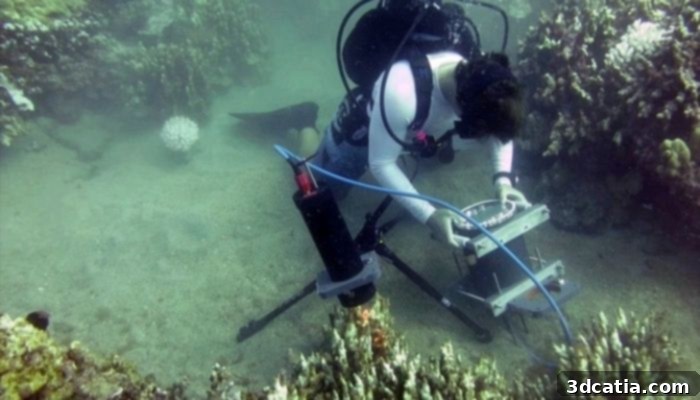
Photo Credits: Scripps Institution of Oceanography
Innovative Solutions: 3D Printing and Artificial Intelligence for Detection
The MIDAS project, which formally commenced in May 2021, set out with an ambitious dual objective: not only to fabricate a highly functional and affordable device for microplastic detection but also to integrate a sophisticated suite of algorithms based on artificial intelligence (AI). This strategic combination of hardware innovation and intelligent software aims to significantly streamline and enhance the accuracy of microplastic identification. By automating the analysis process, AI can process vast amounts of microscopic imagery, identify suspicious particles, and potentially classify different types of microplastics with greater speed and consistency than human observation alone, thereby transforming the efficiency of marine environmental monitoring.
Just ten months after its inception, the MIDAS team successfully reached its crucial first phase. This milestone culminated in the physical manufacture of the prototype 3D printed microscope and the successful execution of initial image acquisition tests. These preliminary tests, as highlighted in a press release from the Polytechnic University of Cartagena, confirmed the device’s capability to capture high-quality microscopic images essential for identifying tiny plastic fragments. Building on this success, the researchers are now poised to embark on the next critical phase: the intensive development and refinement of the AI-powered algorithms. Once these algorithms are robustly developed and tested, the team will proceed to collect real-world samples from the port of Cartagena, using these samples to validate and fine-tune their complete detection system in an operational environment.
The Power of 3D Printing: Democratizing Scientific Tools
The choice of 3D printing for developing the microscope is central to the project’s success and its long-term vision. Additive manufacturing offers unparalleled advantages for creating bespoke scientific instruments, particularly when cost-effectiveness and rapid prototyping are critical. Unlike traditional manufacturing methods that require expensive tooling and extensive lead times, 3D printing allows for quick iteration and custom design at a fraction of the cost. This significantly lowers the barrier to entry for research institutions and educational centers, making advanced scientific tools accessible to a broader audience. Moreover, the open-source nature of the design means that the specifications and blueprints for the microscope can be freely shared and modified, encouraging global collaboration and localized production, which is vital for widespread environmental monitoring efforts.
The potential impact of this low-cost, open-source approach extends beyond just research. It empowers citizen science initiatives and educational programs to actively participate in data collection and environmental stewardship. By providing an affordable and easy-to-use tool, the MIDAS project fosters a greater understanding of microplastic pollution among students and the general public. This educational component is crucial for raising awareness and inspiring future generations to pursue careers in environmental science and conservation. The ability to print these microscopes on demand also means that regions with limited resources can still access cutting-edge detection technology, democratizing scientific inquiry and environmental protection efforts worldwide.
Community Engagement and Future Horizons
The innovative nature and practical utility of the MIDAS project have already garnered significant interest from various educational centers within the region of Murcia. These institutions are enthusiastic about incorporating the 3D printed microscopes into their curricula and research activities. Plans are underway for these centers to begin printing multiple units of the microscopes, which will be utilized for the observation and analysis of water and sediment samples collected from local beaches. This direct engagement fosters hands-on learning and provides students with practical experience in environmental monitoring, cultivating a new generation of informed and engaged environmental scientists and advocates.
Further emphasizing its commitment to public awareness and education, the MIDAS team has scheduled a special workshop for June, coinciding with the annual celebration of Ocean’s Day. This event will be dedicated to a series of activities centered around the pressing issue of plastic pollution in marine environments. Participants at the workshop will have the unique opportunity to actively engage in the study by taking water samples using specialized nets. Following collection, they will then analyze these samples under the newly developed 3D printed microscopes, directly observing microplastic particles. This interactive approach aims to deepen understanding, highlight the gravity of the problem, and demonstrate how accessible technology can contribute to scientific discovery and environmental protection.
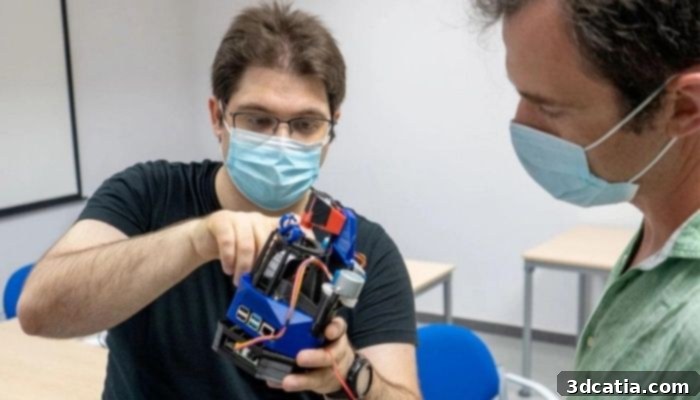
Photo Credits: Microplastics Detection Asistant
Looking ahead, the MIDAS team has ambitious plans to further enhance the capabilities of their microplastic detection system. A key area of future research involves the development of specialized dyes designed to rapidly identify tiny plastic particles. These dyes would work in conjunction with the project’s advanced algorithms, allowing for faster and more precise recognition of microplastics within complex environmental samples. This innovation could significantly reduce the time and effort required for analysis, making large-scale monitoring more feasible and efficient. The overarching vision for this project aligns seamlessly with the broader European initiative for sustainable blue growth, which champions the responsible and sustainable exploitation of ocean resources while ensuring their ecological integrity and minimizing environmental impact. By contributing to improved marine monitoring, the MIDAS project directly supports the goals of a healthy, productive, and resilient ocean environment for future generations.
The collective effort of the Polytechnic University of Cartagena, Navantia, S.M.E, and the Cartagena Institute of Oceanographic Research, through the MIDAS project, exemplifies how interdisciplinary collaboration and technological innovation can address urgent environmental challenges. By providing an affordable, accessible, and intelligent solution for microplastic detection, they are not only advancing scientific research but also empowering communities and fostering a global movement towards cleaner, healthier oceans. This initiative serves as a beacon of hope, demonstrating that with ingenuity and commitment, humanity can develop the tools necessary to understand, monitor, and ultimately mitigate the pervasive threat of plastic pollution.
What are your thoughts on this innovative initiative to combat microplastic pollution? Share your insights and comments below or engage with us on our Linkedin, Facebook, and Twitter pages! Don’t forget to sign up for our free weekly Newsletter here to receive the latest 3D printing news straight to your inbox! You can also find all our videos on our YouTube channel.