
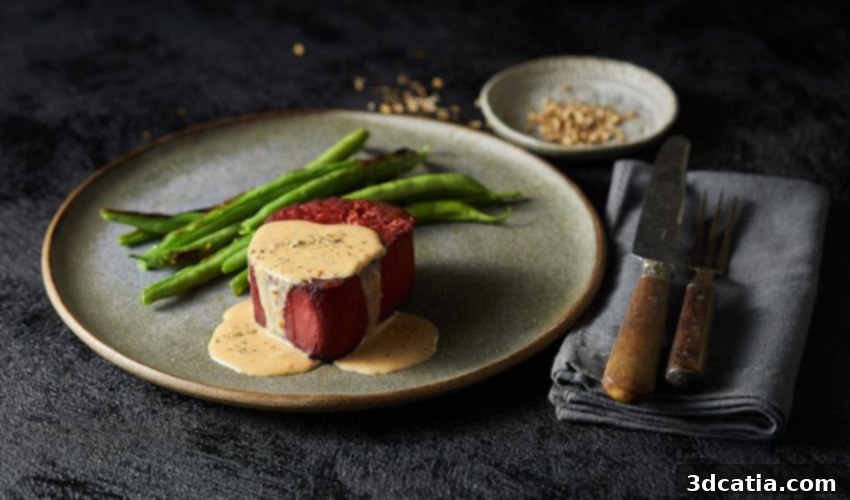
The Future of Food: Revolutionary Advances in 3D Printed Meat and Sustainable Protein Alternatives
The culinary landscape is undergoing a profound transformation, driven by extraordinary advancements in alternative meat production. What once seemed like concepts confined to science fiction novels or futuristic films – phrases like “3D printed vegan meat” or “meat bioprinted in space” – are now tangible realities. In an era increasingly defined by urgent environmental challenges and the rapid depletion of natural resources, sustainability has transcended its role as a mere marketing buzzword; it has become a fundamental pillar of vital business strategy and global survival. Consequently, the past few years have witnessed a surge in investment, with a growing number of pioneering companies dedicating significant resources to the research and development of sophisticated 3D printed meat alternatives. As these innovations reshape our understanding of food production, let’s delve into the most exciting breakthroughs in the sector, reviewing the latest developments that promise to revolutionize how we eat and sustain ourselves.
Redefine Meat: Cultivating an Alt-Steak Era by Selling Technology, Not Just Steaks
On June 30, 2020, Redefine Meat made a groundbreaking announcement: the unveiling of the world’s first plant-based Alt-Steak. This significant reveal was coupled with news that market testing for their innovative product would commence later that year at an exclusive selection of high-end restaurants. The Alt-Steak, meticulously crafted using Redefine Meat’s patent-pending 3D meat printing technology, has been engineered to perfectly mimic the sensory experience of traditional beef steak. It boasts the authentic texture, rich flavor profile, and appealing appearance of its animal-based counterpart, crucially combined with a cost-efficiency that enables large-scale industrial production. This dual focus on quality and scalability positions Redefine Meat as a key player in the alternative protein market.
The development process for Redefine Meat’s Alt-Steak was an intensive, collaborative effort. The company engaged in extensive consultations with a diverse array of experts, including leading butchers, acclaimed chefs, seasoned food technologists, and discerning taste experts. Through this rigorous research and development, Redefine Meat successfully managed to digitally map over 70 distinct sensorial parameters into its Alt-Steak products. These parameters cover every crucial aspect of a premium beef cut, from its fibrous texture and succulent juiciness to the intricate distribution of fat and the satisfying mouthfeel. The innovation extends to the very core of their manufacturing process: the company’s proprietary industrial-scale 3D food printers meticulously construct each Alt-Steak product, layer by precise layer. This is achieved using Redefine Meat’s unique plant-based formulations, categorized as Alt-Muscle, Alt-Fat, and Alt-Blood. By leveraging multi-material printing capabilities, Redefine Meat can produce sustainable, high-protein, cholesterol-free steaks that not only look and cook like beef but also deliver an indistinguishable taste experience.
Eshchar Ben-Shitrit, CEO and Co-Founder of Redefine Meat, articulated the profound impact of their work: “Today’s announcement marks the start of a new era in alternative meat – the Alt-Steak era – driven by production processes that will accelerate the development of a wide range of alt-meat products and create a sustainable alternative to raising and eating animals. The importance of using 3D printing technology to achieve texture, color and flavor cannot be overstated. By using separate formulations for muscle, fat and blood, we can focus on each individual aspect of creating the perfect Alt-Steak product.” This strategic approach underscores their commitment to addressing the complexities of meat’s sensory profile through advanced technological solutions, paving the way for a more sustainable and ethical food system without compromising on consumer satisfaction.
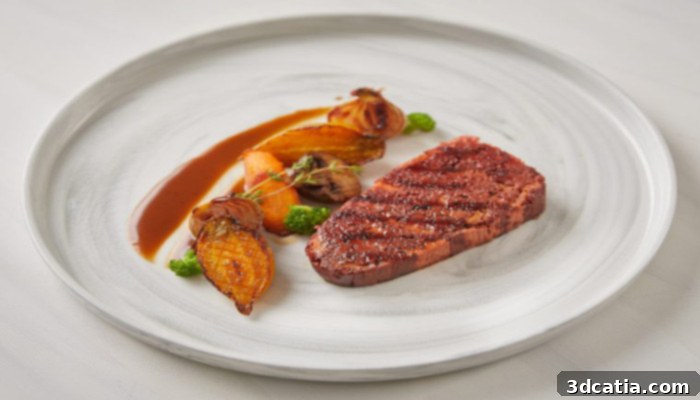
Image credits: Redefine Meat
Following its initial market debut, Redefine Meat’s Alt-Steak products were meticulously put through their paces at a select number of prestigious chef restaurants. The invaluable feedback garnered from these high-level culinary professionals and experienced butchers is crucial for refining the product. This iterative process of testing and feedback will inform the subsequent ramp-up in the production of their industrial 3D meat printers and refined alt-meat formulations, all in preparation for broader market distribution slated for 2021. It is particularly noteworthy that Redefine Meat’s overarching business model centers on selling its advanced technology and proprietary plant-based materials, rather than directly marketing the finished meat products. This strategic focus aims to empower food manufacturers and distributors to integrate their sustainable solutions into existing supply chains, thereby accelerating the global adoption of high-quality alternative meats.
Aleph Farms: Pioneering Cell-Based 3D Printed Meat Beyond Earth
While Redefine Meat focuses on providing the technology, another innovative Israeli startup, Aleph Farms, is charting a course towards directly commercializing actual 3D printed meat products. Recognized as a frontrunner in the cultivated meat sector, Aleph Farms has garnered international attention for its groundbreaking achievements, including the remarkable feat of 3D printing meat in space. This extraordinary accomplishment not only showcased the robustness and versatility of their technology but also hinted at the potential for sustainable food production in challenging and isolated environments, pushing the boundaries of what is considered possible in meat cultivation.
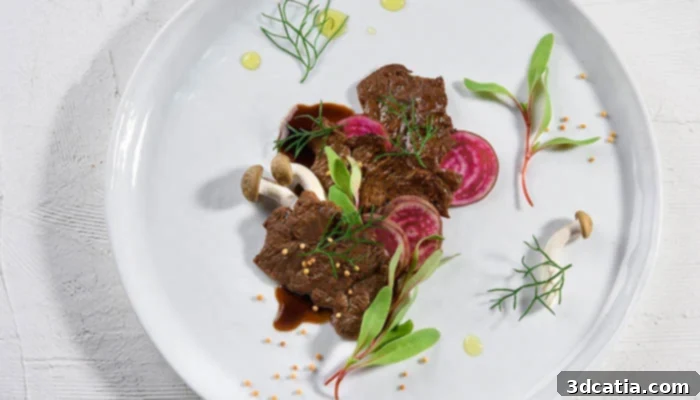
Image credits: Aleph Farms
Aleph Farms has recently introduced a sophisticated methodology that precisely replicates the natural process of muscle regeneration found within a cow’s body, but crucially, under meticulously controlled laboratory conditions. This innovative technique distinguishes itself significantly from plant-based 3D printed meat alternatives by utilizing actual bovine cells. By cultivating these cells, Aleph Farms aims to perfectly reproduce the authentic taste, familiar texture, and visual appeal of conventional meat. Their advanced method involves carefully mixing various types of cells – including fat cells, muscle fibers, and blood vessel cells, among others – which are then transformed into a specialized bio-ink. This bio-ink serves as the fundamental building block for their sophisticated 3D bioprinting process, allowing them to construct complex, structured meat products that are biologically identical to those derived from animals, yet produced without animal slaughter or the extensive environmental footprint of traditional livestock farming.
NOVAMEAT: Championing Vegan and Sustainable 3D Printed Protein
From Spain, NOVAMEAT emerges as another influential player in the alternative meat sector, renowned for its pioneering work in 3D printing vegan meat. This innovative firm has developed proprietary technology capable of ingeniously reorganizing the nanofibers derived from vegetable proteins, allowing them to mimic the intricate structure and functionality of animal proteins. This scientific breakthrough is central to their ability to create highly realistic and satisfying plant-based meat alternatives. Typically, NOVAMEAT’s core materials for their 3D printing process include sustainably sourced ingredients such as peas, seaweed, and rice. These ingredients are chosen not only for their nutritional value but also for their textural properties and their capacity to be finely processed into the essential components needed for their bio-inks.
Not long ago, the Barcelona-based startup proudly unveiled its latest innovation: a meticulously crafted 3D printed pork product, which they dubbed “pork skewer 2.0.” To achieve the authentic taste and texture of pork, the company employed a sophisticated composition comprising pea isolate and rice isolate for protein and structure, extra-virgin olive oil for fat and mouthfeel, brown seaweed extract for binding and nutritional benefits, beet juice concentrate for natural color, and carefully selected natural aromas to replicate the distinct flavor profile of pork. This level of detail in ingredient selection demonstrates NOVAMEAT’s commitment to creating products that are not only sustainable but also highly palatable and convincing for consumers.
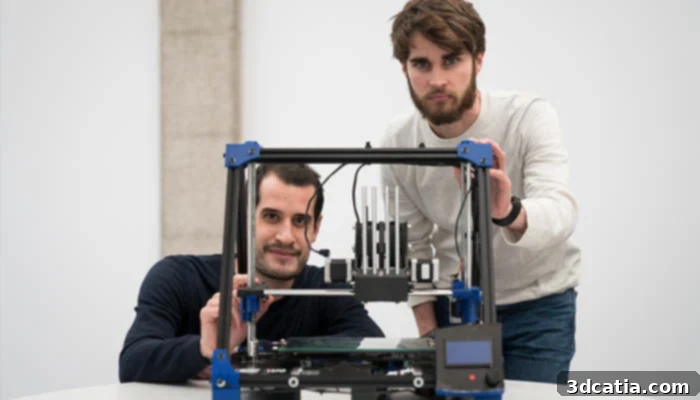
The meat is 3D printed using an extrusion based process. (Image credits: NOVAMEAT)
NOVAMEAT is driven by a clear mission: to foster a more humane and ecologically sustainable global food system through its cutting-edge technology. Guiseppe Scionti, the visionary CEO and co-founder, elaborated on this commitment, stating, “We are testing alternative ingredients (proteins, fibers and oils) to tune the flavorings and improve sustainability. Demonstrating that our technology works with a variety of ingredients is aimed at supporting biodiversity, to fight unsustainable monocultures and deforestation practices.” This statement highlights a comprehensive approach that extends beyond mere meat replication. NOVAMEAT is actively exploring a diverse palette of plant-based components, not only to enhance the sensory attributes and nutritional value of their products but also to champion agricultural biodiversity. By doing so, they directly confront the environmental degradation associated with unsustainable monoculture farming and widespread deforestation, offering a truly holistic solution to the challenges of modern food production.
MeaTech: Accelerating Towards Industrial-Scale Meat Production
Joining the competitive global race for the most advanced 3D printed meat, MeaTech distinguishes itself as one of the newest and most ambitious entrants. This Israeli startup has strategically positioned itself with an unwavering focus on achieving 3D printed meat at an unprecedented scale, specifically targeting the vast industrial market. Unlike some competitors who might cater to niche culinary experiences or provide the underlying technology, MeaTech’s core mission is to mass-produce cultivated meat efficiently and affordably. According to Sharon Fima, CEO and co-founder, the company’s ambitious aim is to dramatically accelerate production, envisioning a future where one unit of their product can be created every few seconds. He articulates this vision clearly: “Our goal is to show that 3D printing meat can be done in an industrial capacity.” This objective addresses one of the most significant hurdles in the cultivated meat industry: moving from laboratory prototypes to viable, large-scale commercial output.
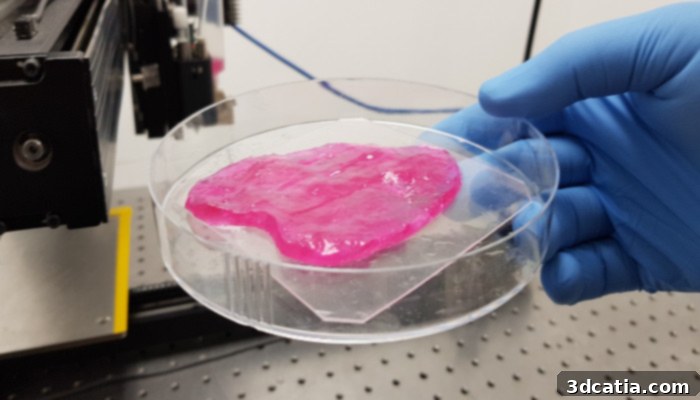
Image credits: MeaTech
With numerous companies like Redefine Meat, Aleph Farms, NOVAMEAT, and MeaTech all promising a revolutionary transformation in how meat is produced and consumed, the natural question on many minds is: when will these innovative products transition from controlled laboratory environments to our everyday kitchen tables? According to insights from some key industry players, including MeaTech, the realm of 3D printing meat is still predominantly in its intensive development stage. While significant strides are being made, the widespread availability for mass consumption is generally anticipated no sooner than two to three years from now. Therefore, while the excitement is palpable, consumers should not yet expect to find 3D printed meat readily available at their local supermarkets. However, the landscape is rapidly evolving. Redefine Meat’s announcement regarding the distribution of their Alt-Steak to several European restaurants later this year signifies a crucial step towards market integration. This phased introduction will allow for real-world feedback and refinement. As such, it is an opportune time to stay tuned for more breaking news, in-depth reviews, and further developments from this dynamic and rapidly advancing sector. The future of food is not just on the horizon; it is being printed, layer by delicious layer.
What are your thoughts on these groundbreaking developments within the 3D printed meat sector? Are you eager to experience the innovative Alt-Steak or other cultivated meat products? Share your opinions and engage with us in the comments section below, or connect with us on our social media channels: Facebook and Twitter! For those who want to stay at the forefront of this culinary revolution, remember to sign up for our free weekly Newsletter. It’s your direct link to receiving all the latest news on technological progress, cutting-edge research, and insights from more visionary entrepreneurs in the 3D printing world, delivered straight to your inbox!