
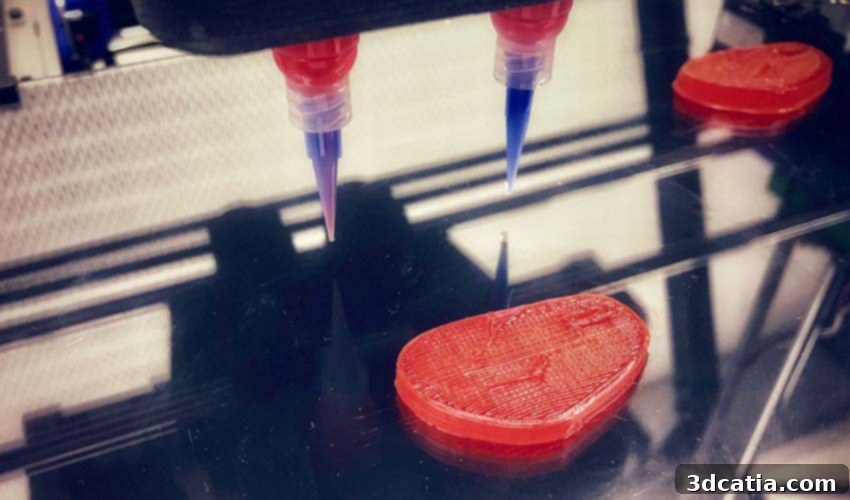
Innovating the Future of Food: The Rise of 3D Printed and Cultured Meat
The global livestock farming industry presents an increasingly critical challenge to our planet’s environmental health and sustainability. It is a major contributor to climate change, primarily through the release of methane, a potent greenhouse gas that is 20 to 30 times more effective at trapping heat than carbon dioxide. The sector’s environmental footprint is staggering: it surpasses the entire global transportation sector in greenhouse gas emissions and utilizes nearly 30% of the Earth’s ice-free land surface. Furthermore, it stands as the leading cause of deforestation, land degradation, pervasive water pollution, and desertification. Adding to this complex issue, the Food and Agriculture Organization of the United Nations (FAO) projects a daunting 70% increase in global meat demand by 2050, threatening to exacerbate these environmental pressures significantly.
Beyond the dire environmental consequences, livestock farming also raises profound concerns regarding public health and animal welfare. Issues such as widespread food contamination and the escalating crisis of antibiotic resistance are direct repercussions of conventional animal agriculture practices. From an ethical standpoint, the conditions under which billions of animals are raised and slaughtered annually are deeply troubling. The FAO estimates that approximately 56 billion land animals are raised for food each year, often enduring extremely poor living conditions. These multifaceted threats demand urgent attention and innovative solutions. Can humanity explore alternative, sustainable methods of producing meat for those who continue to desire it, without compromising planetary health or ethical standards?
Understanding 3D Printed Plant-Based Meat: A Sustainable Alternative
One direct approach to mitigating the environmental impact of meat production is to reduce or eliminate meat consumption. While a growing movement towards veganism and vegetarianism has gained traction in recent years, these dietary choices still represent a minority in many Western societies, typically ranging from 1-10% in European countries and 5-7% in the US, though higher in some regions like India due to cultural factors. For a significant portion of the global population, a complete shift away from meat is not yet a viable or desired option. This is where meat substitutes play a crucial role, offering an alternative for consumers who wish to enjoy the experience of eating meat without the associated environmental and ethical drawbacks of animal agriculture.
Given the advancements in modern technology, particularly in additive manufacturing, a revolutionary category of meat alternatives is emerging: 3D printed plant-based meat. Just as 3D printing technologies have permeated and transformed numerous industries, they are now poised to disrupt the food sector. This innovative application allows for the creation of plant-based meat products that are not only significantly more environmentally friendly but also offer unprecedented levels of customization, potential affordability, and a positive impact on animal welfare. Unlike earlier plant-based alternatives, 3D printing offers the ability to precisely control the structure and texture of the final product, mimicking the complex fibrous nature of animal meat more accurately than ever before.
It is important to acknowledge the existing landscape of plant-based meat alternatives that have paved the way for this innovation. Brands like Beyond Meat, with its acclaimed ‘Beyond Burger’ – touted as “the world’s first plant-based burger that looks, cooks, and satisfies like beef” – and Impossible Foods, with its ‘Impossible Burger’ that “delivers all the flavour, aroma and beefiness of meat from cows,” have successfully captured a segment of the market. These products have demonstrated the feasibility of creating delicious and satisfying meat experiences from plants. However, while these options excel in mimicking ground meat textures, 3D printing introduces a new dimension: the ability to replicate the intricate fibrous structures required for whole-cut meat, such as steaks. This precision offers a significant leap forward in creating plant-based alternatives that truly emulate traditional animal meat in all its forms.
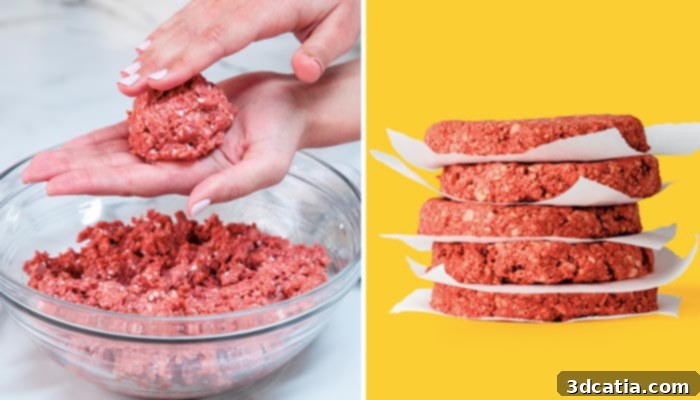
On the left Beyond Meat’s Beyond Beef, on the right Impossible Foods’ Impossible Burger | Credits: Beyond Meat (left), Impossible Foods (right)
The Innovative Edge: How 3D Printing Transforms Plant-Based Meat
The innovation behind 3D printed plant-based meat lies primarily in its ability to precisely control and replicate the complex fibrous structures found in animal muscle. This is a game-changer, moving beyond ground meat substitutes to create convincing whole-cut alternatives. A pioneer in this field is Giuseppe Scionti, an expert in tissue engineering and biomedicine and the founder of Novameat, a Barcelona-based startup dedicated to developing technology for 3D printing a plant-based steak. Scionti’s extensive background in bioprinting at the Polytechnic University of Catalonia (UPC), where he spent over a decade creating various tissues, including a prototype human ear, provided the foundational insight for his venture. He realized the remarkable textural similarity between bioprinted human tissue and actual animal tissue.
This profound realization sparked the idea for Novameat. Scionti recounts, “I realised that if 3D printers could imitate human tissue that well, then I could generate a meat substitute that had the same texture as animal tissue.” This revelation led him to patent his unique technology and establish Novameat in June 2018, aiming to create plant-based products that closely mimic the sensory experience of traditional meat. The core of this innovation is texture. Scionti emphasizes, “I was able to generate something that had the same texture as meat, I was able to create micro fibres that resembled not just a hamburger or a meatball but had the same texture as muscular tissue.” Unlike most existing plant-based alternatives, which are typically designed for ground applications like burgers or meatballs, Novameat’s creation comes in the form of a steak, demonstrating a significant advancement in structural complexity.
Giuseppe Scionti’s approach highlights four critical parameters for a successful meat alternative: taste, texture, appearance, and nutritional properties. While plant-based hamburgers have largely mastered taste and soy extrusion has made strides in texture, Novameat aims to achieve excellence in all four simultaneously, with a particular focus on perfecting texture. Scionti holds a patent on the microstrain technology that meticulously imitates the natural texture of meat tissue. As he explained to El País, he adapts techniques from cultured meat production and bioprinting to work with plant-based materials. The challenge lies in reorganizing vegetable protein nanofibers to replicate the intricate structure of animal proteins, requiring a deep understanding of animal tissue histology. The specialized 3D printer used by Novameat, developed by the CIM Foundation, precisely deposits a pea and seaweed protein paste according to CAD-designed patterns, layer by layer, to build a convincing steak.
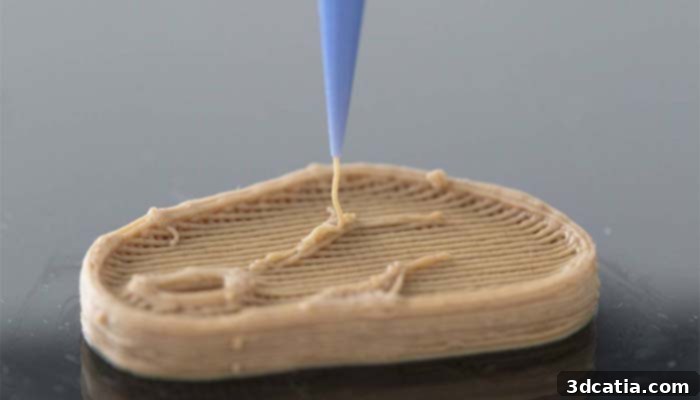
The 3D printed steak being printed onto the printing plate | Credits: El País, Consuelo Bautista
Another prominent player in this innovative space is Redefine Meat (formerly Jet-Eat), an Israeli startup. Eshchar Ben-Shitrit, CEO of Redefine Meat, articulates the urgent need for such innovation: “It’s clear that the food industry today lacks the tools and the technologies to tackle the challenge of finding good alternatives to animals as providers of meat. Moreover, it’s clear that growing animals for food is not sustainable given the increasing population size, the booming demand for meat in Asia, and the inherent inefficiencies and pollution associated with meat production and mainly beef.” Redefine Meat is developing a technology to produce plant-based alternatives that truly mimic whole cuts of meat – specifically steaks, roasts, and stews – using natural and sustainable ingredients. Their unique methodology combines proprietary 3D printing technology with advanced digital modeling and meticulously crafted plant-based food formulations to introduce an entirely new category of meat alternatives.
The path to widespread availability for these pioneering products is a key focus for companies like Redefine Meat. Eshchar Ben-Shitrit shared their progress, stating, “In the past months, working with chefs and butchers, we have served hundreds of our products to unexpecting consumers. Their first response is always: I can’t believe it’s not meat and how can we get more of these?” This positive consumer feedback underscores the potential for market acceptance. While scaling production is a challenge, Ben-Shitrit notes it’s not a major hurdle given that their raw materials are already significantly more affordable than beef. Redefine Meat’s ambition extends beyond just developing a new food product; they aim to establish a transformative food technology platform that will enable the rapid introduction of superior meat alternatives that currently do not exist. Their plan is to roll out their specialized 3D printing machines by 2021, offering a broad range of capabilities beyond producing a single item. This strategic timeline allows them to perfect and enhance the technology, ensuring consumers and partners can fully benefit from its potential in the long term.
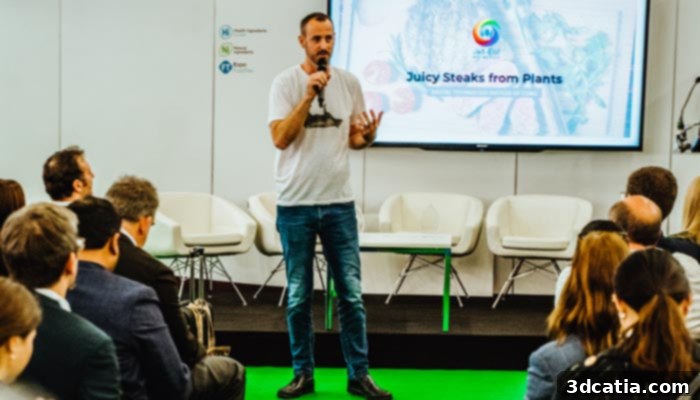
CEO Eshchar Ben-Shitrit, Redefine Meat (Jet-Eat) was selected as one of the winners of 2018 Food Accelerator Network Program competition organised by EIT (European Institute of Innovation & Technology) | Credits: bites
The integration of these advanced technologies into a broader food production system promises significant benefits, including substantial reductions in food waste, packaging materials, and the need for traditional livestock farming. Redefine Meat, for instance, projects that their 3D printed meat will decrease environmental impact by an impressive 95%, offer a cholesterol-free product, and ultimately be more affordable than conventional animal meat. Eshchar Ben-Shitrit envisions a collaborative future: “We would like to see others using these new digital capabilities to solve real problems in the food system. We would like to see an ecosystem emerging where each company takes care of different parts of the value chain, as today we need to do everything ourselves or with close partners.” He anticipates a transformative shift within five years, predicting that several food items will transition to digital production, leading to enhanced product quality, more efficient supply chains, and the widespread availability of mass-customized food options.
Consumer acceptance will be a crucial factor in the success of 3D printed meat, and appearance plays a significant role, as Giuseppe Scionti points out. While early prototypes may not yet be entirely convincing in appearance, ongoing advancements are rapidly addressing this. By refining three-dimensional models to incorporate greater complexity, such as distinct differentiation between areas mimicking fat and muscle or other tissues, the visual appeal can be dramatically improved. Beyond aesthetics, one of the most compelling characteristics of 3D printed meat is its inherent customizability. This flexibility suggests that these products will not be limited to supermarket shelves. They could be tailored to meet the specific nutritional and textural needs of diverse clients, from space exploration companies and high-end restaurants seeking bespoke culinary experiences to hospitals requiring specialized dietary solutions. This opens up entirely new markets and applications for meat production.
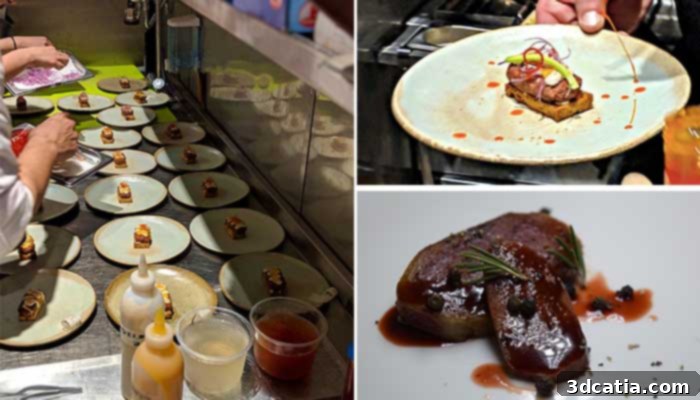
Redefine Meat’s 3D printed plant-based beef, integrated in a restaurant dish | Credits: Redefine Meat (Jet-Eat)
Cultured Meat: Growing Meat Without Animals
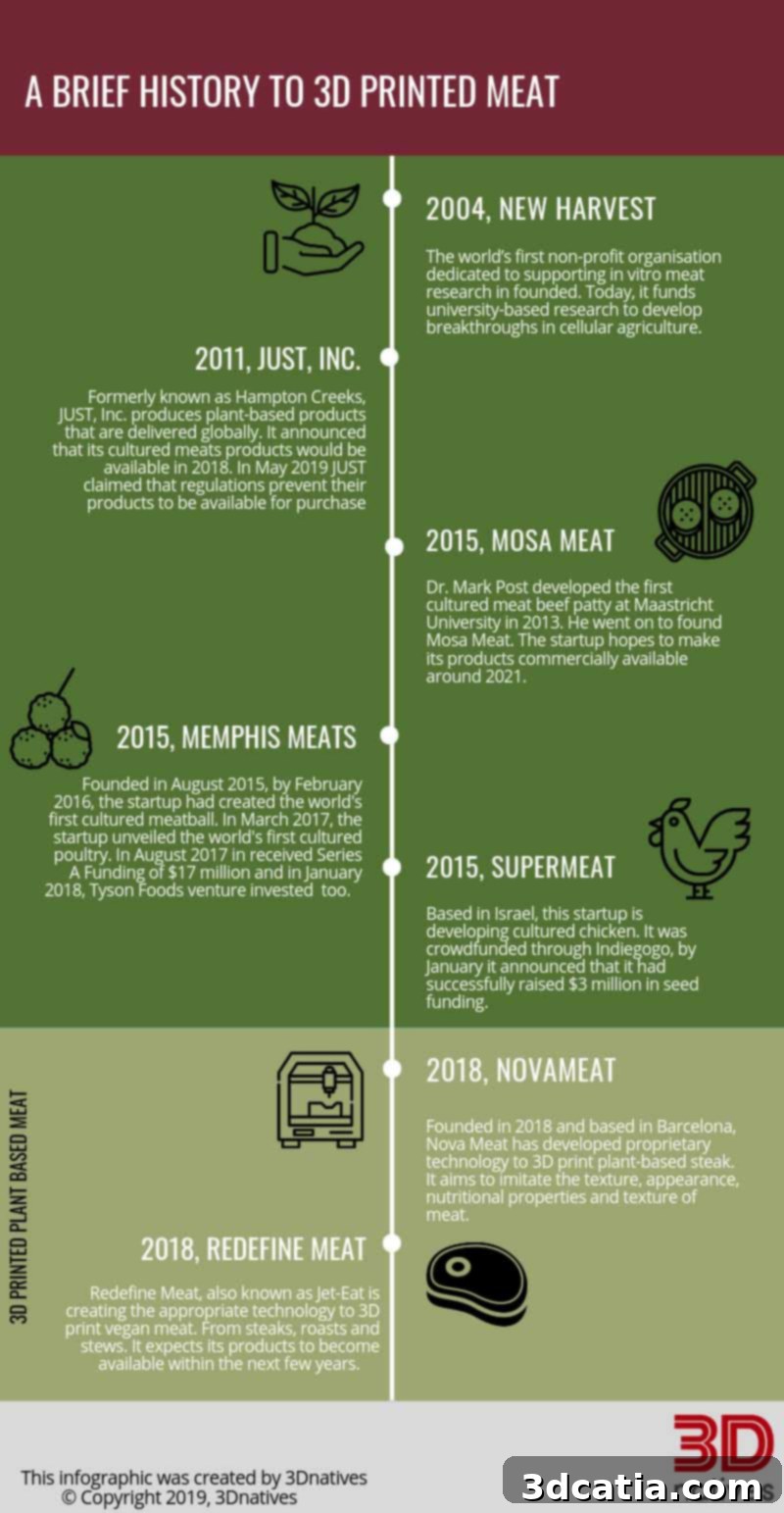
3D printed plant-based meat is not the only innovation poised to revolutionize the meat industry. Cultured meat, often referred to as lab-grown meat or clean meat, represents another paradigm shift. Instead of harvesting meat from slaughtered animals, cultured meat is produced through the in-vitro cultivation of animal cells. The foundational concept isn’t entirely new; in-vitro cultivation of muscular fibers was demonstrated as early as 1971 by Russell Ross. However, it was Jason Matheny who brought the idea into popular discourse in the early 2000s, co-authoring a pivotal paper on cultured meat production and subsequently founding New Harvest in 2004. New Harvest is a non-profit institute dedicated to advancing cellular agriculture, the broader field encompassing the production of agricultural products from cell cultures rather than whole organisms.
New Harvest plays a critical role in fostering breakthroughs in cellular agriculture by providing funding for university-based research. Their mission is to champion a “post-animal bioeconomy,” envisioning a future where “animal products are harvested from cell cultures, not animals, to feed a growing global population sustainably and affordably.” The scientific community has been actively engaged in this research, with over 30 laboratories worldwide reporting cultured meat projects by 2012. A landmark moment occurred in August 2013, when Dr. Mark Post at Maastricht University unveiled the world’s first lab-grown beef patty, which was famously cooked and tasted at a press conference in London, signaling a tangible step towards commercialization.
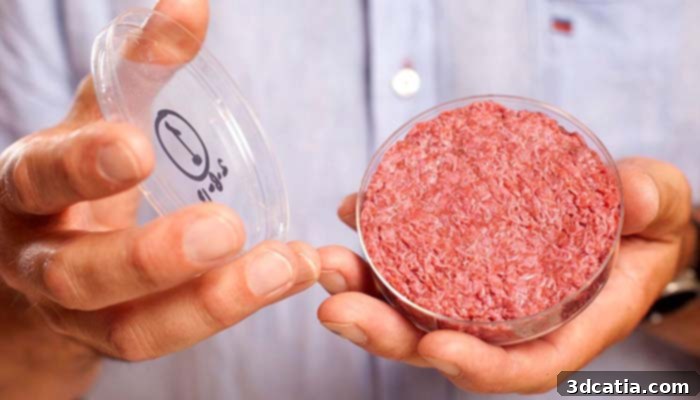
The cultured beef patty developed by Dr. Mark Post | Credits: Mosa Meat
So, how exactly is cultured meat produced? The process leverages cellular agriculture principles: a small sample of cells from a specific animal species and tissue type is obtained (without harming the animal). These cells are then placed on a scaffold and bathed in a nutrient-rich serum within a bioreactor, an environment carefully designed to promote their growth and proliferation. As the cells multiply, they form muscle tissue, which is then harvested. Cultured meat is often termed “clean meat” due to several distinct advantages. Firstly, it significantly reduces the risk of bacterial contamination, a common issue with conventionally farmed meat, as it is produced in a sterile, controlled environment. Secondly, its production process is dramatically more environmentally friendly, generating up to 96% lower greenhouse gas emissions compared to traditional livestock farming, alongside substantial reductions in land and water use.
While the initial cost of cultured meat was exceptionally high – the first beef patty, funded by Google co-founder Sergey Brin, took two years to develop and cost approximately $330,000 – significant progress has been made in bringing prices down. Just three and a half years later, reports indicated that the cost for a similar patty had plummeted to around $11.36. More recently, startups like Memphis Meats in San Francisco are producing clean meat for as low as $40 per gram, a remarkable reduction from previous figures. The ultimate goal for the industry is to achieve price parity, or even surpass, conventionally produced meat, making clean meat an economically viable and attractive option for consumers worldwide. Experts believe this goal could be realized within the next decade, provided there is adequate support and funding for ongoing clean meat research, which organizations like New Harvest contend is still insufficient but absolutely vital for accelerating innovation.

Because cells can only grow about 0.5mm thick in culture, it is easier to grow ground meat than something thick like a steak explains New Harvest | Credits: New Harvest
The Potential Synergy: 3D Printing’s Impact on Cultured Meat
The advancements in 3D bioprinting, a specialized application of 3D printing, suggest a natural convergence with cultured meat technology. Recent breakthroughs, such as researchers from Tel-Aviv successfully bioprinting a tiny human heart complete with complex vascular networks and capillaries using a patient’s own cells and biomaterials, highlight the sophistication of current bioprinting capabilities. Given this, it seems entirely plausible that bioprinting technology is advanced enough to significantly enhance the creation of structured meat from animal cells. While cultured meat has excelled at growing ground meat, creating whole-cut structures like steaks with the characteristic marbling and fibrous texture remains a challenge. This is precisely where 3D printing can step in.
Meera Zassenhaus, Community Engagement Associate at New Harvest, acknowledges this uncharted but promising territory. She shared her insights: “The application of bioprinting to cellular agriculture is uncharted territory. However, just because nothing has been done to unite the two just yet doesn’t mean that kind of interdisciplinary work isn’t extremely promising. I think a lot of scaffold materials could be 3D printed.” She further highlights a critical barrier: the lack of dedicated funding streams for such interdisciplinary research, stating, “There hasn’t been much research into agricultural applications of traditional medical research because there isn’t a funding stream for that kind of work. That’s why we exist, to provide that funding stream at the academic level. But the same funding problem exists for those who want to explore bioprinting in a cell agriculture context.” Giuseppe Scionti of Novameat also sees this potential, suggesting his company’s technology could serve as a valuable scaffolding solution for cultured meat enterprises, providing the structural integrity and texture needed for whole-cut products.
Zassenhaus further elaborated on why meat might be an ideal target for bioprinting innovation: “Unlike organs, meat doesn’t have to be successfully integrated back into a living body, so it seems like a reasonable starting point for a lot of biomedical innovations. I don’t know of anybody that has bioprinted meat but that doesn’t mean it hasn’t been done yet. It seems like it would be a lot faster and more efficient than bioprinting a heart. If we can 3D print a heart, I don’t see why we couldn’t do the same for meat.” This perspective underscores the immense potential for 3D bioprinting to create complex, structured cultured meat products that closely replicate conventional meat, overcoming the current limitations of growing only thin layers of cells and thus revolutionizing the texture and appearance of lab-grown meat. This synergy could ultimately accelerate the commercialization and widespread acceptance of truly sustainable meat alternatives.

The team at Memphis Meats preparing dishes using their cultured meat (chicken and beef) | Credits: Memphis Meats
The Future of Meat: Scaling Up and Commercialization
The trajectory of 3D printed plant-based meat is clearly set towards commercial viability, with scaling up production being the next critical phase. For cultured meat, companies like Mosa Meat, founded by Dr. Mark Post in 2015, anticipate bringing cultured beef burgers to market within the next few years. They face significant scientific challenges, particularly in developing a cost-effective and ethically sound replacement for fetal bovine serum (FBS), which is currently used as a growth medium. As Mosa Meat explains, “We cannot use this in future, both because it’s incompatible with our animal welfare standards, and also because it’s inherently unsustainable given cultured meat itself will reduce the herd of cows worldwide. So far, we’ve achieved serum-free medium that works, but we still need to optimise it.” Overcoming this hurdle is paramount for achieving true sustainability and widespread consumer acceptance.
Beyond scientific optimization, the future success of these meat alternatives hinges on efficient scaled-up production and a significant reduction in price to achieve competitiveness with traditional meat. The industry has already seen rapid growth and substantial investment. Following Mosa Meat, two other prominent startups launched in 2015 with the goal of commercializing cultured meat: Memphis Meats, based in California, and SuperMeat, based in Israel. Both companies have attracted considerable funding in recent years, propelling their research and development efforts. Memphis Meats, for instance, has ambitious plans to bring its innovative products to market as early as 2021, signaling a rapid acceleration towards consumer availability.
Winston Churchill’s prescient declaration in 1931, envisioning a future where “Fifty years hence, we shall escape the absurdity of growing a whole chicken in order to eat the breast or wing by growing these parts separately under a suitable medium,” perfectly encapsulates the direction these innovations are taking. While his timeline was optimistic, the underlying vision of cellular agriculture and precision food production is now rapidly becoming a reality. The ongoing development of 3D printed plant-based meat and cultured meat represents not just technological advancements, but a fundamental shift towards more ethical, sustainable, and efficient food systems. This evolution is undoubtedly good news for both our planet and the countless animals impacted by traditional agriculture, offering a path to feed a growing global population without devastating our natural resources.
For more in-depth information on these groundbreaking developments, please visit the following websites: Novameat, Redefine Meat (Jet-Eat), New Harvest, Mosa Meat, and Memphis Meats.
Would you be willing to try 3D printed plant-based meat or cultured meat? Share your thoughts and opinions in the comments below, or connect with us on our Facebook and Twitter pages! Don’t forget to subscribe to our free weekly Newsletter to stay updated on all the latest news and innovations in 3D printing, delivered directly to your inbox!