
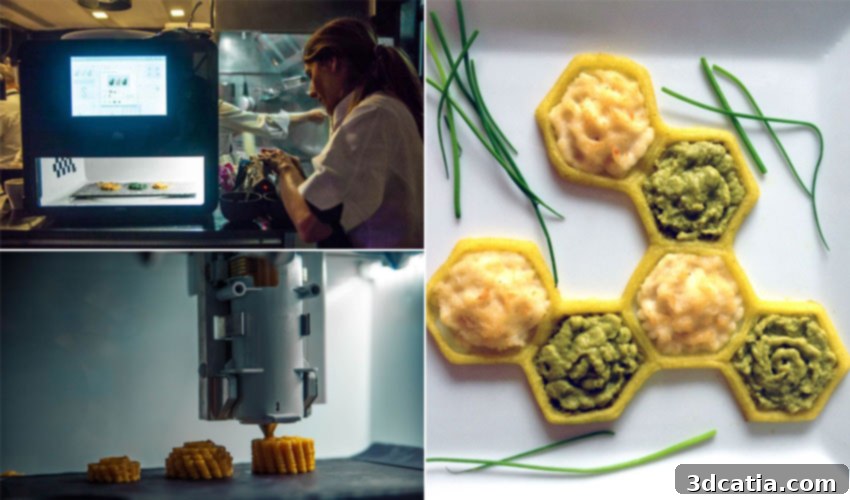
The Future is Served: Exploring the Revolutionary World of 3D Food Printing
We all remember the legendary Replicator from Star Trek, a futuristic device capable of transforming any molecule into delicious, edible food and complete dishes. While this concept once existed solely within the realm of science fiction, the rapid advancements in 3D food printing are bringing us remarkably closer to that vision. This isn’t a fantasy from a sci-fi movie; it’s a tangible reality, with innovations constantly emerging from various manufacturers. Companies like 3D Systems with their ChefJet, Natural Machines offering the Foodini, and BeeHex’s Chef3D are at the forefront, creating machines that can produce an astonishing array of culinary delights. From intricate chocolate designs and bespoke pasta shapes to decorative sugar confections and even entire meals, the possibilities seem almost boundless. This burgeoning technology promises to reshape our kitchens and dining experiences in ways we are only just beginning to comprehend.

An homage to the Versailles palace, printed in sugar.
The journey of 3D food printing, like many revolutionary technologies, began with humble, often imperfect, results. Early printed objects, typically made from sugar paste, were more novelties than truly desirable consumables. However, the relentless pace of technological development, particularly in additive manufacturing techniques like Fused Deposition Modeling (FDM), has dramatically refined the process. Today, we can produce not only complex chocolates and elaborate sweets but also genuinely delicious and nutritious real meals. One of the most compelling advantages of this technology is the unparalleled freedom of design it offers, a benefit already widely recognized and utilized in other industrial sectors. 3D printers excel at creating highly intricate shapes and geometries that would be exceedingly difficult, if not impossible, to achieve using conventional culinary methods. While many early food printers were simply modified FDM machines, specialized 3D food printers are now being developed, dedicated to producing exquisite and sophisticated dishes. This raises profound questions about the future of our food: Can 3D food printing truly revolutionize the way we cook, prepare, and even perceive our meals?
Pioneering 3D Food Printing in the Cosmos: NASA’s Vision
The story of modern 3D food printing often traces its roots back to space exploration. In 2006, NASA initiated pioneering research into 3D printed food, a project many consider the true genesis of this field. This early work laid the groundwork for a more ambitious undertaking in 2013: the NASA Advanced Food Program. Its core mission was straightforward yet critical: how to optimally nourish a team of astronauts during extended space missions? Collaborating with BeeHex, NASA developed the Chef3D, a groundbreaking printer capable of 3D printing a pizza. The printed pizza simply needed a final bake in an oven to be ready for consumption, demonstrating a remarkable step towards convenient space-ready meals.
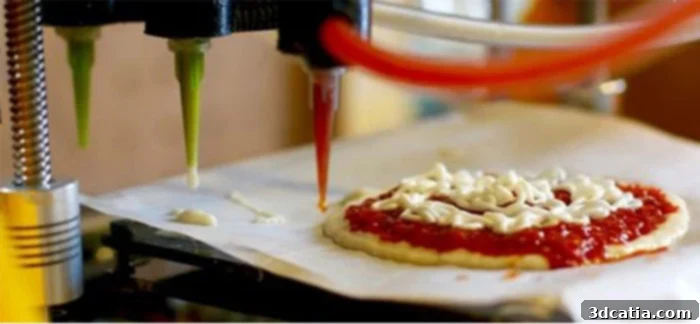
NASA had 3D printed a pizza.
Fundamentally, 3D food printing in space travel aims to enhance the quality of life for astronauts, making longer missions more appealing and sustainable. NASA quickly recognized the substantial advantages this new technology offered. Traditional space food, often monotonous and unappetizing, contributed to morale issues and reduced nutritional intake over prolonged periods. The ability to print diverse and visually appealing meals holds immense potential to combat this problem, transforming the dining experience for those living and working far from Earth. This innovative approach ensures not only nutritional adequacy but also psychological well-being through varied and customized culinary options.
Looking back at our terrestrial world, it becomes clear that the opportunities for employing 3D food printing technology within the broader food industry are vast and multifaceted. A growing number of visionary companies have identified these opportunities and are actively leveraging 3D printing to create a wide range of customized food products, spanning from intricate sugar and chocolate creations to various pasta shapes and even complex vegetable mixes. This innovative paradigm shift promises to bring unprecedented customization and efficiency to food production.
Why Embrace 3D Food Printing? Unveiling Its Unique Advantages
A common question arises: if you can readily purchase the same food at a supermarket or prepare it yourself, why invest energy and resources into this nascent technology? The skepticism is understandable, as 3D printing remains a relatively new concept for many, particularly when applied to food. We had the opportunity to discuss this with Lynette Kucsma, CEO and co-founder of Natural Machines, the company behind the Foodini 3D food printer. She recounts a similar initial reaction to the idea of 3D printed food, often perceiving it as akin to highly processed, packaged goods. However, Lynette explains that the goal of 3D food printing is, in fact, quite the opposite. “If you eat something from food manufacturers, which includes pretty much anything packaged in the supermarket, then you’re essentially eating 3D printed food,” she notes. In conventional manufacturing, food often travels through machines into molds. With a 3D printer, however, consumers regain control, making their own informed decisions about the exact ingredients they wish to use, thus offering a level of transparency and customization currently unavailable in mass-produced items.

The Foodini 3D food printer from Natural Machines.
Lynette further highlights the diverse opportunities that 3D printing brings to the culinary world. Jonathan Blutinger, a researcher at the innovative Creative Machines Lab, echoes Lynette’s observations, affirming that the technology indeed enables the creation of truly novel and innovative food products. Beyond mere aesthetics, 3D food printing facilitates the exploration of new taste profiles and textures, while simultaneously holding significant promise for benefiting consumer health and fostering environmental sustainability. The last major revolution in home food preparation, the microwave oven, arrived more than 70 years ago. It is unequivocally time for a new wave of innovation, and 3D food printing appears poised to lead this charge, offering a paradigm shift in how we approach food production and consumption.
Revolutionizing Health and Personalized Nutrition
In our increasingly fast-paced modern world, despite a growing awareness of healthy eating, fast-food consumption continues to rise, children often reject nutritious vegetables like broccoli, and many individuals struggle to absorb all the essential nutrients they require. Lynette Kucsma believes that 3D food printing could fundamentally alter this dynamic. “People will again be more interested in what they eat,” she explains, predicting a resurgence of engagement with our diets once people are introduced to the concept of printing their own food. Kucsma herself uses a Foodini at home and has experienced numerous positive outcomes, especially with her children. For instance, while her children might typically refuse plain spinach, they enthusiastically consume it when it’s transformed into engaging shapes like small dinosaurs, illustrating the power of visual appeal in promoting healthier eating habits.
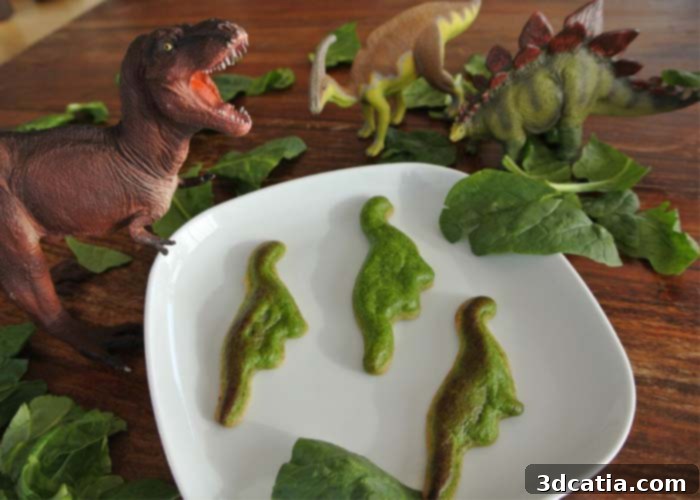
Furthermore, the ability to select and customize ingredients empowers individuals to cater precisely to special dietary needs and preferences. In contemporary society, trends such as veganism, gluten-free, and dairy-free diets are rapidly gaining traction. 3D printing offers an ideal solution to accommodate these evolving requirements, allowing for the precise formulation of meals free from specific allergens or animal products, tailored to individual health and ethical choices.
Beyond catering to preferences, 3D food printing can seamlessly integrate with other smart devices to create a truly personalized nutritional experience. Lynette highlights an illustrative example: imagine your fitness tracker monitoring your calorie expenditure, then wirelessly transferring this data to your 3D food printer, which subsequently creates a customized meal perfectly balanced to meet your immediate nutritional needs. While this level of data integration holds immense promise for optimizing personal health, it also naturally raises important discussions about data privacy and the ethical implications of such highly personalized systems.
Jonathan Blutinger elaborated on another critical application aimed at public health: the use of 3D food printing in hospitals and care facilities. In such environments, meals can be precisely adapted to each patient’s unique nutritional requirements, potentially significantly improving recovery rates and overall well-being. Projects like Biozoon exemplify this, offering a dignified alternative to patients who struggle with chewing or swallowing. Instead of being presented with uniform, unappealing purees, their food can be 3D printed into more pleasant and recognizable forms with a modified, easier-to-consume consistency. This innovative approach enhances the standard of living for countless individuals in elderly care homes and hospitals, making mealtime a more enjoyable and therapeutic experience.
The young Columbia University researcher envisions an even more profound application: “A seamless integration of medicine into human nutrition could be made more pleasant. This means not only adapting food to nutritional needs, but also integrating individual medications into it.” This vision suggests a future where food isn’t just sustenance but a personalized delivery system for health and healing, precisely tailored to each person’s medical needs.
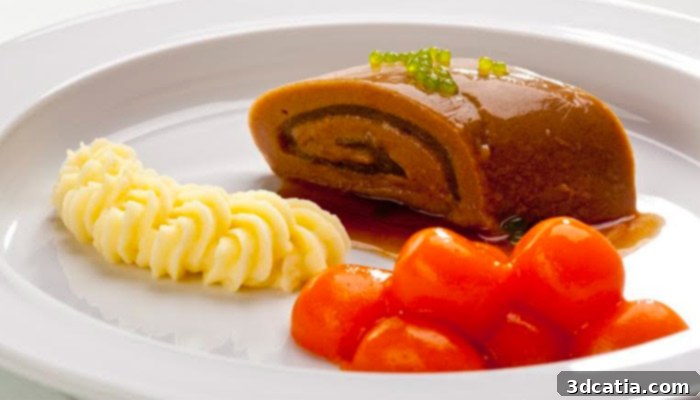
Biozoon 3D printed dishes.
Addressing Food Waste and Promoting Sustainability
Additive manufacturing in food also presents compelling solutions for addressing global food security and sustainability challenges, particularly by enabling the utilization of alternative protein sources and reducing waste. While there is often significant reluctance to consume insects in the Western world, they are a common and valued dietary staple in many other cultures. And for good reason: these small creatures are incredibly efficient and valuable protein carriers, offering a sustainable alternative to traditional meat sources.
Designer Susana Soares, through her thought-provoking project “Insects au Gratin,” eloquently highlights the urgent need to reduce conventional meat consumption due to its environmental impact. As a substitute, she advocates for the use of insects, which, despite their nutritional benefits, are generally met with aversion in Western societies. Environmentally, insects are far more sustainable, producing significantly less methane and requiring substantially less water compared to livestock farming. Herein lies the transformative potential of 3D printing: it can render these initially unappetizing protein carriers into visually appealing and palatable forms. By leveraging this new technology, insects can be shaped into forms that are aesthetically pleasing and appetizing to the Western palate. As Soares aptly states, “The influence of aesthetics on the choice of food is well documented. The appearance of the food influences the acceptance and the taste experience.” This underscores how design can bridge cultural and psychological barriers to sustainable eating.

Susanna is eating an insect cookie.
This emphasis on aesthetics and usability also directly addresses the massive problem of food waste. This extends beyond the leftover broccoli in your refrigerator, escalating throughout the entire food supply chain. A significant portion of food that is perfectly good for consumption is discarded simply because it does not meet arbitrary aesthetic standards for sale – often labeled as “ugly” produce. Natural Machines, in collaboration with a fillet manufacturer in Iceland, is tackling this issue head-on. Lynette Kucsma shared insights into the “ugly” but perfectly edible leftovers generated during the fish production process. While no one would voluntarily buy these irregular scraps if a flawless fillet is available, there is absolutely nothing wrong with their nutritional value or safety. With the innovative application of 3D printing, these perfectly good leftovers can be transformed into more appetizing and commercially viable shapes, thereby effectively reintroducing them into the food chain and dramatically reducing valuable food waste. This approach not only enhances sustainability but also optimizes resource utilization in the food industry.
The Road Ahead: Overcoming Challenges and Shaping the Future of 3D Food Printing
Despite the significant progress and exciting application possibilities, a considerable obstacle still remains in the widespread adoption of 3D food printing: the cooking process itself. As seen with the early 3D-printed pizza, while the printing of the food works effectively, the meal often still requires separate cooking after it emerges from the printer. This two-step process hinders its seamless integration into everyday kitchen routines. Lynette Kucsma confirms that Natural Machines is diligently working to overcome this challenge, striving to evolve the 3D food printer into a truly all-in-one culinary appliance capable of both printing and cooking.
Jonathan Blutinger at the Creative Machines Lab is also intensely researching this very hurdle. His groundbreaking work is focused on the revolutionary concept of using lasers to cook food directly during the printing process. Laser cooking represents a highly precise method that leverages the concentrated heat of a laser beam to achieve desired cooking effects. Blutinger is currently investigating various types of lasers and their specific applications across different food types and textures, aiming for optimal cooking results.
His primary focus is on blue and infrared lasers. The blue laser, with its penetrating properties, creates a cooking effect that reaches deeper into the food’s structure, ensuring thorough cooking. Conversely, the infrared laser excels at browning and crisping the surface, imparting desirable textures and flavors. When skillfully combined, these two laser types could achieve a perfect, multi-layered cooking outcome. However, the sophisticated software required to precisely control the speed, intensity, and temperature of these lasers demands an exceptionally high degree of accuracy and intricate programming. This integration of printing and cooking in a single device represents the next major frontier for 3D food printing technology.
“The ultimate goal is to combine this technology coherently on a machine that is capable of extruding and cooking your food according to your wishes and needs,” states the ambitious young researcher, envisioning a future where personalized, perfectly cooked meals are created with unparalleled ease and precision.
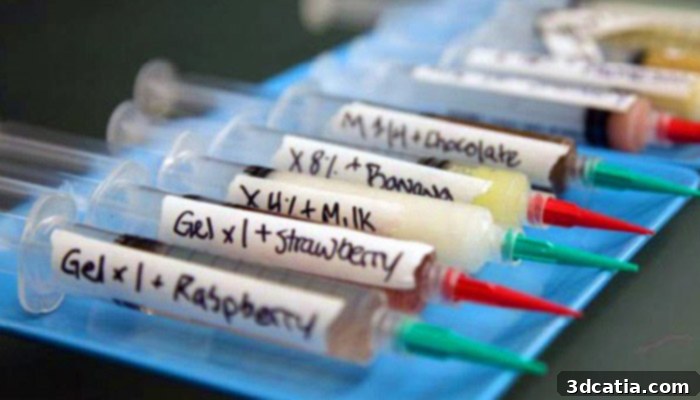
Photo Credits: Creative Machine Lab
While the underlying technology is rapidly advancing, and the innovators are pushing the boundaries, both the technology itself and societal readiness are still evolving before 3D food printers become a common fixture in every kitchen. However, those deeply involved in the field unanimously agree that its widespread adoption is merely a matter of time. “Any project that implies a behavioural change, especially in relation to food, takes a lot of time to be accepted and implemented,” observes Susana Soares, who frequently encounters skepticism regarding her 3D-printed insects. Yet, the aim is not to have all our food exclusively generated by a 3D printer, as the founder of Natural Machines clarifies. Ultimately, it is envisioned as another versatile kitchen appliance, offering an exciting avenue to experiment with novel culinary creations, simplify meal preparation, and save valuable time in the kitchen. It’s about enhancing, not replacing, the joy of cooking and eating.
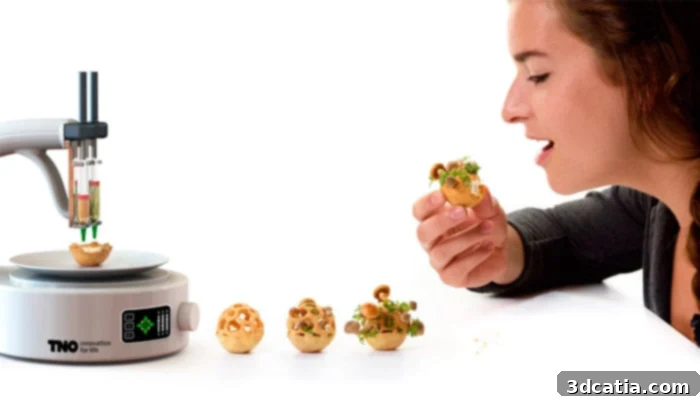
The question then remains: Will you soon have a food printer gracing your kitchen countertop?
“The technology is almost there,” Jonathan asserts confidently. “It’s all about packaging it and selling it so people will accept it. It happened with the microwave and pretty soon with food printing.” This perspective suggests that the transition from a niche innovation to a household staple is largely dependent on user experience, affordability, and market acceptance, mirroring the trajectory of many transformative technologies before it.
What are your thoughts on 3D printing your food? Share your opinions in a comment below or join the conversation on our Facebook and Twitter pages! Don’t forget to sign up for our free weekly Newsletter, delivering all the latest news in 3D printing directly to your inbox!