
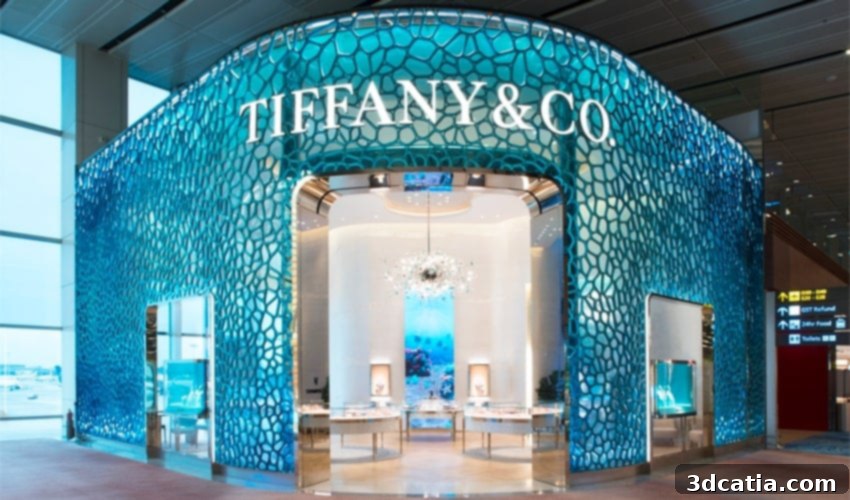
Tiffany & Co.’s Sustainable 3D Printed Façade: A Coral-Inspired Masterpiece at Singapore’s Changi Airport
Singapore’s Changi Airport, renowned globally as a benchmark for travel luxury and innovation, is now home to an architectural marvel that seamlessly blends high-end retail with cutting-edge sustainable design. Visitors to the airport’s captivating Piazza Garden, nestled near the iconic Jewel Changi, can witness the stunning new façade of the Tiffany & Co. store. This extraordinary creation is not merely a design statement but a profound testament to the luxury brand’s commitment to environmental stewardship and groundbreaking architectural practices. Conceived through a collaborative effort between the esteemed architect Moshe Safdie and the innovative firm MVRDV, this façade is a vibrant, coral-inspired structure that stands as a beacon of additive manufacturing’s potential in sustainable construction.
What sets this project apart is its pioneering use of 3D printing and recycled materials, underscoring Tiffany & Co.’s dedication to incorporating eco-conscious methods into its operations. The intricate process of bringing this vision to life involved key players in the additive manufacturing sector: the Dutch company Aectual, celebrated for its expertise in 3D printing for interior design and architecture, and a team of skilled engineers from the Italian company BUROMILAN, who were crucial in navigating the technical complexities. The resulting façade, with its captivating coral-inspired patterns and a mesmerizing color scheme, effortlessly draws the eye of every traveler passing through the bustling international hub, promising an experience as unforgettable as the brand itself.
The Evolution of Sustainable Design in Luxury Retail
The integration of additive manufacturing into the realm of architectural and retail design is rapidly gaining traction, transforming how decorative and structural elements are conceived and produced. This innovative approach offers unprecedented freedom in creating complex geometries and bespoke designs while often providing pathways to more sustainable construction practices. The Tiffany & Co. project in Changi is a prime example of this paradigm shift, yet it’s part of a growing trend among luxury brands seeking to combine exquisite aesthetics with environmental responsibility.
Prior to Tiffany’s venture, other leading luxury houses had already explored the potential of 3D printing. For instance, the iconic fashion brand Dior collaborated with WASP, a prominent name in large-scale 3D printing, to construct an eco-friendly pop-up store. This temporary retail space demonstrated how advanced manufacturing could deliver both high design and a reduced environmental footprint. Similarly, in the Netherlands, the Rotterdam-based studio RAP made headlines with its stunning façade design for a luxury boutique situated on Amsterdam’s prestigious P.C. Hoofstraat. These examples collectively illustrate more than just the aesthetic beauty achievable through optimized designs and 3D printing; they highlight the increasingly vital role of innovation in addressing contemporary challenges, whether through architectural advancements or by championing increased sustainability. This dual focus on design excellence and environmental concern has undeniably moved to the forefront of modern commercial strategy and public consciousness.
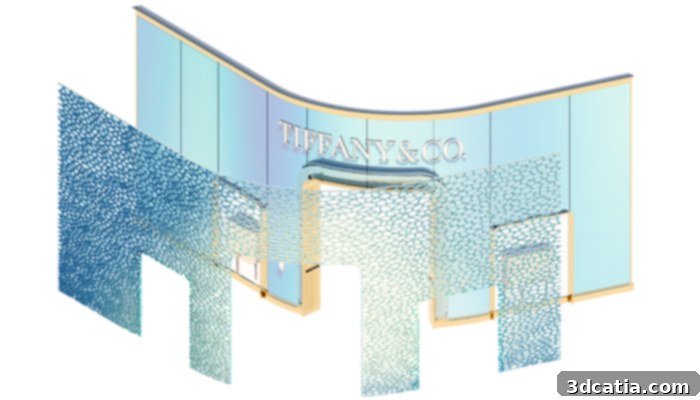
Initial rendering of how the 3D façade would be implemented in the store
The Vision Behind Tiffany’s Changi Façade: Fusing Brand Identity with Nature
The design journey for the Tiffany & Co. store at Changi Airport was deeply rooted in capturing the essence of the brand while embracing a forward-thinking, sustainable philosophy. The MVRDV team, working in close collaboration with Tiffany & Co., meticulously identified key aspects of the brand’s identity and rich history, ensuring that these elements were seamlessly woven into the architectural fabric. Central to this vision was the incorporation of iconic brand elements, most notably the unmistakable Tiffany Blue®, which plays a pivotal role in the façade’s visual narrative.
Drawing profound inspiration from the intricate and vibrant patterns of coral reefs, the architects engineered an organic, sculpted screen that gracefully envelops the store’s exterior. This screen is not merely decorative; it’s a sophisticated interplay of form and color. It features screen-printed glass integrated with a delicate gradient of hues, transitioning from the signature Tiffany Blue to a deeper, more profound shade of blue that powerfully evokes the vast and mysterious depths of the marine environment. This captivating gradient is thoughtfully echoed throughout various components of the 3D printed design, enhancing its dynamic appeal. For instance, at the store’s entrances, the display panels exhibit a similar gradient, shifting from a lighter blue at the front to a darker blue towards the back, creating an illusion of depth and movement. Furthermore, this gradient effect is ingeniously reversed at the corners of the façade, where a gradual and fluid transition between the two shades generates a remarkable three-dimensional effect, inviting onlookers to explore its intricate details from every angle.
Innovation in Materials and Manufacturing: A Commitment to the Environment
The innovative spirit of the Tiffany & Co. façade extends far beyond its design aesthetics; it deeply permeates the selection and application of its materials. The MVRDV team emphatically highlights this aspect, stating, “3D printing experts Aectual developed a process to produce the 50-millimetre-thick screen using recycled plastic, including reclaimed and recycled fishing nets.” This conscious decision to utilize recycled ocean plastics is a powerful statement, not only reflecting the design’s inspiration from marine ecosystems but also actively contributing to their preservation. The choice of both materials and technology embodies a holistic approach to sustainability, where design ingenuity directly serves ecological responsibility.
Building within an airport environment presents a unique set of challenges, particularly concerning stringent fire safety standards. This critical hurdle was expertly addressed and resolved by the engineers at BUROMILAN. Their innovative solution involved integrating a specialized chemical product derived from seawater into the materials. This ingenious addition provided the necessary fire-retardant properties, offering a unique and environmentally conscious approach to meeting strict regulatory requirements without compromising the project’s sustainable ethos. This collaboration between design, material science, and engineering demonstrates a profound commitment to pushing the boundaries of what is possible in sustainable, high-performance architecture.
The coral-inspired façade, therefore, is not just a visual spectacle; it is a meticulously engineered structure that speaks volumes about sustainable luxury. It showcases how advanced manufacturing techniques, coupled with a deep respect for natural inspiration and resourcefulness, can create architectural elements that are both aesthetically magnificent and environmentally benign. This project stands as a testament to the fact that luxury and sustainability can, and indeed should, coexist, paving the way for future innovations in the intersection of design, technology, and ecological consciousness. For those interested in delving deeper into similar groundbreaking projects or seeking more detailed information about this specific 3D printed façade, further insights are available by clicking here.
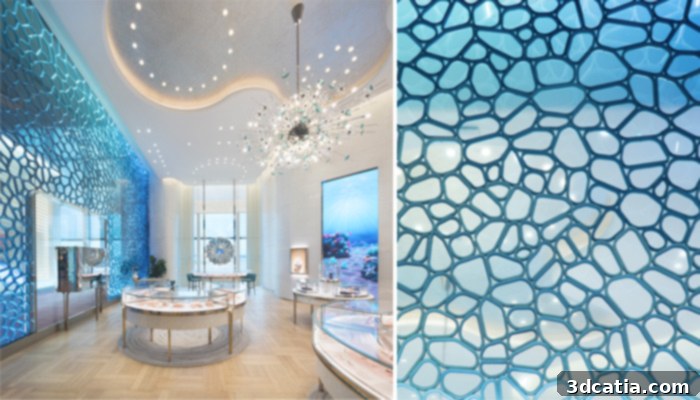
The interior of the Tiffany & Co. store, and next to it a close-up view of the 3D printed façade
The Future of Luxury: Blending Innovation, Aesthetics, and Sustainability
The Tiffany & Co. façade at Singapore’s Changi Airport serves as a powerful case study for the luxury sector, demonstrating that opulence and environmental responsibility are not mutually exclusive. Instead, they can be harmoniously integrated to create spaces that are both awe-inspiring and forward-thinking. This project exemplifies how luxury brands can leverage cutting-edge technologies like additive manufacturing to not only achieve unparalleled aesthetic results but also contribute positively to global sustainability efforts. By utilizing recycled materials, particularly reclaimed fishing nets, Tiffany & Co. and its collaborators have set a new benchmark for eco-conscious design within a high-profile commercial setting.
This architectural achievement also highlights the increasing importance of interdisciplinary collaboration. The successful realization of such a complex and innovative project required the combined expertise of architects, 3D printing specialists, material scientists, and engineers. This collaborative spirit is essential for pushing the boundaries of design and construction, enabling solutions to challenges that might otherwise seem insurmountable, such as meeting rigorous airport safety standards with unconventional materials. The adoption of 3D printing allows for unprecedented design freedom, enabling the creation of intricate, organic forms inspired by nature, which would be prohibitively difficult or costly using traditional manufacturing methods. This capability is particularly appealing to luxury brands seeking to craft unique brand experiences and signature architectural identities that resonate with a discerning clientele.
Ultimately, the Tiffany & Co. 3D printed façade at Changi Airport is more than just a retail front; it is a vision of the future. It signals a shift towards a design philosophy where beauty, innovation, and environmental integrity are intertwined. As consumers become increasingly aware of and concerned about the environmental impact of products and industries, brands that visibly demonstrate a commitment to sustainability, without compromising on quality or aesthetics, will undoubtedly gain a competitive edge. This project not only enhances the passenger experience at Changi Airport but also inspires a broader conversation about how architecture and design can champion a more sustainable and technologically advanced world.
What do you think of this pioneering 3D printed façade made for Tiffany & Co.? We invite you to share your thoughts and insights in a comment below, or engage with us on our LinkedIn, Facebook, and Twitter pages! Don’t forget to sign up for our free weekly Newsletter here to receive the latest 3D printing news directly in your inbox. You can also explore all our fascinating videos on our YouTube channel for more visual insights into the world of additive manufacturing.
*All Photo Credits: Tiffany & Co. / MVRDV