
Earthenwind: Bat el Hirsh Blends Ancient Wisdom with Ceramic 3D Printing for Sustainable Architecture
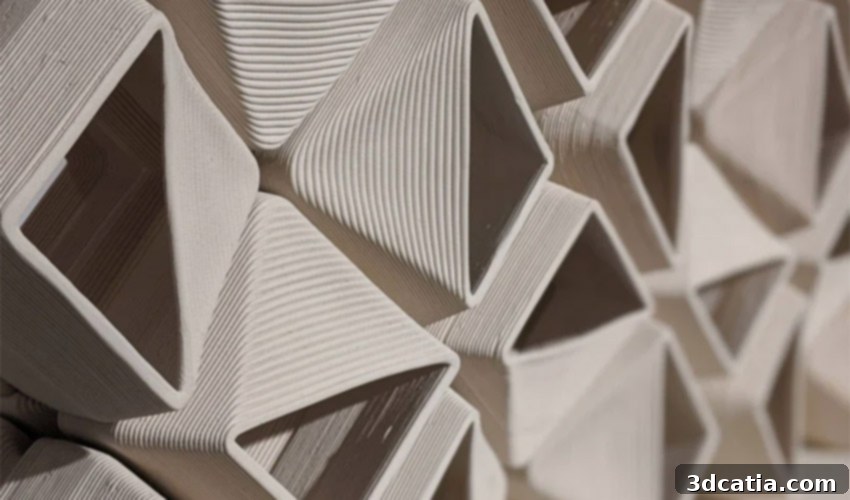
In a remarkable fusion of ancient techniques and cutting-edge technology, emerging artist Bat el Hirsh has unveiled her latest architectural marvel, “Earthenwind.” This innovative project harnesses the power of ceramic 3D printing to create a dynamic, functional, and aesthetically pleasing structure. Earthenwind is conceived as a monumental screen, composed of intricately 3D-printed ceramic blocks meticulously assembled to form a protective barrier against harsh sun and heat, while simultaneously fostering a cooler, more comfortable environment in arid regions. Beyond its primary function as a passive cooling system, the structure also stands as an exquisite decorative element, showcasing the artistic potential of additive manufacturing. The design features blocks of a uniform size, yet they possess a striking visual diversity: some are left hollow, acting as conduits for air, while others are partially filled, creating an intriguing interplay of light, shadow, and texture.
Ceramic additive manufacturing has long captivated the architecture and design sectors, opening up unprecedented avenues for creativity and efficiency. Its ability to facilitate the rapid and cost-effective production of original, complex clay structures has made it an invaluable tool for designers seeking to push the boundaries of conventional construction. The synergy between ceramic 3D printing and building construction is evident in numerous pioneering projects, many of which are based on the principle of extruding a specialized clay-based paste. This method allows for the precise deposition of material, layer by layer, enabling the creation of intricate geometries that would be challenging or impossible to achieve with traditional methods. Among the leading innovators in this field is 3D Potter, a company renowned for developing a comprehensive range of ceramic 3D printers. Their technology played a pivotal role in projects like the acclaimed Mud Frontiers initiative, where local soil mud was ingeniously transformed into 3D-printed huts, demonstrating the potential for sustainable and localized construction using readily available resources. Such ventures underscore the transformative impact of ceramic 3D printing on architectural practices, paving the way for more sustainable, adaptable, and aesthetically diverse building solutions.
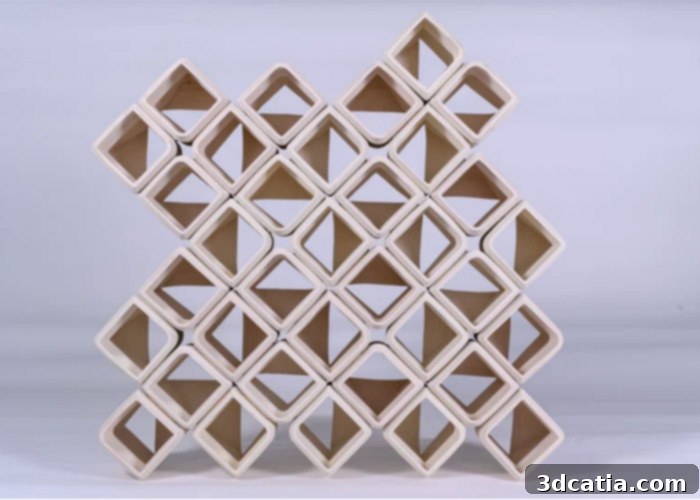
The facade from 3D printed ceramic blocks, showcasing the intricate design of the Earthenwind project. (All image credits: Bat el Hirsh)
For the Earthenwind project, Bat el Hirsh utilized an FDM (Fused Deposition Modeling) 3D printer, a method typically associated with plastics but adapted here for ceramic materials. In this process, a nozzle precisely deposits successive layers of a clay-based paste, which then hardens during or shortly after the printing sequence. The young designer reveals that her creative impetus stems from a deep appreciation for ancient pottery techniques, which she deliberately sought to intertwine with modern additive manufacturing technologies. Her inspiration also draws significantly from the rich heritage of Islamic architecture, particularly the concept of mashrabiya. These traditional architectural elements are sophisticated natural ventilation devices, historically crafted from wood, designed to provide effective sun protection while simultaneously facilitating the circulation of air through intricate latticework. Instead of adhering to the traditional material of wood, Hirsh embarked on a journey to explore ceramics, a material she discovered possessed exceptional properties ideal for cooling and ventilation. This pivotal choice not only honors the functional essence of mashrabiya but also reinvents its aesthetic and material application for contemporary architectural challenges.
Bat el Hirsh articulates her profound connection to the material and its historical significance, stating: “Ancient pottery is a kind of imprint that man left where he lived. Its wide distribution and resistance to the ravages of time allow us to use pottery as a valuable source of information. Ancient Middle Eastern traditions used the properties of clay for cooling and ventilation. These material properties remain relevant today, despite the passage of time and technological advances.” Her words underscore a philosophy that bridges millennia, recognizing the enduring efficacy of natural materials and traditional wisdom in addressing contemporary environmental challenges. By recontextualizing these ancient insights within a modern technological framework, Earthenwind becomes a testament to sustainable design principles. While the specifics of her 3D printing process remain somewhat undisclosed, the tangible outcome of her diligent work speaks volumes. A key design feature of the Earthenwind project involves its numerous diamond-shaped blocks, some of which are ingeniously designed to be slightly “closed” on their upper surface. This subtle but crucial modification directly references the sophisticated functionality found in traditional Islamic architecture, serving to protect the interior from rain and mitigate the impact of hot, undesirable drafts. More broadly, this design choice embodies the artist’s ambition to propel ancient ceramic traditions into a new era, rich with the possibilities offered by advanced manufacturing.
The Earthenwind project by Bat el Hirsh stands as a compelling example of how innovative design, informed by historical precedent and powered by modern technology, can lead to sustainable and beautiful architectural solutions. The meticulous arrangement of the ceramic blocks, varying between open and partially closed forms, is not merely for visual appeal; it is a carefully calibrated system designed to optimize air circulation and provide effective shading. This passive cooling approach significantly reduces the need for energy-intensive air conditioning, making Earthenwind a beacon for eco-conscious construction. The use of ceramics, a material celebrated for its thermal mass and durability, further enhances the structure’s environmental credentials. The ability to 3D print these complex geometries also allows for a high degree of customization and material efficiency, minimizing waste and enabling local production if desired. Hirsh’s work invites architects and designers to reconsider the untapped potential of traditional materials when paired with the precision and flexibility of additive manufacturing. It’s a powerful statement on how cultural heritage can inform the future of green building, creating structures that are not only functional and efficient but also deeply rooted in context and artistry. Earthenwind is more than just a screen; it’s a reinterpretation of architectural identity for a hotter world, promising comfort through intelligent, natural design.
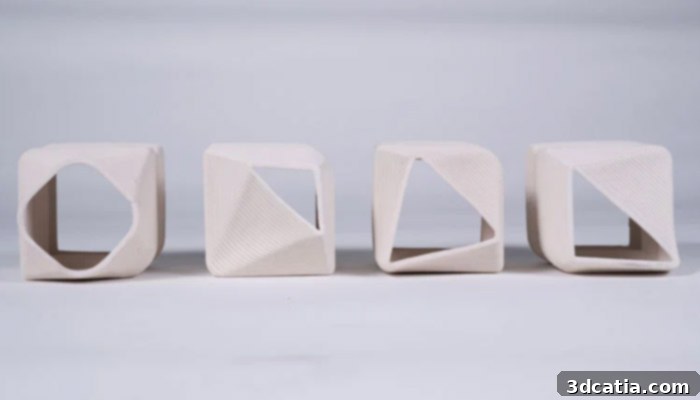
A detailed view of the 3D printed ceramic blocks, highlighting their intricate diamond pattern and varied forms. Image credits: Bat el Hirsh
What are your thoughts on Bat el Hirsh’s groundbreaking Earthenwind project? We invite you to share your insights and comments below, or join the discussion on our Facebook and Twitter pages! Don’t miss out on the latest advancements and innovations in the world of additive manufacturing; make sure to sign up for our free weekly Newsletter, delivering all the essential news in 3D printing directly to your inbox!