
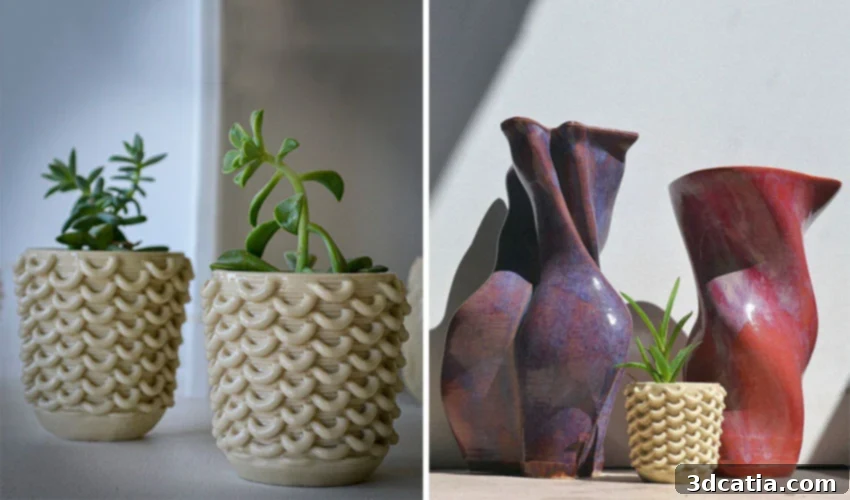
3D Potter: Leading the Way in Real Clay and Advanced Material 3D Printing
In the dynamic landscape of additive manufacturing, 3D Potter stands out as a pioneering force, headquartered in sunny Florida. The company has dedicated itself to the creation of advanced ceramic 3D printers that uniquely harness the power of real clay, setting a new benchmark in the industry. Unlike many conventional systems, 3D Potter’s machines operate on a robust cardinal axis system, offering unparalleled precision and control, a significant departure from the Delta printer configurations often seen in early 3D printing. This design philosophy translates into effortless operation and superior print quality for users. With a growing roster of esteemed clients, particularly within academic institutions and leading universities, 3D Potter’s innovative technology is fueling groundbreaking projects across various disciplines. To gain deeper insights into the company’s vision and the intricate technology underpinning their range of highly capable clay 3D printers, we had the distinct pleasure of sitting down with Dan Defelici, the visionary owner and proprietor of 3D Potter.
3DN: Can you present yourself and tell us how 3D Potter came about?
“My name is Dan Defelici, and I proudly serve as the owner and proprietor of 3D Potter, Inc.,” he began, introducing himself with a clear passion for innovation. “My professional journey has been incredibly diverse, encompassing ventures such as sophisticated yacht building and precision aircraft manufacturing. These experiences instilled in me a profound appreciation for engineering, meticulous design, and robust mechanical systems.” Defelici elaborated on his long-standing fascination with robotics, a field he monitored with keen interest long before the mainstream adoption of additive manufacturing. “I’ve always been captivated by robotics,” he stated, “and I diligently followed the nascent stages of accessible 3D printing technology when it first emerged several years ago. The potential to transform digital designs into physical objects, especially with such unprecedented accessibility, was truly astounding.” This early exposure laid the groundwork for his future endeavors.
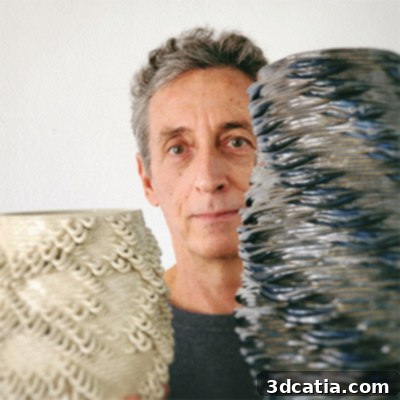
Danny Defelici
Defelici continued, explaining how his innate artistic inclinations converged with his engineering background to spark the genesis of 3D Potter. “I’ve always possessed an artistic bent,” he revealed, “and this led me to closely observe the very early, experimental attempts by individuals to integrate ceramics into 3D printing processes. At that juncture, my involvement was purely personal; I was merely experimenting for my own curiosity and had a wealth of spare parts readily available from previous projects, which I leveraged to design a novel extruder concept.” His ingenuity quickly bore fruit. “Within a remarkably short period, just a couple of days, I successfully engineered a fully functional clay extruder. What set this device apart from anything else I had encountered was its singular capability: it could genuinely extrude real, natural clay. This was a stark contrast to the diluted pastes or pseudo-clay mixtures that many others were attempting to use, which often compromised material integrity and final product quality.” This groundbreaking extruder, initially paired with a uniquely configured, upside-down 3D Delta printer for initial tests, quickly garnered attention. “Once I had this distinctive extruder up and running, coupled with that innovative printer setup, several individuals, witnessing its potential, approached me with requests to build similar systems for them,” Defelici recounted. “It was through these initial demands, driven by the clear superiority of our ‘real clay’ printing, that 3D Potter truly began its journey as a commercial enterprise.” This organic growth, fueled by genuine innovation and market need, underscores the company’s authentic origins.
3DN: Can you tell us more about 3D Potter’s technology? What are its benefits?
Delving deeper into the core advantages of 3D Potter’s groundbreaking technology, Defelici emphasized, “The paramount benefit of our innovative system lies in the extruder’s inherent ability to print directly from the nozzle using genuine, undiluted clay.” He underscored the significance of this distinction. “I really want to emphasize ‘real clay’ here, because this isn’t about working with heavily watered-down slips or clay mixed with substantial quantities of alcohol, which is often the compromise in less advanced systems. By using authentic clay, unadulterated by excessive additives, we achieve a far superior material quality in the final printed object – stronger, more durable, and aesthetically richer.” This dedication to material integrity also unlocks significant performance gains. “This commitment to real clay empowers us to achieve significantly faster print speeds,” Defelici explained, “and allows for the use of impressively large nozzles, some reaching up to an inch in diameter. Such large-diameter extrusion dramatically reduces print times for substantial objects.” Furthermore, the robust design of their extruders and machines facilitates remarkable scale. “Our systems are engineered to print objects with substantial vertical dimensions, routinely achieving heights of 48 inches and often exceeding that,” he proudly stated. “This level of capability simply isn’t feasible with conventional methods that rely on thin, highly diluted clay pastes, which often necessitate complex hose systems and cumbersome air compressors that can introduce inconsistencies and limitations. Our direct extrusion approach bypasses these challenges entirely, offering a streamlined, powerful, and truly industrial-grade ceramic additive manufacturing solution.”
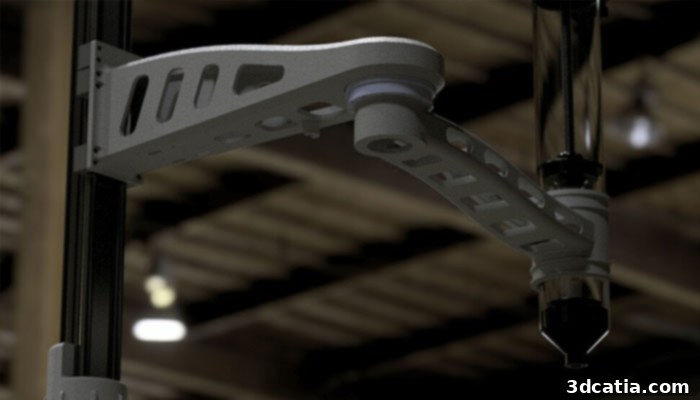
The extruder on the 3D printer | Credits: 3D Potter
3DN: For what applications would you use a clay 3D printer? Who are your clients?
Regarding their diverse clientele and the myriad applications of their ceramic 3D printers, Defelici elaborated on 3D Potter’s widespread adoption. “We are incredibly proud to serve a growing community of over 500 clients, with a significant presence in academic settings,” he noted. “We’ve cultivated excellent, long-standing relationships with art studios and design departments within universities, as well as numerous private art studios. These institutions leverage our technology to push the boundaries of artistic expression and ceramic design, offering students and faculty alike unparalleled creative freedom.” Beyond the art world, 3D Potter is making substantial inroads into more industrial and architectural spheres. “Simultaneously, we’re witnessing a rising demand for our larger-scale ceramic 3D printers within architectural departments,” Defelici continued. “These powerful machines, paired with our specialized continuous flow pumps, are being deployed for ambitious architectural projects, including the fabrication of intricate cement structures. This opens up entirely new possibilities for sustainable construction and innovative building design, allowing architects to realize complex geometries and custom elements with unprecedented efficiency.” Moreover, the technology is empowering individual entrepreneurs. “It’s truly inspiring to see a growing number of artists establishing thriving businesses by utilizing our printers,” Defelici added. “They are producing unique ceramic objects, ranging from decorative pieces to functional wares, for commercial sale. The inherent advantage of our 3D printers in this context is their capacity to rapidly produce multiple objects, transforming the creative process into a viable income-generating venture for these talented individuals.” This dual appeal—from academic research and industrial construction to artistic entrepreneurship—highlights the versatility and transformative impact of 3D Potter’s ceramic 3D printing solutions.
3DN: Can you tell us more about your project with Emerging Objects, Mud Frontiers?
Discussing a particularly notable collaboration, Defelici shared insights into their ongoing work with Emerging Objects. “Our partnership with Emerging Objects has been a fruitful endeavor spanning many years,” he stated. “Professor Ronald Rael and I have collaborated on numerous pioneering projects, always striving to push the envelope of what’s possible with additive manufacturing and natural materials.” He then detailed one of their most celebrated undertakings: Mud Frontier. “The Mud Frontier project was a magnificent confluence of our advanced technology and sustainable building practices,” Defelici explained. “It involved integrating one of our larger, highly capable Scara ceramic robots with a specialized continuous flow pump system, meticulously designed to work with adobe mixtures. This specific setup allowed us to precisely print architectural elements using locally sourced, eco-friendly materials.” The outcome, he proudly declared, was nothing short of spectacular. “The results of Mud Frontier were absolutely perfect, exceeding our expectations in every conceivable way. It was a powerful demonstration of how sophisticated robotic 3D printing can be harmonized with traditional, sustainable building techniques.” Defelici emphasized that this project represents merely the tip of the iceberg for their collaboration. “This is truly just the nascent stage of what we envision achieving with Emerging Objects,” he asserted. “There is immense untapped potential for further innovation with this type of technology, particularly in addressing global housing needs.” He then hinted at future developments: “We are actively developing and already possess machines that are capable of constructing small-scale habitats. These systems are designed with a remarkably small operational footprint and are easily transportable, making them ideal for rapid deployment in various environments. The dream of fully sustainable, 3D printed homes, leveraging natural and readily available materials, is not a distant future concept; it is a tangible reality we are building today.”
3DN: What is your vision of the AM market, in particular ceramic 3D printing?
When asked about his broader vision for the additive manufacturing (AM) market, especially concerning ceramic 3D printing, Defelici outlined an ambitious multi-pronged strategy. “We are committed to pursuing the AM market with aggressive innovation, simultaneously exploring multiple directions,” he affirmed. “Our ambition extends beyond merely maintaining our leadership; it’s about continuously redefining what’s achievable.” He reiterated 3D Potter’s foundational strength. “Not only do we undeniably offer the most sophisticated and robust ceramic 3D printers available on the market today, but the inherent flexibility of our technology also means we can adapt it to process a diverse array of different materials.” This adaptability is a key differentiator. “We are diligently transferring the proven, high-performance technology developed for our ceramic systems into our newest generation of printers currently in development and soon to be released,” Defelici added, highlighting continuous improvement. “While we are confidently positioned as the strongest player in the ceramic 3D printing arena, our strategic expansion doesn’t stop there. We are actively branching out into 3D printing with other advanced material types, including a wide spectrum of metals, specialized technical ceramics, and a variety of other high-performance compounds. This expansion leverages our core expertise in precise extrusion and material handling, positioning 3D Potter as a comprehensive solutions provider across various industrial additive manufacturing sectors.” This holistic approach signifies a bold future for the company, far beyond its initial ceramic focus.
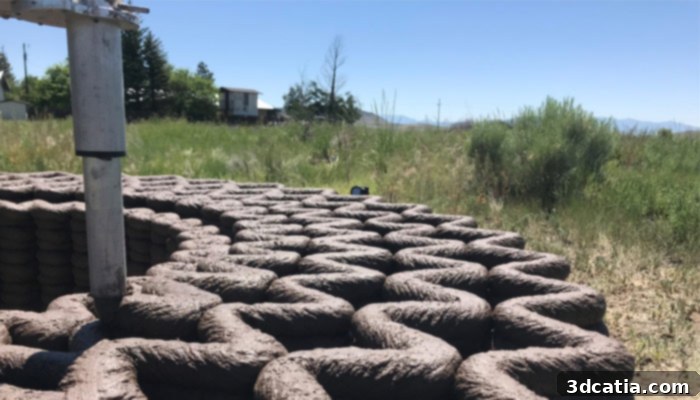
3D printing of the hut for the Mud Frontiers projects | Credits: Rael San Fratello
3DN: Any future projects?
Looking towards the horizon, Defelici unveiled an exciting array of future projects and strategic expansions for 3D Potter. “We have recently established a new subsidiary company, Metallic 3D, marking a significant foray into metal additive manufacturing,” he announced. “This venture has been forged in close cooperation with one of Europe’s largest and most reputable manufacturers of metal feedstock. Through this powerful alliance, we are now fully capable of producing high-quality metal objects and an even broader range of technical ceramics, expanding our material capabilities exponentially.” He stressed the versatility of their new metal printing platform. “Crucially, our technology is not confined to just one or two specific metal types. Leveraging our innovative systems, virtually any powdered metal material is feasible for production, offering unparalleled flexibility to industries requiring specialized alloys and components.”
The innovation extends beyond industrial metals. “Furthermore, the advanced machines we are developing for metal printing are being designed with inherent capabilities for biomedical 3D printing applications,” Defelici revealed, hinting at a profound impact on healthcare. “These next-generation printers boast extraordinary accuracy, making them ideally suited for a wide spectrum of medical-grade materials. The precision and reliability of these systems are attracting considerable interest, with numerous industrial and medical companies actively engaging us to explore their diverse application needs, from custom implants to intricate surgical tools.”
Finally, Defelici highlighted the unexpected evolution of their core robotic technology. “And perhaps most notably,” he concluded, “our largest Scara robotic arms, initially conceived and meticulously engineered for the demanding 3D ceramic printing segment, have truly come into their own. They have evolved significantly in terms of both size and strength, demonstrating capabilities far beyond their original scope. These robust and highly versatile robotic arms are now poised to make a substantial impact within the broader industrial robotics industry, serving as affordable yet incredibly capable solutions for a vast array of advanced manufacturing and automation applications. This expansion underscores 3D Potter’s journey from a specialized ceramic printer manufacturer to a multi-faceted innovator in additive manufacturing and industrial automation.”
For those eager to explore the full spectrum of 3D Potter’s innovative offerings and witness their pioneering technology in action, comprehensive information is readily available on their official website. You can find more details on 3D Potter HERE.
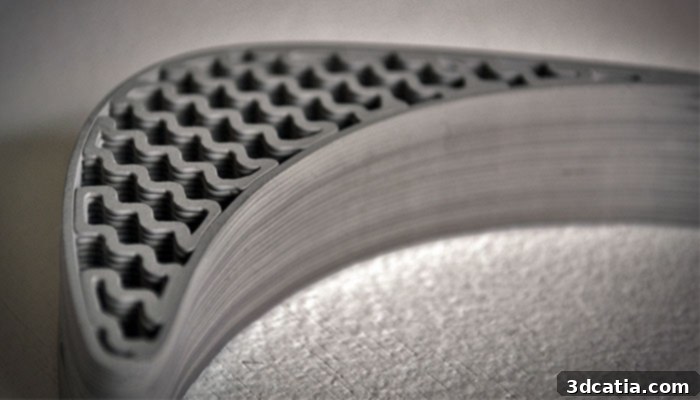
3D Potter’s 3D printer can achieve high resolution in clay 3D printing | Credits: 3D Potter
We invite you, our readers, to share your thoughts on 3D Potter’s transformative contributions to ceramic and advanced material 3D printing. What aspects of their technology or vision resonate most with you? Please feel free to let us know in a comment below, or engage with us on our vibrant community pages on Facebook and Twitter. To stay continually abreast of all the latest breakthroughs and developments in the rapidly evolving world of 3D printing, we encourage you to sign up for our free weekly Newsletter, delivering essential news and insights directly to your inbox.