
Unleashing Creativity: A Comprehensive Guide to the Best Mini 3D Printers for Every Need
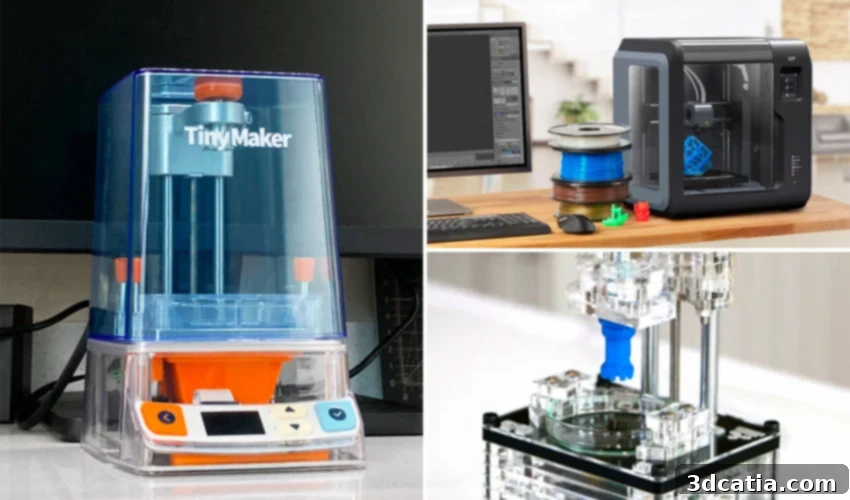
The world of 3D printing, or additive manufacturing, is rapidly expanding, moving beyond industrial applications into the homes of hobbyists and professionals alike. This surge in popularity has led to an interesting challenge: while many aspiring makers are eager to dive into 3D printing, the sheer size and bulk of conventional printers often act as a barrier. For beginners, small businesses, or those with limited workspace, the idea of a large machine taking up valuable desk space can be daunting. Their needs typically revolve around producing smaller objects such as intricate prototypes, custom decorations, miniature models, or functional parts that don’t require an expansive build area. Standard commercial 3D printers, often featuring print beds of 200 x 200 mm or larger, translate into machines that occupy a significant footprint. This is where the charm and utility of mini 3D printers truly shine. These compact, space-saving devices are specifically designed for creators who prioritize portability, affordability, and the ability to print smaller items without sacrificing quality or functionality. Finding these smaller machines, however, can sometimes be a challenge amidst a market saturated with larger models. To assist you in your search, we’ve meticulously researched and compiled a list of top mini 3D printers, focusing on models suitable for build plates of 150 x 150 mm or less. Our selection includes budget-friendly cheap options, alongside innovative projects pushing the boundaries of miniaturization in 3D printing. Join us as we explore these exciting compact solutions, perfect for unleashing your creativity in any space.
Why Choose a Mini 3D Printer? The Advantages of Compact Additive Manufacturing
Mini 3D printers offer a compelling proposition for a diverse range of users, from educational institutions and hobbyists to jewelers and rapid prototyping professionals. Their primary advantage lies in their compact footprint, making them ideal for small apartments, classrooms, or crowded workshops where space is at a premium. Beyond mere size, these printers often come with a lower entry price point, making 3D printing more accessible to a wider audience. This affordability, combined with simplified interfaces and often pre-assembled designs, significantly lowers the barrier to entry for beginners eager to explore additive manufacturing without a steep learning curve. Their portability is another key benefit, allowing users to easily move the printer between locations, whether for presentations, workshops, or simply to store it away when not in use. Furthermore, for specific applications like dental models, jewelry, or highly detailed miniatures, a smaller build volume is not a limitation but rather an optimization, as it often correlates with higher precision and faster print times for tiny objects. These characteristics position mini 3D printers as not just scaled-down versions of their larger counterparts, but as specialized tools with distinct advantages for focused applications.
Easythreed X1 Mini 3D Printer: Portability Meets Affordability
The Easythreed X1 Mini 3D printer stands out as an exceptionally compact and portable FDM (Fused Deposition Modeling) machine, making it a favorite for makers who require both small-object printing capabilities and easy transport. With an incredibly competitive price point, often hovering around 100 euros (though availability can fluctuate), it’s one of the most accessible entry-level mini 3D printers on the market. Its impressive print volume of 100 x 100 x 100 mm is perfectly suited for crafting prototypes, small figurines, educational models, and various practical household items. What truly sets the X1 Mini apart is its minimal footprint and an astonishingly low weight of just 1.3 kg. This makes it an ideal companion for creators on the go, allowing for 3D printing virtually anywhere, from a student dorm room to a bustling workshop, or simply tucking it away neatly in any corner of your home. The printer is primarily compatible with PLA filaments, a popular choice due to its ease of use and environmental friendliness, but it has also shown potential for processing softer materials like TPU, expanding its versatility. Despite its diminutive size and budget-friendly tag, the Easythreed X1 Mini is capable of delivering decent quality prints. Its adjustable layer thickness, ranging from 50 to 300 microns, allows users to balance speed with detail, ensuring that even tiny parts exhibit good accuracy. This combination of portability, affordability, and respectable print quality solidifies its position as an excellent choice for beginners and those needing a secondary, highly mobile 3D printer.

Photo Credits: Easythreed
Entina Tina2: Simplification for the Novice 3D Printer User
The Entina Tina2 emerges as another excellent contender in the mini 3D printer category, specifically tailored for novice users embarking on their first journey into additive manufacturing. Developed by Entina, this Fused Filament Fabrication (FFF) / Fused Deposition Modeling (FDM) machine is designed with the explicit goal of significantly lowering the learning curve often associated with 3D printing. The Tina2 boasts a maximum build volume of 100 x 120 x 100 mm, offering ample space for a wide array of small projects while maintaining a manageable footprint. Weighing in at 3kg, it strikes a good balance between stability during printing and portability when needed. One of its standout features, highly beneficial for beginners, is the automatic leveling of the printing tray. This crucial function eliminates one of the most common frustrations for new users, ensuring consistent print quality from the very first layer without manual adjustments. The inclusion of a 2.4-inch LCD screen further enhances user experience, providing an intuitive interface for controlling print parameters and initiating the manufacturing process with ease. Furthermore, its compatibility with Wiibuilder cutting software facilitates offline use via a MicroSD card, offering flexibility and convenience even without a constant internet connection. The Entina Tina2 is more than just a compact machine; it’s a gateway to creativity, empowering users to explore the exciting possibilities of 3D printing with unparalleled simplicity and confidence, making it a highly recommended choice for educational settings and first-time users.
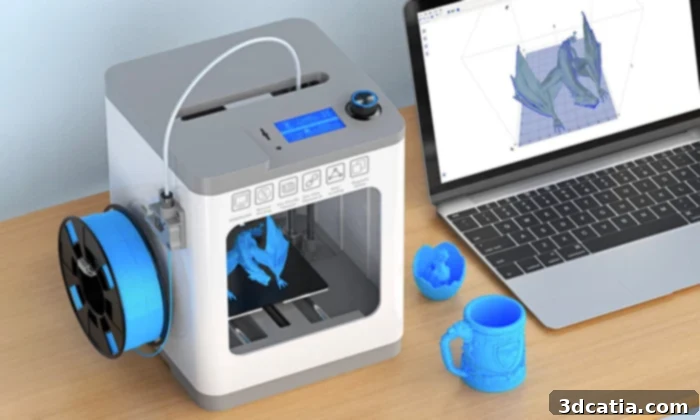
Photo Credits: Entina
Monoprice MP Voxel 3D: Feature-Rich in a Small Package
The Monoprice MP Voxel 3D printer has garnered significant attention for packing an impressive array of features into its compact design, making it a compelling option for both beginners and experienced users seeking a versatile mini 3D printer. This machine is truly plug-and-play, coming fully assembled and ready to use right out of the box, allowing immediate access to its 150x150x150mm printing platform. This build volume is generous for a “mini” printer, offering ample space for a variety of small to medium-sized projects. Ease of use is a cornerstone of the MP Voxel’s design, highlighted by its small color touch screen that provides intuitive control over print settings and operations. The assisted leveling system is a boon for newcomers, simplifying a potentially tricky setup step and ensuring reliable first layers. Furthermore, its tool-free nozzle changing mechanism, which allows for swaps in mere seconds, makes maintenance and material changes incredibly quick and hassle-free, encouraging experimentation with different filament types or nozzle sizes. Beyond these user-friendly aspects, the MP Voxel boasts a remarkable list of advanced features. It includes 8GB of internal memory for storing models, eliminating the need to constantly connect to a computer. Wi-Fi connectivity allows for seamless file transfer and remote control from various devices, enhancing workflow flexibility. Perhaps one of its most innovative additions is an integrated camera, which enables users to monitor their prints remotely, providing peace of mind and the ability to intervene if any issues arise. This combination of ease of use, robust features, and thoughtful design makes the Monoprice MP Voxel an outstanding choice for those looking for a high-performance mini 3D printer that punches well above its weight class.
TinyMaker: A Resin 3D Printer That Fits in Your Palm
Venturing into the realm of resin 3D printing, the TinyMaker project introduces an exciting prospect for ultra-compact, high-detail additive manufacturing. Still in its project stage and having been a crowdfunding success, the TinyMaker is a diminutive resin 3D printer designed by its eponymous manufacturer to redefine portability. This open-source machine boasts an incredibly small print volume of 30.6 x 40.8 x 60 mm, all housed within a remarkably compact physical footprint of just 100 x 115 x 155 mm. The manufacturer’s vision behind the TinyMaker is clear: to make high-resolution resin 3D printing more accessible and truly handheld. Its size allows it to comfortably fit in the palm of your hand, a feat rarely achieved by FDM printers, let alone resin-based systems. The TinyMaker utilizes MSLA (Masked Stereolithography Apparatus) technology, known for its ability to produce highly detailed and smooth parts, perfect for intricate miniatures, jewelry components, or small engineering prototypes. What’s more, the TinyMaker ecosystem extends beyond just the printer, offering complementary post-processing solutions. It can be supplied with its own cleaning station and a heat treatment machine, both designed with the same commitment to compactness. This integrated approach ensures that the entire resin printing workflow remains space-efficient. While the crowdfunding participants eagerly await their units to be delivered, the TinyMaker represents a bold step towards truly portable and accessible resin 3D printing, with the potential to be a significant success in the niche market for ultra-small, high-detail prints.
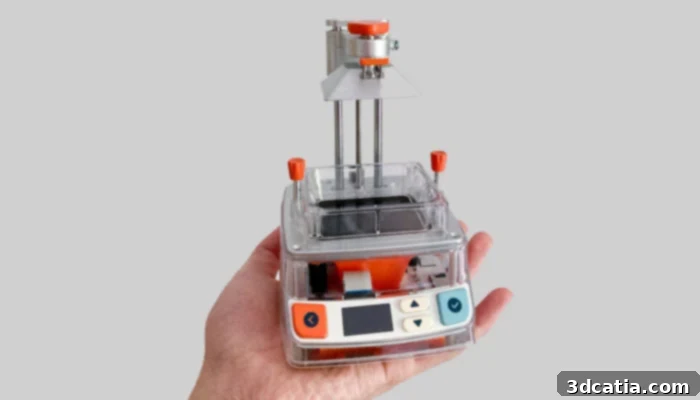
Photo Credits: TinyMaker
My N Mi’s Match-Sized 3D Printer: Pushing the Boundaries of Miniature
While not a commercially available product, the match-sized 3D printer created by YouTube phenomenon My N Mi captivated the entire 3D printing community in February 2023. This astounding feat of engineering, painstakingly crafted by hand, redefined what was considered “mini” in additive manufacturing. The entire device is physically smaller than a matchstick or a standard microSD card, representing perhaps the world’s smallest functional 3D printer. This incredible Stereolithography (SLA) machine boasts a truly microscopic build volume of just 11 x 11 x 17 mm. Despite its minuscule size, it demonstrated the remarkable ability to produce small, highly detailed objects, showcasing the potential for precision even at the tiniest scales. The printing process, however, was equally intricate, requiring resin to be manually added with a syringe to prevent spillage – a testament to the experimental nature of such a compact device. Although My N Mi’s creation isn’t something you can purchase off the shelf, its impact was profound. It served as a powerful demonstration of the extreme possibilities within 3D printing, inspiring engineers and hobbyists alike to think bigger about what “small” could achieve. This project underlined the critical role of innovation and DIY spirit in pushing the frontiers of additive manufacturing technology, proving that limitations are often just challenges waiting to be overcome by ingenuity.
Lite3DP S1: Open-Source MSLA Mini Printer for Precision
From Albuquerque-based company Lite3DP, the S1 is a prime example of a successfully crowdfunded, small-scale MSLA 3D printer that emphasizes simplicity in both construction and operation. Designed with a philosophy of open-source accessibility, the Lite3DP S1 provides comprehensive documentation and specifications, making it an excellent platform for beginners to start their 3D printing journey immediately. Simultaneously, experienced users benefit from the flexibility to customize their setup and experiment with different configurations. This dual appeal makes it a versatile tool for both education and advanced hobbyist projects. With a build volume of 45.1 x 33.8 x 70 mm, the S1 is squarely focused on high-precision, small-scale creations, prioritizing intricate detail over large object production. Its lightweight and compact design further enhance its appeal for those with limited space. The original S1 model was launched in 2020 to considerable acclaim, and its continued success has led to the development of a new Gen 2 model, which is currently in its crowdfunding phase. This ongoing evolution underscores Lite3DP’s commitment to advancing accessible and precise miniature additive manufacturing. For anyone looking for an open-source, community-supported, and detail-oriented mini resin 3D printer, the Lite3DP S1 (and its upcoming Gen 2) represents a highly attractive option.
Tiny Boy: An Educational and Accessible Mini 3D Printer
The Tiny Boy project, envisioned by its founder Parker Leung, offers another compelling solution for compact additive manufacturing, specifically targeting educational environments and individual learners. Leung’s inspiration for the Tiny Boy stemmed from a desire to integrate practical 3D printers into classrooms, making the technology accessible to every student. The result is the Mini Fabrikator 3D printer from Tiny Boy: a device engineered to be both remarkably small and exceptionally affordable, priced at less than €170. This makes it an ideal investment for schools, colleges, and hobbyists on a tight budget. Beyond its cost-effectiveness, the Tiny Boy is designed for ease of use, allowing anyone, regardless of prior experience, to operate it effectively. Its overall dimensions of 150 x 150 x 220 mm mean it can comfortably fit into even the most constrained desk corners, emphasizing its space-saving design. Despite its compact exterior, it is capable of printing parts with a maximum volume of 80 x 80 x 80 mm, a size perfectly adequate for the majority of small models, educational projects, and intricate components. The Tiny Boy exclusively uses 1.75 mm PLA filament, avoiding ABS for simplicity and lower fumes, which is a significant advantage for classroom settings. It is available in vibrant transparent orange or green colors, adding a touch of personality. The Tiny Boy exemplifies how mini 3D printers can democratize access to advanced manufacturing, fostering innovation and learning in a practical, affordable, and accessible way.
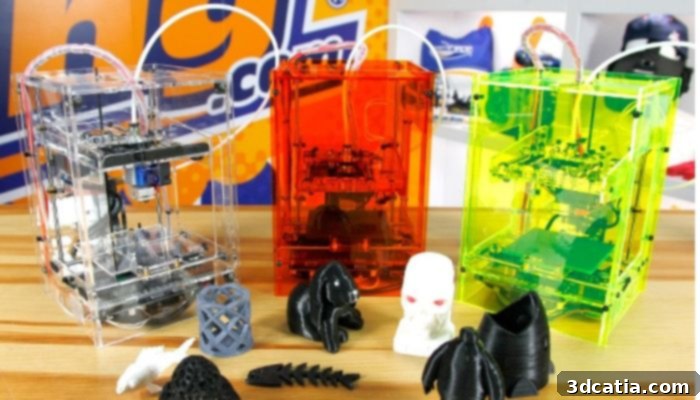
Photo Credits: helicomicro
PicoFab: Lumi Industries’ Ultra-Compact LCD Resin Printer
The PicoFab represents an ambitious project spearheaded by Davide Marin, CEO of Lumi Industries, aiming to create an ultra-compact LCD resin printer that delivers exceptional print quality despite its diminutive size. This vision has materialized into the PicoFab, a desktop resin printer engineered to produce highly detailed prints with impressive speed. The printer boasts broad compatibility with all commercially available 450nm resins, requiring only 15-20ml of resin for a single print, which highlights its efficiency and economical operation. The maximum print size for objects is 24 x 24 x 50mm, with remarkable resolutions: 100um on the horizontal axis and 25-50um on the vertical axis. These specifications make the PicoFab particularly suited for applications demanding high precision and fine features. Potential uses span a wide range of fields, including intricate dental applications, bespoke jewelry creation, small mechanical parts, highly detailed miniatures for gaming or display, and rapid prototyping of compact components. It’s crucial to note that, by design, the PicoFab is not intended for large-scale production or printing of sizable parts, but rather for specialized, small-batch, high-detail work. Lumi Industries aims to make the PicoFab available at a competitive, low price, targeting a broad spectrum of users from professional designers to enthusiastic hobbyists. While an official release date has not yet been announced, the PicoFab is poised to become a significant player in the market for ultra-compact, high-resolution resin 3D printers, offering precision and accessibility in a remarkably small package.
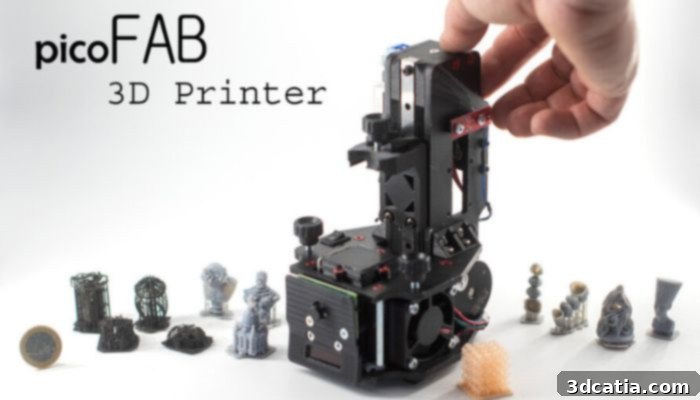
Photo Credits: Lumi Industries
iBox Nano: The World’s Smallest and Most Affordable Resin 3D Printer
The iBox Nano proudly claims the title of the world’s smallest and most affordable resin 3D printer, truly standing out from conventional additive manufacturing devices. This innovative little machine redefines expectations for compact 3D printing. Beyond its incredibly small form factor, which includes a printing area of 90 x 100mm, the iBox Nano distinguishes itself through several unique features: it’s remarkably quiet, exceptionally lightweight, and, perhaps most notably, battery-operated. This makes it the pioneering battery-powered 3D printer available on the market, offering unparalleled freedom and portability for printing anywhere, anytime, without being tethered to a power outlet. Connectivity is also a strong suit, as the iBox Nano is equipped with Wi-Fi, allowing users to effortlessly send their designs from any device, enhancing convenience and workflow. Instead of traditional DLP technology, it employs LED light to cure the resin. This choice is strategic, as LED lights boast a longer lifespan and generate less heat, contributing to both the printer’s durability and its safe, energy-efficient operation. Furthermore, the iBox Nano is designed with user convenience in mind; if batteries aren’t readily available, the printer can be charged via a standard USB cable, much like a smartphone. This blend of extreme miniaturization, innovative power solutions, and smart features makes the iBox Nano a groundbreaking device, ideal for mobile creators, educational projects, or anyone seeking a high-detail resin printer with ultimate portability and minimal fuss.
Key Considerations When Choosing Your Mini 3D Printer
When delving into the market for a mini 3D printer, several factors warrant careful consideration to ensure you select the best model for your specific needs. Firstly, evaluate the **build volume**. While all printers on this list are “mini,” their actual print areas vary significantly, from the TinyMaker’s ultra-small dimensions to the Monoprice MP Voxel’s more generous 150x150x150mm. Your typical project size will dictate the minimum build volume you require. Secondly, consider the **printing technology**: FDM (Fused Deposition Modeling) printers like the Easythreed X1 or Tiny Boy are generally more affordable, easier to maintain, and use robust plastic filaments like PLA. Resin (SLA/MSLA) printers such as the TinyMaker, Lite3DP S1, PicoFab, or iBox Nano offer much higher detail and smoother finishes, ideal for miniatures, jewelry, and intricate prototypes, but typically come with a higher cost and require more careful post-processing (washing and curing). **Material compatibility** is also crucial; most FDM mini printers handle PLA, some can manage TPU, while resin printers require specific photopolymer resins. For beginners, **ease of use** is paramount, including features like automatic bed leveling, intuitive touchscreens, and simple software interfaces. **Portability** (weight and dimensions) is a key advantage of mini printers, so consider how often you plan to move the machine. Finally, **budget** will always play a role, with prices ranging from under €100 for basic FDM models to several hundred for more advanced resin printers or feature-rich FDM machines. By carefully weighing these aspects, you can make an informed decision and find a mini 3D printer that perfectly aligns with your creative ambitions and practical requirements.
Conclusion: The Future is Small, Detailed, and Accessible
The rapid evolution of mini 3D printers underscores a growing demand for accessible, compact, and efficient additive manufacturing solutions. Whether you’re a complete novice looking to take your first steps into 3D printing, an experienced hobbyist needing a portable secondary machine, a student eager to learn, or a professional requiring high-detail prototypes, there’s a mini 3D printer designed to meet your specific needs. From the ultra-affordable and portable Easythreed X1 Mini to the user-friendly Entina Tina2, the feature-packed Monoprice MP Voxel, and the incredibly precise resin printers like TinyMaker, Lite3DP S1, PicoFab, and the iBox Nano, the options are diverse and compelling. Even projects like My N Mi’s match-sized printer show the incredible potential for miniaturization, pushing the boundaries of what’s possible. These compact devices are not just smaller versions of industrial machines; they represent a fundamental shift towards democratizing 3D printing, making it easier and more convenient for individuals and small setups to bring their digital designs into the physical world. As technology continues to advance, we can only expect these mini marvels to become even more powerful, versatile, and integrated into our daily lives, transforming how we prototype, create, and innovate. The future of 3D printing is indeed looking smaller, more detailed, and remarkably more accessible for everyone.
What do you think of this comprehensive list of mini 3D printers? We’d love to hear your thoughts and experiences! Share your insights in a comment below or connect with us on our LinkedIn, Facebook, and Twitter pages! Don’t miss out on the latest advancements and news in the 3D printing world; sign up for our free weekly Newsletter here, delivered straight to your inbox. You can also explore all our engaging videos and tutorials on our YouTube channel for more insights into additive manufacturing.