
Pioneering Space Innovation: Zortrax Sends 3D-Printed PEEK Circuits to Orbit with WISA Woodsat Mission
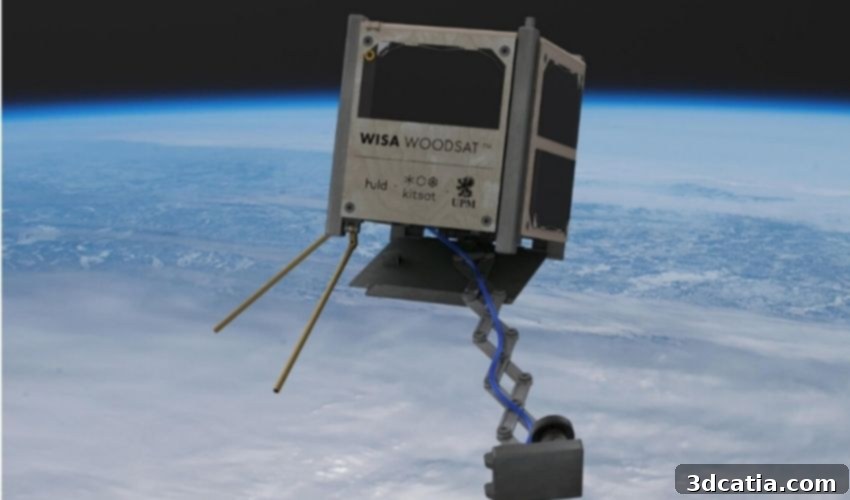
In a monumental leap for additive manufacturing and space exploration, Zortrax is poised to launch a cutting-edge 3D-printed electrical circuit into low Earth orbit by the end of this year. Crafted on their high-performance Endureal printer, this groundbreaking component will be tested onboard the WISA Woodsat CubeSat space mission. This ambitious endeavor aims to achieve a historic milestone: transmitting the first-ever message routed entirely through a device 3D-printed with advanced high-performance polymers. Adding another unique layer to this mission, the WISA Woodsat will distinguish itself as the world’s inaugural satellite constructed primarily from birchwood, pushing the boundaries of material science and engineering in extraterrestrial environments.
Since 2019, Zortrax has been at the forefront of innovation, working in close collaboration with the European Space Agency (ESA). This strategic partnership has been instrumental in the development of sophisticated composite 3D printing technology specifically designed to produce robust, space-ready parts. As investment in proof-of-concept development for 3D-printed components continues to grow across the aerospace industry, the WISA Woodsat mission represents a critical juncture. It will perform the first-ever flight-testing of 3D-printed PEEK polymeric-based electrical circuits in history, solidifying its status as a truly groundbreaking and transformative space mission. This collaboration underscores a shared vision to accelerate the adoption of additive manufacturing for crucial space applications, opening new avenues for spacecraft design and functionality.
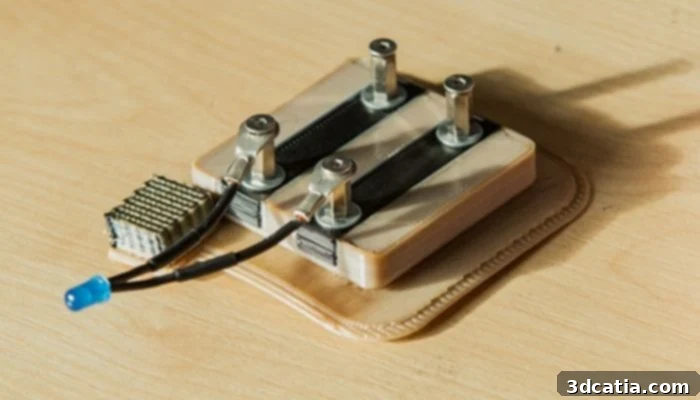
PEEK-Conductive PEEK composite models printed for the European Space Agency. (Photo Credit: Zortrax)
The WISA Woodsat Space Mission: A Blend of Innovation and Natural Materials
The WISA Woodsat space mission is not merely a test for Zortrax’s 3D-printed electrical circuits; it is an extensive endeavor aimed at exploring novel materials and manufacturing methods for the demanding space industry. This mission is particularly noteworthy for its primary structure: a CubeSat partially made from birch wood. This choice of material, though seemingly unconventional for space, is meticulously protected by a specialized coating designed to shield the wood from the harsh vacuum, extreme temperatures, and radiation found in the space environment. The primary objective is to validate how such organic materials perform in orbit and whether they can offer sustainable alternatives for future satellite constructions. The WISA Woodsat serves as a pioneering platform, paving the way for further research into using readily available, environmentally friendly materials in aerospace applications.
CubeSats, small and modular satellites, have become invaluable tools for scientific research and technological demonstrations due to their cost-effectiveness and relatively quick development cycles. The WISA Woodsat capitalizes on this flexibility to host a variety of payloads, including the Zortrax-printed electrical circuit. These compact satellites enable universities, startups, and established space agencies alike to conduct vital experiments without the prohibitive costs associated with larger missions. The data gathered from the WISA Woodsat regarding the performance of both the birchwood structure and the 3D-printed components will be critical in shaping the design and material selection for future generations of spacecraft, especially as the “new space race” intensifies with numerous startups and private entities entering the arena.
The PEEK Challenge: Mastering High-Performance Polymer 3D Printing for Space
Polyether ether ketone, commonly known as PEEK, is a high-performance thermoplastic renowned for its exceptional mechanical properties, chemical resistance, and high-temperature stability. These characteristics make it an ideal candidate for aerospace applications where durability and reliability are paramount. However, PEEK is notoriously difficult to 3D print due to its demanding material properties. Its high melting temperature, which can exceed 400°C, requires specialized printing equipment capable of maintaining precise and consistent thermal conditions. Furthermore, as PEEK cools down to room temperature, it undergoes significant contraction. This rapid and substantial shrinkage introduces considerable structural stresses within the printed part, a phenomenon that can lead to common issues such as warping, delamination, or even cracking. Successfully printing PEEK without these defects is a significant engineering challenge.
Zortrax engineers, leveraging the advanced capabilities of their Endureal printer, pushed the boundaries of conventional PEEK printing. To achieve the specific requirements for conductive electrical circuits, they employed printing temperatures that surpassed 430°C – a remarkably high figure even for PEEK. This extreme temperature was crucial for ensuring a uniform distribution of graphene nanoparticles and carbon nanotubes throughout the polymer matrix. These conductive additives are essential for transforming PEEK, which is typically an insulator, into a material capable of carrying electrical current. By meticulously controlling these parameters, Zortrax was able to create highly conductive paths within the 3D-printed material, a feat that is critical for the functioning of the electrical circuit in the vacuum of space. The Endureal’s ability to maintain such high temperatures with precision and consistency was key to overcoming the inherent challenges of printing with PEEK and its composite variants, showcasing Zortrax’s expertise in advanced additive manufacturing.
Zortrax Endureal: The Backbone of Space-Grade Additive Manufacturing
The success of creating space-ready PEEK components is largely attributable to the Zortrax Endureal 3D printer. Engineered for industrial applications, the Endureal boasts a high-temperature printing chamber, an advanced thermal management system, and robust construction capable of handling demanding materials like PEEK, as well as PEEK composites infused with graphene and carbon nanotubes. Its precise temperature control not only in the nozzle but also within the build chamber is paramount for mitigating the challenges associated with PEEK’s thermal contraction and ensuring optimal interlayer adhesion. This industrial-grade printer enables the production of parts with consistent quality, structural integrity, and the necessary electrical properties required for critical space missions, underscoring its role as a key enabler in the future of aerospace additive manufacturing.
The Significance of 3D-Printed Electrical Circuits in Space
The WISA Woodsat mission’s objective to transmit the first-ever message via a fully 3D-printed polymeric electrical circuit is a landmark event in the convergence of additive manufacturing and space technology. This achievement would signify a paradigm shift in how electronic components for spacecraft are designed and produced. Traditionally, electrical circuits are manufactured through conventional methods involving etching, soldering, and assembling multiple discrete parts. 3D printing offers the potential to create highly complex, integrated circuits with bespoke geometries in a single, streamlined process. This not only reduces manufacturing complexity and material waste but also significantly cuts down on weight – a critical factor for any payload destined for orbit.
The ability to 3D print functional electrical circuits from high-performance polymers like PEEK opens up a myriad of possibilities for future satellite design. Imagine satellites with integrated circuits embedded directly into their structural components, leading to lighter, more compact, and more robust systems. This technology could facilitate rapid prototyping of custom electronics, allowing for faster iterations and greater flexibility in mission planning. Furthermore, the use of PEEK for these circuits means they inherently benefit from the polymer’s superior strength, thermal stability, and resistance to radiation, making them exceptionally well-suited for the extreme conditions of space. This successful demonstration onboard the WISA Woodsat could accelerate the adoption of on-demand manufacturing for electronic systems in space, potentially revolutionizing the efficiency and capabilities of future space missions.
The Launch Vehicle: Powering Innovation with the Electron Rocket
The WISA Woodsat CubeSat will embark on its journey into space onboard the Electron rocket, developed by Rocket Lab. The Electron is a two-stage orbital expendable launch vehicle, though it also features partial recoverability, with Rocket Lab actively working towards full reusability. Notably, significant portions of its body are constructed from lightweight carbon composites, a testament to the aerospace industry’s continuous drive for weight reduction and enhanced performance. This choice of launch vehicle further highlights the mission’s broader theme of advanced materials and innovative manufacturing techniques. The synergy between the composite-laden Electron rocket and the experimental materials of the WISA Woodsat underscores a shared commitment to pushing the boundaries of what is technologically feasible in modern spaceflight.
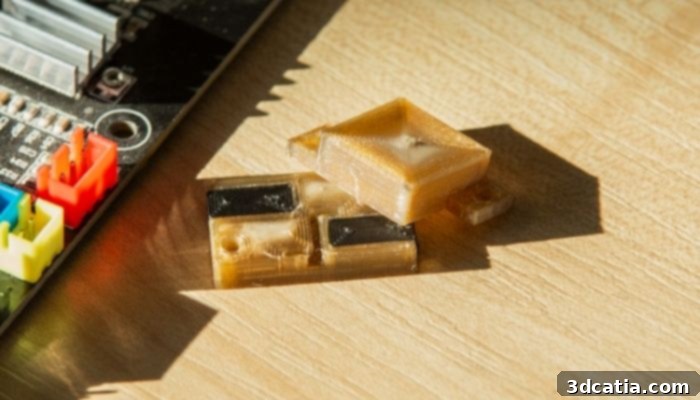
Miniaturized example of the conductive demonstrator printed for the WISA Woodsat mission. (Photo Credit: Zortrax)
Future Implications: Shaping the New Space Race
The WISA Woodsat mission, particularly with its integration of Zortrax’s 3D-printed PEEK circuits, is set to reveal new manufacturing techniques and material applications that will be highly relevant for the rapidly evolving space industry. As numerous startups and established companies join what’s often termed the “new space race,” there’s an increasing demand for faster, more cost-effective, and more adaptable methods of satellite and spacecraft production. Additive manufacturing stands out as a key technology capable of meeting these demands. This mission’s success could validate 3D printing as a viable and indispensable method for creating critical components, from structural elements to complex electronics, significantly reducing lead times and development costs for future space endeavors.
The insights gained from flight-testing these advanced materials and processes will empower aspiring space explorers and engineers with a broader toolkit for innovation. It could democratize access to space by lowering the barriers to entry for constructing and deploying sophisticated payloads. Furthermore, the emphasis on materials like PEEK and even birchwood signals a shift towards exploring diverse material properties for space applications, potentially leading to more resilient, lighter, and even more sustainable spacecraft. Zortrax’s pioneering role in this mission not only showcases the capabilities of its Endureal printer but also solidifies its position as a leader in pushing the boundaries of what additive manufacturing can achieve for the most demanding environments beyond Earth. This groundbreaking mission is a clear indicator that the future of space exploration will be built on the foundation of advanced materials and innovative manufacturing techniques, with 3D printing at its core.
What are your thoughts on the innovative WISA Woodsat CubeSat space mission project and Zortrax’s contribution to space-grade 3D printing? We’d love to hear from you! Let us know your opinions in a comment below or join the conversation on our Linkedin, Facebook, and Twitter pages! Don’t forget to sign up for our free weekly Newsletter here to get the latest 3D printing news delivered straight to your inbox! You can also find all our compelling videos on our YouTube channel for more in-depth content.
Cover Photo Credit: Zortrax