
Combating 3D Printing Piracy: How Embedded QR Codes Secure Intellectual Property in Additive Manufacturing
The rapid evolution of 3D printing technology, also known as additive manufacturing, has ushered in an era where virtually anyone with the requisite knowledge and equipment can reproduce intricate objects with remarkable precision. While this democratization of manufacturing offers immense potential for innovation and accessibility, it simultaneously presents a significant challenge: the escalating issue of intellectual property (IP) infringement and piracy. As 3D printing moves from niche applications to mainstream industrial adoption, protecting proprietary designs and models has become a paramount concern for businesses across various sectors. The ease with which digital designs can be shared and replicated, often without authorization, has created a complex landscape where safeguarding innovation is more critical than ever before.
Companies deeply invested in creative and engineering assets, such as Disney, have long grappled with the implications of piracy, now extending their protective measures into the realm of 3D printing. These efforts often involve deploying sophisticated patents and legal frameworks to prevent the unauthorized reproduction of their iconic characters, products, and designs. However, legal battles alone can be costly and reactive. A more proactive and integrated approach is increasingly seen as essential. In response to this growing threat, researchers from New York University, specifically those based at the Tandon School of Engineering and the Abu Dhabi campus, have pioneered an innovative solution: the development of **embedded QR codes to thwart duplication and confirm authenticity** within 3D printed objects. This groundbreaking method seeks to address the vulnerabilities inherent in digital manufacturing by integrating an invisible layer of security directly into the physical product.
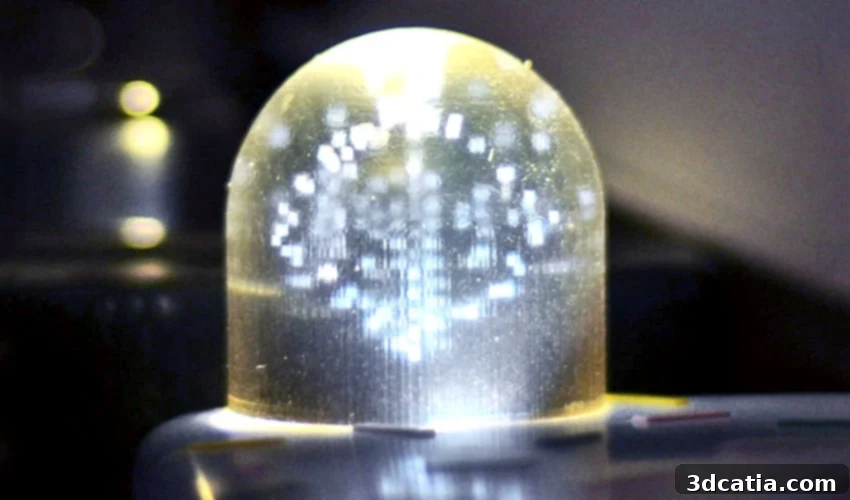
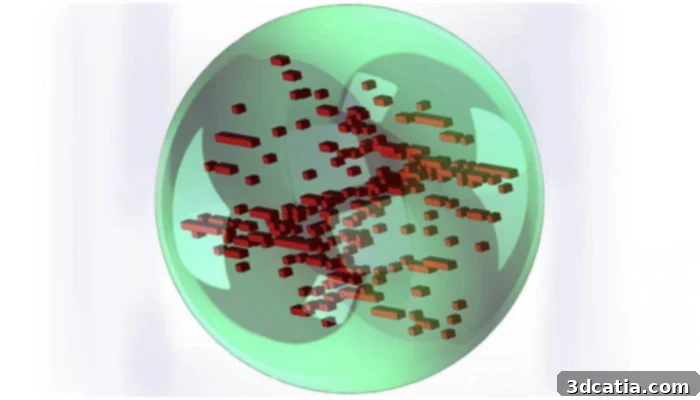
The core of this novel protection method lies in the introduction of minuscule, almost imperceptible QR codes directly into the internal structure of 3D printed models. Unlike traditional QR codes printed on a surface, these embedded markers are designed to be virtually undetectable to the casual observer or a would-be counterfeiter. This stealthy integration ensures that the aesthetic and functional properties of the printed part remain uncompromised. However, despite their hidden nature, these codes are meticulously engineered to be easily identifiable and readable by specialized scanning equipment. Once detected, this internal QR code acts as a digital fingerprint, allowing for rapid and accurate confirmation of the 3D printed piece’s legitimacy. This process enables manufacturers and consumers alike to verify a product’s origin and ensure it adheres to original design specifications, thereby creating a robust defense against counterfeit goods and unauthorized reproductions.
Credits: NYU Tandon School of Engineering
Delving deeper into the technical intricacies, Nikhil Gupta, an associate professor of mechanical engineering at NYU and a key contributor to this pioneering project on piracy in 3D printing, shed light on the challenges and breakthroughs. He explained, “To create typical QR code contrasts that are readable to a scanner, you have to embed the equivalent of empty spaces. This typically means creating voids or sections with different material properties that stand out, which can naturally compromise the structural integrity of the part.” Gupta further elaborated on their innovative solution, stating, “But by dispersing these tiny flaws over many layers, rather than concentrating them in one area, we were able to keep the part’s strength well within acceptable limits.” This multi-layered embedding technique is crucial. It distributes the minor structural alterations inherent in embedding data across numerous micro-layers of the 3D print, effectively minimizing any localized weaknesses. The result is a robust, authenticable part that doesn’t sacrifice its performance for security, making the technology viable for even high-stress applications.
The need for such advanced security measures is particularly acute in industries where component failure can have catastrophic consequences. Sectors such as aerospace, aeronautics, and biomedical engineering are increasingly integrating additive manufacturing technologies to produce highly complex, custom, and performance-critical parts. The allure of 3D printing in these fields lies in its ability to create lightweight structures, optimize geometries, and produce parts with unprecedented speed and cost-efficiency. The growth in these areas is significant; for instance, the Wohlers Report highlighted that as far back as 2017, 3D metal printing alone accounted for an impressive 80% of additive manufacturing industry growth. This rapid adoption, however, amplifies the risk associated with counterfeit components entering the supply chain. Beyond the NYU innovation, other companies like Identify3D are also focusing intensely on the comprehensive protection of digital models and physical parts within these industries, developing digital rights management (DRM) solutions for additive manufacturing to ensure secure file transfer, controlled production, and verified part usage.
Is It Possible to Effectively Counter Piracy in 3D Printing?
A consensus among most industry experts is that as the additive manufacturing market continues its exponential growth, so too will the challenges posed by 3D printing piracy. This pattern mirrors the historical development of other transformative technologies, such as the internet, where the proliferation of digital content inevitably led to widespread unauthorized sharing and duplication. In the context of 3D printing, the focus of anti-piracy efforts is often on preventing the illicit duplication of critical, high-value, or safety-sensitive components in specific developments. These “key pieces” might include specialized medical implants, aerospace engine parts, or proprietary industrial tools, where authenticity and material integrity are non-negotiable for performance and safety.
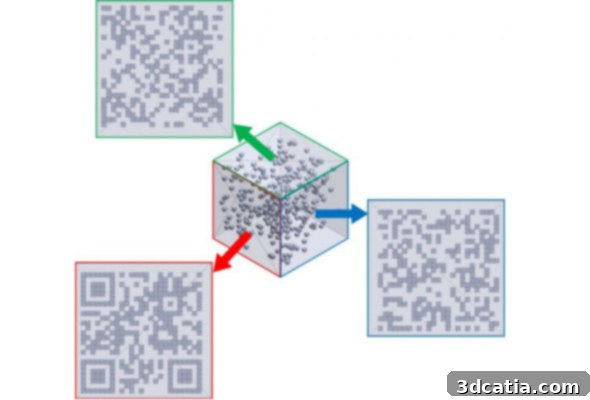
However, outsmarting sophisticated counterfeiters remains an exceptionally difficult undertaking. The ingenuity of those seeking to replicate products illegally often keeps pace with, or even outstrips, security innovations. Recognizing this challenge, the NYU research team subjected their embedded QR code method to rigorous testing under various configurations and conditions. They experimented with different levels of complexity in code distribution, ranging from embedding a relatively simple code across just three layers of a 3D object to fragmenting a single QR code into an astonishing 500 tiny, discrete elements. These extensive trials were conducted across a spectrum of commonly used industrial materials, including thermoplastics, photopolymers, and various metal alloys, utilizing several prevalent 3D printing technologies to ensure broad applicability and effectiveness in diverse manufacturing environments.
Credits: NYU Tandon School of Engineering
Gupta further elucidated the ingenious hiding mechanism of their system, likening it to a form of physical cryptography. “By converting a relatively simple two-dimensional tag into a complex 3D feature comprising hundreds of tiny elements dispersed within the printed component, we are able to create many ‘false faces,’ which lets us hide the correct QR code from anyone who doesn’t know where to look,” he stated. This concept of “false faces” refers to the creation of numerous decoys or misleading patterns within the object’s structure. Only a specific, predefined scanning protocol, utilizing particular angles, wavelengths, or sequences, can correctly identify and reconstruct the authentic QR code. This multi-dimensional embedding significantly elevates the bar for counterfeiters, requiring not just a copy of the object, but also an intimate understanding of the proprietary embedding algorithm and scanning technique to even attempt to detect or replicate the hidden code. This inherent complexity makes unauthorized duplication exponentially more difficult and expensive.
Following the successful validation of their innovative developments across a range of 3D models and materials, the next crucial step involved defining the specific sectors where this technology would offer the most impactful and profitable applications. Gupta’s conclusions underscored the importance of aligning the security solution with the level of threat and potential impact. He emphasized, “It must be profitable and match the solution with the level of threat. There’s no point in applying highly expensive and complex security to low-value, non-critical items.” He concluded by highlighting the primary beneficiaries: “Our innovation is especially **useful for sophisticated and high-risk sectors such as biomedical and aerospace**, in which the quality of the smallest part is fundamental to safety, performance, and regulatory compliance.” In these fields, where component failure can lead to severe consequences, from patient harm to catastrophic equipment malfunctions, ensuring the absolute authenticity and integrity of every part is not merely a preference but a critical requirement. The ability to embed an uncompromised, verifiable digital signature within the physical object offers an unprecedented level of security and traceability, reinforcing trust in the additive manufacturing supply chain.
What are your thoughts on the strategic use of embedded QR codes as a formidable defense against piracy in the rapidly evolving landscape of 3D printing? Do you envision this technology becoming a standard in critical industries, or do you foresee other challenges and solutions emerging? We invite you to share your perspectives and engage with us in the comments section below, or connect with our community on our Facebook and Twitter pages! Don’t miss out on the latest advancements and insights in additive manufacturing – be sure to sign up for our free weekly Newsletter, delivering all the essential news and updates straight to your inbox!