
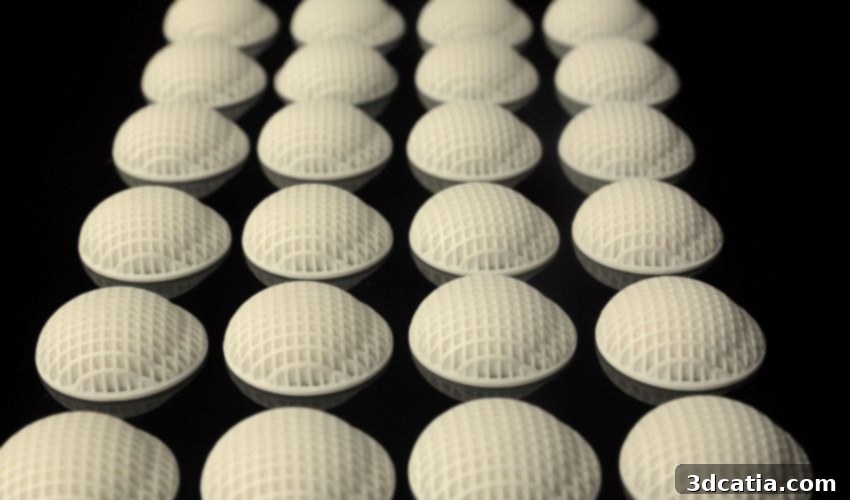
XJet’s NanoParticle Jetting: Pioneering Powderless Metal and Ceramic 3D Printing for Industrial Innovation
The landscape of additive manufacturing (AM) continues its robust expansion, solidifying its position as a critical driver of industrial innovation. According to the most recent Wohlers Report, the market for additive manufacturing goods and services experienced a remarkable growth of approximately 18.3% over the past year. This impressive figure not only confirms a sustained market recovery from the global pandemic but also underscores the increasing importance and widespread adoption of the sector across various industries. Within this thriving ecosystem, technologies utilizing metal and ceramics have particularly surged in popularity and investment. Indeed, the metal additive manufacturing market alone is now valued at over $3 billion, as reported by AMPOWER, with a compelling projected Compound Annual Growth Rate (CAGR) of 26.1%. Similarly, ceramic AM is on a trajectory to reach an estimated worth of $400 million by 2032, marking an astounding sevenfold increase since 2020. This rapid ascent highlights the immense potential and growing demand for advanced manufacturing solutions capable of producing high-performance components from these critical engineering materials.
Despite this remarkable growth and evident potential, significant barriers to the broader industrial adoption of metal and ceramic 3D printing still persist. A primary challenge stems from the widespread reliance on powder and slurry feedstocks, which constitute the majority of raw materials used in traditional ceramic and metal AM processes. This conventional approach introduces several inherent shortfalls throughout the manufacturing lifecycle, directly impacting scalability and wider industry integration. Beyond merely leading to material waste during preparation and processing, these methods frequently necessitate extensive and costly post-processing steps. Furthermore, the direct handling and manipulation of hazardous powdered materials and slurries throughout the manufacturing process raise serious safety concerns, often requiring specialized infrastructure, personal protective equipment (PPE), and strict environmental controls. The presence of fine powders can pose inhalation risks, and certain metal powders are highly reactive, presenting flammability or even explosion hazards. Coupled with the manual, time-consuming nature of powder removal and recycling, these complexities create significant operational hurdles that deter many potential adopters. Fortunately, innovative alternative technologies are emerging to directly address these profound concerns. Israeli manufacturer XJet stands at the forefront of this revolution, renowned for its groundbreaking NanoParticle Jetting™ (NPJ) technology. This proprietary process ingeniously replaces hazardous powders with specialized inks, consistently yielding parts that boast exceptional levels of detail, superior surface finish, and unparalleled accuracy. To truly appreciate its transformative impact, let us delve deeper into the precise mechanics of how this remarkable technology functions.
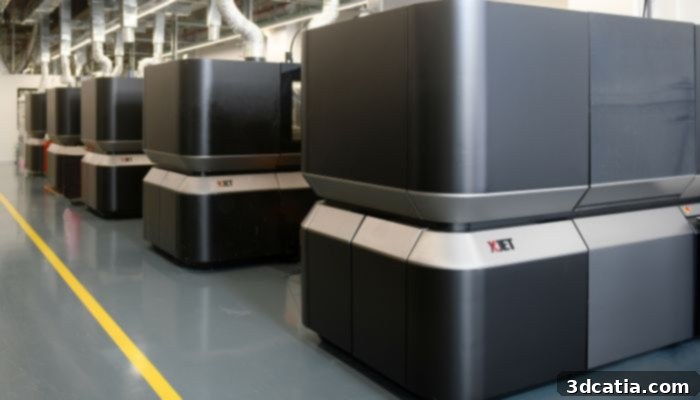
XJet’s NPJ solution offers unparalleled precision in metal and ceramic additive manufacturing.
How Does XJet’s NanoParticle Jetting (NPJ) Technology Work?
The NanoParticle Jetting (NPJ) process fundamentally differentiates itself from most conventional metal and ceramic additive manufacturing technologies. Traditionally, the fabrication of parts from these advanced materials typically involves methods such as powder bed fusion (e.g., Selective Laser Sintering or Electron Beam Melting) or binder jetting. In these processes, the build chamber is filled with a loose bed of fine metal or ceramic powder. Each layer is then formed by spreading this material and selectively binding or sintering it using a laser, electron beam, or a liquid binder. This repeated spreading and fusing process eventually builds up the desired part, usually encapsulated within a bed of unfused powder. The inherent nature of these powder-based approaches introduces complexities related to material handling, environmental control, and extensive post-processing for powder removal.
XJet’s NPJ technology, however, operates on a distinctly different principle. Diverging from powder-centric methods, NPJ falls under the umbrella of material jetting. For those unfamiliar with this category, material jetting distinguishes itself by directly jetting the build material onto the print platform, thereby entirely eliminating the need for loose powder beds. XJet achieves this by developing sophisticated inks that contain precisely dispersed solid nanoparticles of either metal or ceramic materials. These specialized inks are contained within sealed cartridges, ensuring both purity and safety. During the printing process, thousands of minute droplets of these inks, along with a separate soluble support material, are jetted simultaneously onto the build tray. As the droplets are deposited, the liquid carrier evaporates at high temperatures within the build envelope, leaving behind the densely packed metal or ceramic nanoparticles. This layer-by-layer deposition of nanoparticles forms a highly accurate and detailed “green part.” The entire NPJ process has been meticulously designed for simplicity and efficiency, culminating in what XJet refers to as the “Print-Wash-Sinter” workflow. This streamlined three-step process significantly reduces the complexity traditionally associated with metal and ceramic additive manufacturing. Unlike many other available technologies that demand intricate post-processing, extensive manual intervention, or specialized facilities, NPJ’s automated approach dramatically lowers the barriers to entry, making high-quality metal and ceramic 3D printing more accessible for a wider range of industrial users. Furthermore, the ability to print multiple materials concurrently, including a readily removable soluble support, enhances design freedom and further simplifies the post-print workflow.
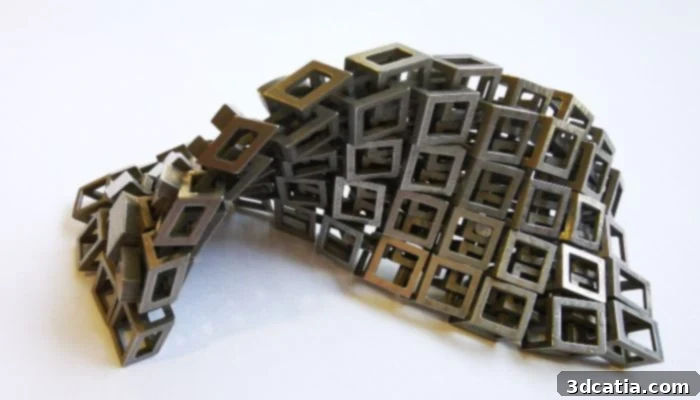
NPJ technology can be used to create extremely detailed metal and ceramic parts with superior surface finish.
Unlocking Advantages: Benefits of Powderless Processes in Additive Manufacturing
The transition to a powderless process, as exemplified by XJet’s NanoParticle Jetting, introduces a myriad of significant advantages over more traditional ceramic and metal additive manufacturing techniques, extending far beyond mere ease of use. These benefits collectively address some of the most pressing challenges hindering the wider adoption of advanced manufacturing, making NPJ an increasingly attractive solution for industrial applications.
Foremost among these benefits is a dramatic improvement in user safety. Working with fine metal and ceramic powders inherently carries various risks. Metal powders, for instance, can be highly reactive, posing flammability or explosion hazards under certain conditions, while both metal and ceramic powders, when airborne, present a significant inhalation risk if they enter the lungs. This necessitates the use of extensive personal protective equipment (PPE), specialized ventilation systems, explosion-proof environments, and rigorous handling protocols, all of which add complexity, cost, and potential health concerns to the manufacturing process. XJet’s powderless NPJ technology completely negates these issues by using sealed cartridges containing liquid inks. This closed-loop system eliminates exposure to loose powders at every stage, from material loading to part removal, creating a far safer and cleaner working environment for operators and significantly reducing the capital expenditure associated with safety infrastructure.
Furthermore, the NPJ process is inherently more sustainable and environmentally friendly. While 3D printing is often lauded for its ability to reduce material waste compared to subtractive manufacturing methods, the industry acknowledges that waste generation, particularly with support structures and unused powder, remains a challenge in many AM processes. NPJ dramatically minimizes such waste. Firstly, support structures, crucial for complex geometries, are fabricated using a specialized soluble material. This allows for their effortless removal simply by washing them away, eliminating the need for manual grinding or machining, which often damages parts and generates additional material waste. This not only makes the process cleaner and more efficient but also contributes to a lower environmental footprint. Secondly, the necessary sintering process for NPJ-printed parts is performed at lower temperatures and over shorter durations compared to conventional methods. This reduction in energy consumption directly translates into environmental benefits. Moreover, this optimized sintering profile also significantly mitigates shrinkage, a critical and often problematic issue in additive manufacturing that can lead to warpage or cracking in parts, resulting in higher yield rates and further reducing material waste.
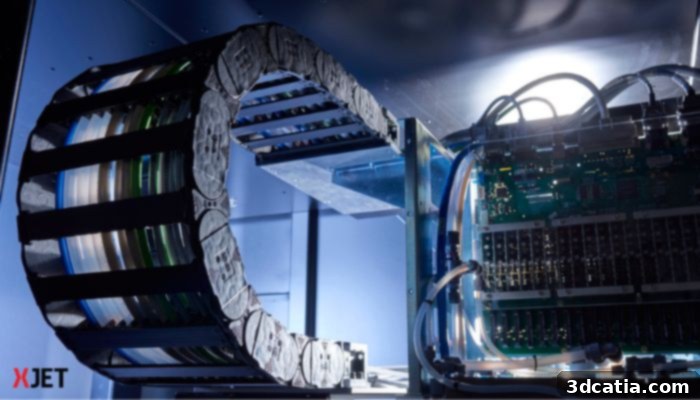
The inside of XJet’s powderless machine showcases advanced material jetting technology.
Finally, the unique nature of NPJ technology translates directly into superior part quality and performance. The precise deposition of nanoparticles in liquid form allows for an exceptionally high resolution and intricate detail that is often difficult to achieve with powder-based systems. Parts manufactured with NPJ exhibit significantly higher accuracy, finer feature sizes, and a remarkably smoother surface finish, often negating or greatly reducing the need for costly and time-consuming post-finishing operations. This improved surface roughness is critical for applications requiring tight tolerances or specific functional characteristics. Furthermore, the dense packing of nanoparticles ensures that the finished parts possess excellent mechanical properties, including high density and strength, often comparable to or exceeding those of conventionally manufactured components. The entire production workflow, from printing to washing and sintering, is highly automated with minimal to no manual intervention. This automation ensures unparalleled consistency and repeatability in part production, which is a paramount requirement for industrial-scale manufacturing and critical for the successful adoption of additive manufacturing for demanding end-use applications across aerospace, medical, and automotive sectors.
The transformative potential of XJet’s NPJ technology is already being recognized and adopted by industry leaders. As a matter of fact, this innovative technology is not only ideal for pure additive manufacturing but can also be strategically integrated to supplement and enhance traditional manufacturing processes. CeramTec, a global leader in the production of high-performance technical ceramics, recently acquired XJet’s solution to integrate it into a dedicated additive manufacturing floor. The strategic goal for CeramTec is to expand its traditional manufacturing capacity by leveraging the advanced capabilities of AM, thereby enabling the exploration of entirely new applications, complex geometries, and lucrative markets that were previously inaccessible. This collaboration underscores the growing trend of hybrid manufacturing approaches, where the strengths of both traditional and additive technologies are combined to achieve optimal results. To delve deeper into the intricacies of NPJ technology and explore the diverse range of solutions offered by XJet, you can learn more HERE.
What are your thoughts on XJet’s groundbreaking NPJ powderless metal and ceramic process? We invite you to share your insights and comments below, or engage with us on our LinkedIn, Facebook, and Twitter pages! Don’t miss out on the latest advancements and news in the 3D printing industry—make sure to sign up for our free weekly Newsletter here, delivering the freshest updates straight to your inbox! Additionally, you can explore all our compelling video content on our dedicated YouTube channel.
*All Photo Credits: XJet