
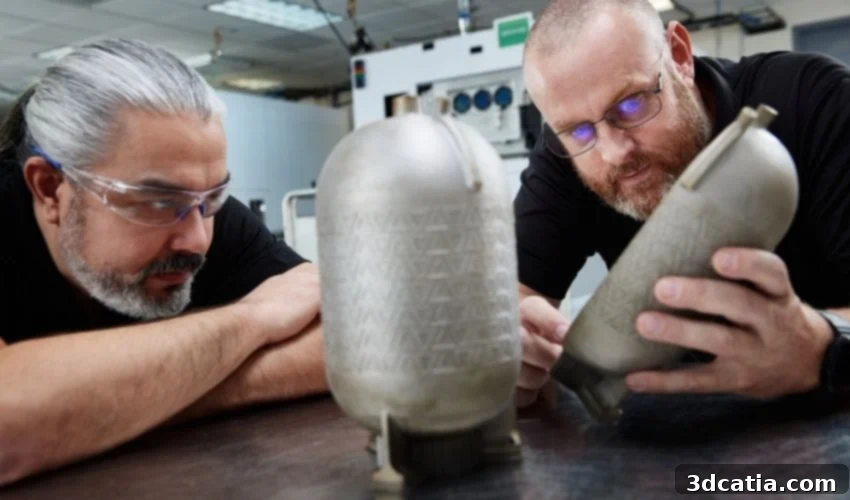
Unlocking Aerospace Innovation: Overcoming Metal Additive Manufacturing Barriers with Velo3D
The aerospace industry stands as a pioneering force in adopting advanced manufacturing technologies, with additive manufacturing (AM), commonly known as 3D printing, at its forefront. Since the inception of 3D printing, this critical sector has vigorously pursued the integration of AM due to its transformative benefits, most notably in achieving significant weight optimization and substantial cost reductions. These advantages are paramount in an industry where every gram and every dollar counts towards operational efficiency and performance. Indeed, the financial outlook for this market segment is robust; a recent report by Fortune Business Insights projects that the combined Aerospace and Defense AM market will reach a staggering $13.01 Billion valuation by 2028. This forecast underscores the immense potential and growing reliance on additive technologies. However, despite this exponential growth and clear demand, numerous formidable obstacles continue to hinder aerospace companies from fully entering and leveraging the advanced capabilities of the metal AM market.
While 3D printing is often lauded as a revolutionary ‘miracle solution’ across various industrial sectors, the reality presents a more nuanced picture. Significant barriers persist, making the widespread adoption of this technology, especially for critical applications, considerably challenging. This complexity is dramatically amplified when rigorous qualification and certification processes come into play, as they invariably do for components destined for flight. In such scenarios, parts are rarely produced without extensive and exhaustive research, development, and stringent testing phases. To gain a deeper understanding of these persistent industry hurdles and explore potential solutions, we delve into insights from a detailed whitepaper published by Velo3D. This document sheds light on the specific challenges faced by aerospace manufacturers and outlines how Velo3D proposes to address them through its sophisticated, end-to-end metal AM solution.
Critical Barriers Hindering Aerospace Adoption of Metal Additive Manufacturing
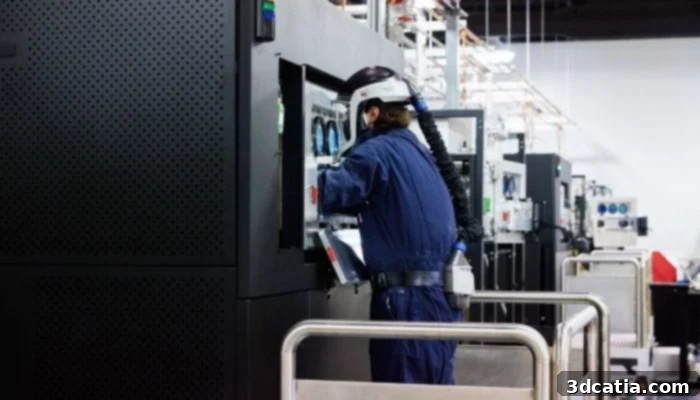
Compared to more straightforward 3D printing technologies, metal additive manufacturing inherently demands an exceptionally high degree of process control. This stringent requirement for precision and consistency often presents a significant barrier to entry for many organizations within the aerospace industry. Consider, for instance, the crucial role of inert gases, also known as noble gases. Metal 3D printing processes necessitate closed build chambers that are meticulously filled with these gases. Their presence is absolutely vital for ensuring the production of high-quality parts, as they prevent oxygen and other reactive elements from infiltrating the build environment. Without this protective atmosphere, oxygen could lead to embrittlement, increased porosity, or other undesirable metallurgical conditions that compromise the structural integrity and performance of the printed components.
The reactivity of the chosen material directly correlates with the potential for damage if atmospheric control is insufficient. Materials like titanium and specialized superalloys, highly favored by the aerospace industry for their superior strength-to-weight ratios and high-temperature performance, are particularly susceptible. The ingress of oxygen and hydrogen can significantly increase porosity levels within the printed parts, which in turn severely compromises critical mechanical properties such as strength, stiffness, and fatigue resistance. Consequently, meticulous atmospheric regulation is not merely important, but absolutely essential. Any failure in this regard will result in suboptimal results, an unacceptable outcome in safety-critical applications like those found in aerospace. Furthermore, Velo3D highlights that conventional systems frequently struggle with modulating inert gas flow effectively to manage the soot generated during the laser melting process. This often leads to soot buildup, which can interfere with the precise energy delivery to the powder bed, resulting in inconsistent part quality and unpredictable outcomes.
Beyond the complexities associated with gas management, another significant impediment to broader metal AM adoption lies in software limitations. Velo3D specifically points out that many conventional additive manufacturing solutions lack vital capabilities such as robust in-situ monitoring and the ability for users to precisely optimize build parameters in advance. The absence of reliable, real-time in-situ monitoring means that operators cannot capture crucial metrics during the printing process. This prevents the immediate identification of imperfections or deviations as they occur, leading to a higher incidence of build failures. Parts that could have been corrected or aborted early are only identified as flawed after the entire, costly printing process is completed. Similarly, a lack of advanced parameter optimization capabilities forces users to undertake multiple, iterative builds to fine-tune a design and achieve the desired final quality. This trial-and-error approach is inherently wasteful in terms of both expensive materials and valuable machine time, imposing a significant financial and operational burden on aerospace companies aiming to integrate metal AM.
Finally, one of the most substantial structural barriers preventing aerospace companies from fully leveraging the metal AM market is the recoater blade mechanism, which Velo3D has acutely identified as a primary “Achilles heel” for many existing laser powder bed fusion systems. Recoater clashes occur when a printed part overheats and develops minute protrusions that extend above the powder bed surface, making contact with the recoater blade as it spreads a new layer of powder. These clashes are among the leading causes of catastrophic build failures in metal AM. Such incidents not only result in wasted material and lost production time but can also damage the machine, requiring costly repairs and further downtime. To achieve consistently effective and reliable printing for critical aerospace applications, this fundamental issue of recoater clashes must be definitively addressed and overcome.
Velo3D’s Solution: Revolutionizing Metal AM for Aerospace Excellence
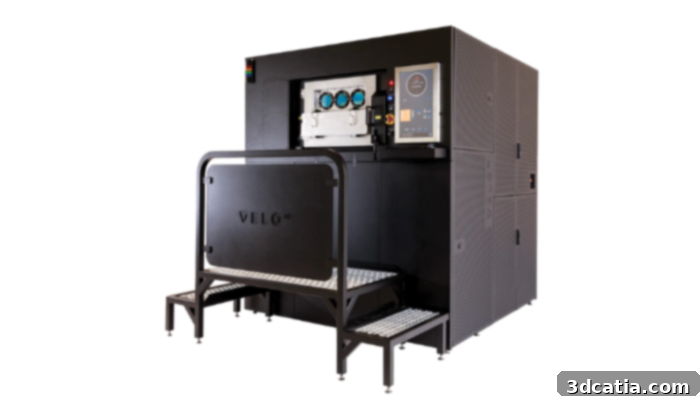
Velo3D champions its advanced metal AM solutions, particularly its proprietary Sapphire® systems, as the definitive answer to overcoming the aforementioned barriers. These industrial-grade metal AM machines are engineered to instill confidence in aerospace companies, empowering them to fully embrace and integrate additive manufacturing into their production workflows. But the question remains: how exactly do these systems accomplish such a transformative feat?
By meticulously addressing each barrier individually, Velo3D’s advanced metal systems incorporate built-in solutions that fundamentally enhance reliability and ease of use for operators. For instance, a critical innovation is the implementation of a non-contact recoater arm within their advanced AM systems. This revolutionary design completely eliminates the issues associated with protruding surfaces and the risk of recoater clashes. By ensuring that the recoater never physically touches the part, Velo3D significantly reduces the likelihood of build failures, leading to higher yield rates and more predictable production. Furthermore, this non-contact approach contributes to a smoother, more consistent surface finish on the printed parts, which in turn drastically reduces the time and effort required for post-processing—a considerable benefit in aerospace manufacturing where precision and efficiency are paramount.
Regarding the complex challenges posed by software limitations, advanced industrial metal systems like Velo3D’s Sapphire® are designed to integrate extreme process controls. This includes sophisticated real-time monitoring and adaptive control algorithms that meticulously manage every aspect of the build process. The result is the production of superior quality parts, printed significantly faster, all while ensuring unparalleled metallurgical structural integrity. A robust, end-to-end workflow is central to Velo3D’s approach. This ensures that the printing process is not only intuitive—allowing direct manipulation and optimization of CAD files within the machine’s software—but also rigorously monitored at every stage. This continuous, intelligent monitoring system actively detects potential deviations and anomalies, further reducing build failures and providing operators with critical insights into process stability and part quality. Finally, the company highlights the superior gas ventilation systems present in these industrial solutions. These advanced systems efficiently evacuate accompanying soot and particulate matter generated during the laser fusion process, preventing interference with laser energy delivery and ensuring more rapid, cleaner, and consistent melting of the powder, which is crucial for achieving high-density, defect-free aerospace components.
Velo3D is not alone in its conviction that this advanced approach represents the future of aerospace manufacturing. The company proudly points to a growing number of compelling case studies where its advanced metal AM systems have opened previously inaccessible doors for leading aerospace organizations. For example, Honeywell Aerospace, a titan in the industry, strategically chose to deploy Velo3D’s advanced metal AM system to achieve the ambitious goal of creating exceptionally complex geometries without the need for traditional support structures. This was accomplished using Iconel®, a high-performance nickel-based superalloy critical for parts that require stringent certification. Velo3D’s unique capabilities allowed Honeywell to streamline production, reduce material waste, and achieve design freedom previously considered impossible, especially for flight-critical components.
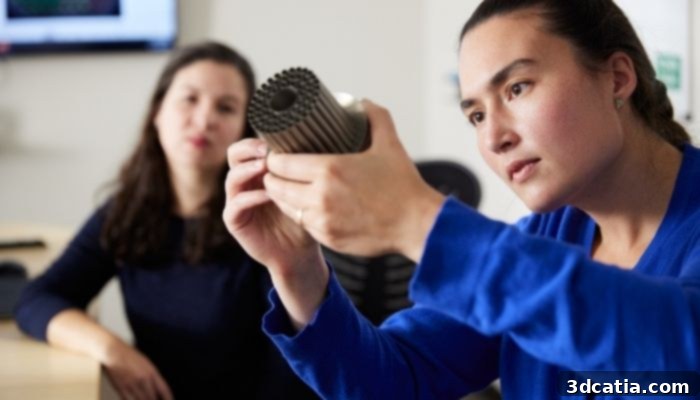
Another resounding success story involves KW Micro Power, which also adopted Velo3D’s innovative metal AM solution. Utilizing this technology, KW Micro Power successfully manufactured a part through topology optimization that was previously deemed “unmanufacturable.” The part featured an intricate labyrinth of exhaust channels, a design complexity that conventional manufacturing methods simply could not achieve. These remarkable cases unequivocally demonstrate that, thanks to sophisticated solutions like the Sapphire® series, metal 3D printing is evolving into an undeniably effective and indispensable tool for companies across the spectrum—even those who are relatively new to additive manufacturing. By enabling the production of parts with unprecedented design freedom, superior performance, and streamlined processes, Velo3D is actively accelerating the spread and integration of this transformative technology into an ever-wider array of industrial and safety-critical applications, particularly within the demanding aerospace and defense sectors.
Velo3D definitively concludes, “Advanced industrial metal AM technology has at last reached the point where it reliably delivers on the promise of unprecedented design freedom, shorter lead times, reduced development and production costs, and the highest-quality, fully-functional end-use parts for aerospace and defense.” To delve deeper into the extensive benefits of advanced metal AM solutions and specifically Velo3D’s innovative offerings, you can explore their comprehensive whitepaper HERE.
What are your thoughts on Velo3D’s approach to empowering aerospace companies to overcome the persistent barriers in adopting metal additive manufacturing? We invite you to share your insights in a comment below or engage with us on our LinkedIn, Facebook, and Twitter pages! Don’t forget to sign up for our free weekly Newsletter here to receive the latest 3D printing news directly in your inbox! You can also find all our engaging videos on our YouTube channel.
*All Photo Credits: Velo3D